Out of the Mire
…because thriving is the goal
Practicing Joy
I have been writing about personal transformation referring to Alan Morinis’ book about the Mussar tradition, Every Day, Holy Day: 365 Days of Teachings and Practices from the Jewish Tradition of Mussar . According to the Mussar tradition, we have to fuel our own personal transformation with enthusiasm. It must come from us since we are the ones doing the work of transforming. I’ve been writing this blog for about six years. I agree with Morinis and the tradition. My blog’s content would probably back this up.
But…how? How do we fuel our own transformation? It all sounds so nice when someone says it. I read the words and think, “Yeah! That! Fuel my own transformation with personal enthusiasm!” And then I look at my pile of laundry and instantly feel deflated and tired. And that’s just laundry! I haven’t even looked at my budget or my schedule or my kids’ list of needs or…or…or…
And then there’s this whole divorce thing going on. That will really suck the enthusiasm right out of you.
It just goes to show you that we are all occupying a space on the battlefield. So, I ask, once again, how? How do we create and then maintain enthusiasm about our lives so that we can cultivate some forward momentum? This feels like a key component of success to me.
Do I have an answer? Maybe. Oddly, I found it in San Francisco.
I have been to San Francisco a lot during the past year. During one of my visits, I was walking in Golden Gate Park and came upon an outdoor roller rink known to the locals as The Skatin’ Place. There was an amp blasting old school funk and people of every age skating and dancing. Frankly, it was amazing. I sat on the grass and watched people from every walk of life skate, dance, fool around, and socialize. There were roller derby girls, men in skirts, girls in hot pants, men in hot pants, girls and guys with ridiculous skills on Rollerblades, and even little kids in the mix who could probably get down on their skates better than most of the adults. What I later found out was that this was a Sunday afternoon tradition at Golden Gate Park.
What really affected me about this Sunday afternoon gathering was the feeling of joy that permeated the entire group. People didn’t just look happy. They looked positively joyful. Almost like they lived to get to Sunday so that they could go skating. With that joy came freedom. Just being present in the midst of it, listening to the music, talking to the people there, made me feel exuberant.
And then I read this today:
MOMENTS COME when the heart dances in the light. So much more than the experience of fun or even happiness, joy erupts when the inner sphere scintillates in its completeness. An experience touches us to the depths of our souls, and in that moment we are graced with a vision—if only fleetingly—of the flawless wholeness and perfection of it all. Then the heart fills and flows over, even amid the brokenness of this world.
Light is sown for the righteous, and for the upright of heart, joy! —PSALMS 97:11
PHRASE Mouth filled with laughter, lips with shouts of joy.
PRACTICE Step away from your busyness and savor several moments every day; feel the joy that is available to you.
Morinis, Alan. Every Day, Holy Day: 365 Days of Teachings and Practices from the Jewish Tradition of Mussar (p. 15).
Learning to practice joy–to really make it intentional–seems to me to be one of the keys to developing enthusiasm over your own process of transformation. Why? Well, happiness is worthwhile, but it’s situationally dependent. We are happy when things are going well for us. As soon as circumstances become unfavorable, we no longer feel happy. Joy, however, is different. Where happiness exerts its influence from the outside in, joy exerts its influence from the inside out. Joy almost conjures itself internally and springs forth even in the midst of difficulty. Happiness seems to derive itself from favorable events and situations. So, it’s possible to be joyful and yet unhappy at the same time. An odd notion to be sure. It almost feels like an oxymoron–joyfully unhappy or unhappily joyful. Weird.
Just because it’s weird or foreign in concept doesn’t make it false. So, the thing to focus on then is what might practicing joy look like? How do we do this? Well, for the folks enjoying skating today in San Francisco, it looks like that. They dedicate time to something that inspires joy in their lives. It’s intentional. This is key. Being intentional. In fact, intention is the key to just about everything when it comes to progressing in life and making your life your own.
Developing a joyful practice. It’s something to consider as you make your way.

Option D
This is from Alan Morinis’ Every Day, Holy Day:
MAN IS BY NATURE very “weighed down” by an earthiness and coarse materiality. That is why he does not want to exert or burden himself. But if you want to merit to divine service, you have to fight this nature and be self-motivated and enthusiastic. For if you abandon yourself to this heaviness, you will not succeed in your quest.
—RABBI MOSHE CHAIM LUZZATTO (1707–1746)
PHRASE If not now, when?
PRACTICE Every day, tackle one of the things that has been languishing at the bottom of your to-do list.
(Every Day, Holy Day: 365 Days of Teachings and Practices from the Jewish Tradition of Mussar (p. 14). )
I have to agree with Rabbi Luzzatto. For the most part, humans are by nature weighed down. We tend towards inertia. Some more than others, but I can imagine that everyone knows what this feels like. That sense of “I really should get up and do X, but I just want to sit here and do Y.” Y being the thing that will not move you in the direction of accomplishing anything meaningful, and X being the thing that will.
Why is this? Luzzatto observed this in the 18th century. Morinis writes, “It is reported that when Rabbi Simcha Zissel Ziv (1824–1898), the founder of Kelm Mussar, awoke in the morning, he would immediately spring out of his bed in great haste, as if a highwayman was standing behind him threatening to kill him—in order to overcome laziness and implant in himself the trait of enthusiasm.” (Every Day, Holy Day: 365 Days of Teachings and Practices from the Jewish Tradition of Mussar (p. 12))
I find that habit amusing and somewhat extreme, but it’s telling. This reminds me of a mind game I played with myself when I ran and swam. When I ran, I would pretend that I was being chased by a serial killer and had to run to get away from him. I can tell you that I did run faster. When I was doing laps, I would pretend that a shark was in the water. I had to swim to shore to avoid being eaten. It certainly was a way to “instill enthusiasm” into my workouts.
How do we find a way to instill enthusiasm into our lives and growth process then? Pretending that there is a killer standing behind me threatening to take me out every morning doesn’t sound appealing. I already consume enough coffee to cause my cortisol levels to spike.
The only answer I can find right now is hope. We must have hope. We must come to the conclusion that there is a valid reason to get out of bed in the first place. We have to give ourselves permission to fantasize. To dream. To ask the question, “What is possible for me?” And the answer cannot be, “Nothing.” Something must be possible for us. Just because we haven’t thought of it doesn’t mean that it doesn’t exist.
A few years ago, I was working on a project with two very interesting and very intelligent people–two mathematical savants. I wasn’t sure what I could contribute, but they said I was needed. I just sat there. The intellectual third wheel. Listening to them problem solve was fascinating. They couldn’t solve the problem, but David was not to be thwarted. I heard him say, “It’s either Option A, Option B, Option C, or…Option D.”
I had been listening to them try to figure out the problem all night. I knew what the possible solutions were, but I had no idea what Option D was.
“What’s Option D? You haven’t mentioned that yet,” I asked.
David grinned at me and answered, “Option D is something I haven’t thought of yet.”
That is a genius approach to problem solving. Option D. Always leaving room for possibilities and positive uncertainties. Option D represents our hope that we will come up with a better solution. At some point. We just don’t know it. Yet.
Option D takes the pressure off, too. Why? Because it leaves space for creative thinking, risk taking, and going off the map. Option D is out there. We can only see so far. Option D, the right answer for our problem, might be right over the horizon. Or, we might meet a person who has the answer, and we have the question. Put the two of us together, and, suddenly, magic has been created. History has a plethora of examples of Option D couplings–those creative partnerships that change the landscape of their part of the world. Think of John Lennon and Paul McCartney, the Warner Brothers, the Wright Brothers or even William H. Masters and Virginia E. Johnson.
In any case, part of instilling enthusiasm into our lives is leaving room for Option D. We might be feeling pretty defeated and anything but enthusiastic, but when we consider that something else is possible hope is kindled.
Option D is an idea worth looking at. So, if you are in a situation that feels binding and impossible, then consider applying a new filter–a reframe if you will. Go through all your options. Problem solve until you can’t problem solve anymore. And then, add on Option D–“Something I haven’t yet thought of.” Pay attention to any shifts that occur inside you. Give it time. If you have been entrenched in circular thinking and panic, then be mindful of yourself now.
Removing limitations on possibilities allows for more creative flow, calms down the limbic system, and actually allows us to problem solve more effectively. Option D acknowledges that we do not know what will happen while acknowledging that we know something good just might. We are allowing ourselves to plan for goodness rather than catastrophe. It subverts the automatic negative thoughts (ANTs) so common to anxiety-provoking uncertainties which are common to life.
If you want to try to cultivate enthusiasm for your life which will fuel your own transformation, then I suggest taking a look at the Option D Approach. Suddenly, a lot more becomes possible when you remove your own mental limitations.
Two Guarantees
I came across this aphorism by Hillel the Elder yesterday:
“If I am not for myself, who is for me? And if I am only for myself, what am I? And if not now, when?” Ethics of the Fathers 1:14
Three powerful questions. That’s it. Oddly enough, I read Hillel’s questions right before I made the final decision to end my marriage–“If I am not for myself, who is for me?” (emphasis added) I couldn’t stop thinking about that one particular question. Is there a right answer? If I am not for myself, then what? Can I expect anyone to advocate for me? Can I reasonably expect anyone to ultimately be for me if I won’t do that first? If I won’t fight for the quality of my own life, then…what? I did some serious soul searching.
I made my decision and forgot Hillel’s words. I had to get on with the business of divorcing which is inordinately difficult.
On an evening flight home a few weeks ago, I wrote this in my journal:
What is it like to take your life into your hands and run with it? I mean really run with it. You finally believe that your life will end one day. You aren’t immortal. You will expire and die. This is actually a one shot deal. Sure, it’s nice to philosophise about Karma, heaven, reaping and sowing, and what might be waiting for us in the hereafter, but we don’t live in the Great Beyond. We don’t even live in tomorrow or tomorrow’s tomorrow’s tomorrow. Yesterday and yesteryear have passed.
We have today. Now. This moment. Which is about to become another bygone breath.
Does it matter? It must matter because it’s all we have.
What a strange guarantee. The guarantee of the present. Some people like to say that there are only two guarantees in life–death and taxes. There are more. Little is certain in life. Even taxes. The tax codes are always changing, and we don’t know when death will claim any of us. Uncertainty is the constant, and this is a guarantee.
That…and now. The present. We are always moving from the past into the present attempting to inform and shape the future–if we are paying attention. If we are not, then the present moves around us becoming our past, and yet it still informs and shapes our future which will ultimately become our present and flow into what was.
And my question remains:
Have you ever lived as if the present had the most power? As if every choice and belief that you currently held and made mattered more than anything?
What if you did?
What if how you ate began to matter more?
What if what you believed about the world, media, entertainment, and people were thoughtfully examined?
What if how you treated others daily came under your own scrutiny?
What if everything you believed about yourself came under your own scrutiny?
What if you examined how you loved? How you had sex? How you thought about your sexuality and body?
What if you considered thinking bigger? Being kinder to others and yourself? Letting go of negativity and old beliefs that hinder you in exchange for something better?
What if you went on the hunt for a better definition of “good” or “happy”?
What kind of life would you live if you really understood that all you were guaranteed is now and the rest is not certain at all?
What kind of life would you want?
Coming upon Hillel’s words again yesterday struck me.
“If not now, when?”
Was it a coincidence that almost a year later I was essentially asking myself the same question? Probably not. At what point do we take full responsibility for everything in our lives, everything that we’ve become, everything that we believe, everything that we do, and make a decision to do something about what we lack and what we really want? Do we even know what we really want? How do we go about figuring that out? It’s really now or never, isn’t it? All we have is now.
As I ask it of myself, I’ll ask it of you. If not now, when?
“In the end, only enthusiasm for your own growth will fuel your transformation.”–Alan Morinis
Further Reading:
- Me, Myself, and I: Ethics of the Fathers 1:14
- With Heart in Mind: Mussar Teachings to Transform Your Life by Alan Morinis
- Every Day, Holy Day: 365 Days of Teachings and Practices from the Jewish Tradition of Mussar by Alan Morinis (Every Day, Holy Day is an essential companion for anyone who wants to experience the life-changing gifts of Mussar. The program laid out in this book focuses on 26 traits (middot)—such as loving-kindness, strength, generosity, compassion, honor, and equanimity—each of which takes center stage for a week of contemplation and exercises, in order to develop and refine that quality in yourself.)
Getting Triggered: Healing from Trauma
I wasn’t sure who would read my previous post on the experience of getting triggered (Getting Triggered). I can’t find much helpful information on it to be honest. The online article from 1in6 from which I cited was actually one of the best articles I’ve read on the subject. If you carry trauma with you, then you have most likely experienced a triggered response. Frankly, it sucks.
I didn’t expect the post to get so many hits. Over 200 on the day it was published. For my little blog, that’s a lot. Clearly, this is a topic worth discussing. So, let’s talk about it.
I went to my therapist after the triggered response was largely over–it lasted around five days. I thought that he might be able to help me understand it or give me words of wisdom. He asked me many probing questions. I answered. I explained the origin of the trigger. I always feel a little too vulnerable when I’m explaining things to my therapist. I think I’m waiting for him to say something like, “Well, it’s settled. You’re officially crazy now. You weren’t before, but you are now. And no, it’s not in the DSM-V, but I know someone I can call. Expect them to arrive at your house by 9 o’clock tonight. In a black suit. No one will see or hear from you again.”
He leans forward and stares at me. I hate that. And, then he assesses. It makes me itch.
“You’re okay. You did a good job.”
And this is the moment when I want to yell.
“What about that awful pain? The Event Horizon? What is that about? Don’t you know?”
I see a micro-shrug.
“Am I processing trauma?”
He nods.
“Look,” he says, “I could tell you what you already know and give you coping strategies like distraction and self-soothing ideas, but will that make this pain in your chest go away?”
“No.”
“What makes it go away?”
“Confronting it. Sitting in it. Fully feeling it. Not avoiding it. And then letting it pass. However long that takes.”
“Yes. There is no way around this one. The only way is through.”
And that is the truth. A hard truth. There is a special kind of pain that is borne of trauma. It doesn’t matter what your trauma is. You could have been in a car accident or survived a natural disaster. You could be a soldier returning from war. You could have received long-term medical treatment for cancer. You could be a healthcare professional and seen people die. You could be an emergency responder. You could have experienced incest, a sexual assault, or grown up in a domestic abuse situation. Perhaps you were married to someone with an addiction and were on the receiving end of their violence. The list is almost endless. Trauma can be a one-time incident, or it can appear suddenly after long-term exposure to the same crises day after day. This is why people from the same circumstances can report such different experiences. One person from a family may be highly traumatized by what occurred in said family while another isn’t at all. Each person has their own resiliency factor.
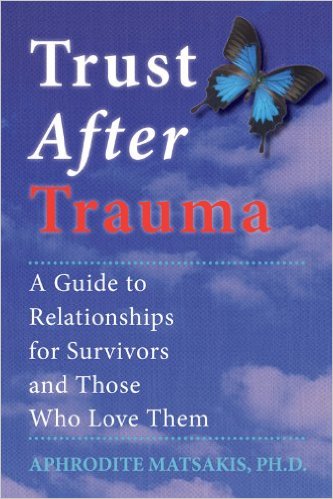
Once that trauma, however, becomes real, life is different, and PTSD is only one possible reaction to trauma. People can experience clinical depression, somatization, and various dissociative disorders. “No diagnosis captures the range and depth of suffering or the specific way that trauma can affect a person’s life.” (Trust after Trauma)
What does trauma feel like?
- Many survivors feel irrevocably different from others–deficient, undesirable, and permanently scarred.
- Some survivors are scared that their trauma “shows”.
- Some survivors feel alone even when they are with other people; some feel even lonelier in a group than when they are truly alone.
- Some feel condemned to a life of emotional numbness, loneliness, and superficial relationships.
- Some feel as if they are really living on the fringes of their family and society even though they have relationships. I call this phenomenon “being invited but not included”.
- They may resent the fact that their traumatic experiences robbed them not only of their peace of mind, physical health, and years of life, but also of the ability to be social and to initiate and sustain an intimate relationship.
- If symptoms of PTSD, clinical depression, panic disorder, or the like develop, then these often become another source of shame and stigma and another reason to be angry at the past and life itself as well as another reason to withdraw from and stay away from other people. (Trust after Trauma)
This is a very good description of what trauma feels like. I’ve met all the criteria for this list at various points in my life. A triggered response will put me back on this list.
What does healing from trauma look like? Judith Herman wrote in Trauma and Recovery that the first stage in healing from trauma involves making your world as safe as possible:
“This means ending abusive or exploitative relationships and situations; it also means learning to feel safe within yourself by learning how to control your nightmares, intrusive thoughts, flashbacks, insomnia, depression, or any addiction. Feeling safe within yourself also means learning to tolerate strong feelings, such as rage, grief, and anxiety, without being destructive towards yourself and others.” (Trust after Trauma)
Learning to become safe within ourselves is big deal. Getting a handle on our own feelings and trusting that we can handle their “bigness” is key. This is the point when many people go for the the maladaptive coping strategies like their pet addictions whatever those might be. It works in a pinch, but it doesn’t teach you to become a safe person for yourself. I won’t lie. It is brutal.
Here is something else though–it never gets any worse than that profound pain you feel well up from a triggered traumatic response. That pain that feels worse than death. That is as bad as it gets from a psycho-emotional perspective. If you can ride that wave, then you are developing sound resiliency. I can say this now because I made it through that weekend by just facing it, sitting in it, and letting it pass. On the other side of it, I can say that it does pass, there is no other pain I’ve ever experienced that trumps it, and it won’t kill you. Oddly enough, I feel a bit stronger now for having made it through.
“Only when you’ve established a certain degree of internal and external safety can you then safely proceed to the second stage of healing which involves remembering the trauma and feeling the feelings associated with the trauma. The major feelings that need to be dealt with are anger, shame, powerlessness, anxiety, and grief. During this second stage of healing, you will begin to identify your many losses and, as much as you can, mourn.” (Trust after Trauma)
I can’t decide which is harder. The first stage or the second stage. What I can say is that you must have a therapist help you do this. Attempting to do this work by yourself is self-destructive. Friends are very helpful, but a therapist is vital. A therapist helps you stay the course and course corrects for you should you get lost. It’s easy to get lost when you’re doing this kind of work.
“The third stage in healing from trauma involves re-establishing human ties. When your life is dominated by memories of trauma, or by an addiction that serves to help numb you to the effects of the trauma, you don’t have time or energy to devote to relationships. Yet problems with your family life, your friendships, or love life may have caused you to turn to alcohol, drugs, food, gambling, or sex as a substitute for meaningful human contact. When you have some understanding of your trauma and some control over your symptoms, including any addictions, you will be ready to begin to reestablish some old relationships, and even consider building new ones.” (Trust after Trauma)
In my experience, this is not a linear process. Sometimes all three are happening at one time. Sometimes you can be in the third stage and then be thrust back into the first stage. Life has a rather “suddenly-ish” quality about it at times. The unexpected happens, and that unexpected nature can be triggering to trauma survivors. My point of view?
It’s okay. Why is it okay?
Because you want to heal. A thorough healing takes time, and sometimes an unexpected event unearths a traumatic event that you buried. And, that buried event, while forgotten, is influencing you in ways that you never knew–and not for the better. Your free will, in a way, has been usurped by your trauma, and you didn’t even know.
This is why healing our trauma is so important. This is why leaning into the triggered responses is key. Trauma, if left to itself, will devour your life. Your free will and free choice will vanish, and you will have never built anything out of your ruins.
I am not a romantic about the world. I am much like Ernest Hemingway:
The world breaks everyone and afterward many are strong in the broken places. But those that will not break it kills. It kills the very good and the very gentle and the very brave impartially. If you are none of these you can be sure it will kill you too but there will be no special hurry. Farewell to Arms
There isn’t one person who will go through life and not suffer at least one break. Some of us are crushed. There is no room for magical thinking or even victim thinking. To be alive is to suffer. At some point, we have to understand that. We are in no way special in terms of our own humanity. You will be broken. It will be unique to you, but it will happen.
That isn’t the point though. The point is that you become strong in your broken places. Why? Because the very gentle, very good, and very brave need you. The world needs broken people who are strong again. The world needs you.
Why? Because you know how to heal, and the world is dying to know how to do that.
A Must Read:
Getting Triggered
I thought I might document what a triggered response looks like. Why? Well, for a few reasons.
I have PTSD of the long-term variety. I wish it were acute, but it isn’t. I can contain like a pro. I can hide my emotional suffering and mask very well while internally boiling over like a pot of pasta. I’m very skilled at “riding the wave”, but, when you’re triggered, it takes a lot of insight to know that this is what’s happening to you because your thinking brain is no longer in charge. A much older part of your brain is calling the shots when you get triggered.
I learn by experience and through other people’s experiences–through their narratives. It also encourages me because hearing other people’s stories reminds me that I’m part of a common experience. I’m not alone.
So, let’s dive in, shall we? Let’s talk about it.
The Trigger.
I’ve been triggered all weekend. How did it begin? It started earlier in the week. The stage was being set.
I had an epiphany in therapy. I saw a rather grand deception that my ex-husband had perpetrated upon me, and my mind made a connection. My mother had done the same thing. I was duped twice. In a terribly cruel way. I spent an hour in my bedroom quietly falling apart (I am a secret cryer). It wasn’t one of those easy cries either. It was the full-body, ugly, heaving cry. You know the type. Where you feel like your soul and body are going to split from the pain and the interstitial space will form a black hole and consume you from the inside out?
I felt defeated. Utterly erased. I felt ontologically insignificant and alone. Betrayed? That wasn’t the right word, but that could qualify it to a degree. When I am in the middle of these types of emotional events, I do not like to be found out. I feel far too vulnerable. I fear vulnerability. That comes from having been deceived and wounded too many times by people close to me. I can’t let myself be seen like that, but, as I was pulling myself up and out of my personal darkness, my phone rang. A person who is very close to me was calling.
“I’ll fake it.”
And, I managed to hide it well except for that tell-tale stuffy nose.
“Why is your nose stuffy? Are you getting sick?”
“No…”
“Allergies?”
“Uh…no…”
Silence. He’s putting two and two together.
“Honey…talk to me…”
I didn’t want to talk. This is my darkness. And my darkness is like a black gravity. I can barely escape the event horizon. I would never subject another person to it. I did what I deign never to do. I talked, and I felt too wide open. Too vulnerable. I can barely regulate that particular feeling. I began to feel terrified. Like I couldn’t defend myself or hide.
This is the beginning of feeling triggered for me. The beginning of flight or fight. Why?
When I was very young and up until my adult years, both my parents would use very personal information against me for the purpose of emotional blackmail and humiliation. My ex-husband would use my personal information differently. He would pretend to feel close to me and then withdraw both physically and emotionally sometimes for months at a time claiming that he was overwhelmed after he had insisted that I share what was bothering me. In all these instances, I was blamed and made to feel somehow defective. He actually accused me of being broken implying that no one else could tolerate me but him. This is a common abuser’s tactic.
My solution at the time? The Rules. Never tell anyone the truth about yourself. Never show weakness. Never ask for help. Never let anyone see you cry. Always appear ‘fine’. Never give anyone anything that they can use against you. What is this an example of?
“When triggers hit, they’re usually unexpected and beyond your control.
And what usually happens next, right after the trigger: You react with old ‘defenses’ or ‘survival strategies’ that are no longer helpful or healthy (if they ever were), and that only make things worse.” (1in6/Getting Triggered)
After doing what non-PTSD folks do and telling the truth, I became hypervigilant, and I couldn’t self-regulate well. I experienced something of a vulnerability hangover.
What happened next?
My close friend went away for the weekend after talking to me every day, and I’ve heard nothing from him for three days. Rationally, this feels normal. To my hypervigilant brain, this felt a little too much like what my ex-husband would do to me, and I tripped and landed on my amygdala.
I became triggered.
“The trigger is always real. By definition, a trigger is something that reminds you of something bad or hurtful from your past. It ‘triggers’ an association or memory in your brain.
But sometimes you are imagining that what’s happening now is actually like what happened back then, when in reality it’s hardly similar at all, or it just reminds you because you’re feeling vulnerable in a way you did when that bad thing happened in the past.
Just as triggers range from obvious to subtle, sometimes we’re aware of them and sometimes we’re not. Your body may suddenly freak out with a racing heart and feeling of panic, but you have no idea what set off that reaction. You may suddenly feel enraged in a slightly tense conversation, but be unable to point to anything in particular that made you angry. Sometimes you can figure it out later (for example in therapy), and sometimes not.
Also, though we may not realize that we just got triggered, or why, it can be obvious to someone who knows us well, like a partner, friend, or therapist. When you feel comfortable doing so, with someone you really trust, it can be very helpful to talk over situations where you seemed to over-react.
Triggers that involve other people’s behavior are often connected to ways that we repeat unhealthy relationship patterns learned in childhood. Things that other people do – especially people close to us and especially in situations of conflict – remind us of hurtful things done to us in the past. Then we respond as if we’re defending ourselves against those old vulnerabilities, hurts, or traumas.” (1in6/Getting Triggered)
My ex-husband would go on trips, and I wouldn’t hear from him for the entire time. He would return and treat me like a roommate. My mother ignored me for almost five years. My being as transparent and open as possible was something I tried to model in my relationships with them, and it was always used against me. I found myself spinning out.
“The power of a trigger depends on how closely it resembles a past situation or relationship, how painful or traumatic that situation or relationships was, and the state of your body and brain when the triggering happens.
Reactions can be big and fast, or creep up on you slowly.
If you’re feeling very calm and safe, the reaction will be much less than if you’re feeling anxious and afraid. If you’re feeling little support or trust in a relationship, your reactions to triggering behaviors by the other person will be much greater.
A trigger can bring out feelings, memories, thoughts, and behaviors.
Other people might have no idea that you’ve been triggered, but you could be struggling with terrible memories in your head. Or you could suddenly have all kinds of negative thoughts and beliefs about the other person and/or yourself, like, ‘I never should have trusted her,’ ‘Every woman will stab you in the heart,’ ‘What a loser I am,’ etc.
Reactions to triggers can be very dramatic and rapid, like lashing out at someone who says the wrong thing or looks at you the wrong way. In these cases, your brain has entered a ‘fight or flight’ state and the part of your brain that you need to think clearly, to remember your values and what’s important to you, and to reflect on your own behavior, is effectively shut down.
But responses to triggers can also creep up on you, playing out over hours and days, and get worse over time.” (1in6/Getting Triggered)
I am still in a triggered mindspace. Thoughts like this are ruling my brain:
- “I should have never said anything.”
- “I want to run away.”
- “There is no point…”
- “I can’t do this…”
- “I will be alone for the rest of my life.”
If you examine those thoughts, then you can observe that these thoughts are all examples of “flight”. I am trying to run away in my brain, and, currently, I can’t seem to put a stop to it. Why? Because I’m triggered.
The good news? I’m not expressing any of this externally. I’m observing this. I’m trying not to judge it. I feel physically ill. I’ve had a seven-day migraine, and I’m now taking prednisone which may be contributing to my elevated mood. Prednisone does contribute to mood regulation and lability.
This is how triggers can come about. This is what they look like in the moment. What can we do about them because, to be honest, they are a pain in the ass?!
Here is some excellent advice:
A stress response can trigger avoidance in the form of denial, dissociation, bingeing, substance abuse, self-harm, and other behaviors in an effort to get rid of feelings. These avoidance behaviors, in turn, can trigger stress responses inside because they are reminders of old efforts to deal with painful feelings. The stronger the response, the stronger the impulses to avoid. The effort spent avoiding leaves little energy to manage day-to-day life, and the result is increased stress responses that increase impulses to avoid. What a mess!
Fortunately, self-regulation skills can help you to tolerate (sit with) and control intense feeling states that have led to avoidance or dissociation in the past. You can learn to feel and control the intensity of your emotions to reduce avoidance. This will help reduce the frequency and intensity of traumatic stress symptoms and experiences. This handbook will teach you the relationship between dissociation, numbing, avoidance, and traumatic stress, and will help you to replace old, currently problematic coping (e.g., dissociation, avoidance, etc.) with conscious, more effective methods of coping (Growing Beyond Survival: A Self-Help Toolkit for Managing Traumatic Stress, p.28)
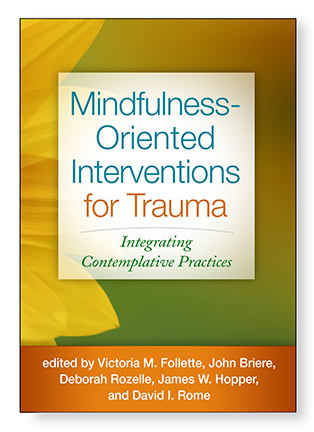
Check out Dr. Jim Hopper’s website, Mindfulness and Kindness.
And this book:
The High Maintenance Woman and Self-Care
A few weeks ago while I was browsing through Facebook, I came upon one of those ubiquitous quizzes. This particular quiz was entitled “How High Maintenance are You?” and the women who had completed it were more than happy to post and comment on their results. They went something like this:
“I got a 2! I must be low maintenance lol…”
“A 2?! I got a 1! I think my car is better maintained! haha”
“I didn’t even score. Did I shower today?”
“I got a 3 but that was only because I got a manicure for my sister’s wedding. I would have scored lower.”
“I haven’t had a haircut in over year, and I think I have a unibrow. I would break the test. I didn’t even bother…”
On the surface, I can see the humor, but it almost reads like gallows humor. Are these women serious? You treat your car better than you treat yourself? Notice the competition. Five women are competing for who takes top honors in treating themselves the worst. Who practices the poorest hygiene? Who practices the poorest personal grooming? Who cares the least about themselves? This is something to be validated and rewarded? And someone came up with a quiz to measure this?
Let’s think about this from the other end. Let’s think about the “high maintenance woman” for a moment. If there is honor in being The Martyr–the woman who throws herself under the bus in the name of Low Maintenance or no maintenance at all, then what about the other end of the spectrum? What of that woman who averages a 5 or above? That woman with the foiled hair, gym membership, gel nails, and spray tan. She’s probably got a Brazilian wax ‘down there’, too. She’s following some vegan gluten-free diet or something trendy. Doing wheatgrass shots and refusing to eat sugar. Blah blah blah. High Maintenance. Who has time for that nonsense? Right?!
The first thing that struck me about this quiz is that men generally don’t do these quizzes. I rarely hear men ask their friends, “Hey, do you think I’m high maintenance? Do you think that my preferring a microbrew over a Bud Light makes me high maintenance? Do you think my liking socks with no seams and tagless t-shirts makes me high maintenance?” It sounds like a situational comedy. Change the script, however, to a few women in a restaurant:
“Do you think my preferring a microbrew over a Bud Light makes me high maintenance? I mean, I just prefer it! Do you think that my refusing to wear socks with seams makes me high maintenance? Or t-shirts with tags? They really itch me! It distracts me all day! I can’t do it. I’m not high maintenance, am I?”
I theorize that you would have mixed responses. Some people would say, “Yeah, you are high maintenance.” Many men would just make their choices and feel okay about it. He likes what he likes. Why? In part, I suggest, because there are no quizzes and labels such as these aimed at men. Men have other labels to deal with to be sure. The idea, however, that women are judged on a spectrum, particularly by each other, for investing in themselves should be shocking. Oddly, it’s not. The first time I heard the phrase “high maintenance” was in the film “When Harry Met Sally”:
“Well, I just want it the way I want it,” Sally says.
“I know. High maintenance,” Harry answers.
Hmmm. That’s interesting, isn’t it? In 1989, the year “When Harry Met Sally” hit theaters, a woman knowing her own mind and asking for what she wanted defined “high maintenance”. In 2016, investing in yourself unapologetically seems to be the new definition particularly if you are a mother.
What does all this mean? What can it mean for you and me?
I used to be a woman who neglected herself. There was no simple reason for it. There were a lot of reasons. I was ashamed of myself. I had gotten married too young. I had children too young. I felt trapped in my life. I had trauma issues to deal with, and I didn’t know how to do it or where to start. I had gained weight in my pregnancies, and I didn’t know how to lose it. I was the primary caregiver to my young children, and I had no friends. I couldn’t see that there were any resources available to me. I was very lonely, and I felt like a foreigner in my own body and life. Nothing felt like mine anymore. My then husband ignored me all the time. I felt almost hopeless. It didn’t feel like neglect. How I treated myself seemed appropriate. I just drifted along with the current. I put everything I had into my children. That felt like the thing to do. In reality, the more I put into my children, the more I was erasing myself. I hated what I had become. I was so disappointed in my life and my state. I completely forgot how to truly be myself–how to maintain my own identity and continue to develop it. It is impossible to maintain and develop yourself if you’re running from yourself. Personal growth and development do not mix with avoidance. They are mutually exclusive. If shame is in the mix, then it becomes doubly difficult.
There is no such thing as a high maintenance woman. Before you point and say, “Kim Kardashian…”, I will say that we only see what we are allowed to see when it comes to other human beings even more so when commercialism, exploitation, and virtual reality are at play. As women, we know first hand how hard it can be to try to meet the tacit and spoken expectations surrounding us. It’s hard enough to meet our own much less everyone else’s.
So, I propose something. I propose that we all erase the phrase “high maintenance woman” from our vocabularies. Going further, I suggest that we stop comparing ourselves to other women altogether. If you like your unibrow and weekly shower, then keep it! You are not lesser than your neighbor who waxes her face, legs, and bikini area and showers four times a day while getting a mani/pedi and Botox while holding the Warrior pose at the same time. What matters here is that you like yourself, know your own mind, can express your wants and needs, and live a fulfilling life with rewarding relationships. Your ability to practice self-care and invest in yourself is an expression of the quality of your life and self-esteem.
As women, when we observe other women participating in self-care and self-expression, applaud them because this has not always been available to women. It is often still not available to women here and in other parts of the world. So, eschew that quiz. Don’t do it. Take care of yourself. Love yourself. And encourage and enable other women to do the same in whatever way is most meaningful to them. If you are not sure how to begin taking care of yourself in a way that is meaningful to you, then I recommend this book:

While you’re thinking about how to do that, consider donating to Days for Girls International, an organization that provides hygiene “kits” for girls in developing parts of the world so that they don’t miss school due to their menstrual cycles. Yeah, that’s a thing. Hygiene kits–the most basic self-care for women and girls. You and I can actually change the lives of girls in other parts of the world by fulfilling this most basic need. To see this in action, watch this four-minute film.
The Borderline Blame Storm
I was asked recently to write more about being in relationship with someone who expresses as having a personality disorder.
Firstly, I want to be careful because I don’t want to vilify people who carry this diagnosis. There is a lot of inflammatory rhetoric particularly on the Internet concerning personality disorders, and the very labels themselves have entered into popular culture. The word ‘narcissistic’ is used commonly today, but would someone recognize a legitimate diagnosis of Narcissistic Personality Disorder (NPD) in, say, their neighbor? I’m not so sure.
Borderline Personality Disorder (BPD) is on its way to becoming just as recognizable in terms of popular terminology and stigma. To counteract the stigma associated with BPD, there is a movement within the therapeutic community to rename BPD Emotional Dysregulation Disorder. I can understand this. Diagnostic labels of the psychiatric sort can dehumanize people minimizing an entire person until they are just viewed through the lens of a label.
Having grown up with a mother with BPD, I can tell you why there is therapeutic and social stigma around BPD. The disorder manifests in such a way in a person to enhance and magnify their best and worst traits even going so far as to bring forth talionic rage and homicidal tendencies. At times, it can resemble sociopathy. Without help from trained professionals specializing in treating BPD, there seems to be a lack of any ability to learn from past mistakes causing the same relational mistakes to be made repeatedly–even if those mistakes are extreme displays of violence. This notable inability to apply learning is what makes BPD so difficult to treat. It’s also why it’s so hard to stay in relationships with someone with BPD; you can’t hold someone accountable for their behaviors if they don’t learn from their past mistakes. The neuroscience behind this explains some of the behavioral manifestations, but it doesn’t lessen the abusive nature of it.
I love my mother. Dearly. It cost me to pause our relationship and put space between us. Why did I do that? Because she consistently blamed me for her behaviors and choices. What does that look like? I’ll give you a very black-and-white example so that the dynamic is easy to spot.
When I was under the age of 10, I was playing in our living room. I had a drink in my hand. My mother had our couch newly upholstered in a rather hideous floral pattern. As I was going to sit on our couch, I lost my balance spilling my drink on the couch. She saw this, and I observed her facial expression change from one of contentment to rage. It was an immediate switch. She ran over to me, clutched my upper arm very tightly, and dragged me across the floor while screaming invective. I was trying to get to my feet because I could feel my shoulder starting to pull from the joint, but I could not. I was crying and pleading with her to stop. She proceeded to drag me by my arm up the stairs, her nails digging into me, the connective tissue in my shoulder stretching. She got to my room, threw me on the floor, and slammed the door. My shoulder was almost dislocated by then, and there was already a well-developed bruise around my upper arm marking where she had grasped it.
This is a typical interaction with my mother. One of many. Years later, when I tried to discuss this with her, she responded, “Oh, you had that coming. You were fooling around and stained my couch.” She tossed her hair, gestured, and rolled her eyes.
Blame.
She blamed me. It was my fault that she behaved badly. It was my fault that she was abusive. When I told her that she almost dislocated my shoulder, she said, “It’s not my fault that your shoulder couldn’t stay in its socket!” She blamed my shoulder! It is almost funny.
In her mind, she should have been able to apply as much force to my shoulder as she wanted because she was angry. It was my shoulder’s job to take it. If my shoulder broke or dislocated, then it was my shoulder’s fault. Not hers. This idea comes from a blindness, and that blindness is centered around a poorly developed cognitive empathy known in academic circles as theory of mind (ToM).
Theory of mind is the ability to understand that what I think is different from what you think. Going further, a well-developed theory of mind allows one to predict, infer, and deduce another person’s thoughts based on their cues and nonverbal communications. It also allows one to understand that what I think, want, and believe is not what other people want, think, and believe. Furthermore, what I do affects other people and my environment as well as how other people feel around me. People who carry a personality disorder diagnosis often have a ToM deficit, and this deficit contributes to the blatant displays of entitlement which fuel the blaming behavior.
In my recent dealings with my mother through an exchange of letters, she is still blaming me for her choices. She wants a relationship, but she continues to blame me for her abusive behaviors: “That only happened because you did _________.” There is a pathological behavior present here. She cannot account for her own choices and then go on to see how anything that she did might have caused a subsequent event. It is like trench warfare. To reach her, I would have to leave my trench and go out into the field risking assassination, and I’m no fool. She would take me out, and then, when I’m gasping for air, she would blame my body for being vulnerable to death.
My mother has both borderline and narcissistic tendencies so her “blame storms” are excruciating.
Sam Vaknin, self-acknowledged narcissist and author of Malignant Self Love: Narcissism Revisited, says:
I am constantly on the lookout for slights. I perceive every disagreement as criticism and every critical remark as complete and humiliating rejection–nothing short of a threat. Gradually, my mind turns into a chaotic battlefield of paranoia.
I react defensively. I become conspicuously indignant, aggressive, and cold. I detach emotionally for fear of yet another (narcissistic) injury. I devalue the person who made the disparaging remark, the critical comment, the unflattering observation, the innocuous joke at my expense.
A narcissistic injury is just as painful to the narcissist as abandonment is to the borderline. Thus, just as the borderline is hypersensitive to abandonment, the narcissistic is hypersensitive to anything that smacks of a narcissistic injury. (Randi Kreger)
In the end, my mother has emphasized that if I loved her, as she so loves me, then I would never “throw these things in her face”. I’m supposed to love her no matter what, and this is where I must offer a different opinion:
What does unconditional love usually mean as employed by a Narcissist, Borderline or other abusive personality type?
It means that you won’t hold the Narcissist, Borderline, Histrionic or Sociopath accountable for their bad behavior nor enforce appropriate boundaries and natural consequences for their bad behavior. Basically, they’ve confused unconditional love with you happily and obliviously tolerating their abuse of you and others, including children. (What a Narcissist or Borderline Means by Unconditional Love)
In my experience, this is true. This is also true:
If for whatever reason you’re committed to staying with your abuser (e.g., there are minor children or you’re confusing abuse with love due to your own childhood issues) then, yes, you do need to accept that your abuser is unlikely to change in any meaningful way, that she or he is severely limited as a human being and, at some point after she or he has completely depleted your resources, you may be further vilified and discarded for fresh supply. You don’t get points for being a compliant martyr at the end of the relationship. You get blamed for being broken — never mind the fact that it’s the abuser who broke you…(What a Narcissist or Borderline Means by Unconditional Love)
This is tough to hear. The psychologist who penned this article has a lot of followers as well as haters. She doesn’t pull her punches. I don’t agree with how she communicates everything, but she isn’t necessarily wrong either in terms of content. Abuse is abuse. An inability to change is still an inability to change. At the end of the day, does the ‘why’ of it all matter when you’re dying a slow death?
Finally, this is where she is most accurate:
Generally speaking, the mental health field has a difficult time admitting that women can be abusers, even when their victims are other women and children. Many wives and girlfriends of men with abusive exes and adult children of narcissistic and borderline mothers understand this all too well. (What a Narcissist or Borderline Means by Unconditional Love)
I was told for years that my mother was abused as a child and emotionally troubled, and I should just “love her through it”. If a man, however, did the things to me that my mother was doing, I would have been pulled out of the home as a child and advised to flee the relationship as an adult. The faith communities with which I became acquainted were notorious for this response.
As you can see, the concepts of unconditional love and radical acceptance are frequently (ab)used in couples therapy to persuade targets of narcissistic, borderline and sociopathic abuse, particularly if the abuser is a female who has “emotional problems,” that you’re an unloving and abusive partner (or adult child) if you don’t unconditionally accept your partner’s (or parent’s) abuse. If that last sentence makes your head spin, good. It should because it’s ridiculous. It also probably echoes what your narcissist or borderline has been drilling into your head, which is equally ridiculous. (What a Narcissist or Borderline Means by Unconditional Love)
It is not wrong to want to be happy. It is not wrong to want to feel safe. It is not wrong to want to be loved appropriately. It is not wrong to want to be a part of healthy, mutually life-giving relationships.
The only thing that tolerating or accepting abuse will get you is more abuse. You can call that unconditional love, but it sure sounds more like codependence and extremely unhealthy codependence at that. (What a Narcissist or Borderline Means by Unconditional Love)
What I have learned is that blame can be rejected. My mother or my ex-husband can blame me for anything, but I don’t have to accept it. I can let the “blame ball” drop to the ground and walk away. I do not have to take responsibility for something that is not and never was mine. Nor do you.
There may be disorders at play in others that limit their capacities to grow and change, but, if we are not limited, then we can grow and change. When you stop and think about that, and I mean really think about that, you must see that the playing field isn’t level at all.
The possibilities are limitless for you when you stop allowing another person’s limitations define your terms.
That is what I would offer you today.
Where are you allowing other people’s small capacities and limitations determine your own life’s possibilities?
What can you do right now to change that?
Shalom…
Further Reading:
Borderlines and Narcissists Both Blame Storm by Randi Kreger
The Triune Brain
Before we can discuss retraining our brains to think differently in terms of recovering from something like PTSD or generalized anxiety or even transitioning from major life events like divorce, it’s important to step back for a moment and talk about the human brain.
Let’s talk for a moment about Dr. Paul MacLean and his triune brain model. Dr. MacLean theorized that we humans didn’t have one brain; we, in fact, have three.

MacLean referred to the reptilian brain as the “R-Complex”. “The reptilian brain, the oldest of the three, controls the body’s vital functions such as heart rate, breathing, body temperature and balance. Our reptilian brain includes the main structures found in a reptile’s brain: the brainstem and the cerebellum. The reptilian brain is reliable but tends to be somewhat rigid and compulsive.”(McGill) The reptilian brain is not a learning center. In other words, it doesn’t learn from mistakes. It simply behaves instinctively.
I love how marital and sex therapist Dr. David Schnarch describes the reptilian brain in action in his book Passionate Marriage: Keeping Love and Intimacy Alive in Committed Relationships:
When prehistoric mammals’ lives were at stake, fast primitive responses served best. Unfortunately, threats to our identity and emotional security often trigger similar responses. When interpersonal pressure is high enough and we get anxious, survival reactions “hard-wired” into the reptilian and mammalian parts of your brain take control from your neocortex. Your anxiety increases your impulse to fight, submit, or run away. The more anxiety and pressure to adapt, the more this tends to occur. When this happens frequently we label it being “poorly adjusted.” Roughly speaking, the part of your brain that predominates determines the characteristics you display. When you’re severely anxious, as though your life is at stake, you behave like a reptile. Reptiles and badly frightened people have two characteristics: they have no sense of humor, and they eat their young. Relationships aren’t peaceful or stable. Although you’re responsible for what you do at such times, the notion of “choosing” is erroneous because the part of your brain that chooses (your neocortex) is no longer in control. Lessons in “fighting fair” are usually forgotten because reptiles don’t fight fair.
For learning and choosing, you need the emotional and analytical minds. “The limbic brain emerged in the first mammals. It can record memories of behaviours that produced agreeable and disagreeable experiences, so it is responsible for what are called emotions in human beings. The main structures of the limbic brain are the hippocampus, the amygdala, and the hypothalamus. The limbic brain is the seat of the value judgments that we make, often unconsciously, that exert such a strong influence on our behaviour.” (McGill)
Schnarch goes on to explain, “When you have your anxiety under better control, you stop going for your partner’s jugular vein. You act like mammals do: you’re capable of mother-infant nurturance and pair-bonding (like geese who “imprint” on their partner)— but not intimacy or choosing someone and being chosen.”
For what differentiates humans from mammals, we need the neocortex. “The neocortex first assumed importance in primates and culminated in the human brain with its two large cerebral hemispheres that play such a dominant role. These hemispheres have been responsible for the development of human language, abstract thought, imagination, and consciousness. The neocortex is flexible and has almost infinite l earning abilities. The neocortex is also what has enabled human cultures to develop.” (McGill) Our ability to experience relational intimacy also resides in the neocortex. In other words, until the neocortex came on the scene, no being on the planet was capable of experiencing intimacy with another being. Our neocortex makes it possible for us to experience intimacy.
Schnarch hits it out of the park with this:
“What we do know about intimacy is that it hinges on our capacity to make self-other distinctions. Self-disclosure involves a capacity for self-awareness, self-reflection, and complex language. In humans, all these processes are mediated by the neocortex. Intimacy is a relatively unique phenomenon within the animal kingdom— something we share with few other species (if any), and one that’s singularly sophisticated in humans. Until we evolved a neocortex, humans were not capable of intimacy.”
This is what our brain looks like. What’s more, it is not siloed. Our little lizard brain affects our mammalian brain, and, in turn, often determines what our very human neocortical brain will do.
Believe it or not, we have a much bigger say in how that whole song and dance goes down.
Retraining the Anxious Brain
I want to discuss what some people think is rather quotidian but is anything but–anxiety. To do that, I am going to describe what it’s like living alone after almost twenty years of being married.
It’s harder than I expected but not for the reasons I thought.
When I was in the middle of the turmoil, getting out was foremost on my mind. I had developed tunnel vision. “Get out.” That’s all I could see. And, this will actually serve you. Aim for the bullseye. Use whatever anger you’ve got to energize your efforts particularly if you’re a natural born pleaser. Do it. Reach that goal.
Well, I did it. Now what?
Once the dust settles and your fight/flight/freeze response calms a bit, the wide spectrum of your emotions can display itself. The adrenaline of the struggle wears off, and the battle fatigue sets in. You might start to get sick a lot or experience somatic complaints. You might start crying at inopportune times for no apparent reason. Intrusive thoughts might begin to trickle in and start to eat away at your brain. In fact, your brain might suddenly become your enemy. Solitude and quiet are no longer something you seek out, and nighttime becomes something to dread. Why? Because once the day is over and the sun sets you feel the weight of your own aloneness in a way you never have before, and the future looks frightening and cold. Uninviting. Not hopeful. But a harbinger of more suffering. More heartbreak. More betrayal. Life doesn’t feel like something to enjoy or plan or even survive but something to fight and avoid. In fact, hasn’t it always felt like that? And, then the fear comes. Nothing feels predictable. Everything feels like it might crumble at any moment. There is no one behind you, and yet you feel surrounded. You feel paralyzed and yet you feel the need to run for your life all at the same time.
This is anxiety, and it’s terrible.
This experience comes and goes, and I can’t predict it. It peaks in a kind of existential panic and slowly acquiesces until I feel like myself again. I don’t exactly know what triggers it. My therapist tells me that it is the trauma of the divorce. It is a big event, and I went through two divorces as a child. I experienced inordinate trauma during childhood and adolescence, and I experienced emotional and physical trauma in my marriage. The ‘why’ doesn’t concern me now. I want to know how to deal with the nuts and bolts of this issue because this is a brain issue now. My brain has been trained through experience to be anxious. If my brain can be trained to be anxious, then I can train it to be calm reason would suggest.
The magic question: How? How does one go about doing this? Medication won’t do it. According to the New York Times, over 30 million Americans are taking antidepressants. SSRIs and tricyclics will not help us think differently. I am not against using medications, but a pill won’t teach an anxious brain how to think differently. It might provide a different “atmosphere” in the brain’s environment making the brain more teachable, if you will.
Think of it like this. What events happened in your life to give you anxiety? Did they kick your ass? Were they traumatic? Do you remember them? Divorce. Failed relationships. Bullying in school. Various traumas. Poverty. Sexual assault. Sexual harassment. Even something that feels more mundane to you like neglect or sibling rivalry. Or always moving as a child and never having a friend. Perhaps being teased for your appearance. Being cheated on by a significant other. Cyber-bullying. Spending your whole life feeling invited but not included. Like you’re always looking in on everyone having a good time from the outside and longing to be a part of it. Perhaps you felt a profound rejection at some point in your life and the sting won’t leave you. It haunts you in every relationship. Or betrayal in a faith community. One never expects that, but it’s very common. Betrayal by God.
These are very real life experiences, and they each reinforce the neural connections that teach our brains to be anxious and scared. Then, whenever we attempt to step out and try again, our brain is there with its faithful alarm system to warn us: “Don’t you remember when _______? This feels a lot like that. If you do that, then __________ will happen again. Better not.” Or worse, “People are not trustworthy. Everyone you trust hurts you. Better not to trust anyone. Being alone is better than being betrayed.” With a brain like that, who needs enemies? If you’ve endured trauma and betrayals, however, then how do you argue with your own brain’s alarm systems? How do you argue with experience? How do you argue with yourself?
What do you do?
There is a plethora of information available on this very subject. Too much. So, I am going to come at this from a neuroscience angle for a moment in order to make sense of the cognitive behavioral information that many of us have heard before.
What is a neuron? (click here for a good answer)
A neuron is a cell within our nervous system that communicates with other neurons.
What is a neural connection or pathway?
The technical answer:
“There are a variety of reasons that drive the creation of neurons linking together in new ways. A few drivers of the way existing neurons may begin to link in a new manner might be through focused learning of new information or situations we are exposed to. Another could be an area of the brain damaged by an illness such as a stroke might drive the injured part of the brain’s essential functions to be taken over by a healthy area (usually an area close in proximity), mental illness, but there are a multitude of reasons it can happen.
Here is an example of how it might happen. You might decide to learn that new language that you’ve been meaning to for the last 10 years. As you study the language neurons housed in the area of your brain that’s storing your native language would send electrical messengers down the axons to the cell’s center (soma) where it is then routed to a particular group of connected dendrites which would then release a chemical messenger to the new targeted group of neurons that are located next to it. New neural pathways begin to be formed to acquire and store the new language. These new pathways become stronger the more they are used, causing the likelihood of new long-term connections and memories.” (online source)
The analogy:
“An analogy to consider how this function might take place is if you grew up in the woods. Everyday you took the same few paths to get the things you needed to sustain yourself. You never strayed from those paths at all. Then one day as you walk down your normal path that is heavily worn from years of use down to the river you notice a little building way off the trail you’re on. You think wow I’d like to check that out, but you’ve never been off the trail. You decide to go check it out. You leave the worn path that you were on to ground that you’ve never stepped foot on before. You approach the door of the building then walk inside to notice that there is a large volume of books on the subject of building log cabins. You are looking around the room and notice a note on a table that states you are welcome to use the place anytime you want but please never take the books from the building with you. So you begin to come and go everyday to read and focus on learning how to build new log cabins. Everyday as you come and go you begin to develop two fresh paths that diverge off of the worn river path that you use to get to the building. When walk to the cabin everyday these fresh paths begin to become worn and easily noticeable. Even though the paths never become as ingrained and worn as your original paths they are still distinct and worn. This is similar to how neuroplasticity occurs in our brains as we learn something new. The more we repeat something and use that portion of the brain in a focused way new neural pathways might develop in your brain.” (online source)
What about brain chemistry? Doesn’t that affect all this?
What you learn changes the neural associations in your brain. What is in those neural pathways or associations becomes permanent.
Now, how do brain chemicals, neurochemistry, and “imbalances” of brain chemistry fit here?
Your neural pathways and associations influence and decide which neurochemicals, and at what “strength” pass through the synapse (i.e., synaptic gap). Your neurochemistry is determined by your neural pathways and associations, not the other way around.
Medication or pills can change your brain chemistry temporarily. But, medications have no power to change neural pathways or associations. There is no cure for anxiety in medication. There is a temporary, chemical change in your brain brought about by the medication. But it lasts only as long as the medication is synthesized to last, from four hours to longer periods. But it is never permanent. You always need to take another pill to get the same effect.
The only permanent solution is to change your neural pathways and associations. This can only be done by learning new strategies, rational concepts, and new methods to extinguish anxiety. Then, these new strategies and methods must be practiced and practiced. This is why we always talk about repetition.
Without repetition, neural pathways and associations cannot change. To have a permanent solution for anxiety, our neural pathways and associations MUST change.
When our neural pathways and associations change, our brain chemistry also changes. This is a permanent change, because you have practiced the new methods and concepts (i.e., the cognitive therapy) into your brain repetitiously, thus creating new neural associations. The more dense these neural associations are, the more you have recovered from anxiety.
Everything in life works like this. Whatever you really learn causes new neural pathways in the brain, and, over time, with repetition, you gradually become better and better at something. (online source)
Well, this is good news. Another part of me wants to kick the dirt and say, “Well, shit.” It does make sense. We were not born anxious or traumatized. We learned to feel this way through lots and lots of “practice”. Really unpleasant and painful practice but practice nonetheless. We had experiences that taught us things. We drew conclusions. We might have learned to think in terms of “If x, then y“. This will work, too, in terms of self-protection, but it only solidifies anxious and fearful neural connections. “If I disclose any personal information, then it will be used against me in the future.” The next conclusion? “Therefore, never disclose personal information.” The final result? “Don’t trust anyone.”
You will survive. That is what we as humans are wired to do. We are wired for survival, but most people yearn for something better than that. We know that there is something better. I am, therefore, going to shift the content of my posts towards the topic of relearning how to think after major life events. It’s one thing to read about neuroplasticity and cognitive therapy. On paper, it’s all so interesting. But how do you really do it?
That is what I am going to elucidate. We are going to do it. Why? Because I have never been interested in survival.
Thriving is the goal.
For Further Reading:
Currently on the Nightstand
Share this blog

RSS


thrivingisthegoal.com
is licensed under a
Creative Commons Attribution-No Derivative Works 3.0 United States License.

 Out of the Mire