Out of the Mire
…because thriving is the goal
No Apologies
It’s the holiday season, and you know what that means. It’s Letter from My Mother time!
For those of you familiar with her, I fully expect an eye roll. For those of you new to my blog, just roll your eyes. She seems to like to send long, hand-written notes on yellow legal paper folded up and stuffed into Christmas cards annually. At least this year it wasn’t a Dear Santa letter.
One statement that my mother has made in all of her letters is: “I’m sorry for whatever it is that I did to hurt you. If I could go back and do it differently then I would. I’m sorry that I wasn’t the mother that you needed.”
This has always grated on me. There are three ideas within this statement, and each one carries its own meaning. The first statement is a blanket apology: “I don’t know what I did, but I’m sorry about it.” One can’t offer up an apology if one doesn’t know what it’s for. The very nature of an apology is to take responsibility for a specific action. This statement fails to meet the criteria for a basic apology. Am I being a stickler? Perhaps I could be defined as such had I not informed my mother prior to this letter of the actions that needed to be addressed. There should be no confusion.
The notion that she would like to go back and do it again mystifies me. If she doesn’t know what she did wrong, then what would she like to go back and change? That doesn’t fit. We have two contradicting ideas.
Her final statement, to me, is the trickiest of them all. She wasn’t the mother that I needed. Perhaps she could have been the mother that another child needed? Just not me. I had unique needs?
These types of slippery “apologies” are very common in families of origin where high-level abuse was in place. When you receive them, you might feel confused or crazy. Like something isn’t quite right. Did she just apologize to me? Why do I somehow feel worse? That is what I have been thinking about, and I think I’ve come upon an answer that you might find helpful as well.
There are some actions that we witness and experience in abusive families that cannot be defended. Sexual abuse, for example, cannot be defended. Attempted homicide cannot be defended unless it’s self-defense. Long-term physical and emotional abuse as well as neglect cannot be defended. One can’t offer up an apology for committing incest: “I’m sorry, honey, that I snuck into your bedroom every night and forced you to have sex with me.” That falls woefully short. “I’m sorry that you had to talk me out of trying to kill myself so many times.” Really? “I’m sorry that you were on the receiving end of my rages and violence.” Huh.
No one should ever have to endure abuse of any kind. The amount of time and focused effort it requires to recover and heal from abuse is staggering. How does an apology from the abuser mean anything in comparison to that? It’s worthless. The act of abuse is indefensible. There is no apology that could ever be meaningful enough. There is no apology that could ever build a bridge long enough to mend the gap. A better statement might be: “I should never have done _______ to you. That was wrong. You should never have had to go through that or witness it. I am sorry that I ever put you in a position to carry lifelong injuries because of my character flaws and subsequent actions.”
The notion that she was not the mother that I needed is absurd. An abusive parent or guardian is not the parent that anyone needs. We are not somehow demanding or fragile children because we do not like being abused. All children need and deserve a loving parent who provides safety, predictability, empathetic presence, and love. You and I are not high-maintenance because we ask for healthy boundaries, appropriate communication, non-deviant forms of love and intimacy within the parent-child relationship, healthy parent-child role modeling, and a validating environment. We are sound and healthy when we ask for that. Being made to feel somehow unreasonable for asking for such is gaslighting: “I’m sorry for whatever it is I did to you, and I am sorry that I was not the parent you needed.”
It’s very high level. The manipulation is so subtle that it’s easily missed. Your feelings, however, don’t miss it. It’s why you feel so crazy after receiving something like this. Essentially, you are made to feel somehow lesser for asking for that which is appropriate and healthy through an apology like this. The failures and abusive actions of the person apologizing to you are deflected onto you, and then you are blamed for not only not being able to accept their apology but also for not being able to accept them in their role as parent because, you know, “they did the best they could” and you somehow had special needs making it impossible to be a good parent for you.
I have not crafted a response, but I have figured out why I was so bugged by her latest effort to connect with me. She and my ex-husband have issued similar apologies. It’s painful. I just want someone to own up. That’s all. Is it that hard? It must require a Herculean effort because so many people refuse to actually take responsibility for their actions in a meaningful way. Instead, you see apologies coated with justifications or outright denial:
- “I never did that.” (Gaslighting specifically countering technique and denial)
- “That never happened.” (Countering and denial)
- “Maybe I should have been a little more empathetic.” (Gaslighting specifically trivializing technique)
- “Maybe I was a little volatile but I wasn’t abusive.” (countering and trivializing together)
- “Look, I did some wrong things, but I had some things I was struggling with.” (trivializing)
- “You don’t remember it the way it happened.” (countering)
- “I will always be your mother.” (This is a weird thing to say, but it’s a common comeback. It almost feels like blocking and diverting, another form of gaslighting)
The only reasonable defense that I can conjure in my mind for abuse and extreme behaviors is mental illness. And, in the end, this is my mother’s only defense. She does struggle with mental illness, but one might argue that she is responsible for the treatment of that illness in order that she would be a safe and healthy adult. If an adult cannot stop themselves from abusing the people under their care and/or they can no longer differentiate good from bad behavior, then they are no longer fit to care for said minor children or adults needing their care. If their inability to properly care for people is largely due to mental illness and not an unfortunate character defect, then it is imperative that they seek help. If they are entrenched and treatment resistant as so many people are, then what?
That is the question to ask. We each have to decide for ourselves how we want to proceed in relationship with a family member who is a former abuser and also may struggle with mental illness. This is my current dilemma. I know for a fact that my mother has rewritten the past. The family history has been redacted in order to create a narrative that she can tolerate. She has participated in distortion campaigns and lied about me. She will never apologize for this. She will turn the tables on me and blame me should I ever try to hold her accountable for any past behaviors that hurt me. She will continue to be entitled and emotionally dysregulated. She will only see her needs and pathologically pursue getting them met at the expense of everyone around her. And, she will fail to see how any of this could possibly hurt me or anyone else.
This is reality. Is it even reasonable to expect an apology from a person like this? It’s reasonable to want one. To expect one?
Truth is a theme on my blog, and this is where we land again. To continue to heal from having been in a relationship characterized with this flavor of abuse, you must know the truth. You must know that your perceptions and memories of events are valid and valuable. You are not crazy. You are sane. You are not asking for too much when you ask for safety, predictability, empathy, nurturing, kindness, and healthy reciprocity. You are not too demanding when you draw a line in the sand against passive-aggressive and unsafe behaviors and defend it. You are not high-maintenance when you dictate that there will be no gaslighting or ad hominem attacks in future conversations.
You are showing signs of growth and maturation. You are moving forward and healing. You don’t need anyone’s apology to do that, but, admittedly, it sure would be nice sometimes, wouldn’t it?
Resources:
For a review of gaslighting, refer to Gaslighting and Distortion Campaigns
The Happiness List
I came across this list a few days ago: 26 Ways to Take Your Life Back When You’re Broken. I haven’t considered myself to be broken in a long time, but I will admit that there have been aspects of my life that have ceased to work well. My marriage was broken for sure, and I felt tainted by that. I felt very injured. Broken? No. Were it me, I would entitle this list “26 Ways to Rebuild Your Life”. It’s worth reading just to get a sense of what a full life might look like. An example. To someone.
Number 21 caught my eye: “Let yourself be happier than you are comfortable with.” This I am very familiar with. The author of the list goes on to elaborate: “Too often, we sabotage our own happiness out of a reluctance to trust it. Rather than allowing ourselves to grow into bigger shoes, we declare our feet ‘not big enough’ and retreat. We have to start allowing ourselves to let go of guilt and self-doubt and start seizing opportunities as they arise. Even if we feel a bit out of our league along the way.”
This is undoubtedly true. I have actually heard myself saying, “Do you really think you deserve this? Who are you to think that you deserve to be happy?” Whoa. How much happiness should I have? A thimble’s worth? A cup? I have made great strides in laying a foundation for real happiness, and, yes, I am having a hard time trusting it. There are moments when I sit and wait for the other shoe to drop. “Okay, this can’t be real. Surely something terrible is going to happen now.” Well, I bought some shoes–some awesome shoes, but no shoes have been dropping. Life is just moving along. Have there been challenges? Sure. Aren’t there always? That will never change, but if you actually committed to the process of building out your own life with the intention of creating happiness and not sabotaging it in any way, what would happen? Would you actually be, dare I say it, happier?
Without knowing about this list, I can say that in the past year, I have done and continue to do twenty-one things on it. It is a great list to look at particularly during a divorce or even messy life circumstances. It gives you a sense of what could define a happy life. Goals and tasks. Starting points and points to work towards. Some are obviously easier than others, but that’s the point. Happiness doesn’t necessarily have to be hard. Sustaining it requires effort and commitment because we build it over a period of time, and the more influence we feel that we exercise over our own sense of happiness, the more we can grow and experience it. You just have to start somewhere.
So, I recommend reading this list. Pick something. I actually started my process a few years before I ended my marriage, and it was the process of rebuilding that allowed me to make that very hard decision. I started with numbers 5, 7, and 13.
What might you start with? Give it a try. See where it takes you.
What Your Brain Knows
Hello, hello, hello! I apologize for my absence. I have been recovering from not a small surgery, and I don’t think I remember half of September nor the beginning of October at all. I found a stack of bills last night that I have no recollection of receiving. Mea culpa! I have been very limited in my physical activities as in no lifting anything larger than a loaf of bread. This has rubbed me the wrong way to be sure. I have had far too much time to think. And the thoughts tend to bubble up…
Surgery and marital separation, at the same time, can be tricky particularly if one’s surgery was the result of injuries sustained within the relationship. My attitude going into the surgery was one of “Let’s just wipe out all evidence that he ever hurt me.” I had the hip surgery last year; a surgery required to repair an injury caused by him as well. I felt pretty good about this year’s surgery. It will be the last one. I’ll be home free. I am not in love with him anymore. I feel no attachment to him. I spent three years within the marriage mourning the loss of the marriage. The actual physical separation was just a representation of what already existed. It had dissolved. For me anyway. I had done my time and paid my dues. I had been seriously injured twice. By him. The surgery? Piece of cake.
Not so. There were post-operative complications. It was my version of hell. There were unforeseen familial complications for someone close to me while I was in the hospital. My children were scared and stressed. My house guest was stressed. And, I was helpless. And drugged. But not properly drugged. So many things went wrong. I didn’t recover my full abilities for weeks due to hospital incompetence.
That sense of vulnerability and fear caused a trauma memory to emerge. It happens. For those of us who have been traumatized, we experience the re-emergence of old memories. Sometimes it’s just a flash. Sometimes it’s an entire experience, and it’s something that our brain took, put in containment, and stored away. When it comes forward, it feels real and very familiar. When I experience the restoration of a memory, my first response is always, “Oh yeah, I remember that!” It’s as if I always remembered it. A piece of the puzzle has been found. “Hey, there’s that corner piece I’ve needed.” After the memory resurfaces, I usually feel nothing. There is little to no emotional content. It’s like looking at someone else’s family photo: “Oh, that’s nice. There’s Pam and John vacationing by the Black Sea.” The picture, however, is only the beginning.
I dread the process of understanding the memory and why my brain chose that moment to release it. There will be pain. I will suffer. It will take me to my limits, and I know this. I used to fight this process and do everything possible to avoid it, but then I wouldn’t heal. I also would not discover the purpose behind the memory. Our brains are purposeful. When our brains decide to release a memory that was deep sixed for years, the first thing to do is:
Ask why. What is in this memory for me? What is this memory trying to tell me?
The memory that was suddenly staring me down was an event from my abduction. A horrible experience. No wonder my brain chose to keep it from me for so long. I was nearly killed in the experience. It was an experience of sheer terror. I chose to sit in it. To let it wash over and through me. I chose to feel it rather than run from it. It took me to my emotional and cognitive limits. I asked myself what I was feeling. What was I thinking? Words were hard, but, in the end, I heard myself say, “I feel so disposable. I am so disposable.”
There it is. Once I heard myself identify the core belief in that memory aside from profound fear, I started connecting the dots. I grew up in a family of origin where I was expendable, and I am currently leaving a marriage where I truly did feel like I fell last on the list. Like an option. I was afraid.
“What if I really am disposable?”
I was reluctant to discuss this with my therapist. I have not discussed any of my past experiences with him. I’ve not had a need or even a desire to discuss any of it. I’ve processed it as much as a person probably could, but I chose this therapist for a reason. I chose him because he specializes in trauma. It was time to take a risk and let him in on some of the old stuff. So, I told him what I remembered. I told him what I had processed on my own. In all his skill, he saw what I could not:
“You survived something that no one should ever have to survive. In that moment, when your life was being threatened, you did not beg for it. You sat still and determined to play along. You determined to find a way out. You determined to get out alive. And, then you did it. To the people who had you, you were disposable, but, to you, you were not. You fought for yourself. Do you suppose that what your brain is trying to tell you now is that you have already survived the worst thing imaginable? You knew then that you were worth fighting for even when everyone around you was planning your death. You know how to do this. Even if no one knows what you’re worth, you do. And, you’ll fight even unto death because you know your own value because you almost had to do that.”
He was right. My brain did not bring forth a highly traumatic memory to torment me. No, my brain was trying to tell me that I knew how to fight for myself. I had already faced off with a formidable enemy. I had already answered some big questions a long time ago. I was not disposable. Just because I was married to someone who hurt me doesn’t mean that I’m worth hurting or somehow expendable.
Why does this matter for you? For those of us who have struggled with trauma, we often run from the memories when they resurface. Who wants to deal with that old shit again? Well, I am discovering that our brains seem to know better sometimes. There is often a profound self-validation and communication that occurs within the self through these memories. Nothing in our life experiences is quite as extreme as our perception of our own trauma, and that’s often why our brains bring those memories forward. Our present fears feel huge. Our looming anxieties can rule us. The great and mighty “What if…” seems to stalk us, but our deep self knows better. “Look,” it says, “look what you did here. If you can fight for yourself there, if you can survive that, then surely you are resilient enough to make it through this. Now feel it. Feel how big you are. You are bigger than the biggest trauma.”
I could not have done this kind of work five years ago. I did not have the distress tolerance for it. The feelings associated with the trauma would have overwhelmed me and set me back, but, as you build up your distress tolerance and inner resources, processing trauma can become something different. Your inner self can begin to use your healing process not only as a means to heal you from your past but also to set a better trajectory for your future.
Something Better
It has been really…something…for me to document my process of therapy and divorce on my blog. The entire thing is out there for the world to see. I did it, in part, for myself. I process through writing. I also did it so that other people could see what it looks like. How do you get from Point A to Point K? It’s brutal. Is there anything we can do to help ourselves when we’re at rock bottom? How do you leave an abusive marriage? What does it feel like? What does it look like? It’s all here.
Some people do their emotional processing during the separation. I did mine before. I suffered terribly for three years prior to my realization that it was over. This was most likely why my health deteriorated. Toxic stress and abuse. I knew that it was falling apart. I knew that it was him or me. I chose him for too long.
There are many opinions out there defining marriage. I looked at a lot of them. I grew up around the Evangelical conservative definition of it. I read many Jewish resources that described marriage. I read books about healthy relationships. I asked friends. In the end, you have to decide for yourself. The Church, the synagogue, your neighbor, your Mommy and Me group, your parents and in-laws, and the people gathered around the water cooler are not living your life. You are. You get to determine what is good for you and what is not.
What stunned me almost more than anything is something that a friend said in passing to me over a year ago. She said that her mother told her over coffee one day that her husband (my friend’s father) hugged her and said, “You are the best thing that has ever happened to me.” My friend’s mother sighed and said, “I wish I could say the same for him. He is not the best thing to happen to me.” She sipped her coffee and looked out the window. My friend shook her head and said, “We all know it’s true. He has such a bad temper. My mom hasn’t had an easy time of it.” Then she changed her tone and said, “But, we do what we have to do, don’t we?”
We do? What is it that we have to do? Commit to mistreatment? Stay for the kids? What do the kids learn then? It’s okay for Dad to emotionally beat up Mom when he’s angry because anger justifies anything? Sons learn that it’s acceptable to carve up people when you feel angry and justify it later, and daughters learn that angry, abusive men are normal and to be expected–nay, tolerated–in life.
I heard what she said, and it haunted me. I imagined myself being this older woman so wishing I had done what I should have–chosen for myself and my well-being. I imagined myself trying to tell one of my daughters to believe in herself and fight for her happiness and feeling like a hypocrite because I had not done the same thing. I could not do it. I could not be the woman who chose mediocrity simply because I was afraid. I was already afraid. I was afraid every day. Of him. Why not be afraid of something else then? Something better? Like starting over?
So, I did it. It’s been painful but not that painful. I have had unexpected moments of extreme self-doubt in which I have had to fight to stay strong. He has, however, done me the favor of behaving so badly as only to confirm time and time again that I made the right decision. That is how I have reframed his antics. Ah yes, another validation!
I don’t say this easily, but I say it with vehemence. We create our lives. Fight for the life you want. Choose the people whom you want in your life. If you are being abused, then take steps to stop it. If you are not happy, then do something to address that. It is not an easy road to be sure, but it is the most worthwhile adventure that you could possibly choose. Aim. Set your trajectory. And go.
It is within your reach even if it feels like an impossible dream. It isn’t. It really isn’t.
Real Talk
Stress. It doesn’t have to be a bad thing. I keep telling myself that. Stress is one of those buzz words in our culture that implies that something is wrong. It’s not something that needs to be. It is simply an outside force acting on us exerting pressure. Is there a way to reframe it so that it doesn’t feel so negative? So overwhelming? Uh…I’m trying to get there.
Some real talk? I am really stressed. I can feel it, but I can’t seem to offload it. It is just sitting in my body. Piling on. My therapist asked me yesterday what I’m doing to manage the stress and practice self-care. Well, I’m taking every medication I have to manage my autoimmune symptoms and migraines because that is where the stress is showing up. It is translating to pain. Extraordinary pain in my head. Neuralgia. The kind that neurologists usually give you narcotics and anticonvulsants to manage. I’ve got both, and I am using both in the evenings. I’m almost 43 years-old, and I have Lupus-related vasculitis that is manifesting as trigeminal neuralgia–a horribly painful condition that can stop anytime thank you very much. I’d like my cranial nerve back please.
This is one very big downside of divorce even if the dissolution of the relationship was for the good. Stress. My therapist is finally speaking plainly to me which is refreshing: “Are you feeling safer in your home now that you are not in an abusive relationship?” Well now, isn’t that interesting? “What can you do to feel even safer?” He is now calling it what it was: an abusive relationship. That’s stressful to me. It’s one thing when you know what something is. It’s another when someone else does, too. Yeah, okay. I just left an abusive relationship. I did it. I should feel really good about that, and I do. My daughters are singing my praises as are my friends. But, there are days that I just want to sit and cry about it. Not because I still love him. I don’t. This isn’t about him anymore at all. I actually have some really good things in my life. It’s just been a long road, and I’m weary. I look back sometimes and think, “Shit. Can I never, ever go through that again? Can I have a break now?” But, life is just moving ahead at light speed, and I have to continue to keep up. It is hard. Hard to keep running sometimes.
My oldest daughter went to college four days after my ex-husband moved out. Two major life changes in one week. And, she is struggling with homesickness. Yesterday, I had five conversations via text at the same time, putting out various fires. I drove to my daughter’s college campus to take her out to dinner. Managed my youngest daughter’s First Day of Middle School anxiety. As I’ve told a few people, there is a fifth horseman of the Apocalypse, and she is in charge of the lunchroom according to my daughter. One of Satan’s minions is her science teacher, and, as if I did not know this, in middle school, “everyone is herded like cattle!” Oh yes, I remember it well. I’m fairly certain that Satan himself was my Algebra teacher in 8th grade.
I have to meet with my ex-husband at a Caribou Coffee tonight to discuss financial issues. This is how I feel about that:

You know what though? I am going on an extended weekend trip. I leave tomorrow. I planned it a few months ago. I am having surgery next week. This trip is entirely for me. The second time in 19 years that I’ve gone anywhere without my kids. So, this is the good part. I suspect that the only way to deal with high stress levels is to get through it. Just show up and keep showing up. Running from it makes it worse. Increase that distress tolerance and forge ahead. Eventually, this stress will be replaced by a different one, and perhaps I’ll like the new stress a bit more. Sort of like planning a European vacation can be stressful, but that stress is far more desirable than talking finances with your ex-husband.
I’ve come this far. I’ve got to keep going even if I’m tired and in pain. There is no turning back now. Building out a life and defining one’s own happiness is a privilege, and I’m grateful for the opportunity. Forging a new path, however, is not easy. I won’t lie to anyone.
This? This is stressful, but I know that it’s worth every bit of the present pain. As a rabbi once said, “If you do not want it all, then you do not want enough.”
Want it all so that you’ll want enough when life becomes hard.
Asking For Help
Therapy Tuesday was a big day in my world. It was moving day for my ex-husband. It was official. He was moving out. In some ways, it has all happened so fast. In other ways, it has not. I have been treading water for years. Trying not to drown. When someone suddenly pulls you up and out of the water, it might feel like a quick action. Trying to stay alive in open water for a very long time, however, is a slow death. There is an inevitability about it.
Well, I could not live or die like that.
During the days leading up to the physical separation, a childhood memory was playing in my mind. My parents divorced when I was 6 years-old, but I don’t recall them ever living together. They were separated on and off for most of my life. During one of their separations, my father left for California, and he cleaned out their checking account before he took off. I remember my mother crying and panicking. I might have been 4 years-old. He left us with nothing. I had a pickle jar full of loose change. My mother took the money that I had been saving and used it to buy powdered milk, crackers, and peanut butter. That is what I ate for days. To this day, I hate the smell of powdered milk.
My mother did not have to do that. Had she called her parents, they would have helped her in an instant, but my mother never asked for help. It is hard to ask for help. It can be overly humbling. It almost feels humiliating possessing a flavor of shame. If one comes from a family culture that preaches self-reliance, then one might never have seen what it looks like to ask for and receive help. Self-reliance is king. It becomes part of one’s identity.
I am very self-reliant largely because I’ve had to be. When there are few people around to count on, one learns to count on oneself. Rely on oneself. At least you know that you won’t betray yourself, right? This is a very hard way to live particularly if you have children.
This memory of my father’s financial abandonment was ever-present on my mind on Tuesday. I found myself wondering if my ex-husband would do the same to us. I would quickly dismiss the question. Surely not. Guess what? He did. When I saw the bank balance on Tuesday night and the transactions that confirmed the balance, my head started spinning. He actually spent all our money in two hours.
I started weeping and saying out loud, “He did what my father did…”
What could I do? I needed to ask for help. I needed to tell someone. I needed to learn from my mother’s mistake. I texted a dear friend in my heightened state. Honestly, I did not know what to do. She told me to come to her house immediately. Yes, tell me what to do. Give me instructions. I felt helpless. I was reeling. One of my greatest fears had just come to pass. I was reliving a traumatic childhood experience. I could not let my children go through what I did as a child. I ended up having a very difficult relationship with money and even food because of that one childhood event. I developed a scarcity complex that I carried into adulthood. I knew that I had to do something, but I did not see solutions.
My friend and her husband, without my asking, gave me money to keep and money to borrow. More than enough. Yes, it was hard to accept. It was very humbling, but I thought of my daughters. They would not be made to feel afraid or told that there was no food. They would feel safe and secure. My friends pulled us up and out of the open ocean. We would not drown.
I have never been grateful for most of my childhood experiences. I had a very traumatic childhood, but, on Tuesday, I was grateful. I knew what I had to do to in terms of looking for an immediate solution because of what my mother failed to do. My husband’s actions are now only a blip on the radar for me and my daughters. They could have become traumatic had I refused to seek help. I also got to put that awful childhood memory to bed once and for all. By forcefully reliving it as an adult but making the right decision as the adult in the scenario, I overwrote the bad data in my memory. Instead of panic and fear loading that memory, I have now experienced relief and gratitude. I don’t need to use self-reliance so heavily. There are people in my life who do care, and my children can see that as well.
Divorce is hard. Dealing with the details of divorcing is really hard. I am discovering that one of your best tools in life’s widely varied circumstances is asking for help. Humans hate to do it. Just watch a toddler try to do anything. We don’t seem to become any more willing as we age, but learning to be willing to ask for help is essential to every process involving healing and growth.
To quote Martha Stewart, it’s a good thing.
First Fruits
I have written at length about the dynamics within my marriage that contributed to its dissolution. No one gets married to get divorced. This is, however, the right thing. I was told three years ago by a therapist that our situation was not sustainable, and I could not hear it. I was too busy dealing with the reappearance of my mother. I am, however, not one to run from the truth for long. My failing health became a clarion call as did last summer’s hip surgery. The recovery was so brutally painful. I cried on and off for months knowing that he put me in that operating room. How could I have a healthy relationship with a man who hurt me like that? I had to be honest with myself. Really, really honest. The sort of honesty that many of us avoid because it hurts too much. In the course of my very painful self-inventory, I got sicker. Everything in me protested. My neurologist thought I had MS. Bring on the medical testing. Stress is a potent force, isn’t it? It kills people both quickly and very, very slowly.
Today, I am in the final stages of making our separation a reality. He moves out next week, and my house is a pressure cooker. I can honestly say that I am behaving with respect and kindness. I have four daughters to whom I want to model integrity. I have said my apologies to him for the places I contributed to the demise of the relationship. That was very painful, and he really appreciated it. It’s hard when your self-perception conflicts with reality. It’s also easier to come to these realizations on your own and be able to sincerely apologize of your own volition rather than by force of accusation.
I am, however, not broken over the loss. Not anymore. I was broken a year ago. Two years ago. Three years ago. Today? I am sad at the loss of an idea. I am more sad for my daughters. The man I chose for my husband did not turn out to be a good father, and my daughters will grow up wondering what it’s like to have a good father. This is a pain I know all too well, and I worked so hard to try to give them something different. If I’m angry at him for anything, then it’s that. He fucked it up colossally as a father. Me? I will heal. I am healing. Screw up as a husband, but don’t screw up as a parent. Let that be your success in life. Even if you don’t get anything else in life right, get that one thing right. He didn’t. He won’t. This is what cuts me to my core.
So, as a mother, I throw myself into the fray and give it everything I have. I am in it with them. There are no perfect parents out there, but there are some really great ones. I have always aimed to be a great one even though, at times, I have felt completely clueless and ended my day with an apology. I don’t know sometimes what I am doing particularly in this very difficult time of transition. I just want to make sure that everyone is stable, feels cared for and loved, and feels safe and important.
So, yesterday I took Eadaoin, my 16 year-old daughter, out for breakfast before doing some school shopping as was her request. She had a pancake jones. We were chatting about nothing in particular when she said, “I hope I have kids one day, and I hope one is a girl.” Imagining our kids as parents can be a strange experience, but Eadaoin will be a good parent. She went on to tell me as she was sipping her tea that she had a middle name in mind: “I want to name my daughter after you, Mom. The middle name. So, I need to have a girl.”
I was stunned. I had to try not to cry. She kept sipping her tea and continued, “We all look up to you, you know. You are what we all want to be like. So…” It was more than I could really bear to hear, but, in an instant, it made all those moments when I fought to get up and stand up worth it. I didn’t think that anyone noticed. As it turns out, four people were watching, and four people are still watching. She said, “We are really proud of you, Mom. I don’t know everything going on between you and Dad, but I suspect that some bad stuff went down. You are doing the right thing, and I hope that I can be as strong as you one day. And, you know, as good about it. You aren’t rude or anything to him.”
Suffice it to say, I could not finish my breakfast. It is cliché to say, but taking the road less travelled in life albeit a lonely journey much of the time is worthwhile. After all these years, I can finally see those very hard choices–some made many years ago–bear some fruit. And, the fruit is sweet.
Don’t give up. Fight for yourself. Hold onto your self-respect. Build out a happiness. It is well worth it.
The Mental Edge
One of my dear friends signed up my oldest daughter and me for a self-defense class last night. It was not your typical self-defense class. This class was taught at a center owned and run by a former Navy SEAL. One of the core principles of this class was the idea that self-defense begins in the mind–in one’s mindset. We walk away from a dangerous situation often because of how we view ourselves before we ever encounter a perpetrator.
To illustrate this point, our instructor told us a story about a police officer who pulled a driver over and approached his car. The man in the car pulled out a handgun, aimed at the officer, and fired. He then sped off down the road leaving the officer to die. The downed officer’s body began to go into shock. His blood pressure began to drop. His breathing slowed. He exhibited all the signs of dying. His partner ran to him to put pressure on the bullet wound but could find no sign that he had actually been shot. What he did find was that the bullet ricocheted off his partner’s belt buckle but never entered his body. He was never shot, but the officer believed that he was. His brain, therefore, told his body to prepare to die, and that’s what he was doing.
To counter this story, she told another story about an officer who actually was shot in the line of duty while attempting to rescue a child from a hostage situation. While injured, he made it to safety, called in back-up, put pressure on his own wound, and gave details to other personnel while he waited for medical help.
An officer who behaved as if he were dying after he was not shot but believed he was vs. another officer who actually was shot but still performed well.
What makes the difference? Why does one person go down and another stand up under pressure? Well, according to the Navy SEALs, it’s mindset. It’s what you believe about yourself that determines your outcome in many cases. What mantra was suggested to us?
Always fight. Always win. Always survive.
Another one?
You will rue the day that you ever try to cause me harm. I will always fight. I will always win. I will always survive.
I agree with this wholeheartedly. The SEALs call this a “mental edge”. I call it self-determination.
We determine what we are worth. We determine if we are worth fighting for or not. We determine who gets close to us. We determine if we will fight for our own lives and its betterment. We determine if we are going to be happy. No one else can do that for us. We determine the moment when we will stand up and fight.
The hard part about fighting to win is deciding when that moment has arrived. Most of our fights will never happen in a parking garage or a dark alley. They happen closer to the home and heart. Your adversary is clear when he’s threatening to harm you lest you turn over your wallet, but how clear is it when you’re being yelled at for not doing the laundry? How clear is it when you’ve been neglected for years? How clear is it when the person you love gets drunk from time to time and sexually forces himself on you in the middle of the night and then apologizes for it in the morning–or doesn’t remember it at all? How clear is it when you hear repeated promises that it will change but it never does? How clear is it when you never know what you’re going to get from moment to moment? How clear is it when the person hurting you over and over again is a person you love?
If you are going to fight to win, then you have to know that the person opposite you is no longer your ally. You are your best ally now. It’s time to fight so that you can survive in order to flourish somewhere else. And, only you can decide when that time has come.
What I can say from personal experience is that if you live with an abuser or even a person who abuses, then you don’t have an ally in that person–even if they make promises to change and really do love you. If you want to recover your health, well-being, and present and future happiness, then you will need to fight to win so that you can survive your present in order to flourish in your future. This was the hardest thing for me to accept about my ex-husband. At some point, he was no longer my ally in life, and I had to find my fight again. I had to start fighting for myself because no one else could do that for me.
Fight for yourself. You are worth it. Find a mantra that is powerful and truthful. Find a song that inspires you. Take a look at your relationships. Find your allies. Stop negotiating for better treatment and giving up parts of yourself, bartering with your identity, settling for lesser loves. This is your life. Your one shot to create the life you want. Fight for it. Really fight for it like your life depends upon it because, frankly, it does.
In case you need some inspiration, here’s LL Cool J…
Don’t call it a comeback, I’ve been here for years…
The Male Borderline Waif
I’ve written a lot on borderline personality disorder (BPD) on this blog largely because my mother has the disorder. It is not something I wish to vilify, and I don’t want to verbally mistreat people who have been diagnosed with it either. Of all the personality disorders, BPD is the most stigmatized. Many therapists refuse to treat it or see clients who carry the diagnosis altogether. That is a hard road to walk when one has the disorder, and it’s also a very difficult situation if you love someone with it. Where do you turn? What resources are available to you when there are so little available to your loved one with BPD?
Another inherent problem is that of diagnosis. Many people struggling with BPD are never diagnosed and, therefore, never treated due to 1) treatment resistance 2) refusal to seek help. The other factor? Gender bias within the clinical community vis-a-vis personality disorders themselves. Generally speaking, it is believed that BPD affects a larger percentage of women, but if one were to go into the field and poll practicing therapists, then what might one find? Do just as many men struggle with BPD? Probably. The disorder simply looks a bit differently. BPD has a different flavor in men than in women. Wouldn’t it be nice to know what those difference are?
In my almost pathological need to understand my ex-husband, I came upon three personality disorders: schizoid personality disorder, borderline personality disorder, and fragile narcissism. I grew up with a borderline personality. I know the disorder very well. He does have some common traits most notably tantrum-like rages. This is when I’ve been physically hurt. He often doesn’t remember them. This is reminiscent of my mother. He also has very poor self-regulation which is a hallmark of the disorder. He can be very entitled and passive-aggressive. What does it all mean? It was an impossible mission to find anything meaningful written about BPD in relation to men. Until yesterday. I found a rather lengthy article devoted entirely to the subject. Sheri Schreiber, a therapist, posted it on her website. What she lacks in written communication skills she more than makes up for in content (I do acknowledge that Schreiber’s tone is judgmental towards the diagnosed borderline male which I do not agree with, thusly, perpetuating stigma). Allow me to introduce you to the topic of borderline personality disorder in men.
Who is he? What might he potentially look like?
“Borderline Personality Disorder in men is harder to recognize than in women, because their seductions are usually emotional, rather than sexual. The Male Borderline may appear ‘normal’ in contrast to other men, who seem so afraid of closeness, they’re back-peddling before your second date! For simplicity’s sake, this piece names the borderline disordered male, Casanova. Seducing women feeds his narcissism, and fills his core emptiness–it’s his addiction. Since he can’t form solid/healthy attachments, he takes hostages. Make sure you don’t become his next prisoner.
Initially, you may be taken with his unique openness and vulnerability, since you haven’t encountered this in other males you’ve known. It’s refreshing to find a guy who doesn’t censor his feelings/thoughts, and seems emotionally accessible! It’s incredible that this man appears so completely without guile, he almost instantly puts you at ease and inspires your trust.
You’re appreciated for your qualities and attributes, and admired/respected for the woman you’ve become. He’s extremely attentive at first, and wants to be with you constantly–which is like music to your soul. As this courtship picks up speed, you feel fortunate to have found such a considerate, loving, thoughtful man–but just as you begin trusting that his pronouncements of love are genuine and start envisioning your future together, things change.”
When people ask me why I married my husband, I would like them to read this. This is exactly how it was. He was everything that I had hoped for in terms of a partner, not counting the sex, but I was a sexual mess myself. I anticipated growth and maturation in us both. Schreiber goes on to explain:
“As soon as a Borderline senses you’re really his, he distances himself, shuts down or finds fault with you. Your first mistake, is thinking that’s about you!”
This is absolutely true. This pattern of behavior started in my marriage one month after we were married, and I was extremely confused. I didn’t understand why my husband was ignoring me. I thought I had done something wrong. I determined to try harder. This is a rather accurate description:
The Borderline male is incapable of sustaining any type of feeling, including altruistic love. He’ll act-out his ambivalence or upsets, rather than speaking with you about what’s bothering him–and he’ll always put the blame on you for his feelings. You may presume that if you just try a little harder to make him happy, it’ll be possible to have a harmonious relationship with this guy, but you’re just dreaming. Borderlines thrive on crisis, drama and pain, which contribute to their sense of aliveness–it’s the main reason many are treatment resistant.
This is an important reminder:
“These males are love-avoidant. It isn’t that they haven’t wanted love–it’s that they’ve never been able to trust it. You won’t change this, regardless of how much you adore him–or how ‘safe’ you make it for him emotionally.”
This was scarily familiar:
You may be a strong, well-established, successful woman with a mind of her own, but the Borderline has an uncanny ability to wear you down until you’re second-guessing and doubting yourself. Fairly soon after your romance takes flight, he could coax you to “open up” or let down your guard, and trust him more. Up to this point, his behaviors have been loving–but you’ve gone with your instincts so far, and it takes you awhile to let someone in really close.
As was this:
Your borderline lover is hypersensitive–to well, just about everything. This guy will have you feeling just horrible about hurting his feelings, even when you know you didn’t mean a thing by that silly, offhand comment you made about one of his relatives. He’ll sulk, become distant, or angrily bust your ovaries over some stupid little oversight, to where you’ve begun walking on eggshells around him, just to avert these agonizing occurrences! Molehills become mountains, and no matter how careful you are, you’re gonna step on a land mine–and there isn’t a darned thing you can do about it. It won’t be long, before the joyful parts of yourself (like your sense of humor) die off.
This doesn’t mean he won’t be sweet to you at times, or even generous–but you feel imprisoned by his volatility, and how easily he’s upset. Soon, you’ll be so cautious about setting him off, you practically become robotic without feelings or needs–basically, a Stepford Wife. Your body’s still here, but your spirit and soul feel dead. Think you love him? Loving is never painful, unless you also have abandonment and attachment issues–and if you didn’t, you’d already be outta there!
Sadly, this reads like a page out of my journal:
Contrary to popular belief, the borderline male isn’t necessarily compulsively drawn to sex–and in truth, he may be withholding and aloof concerning your needs for sensual contact. The Casanova Complex is purely about seduction. He has to exert control over you, whether that be financially, emotionally or sexually. Interactions must be on his terms, or he doesn’t want to play. This can take the form of ‘booty calls’ in the middle of the night–or whenever it’s least convenient for You. He may press you to satisfy his sexual proclivities (anal intercourse, fellatio, donning provocative costumes, sadomasochistic practices, watching porn, etc.), without any concern for what’s comfortable or pleasurable for you. What else would you expect from a narcissistic guy?
This is particularly noteworthy:
A waif-like male could be considered The Quiet Borderline. You might regard him as effete, as he can seem relatively devoid of masculine essence (if you didn’t know better, you’d swear he’s gay!). He’s soft-spoken, passive, and avoids confrontation of any kind. He could be drawn to strong, independent women, if his mom was domineering or controlling–but they’re not sexually attracted to him. They may embrace him as a friend, but getting naked with this guy would feel akin to climbing into bed with a gal-pal. Unless a woman is fearful of men and masculinity, she’ll be wanting a counterbalance to her feminine aspects–and won’t settle on guys who are disconnected from their primal natures (which is fallout from a castrating parent, during boyhood).
And then, in order to stay in a relationship like this, we are left facing this:
Borderline males are passive-aggressive. They’ll hide out in their caves until you back off anything that pertains to your relationship, rather than have an honest conversation with you on important issues. With StarrMan, I quickly learned to bury my needs and feelings; the instant I tried to express myself, he’d just shut-down/withdraw. Half the time, I’d work to fix that mess–until my therapist back then, set me straight. There’s nothing worse than having someone exit a relationship this way. You’re damned if you open your mouth because you get abandoned by him, and damned if you don’t, because you’re betraying yourself.
This is all very descriptive of my relationship with my ex-husband. It was a shock to read. There was validation, but, at times, I had to stop and wonder how I missed it. Why does one stay in something that is so clearly irreparable? Was it hope? Was it fear? Was I so entrenched in tending to my daughters and their needs that I just completely missed the boat? Was it the “frog in the boiling water” dynamic? Was I just a little too familiar with “trying harder” and feeling inadequate? Was this relationship a template that I instinctively understood? I can’t tell you. What I can say now is that if this is a dynamic in your relationship, then you need to know that the only thing you can change is you. You cannot change him. That is a shocking thing to say. I once thought that I could. If I tried harder, loved harder, gave more, did more, sacrificed more, wanted less, diminished myself, and even killed off my heart, then he would change. He will not. No matter what you do, you cannot make another person change.
You must build a life for yourself. Build your own happiness. If this is the kind of person to whom you have tied your happiness, then I suggest that you do a personal inventory and ask yourself what you really want. I had to do that. It was hard.
But, it was worth it.
More Information:
The Male Borderline: Surviving the Crash after Your Crush by Sheri Schreiber M.A.
Therapy Tuesday: Rewriting History
Tuesday’s therapy session was excellent. In fact, it was so good that it is worth sharing. I have been trying to document the therapeutic process in an effort to depict how the process works so that those who are afraid of entering in will see that it’s worthwhile. Also, if there are those who can’t get to therapy, then perhaps they can derive benefit from my process as laid out here.
As I explained in my last post, I went out to dinner with my ex-husband the night before last. It was an interesting dinner to say the least. He got some alcohol into him and became disinhibited; suddenly, he was more than willing to come at me with some vigor. Lizard Man was on the loose. It’s not surprising. We were surrounded by meat and testosterone. It had to rub off a little bit.
As I have written, we spent some time discussing perspectives, and I finally used the phrase “domestic violence” with him. He did not like this at all. He looked like I had punched him in the gut. There is no room in his self-perception for that idea although it’s true, but I can relate. I would be very broken up if I had hurt another person on the level that he has hurt me. It takes a lot of resiliency to take in that kind of truth: “You have been abusive. You have been a domestic abuser.” How does one write that into a personal narrative and come out the other side with a decent self-esteem? I am in no way looking to stick it to him or hurt him. I don’t want to vilify him. Truth, however, is necessary, and we are not divorcing because I can’t reconcile a few differences. Domestic abuse is not a “difference”. It’s a crime, and he committed two felonies while he was abusing me. He won’t accept that so I absorb the inequities. Well, a person can only do that for so long until the dam begins to crack.
So, what happens then? You rewrite history. And, he did it in real time in front of me. The most popular post I’ve written on this blog deals with alexithymia which is a pathological inability to name one’s feelings. My ex-husband is alexithymic. My therapist named it “emotionally incompetent”. Nothing could be talked about or resolved because he could not discuss anything to the point of resolution. It crippled our relationship in almost every aspect. Feeling the need to salvage his ego most likely, he said over dinner: “I always knew what I felt. I just felt like I was under the microscope with you. I’m a slow processor. But, when I had time I could get to it. I knew what I was feeling.”
I was gobsmacked, and I said so. If he, in fact, always had the ability to name his feelings and had refused to engage in meaningful discussion for nineteen years, then this was nothing short of betrayal! What good would doing something like that do for him? What would he get out of depriving himself and his wife of meaningful relationship? Isn’t that the point of marriage?
I brought this to my therapist yesterday. He grinned and asked, “Do you believe him?” I didn’t know. He then said, “He’s lying. I call bullshit. No one can feign emotional incompetence for nineteen years. Not even a psychopath. He is rewriting history here so that he can get some power back and blame you.”
Rewriting history? Is that so?
Divorce is hard. Right now, for me, it’s easy, but it is well and truly over for me. I spent the last three years living in fear and turmoil. My heart was broken. I felt betrayed and isolated. Desolate and hopeless. Like I had no way out. There was no consequence of any kind for him for anything that he was doing. Now? He is reaping what he has sewn, and, frankly, it must suck. He is losing everything that he has counted on to be there. I can see how painful that is. One’s self-perception can only allow for so much. One can only tolerate so much change at a time. How does one keep going then? Pick a story and go with it. One that will shore up the self.
His story? He’s a victim, too, and he’s angry. Angry and smug. It is very interesting to see him rewrite our history in front of me. He had the skills the entire time? He just chose never to use them? It feels like I’m speaking to a teenager, and that is what my therapist said. He is behaving like a teenager who is trying to separate and individuate, and, due to his emotional incompetence, he is doing it poorly.
The thing to take from this is the idea of rewriting histories. I felt very manipulated when he came at me with his “revelation” that he could, in fact, always do the very thing that he previously said he could not. He has already said that he felt that relationships were a waste of time. Now this? No, nineteen years of experience say the opposite. In intense experiences like a divorce, for example, people may resort to tactics that are hurtful and even deceptive in order to gain some momentum in ego restoration. I don’t know what I would have believed had I not been able to bring this to my therapist. He called it right away, and I feel very peaceful. I can also stay in wise mind as I watch my ex-husband struggle to stay afloat. He is in the grieving process right now, and he’ll be there for a long time. I empathize.
Alas, I don’t sympathize. It could have been prevented.
So, pay attention to this phenomenon in your intense relationships or as relationships end–rewriting histories. People will do this as a way to shore up their own egos and feel better about themselves. They will do this to create a personal narrative that they can tolerate; one in which they are the hero, the victim, the martyr, the child, but never the villain. They may use their new narrative as a weapon of blame casting you as the villain instead–a role reversal. Also, pay attention to yourself. We all have a narrative. Are you rewriting history? I’ve done it–cast myself in a certain role only to go back and see that I was not who I believed myself to be. The truth was painful, but truth is like strong medicine. If we take it in, then we gain momentum to move forward much faster rather than stagnating in self-deception and maladaptive coping strategies.
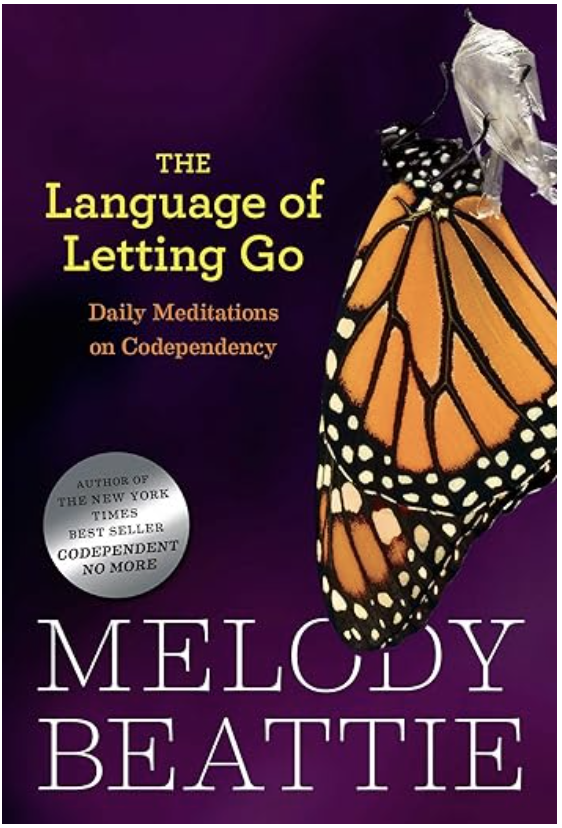
Currently on the Nightstand
Share this blog

RSS


thrivingisthegoal.com
is licensed under a
Creative Commons Attribution-No Derivative Works 3.0 United States License.

 Out of the Mire