Out of the Mire
…because thriving is the goal
Fighting Unfair Treatment
A good friend sent me a blog post by an evangelical pastor, John Bevere, a few days ago in order to get my opinion. What did I think about the content of his post: “Growing Through Unfair Treatment”?
I vehemently disagree with him. In fact, I disagree with him so much that I am here right now explaining my position.
Bevere uses poor exegesis to formulate his thesis by picking two verses from David’s well-known Psalm of repentance: “For You do not desire sacrifice, or else I would give it; You do not delight in burnt offering. The sacrifices of God are a broken spirit, a broken and a contrite heart—these, O God, You will not despise.” (Psalm 51: 16-17) He then begins his post with the following thesis statement based upon these two verses: “A prerequisite for intimacy with the Lord is a broken heart.”
To catch you up on Psalm 51, Nathan the Prophet came to King David after he had Bathsheba’s husband killed in order to claim her for his wife. You see, he was quite taken with her, but she was married. He had a harem full of desirable women, but, oh no, King David had to have this woman. Fix that sticky little problem by whacking her husband! Problem solved. God was angry with David to put it lightly, and, when Nathan made that clear to David, David, being the friend of God that he was, fell apart. Psalm 51 is the result.
So, these particular verses that Bevere is using to support his thesis are, in fact, not about being broken-hearted. They are about true repentance or, a better term, the Hebrew idea of teshuvah, which means ‘to return’ as in to return to God. Combine that notion with another Hebrew idea–kavanah–which means to do something with one’s mind and heart together, and you have a better sense of what these verses mean. God doesn’t want empty acts. He wants the inner man in whatever state it’s in communicating with Him. He wants us to tell the truth, and, in this case, God wanted David to put ritual aside and feel the weight of his actions. King David took advantage of his royal authority, took a human life, and exploited a woman for his own selfish purposes. This violated everything that his covenant with God stood for. No amount of ritual or sacrifice could cover that. In fact, animal sacrifice in biblical Judaism was never meant to cover known sin. Only true repentance and confession could reconcile a person to God. So, 1 John 1: 9 is a very Hebraic notion.
Bevere’s thesis is, therefore, from the beginning, incorrect, and the conclusions that he draws are equally flawed and, frankly, dangerous. The prerequisite for intimacy with God is not a broken heart but instead honesty. What then does Bevere go on to say?
- “God customizes the perfect breaking process for each of us…”
- “God commands us to be submissive not only to the good and gentle [authority] but also to the harsh!”
- “The wisdom of God molds a submitted heart through this kind of treatment in three ways. First, such treatment makes room for us to trust in God’s righteous judgment. Second, it develops in us the character of Christ. Third, our submission under this treatment glorifies God.”
- “When we refuse to defend ourselves, we are hidden under the hand of God’s grace and judgment. There is no safer place. In contrast, those who defend themselves come under the jurisdiction and judgment of their accusers and thus forfeit divine intervention.”
Imagine for a moment who might read these statements? A man or woman in an abusive marriage, or perhaps a man or woman being sexually harassed or exploited by his or her employer for example? Bevere claims that godly authority is, in fact, our employers: “Masters could be employers, teachers, church leaders, or governmental leaders.” He also claims this: “Most of us have had good and gentle leaders, and we loved them. They were easy to submit to.” This is a terribly naïve statement made by a person of privilege living in the West. Talk to any non-white person in a minority group, and they will have at least one story to tell you about being mistreated by an employer. Almost every woman I know, for example, has experienced sexual harassment of some kind on the job. I was fired for reporting sexual harassment in the workplace in my twenties.
What about African-Americans, Jews, immigrants, Muslim-Americans, Asian-Americans, and the like, or just women in general? What about anyone who has experienced LGBT discrimination? How is it Christ-like to simply sit there and take it? Jesus never sat there and took it during his ministry. Bevere simply cannot make the claim that the character of Christ is developed in people who refuse to defend themselves under oppression when the primary message and action of Jesus was that of delivering people from oppression. Furthermore, his most extreme claim that “those who defend themselves come under the jurisdiction and judgment of their accusers and thus forfeit divine intervention” is contrary to biblical teaching. In other words, it disagrees with the Bible itself.
Isaiah 54: 14 says: “With righteousness shall you be established, go far away from oppression, for you shall not fear, and from ruin, for it will not come near you.” The Hebrew verb “go far” is actually an imperative–a command– in the present and future tense at the same time. Hebrew allows for that linguistic nuance. This verse is, therefore, a command to go away from oppression when one finds it. It doesn’t say to tolerate it. It doesn’t say to live under it for the sake of developing character. It says to “go far from it”. And what happens when we go far from oppression? “You shall not fear, and from ruin, for it will not come near you.” When you make a point not to tolerate oppression the results of oppression fall away from you. As if Isaiah had not been clear enough, he made his point clearer when he said: “Any weapon whetted against you shall not succeed, and any tongue that contends with you in judgment, you shall condemn.” Notice that it does not say, “…any tongue that contends with you in judgment, you shall tolerate.” It says to condemn judgment that comes against you. Rise up. Defend. Why? “…this is the heritage of the servants of the Lord and their due reward from Me, says the Lord.” Our right to empowerment, self-respect, and collaboration with God’s justice is our heritage. We are made in God’s image, and God is a creative God. Yes, He is loving and merciful, but He also made us to defend the powerless and oppressed. If we ourselves are the powerless and oppressed, then how much more are we to act on that mandate?
John Bevere is wrong. His teaching is dangerous because it promotes victimization in the name of God. This teaching is rooted in Gnostic thought. We are indeed supposed to grow through unfair treatment. My life is living proof that it’s possible to do so, but God does not craft our breaking. He is not the author of evil and chaos (1 Cor. 14:33). Our growth and personal development under and after abusive treatment is a testament to the resiliency of the human spirit which is another aspect of the Divine spark within us all.
Can you imagine what the world would look like if we lived our lives as John Bevere suggests? What would South Africa look like now? No Nelson Mandela and no end to Apartheid. What about the civil rights movement in America? No Martin Luther King, Jr and no Rosa Parks. What about the women’s suffrage movement in America? No Elizabeth Cady Stanton. No Harvey Milk. What about Jesus? He certainly did not go quietly into that good night.
Stand up for yourselves. Defend. Fight. For yourselves. For the oppressed.
That is, after all, what Jesus did.
Understanding Judaism and Christianity
In the middle of my intense therapy beginnings and increasing awareness that all on the home front is not as it should be and perhaps never was, there is another world opening up to me. I am studying with a rabbi.
This has provided me with tremendous intellectual and spiritual exhilaration that feels almost as powerful as the negativity in my life. It does, however, feel like drinking from a fire hose. I did study Midrash and Mishnah in college, and I took courses in Jewish Studies. It matters not. I am utterly dwarfed by the vast weight of knowledge contained in Judaism as a whole. It is very hard to know where to begin when I try to explain what I’ve learned thus far.
Why even bother? Well, Christianity and Judaism are a bit rivalrous. Christianity began as a sect of Judaism in second-temple times before it completely branched out and became its own religion. It is Judaism’s daughter so to speak. The Gospels are not easy to understand at times, but they become far more accessible when you understand second-temple times. The difficult words of Jesus are certainly challenging unless you understand to whom he was speaking and their culture; his sole audience was the Jews. I don’t know if these are issues that the modern Christian church addresses now, but they were not addressed when I attended church. Certain ideas are timeless–take care of the poor. What does, however, love your neighbor mean exactly if you live under a dictatorship? What does honoring your parents mean if they sell you for drugs? Judaism had responses to these varied questions because the Jews needed clarification and interpretation of the Ten Commandments as it applied to life, hence, the Talmud, the Midrash, and the Mishnah. The sages and rabbis all had their opinions on how to handle various life circumstances, and each one had a desire to be pious. Some were literalists and held strictly to the language of the scriptural text. Others were not. Who was right?
The Pharisees, the sect that survived the rebellion against Rome along with Christianity, were not literalists. The literalists were the Sadducees. The Pharisees were a far more compassionate sect who would more often interpret the scriptures with a leaning towards the “spirit of the law”. The Sadducees followed the letter of the law. Jesus’ teaching was often in agreement with what the Pharisees are recorded as teaching. This information contradicts much of what I was taught growing up in Christian circles. As I have studied, I have seen that there are serious misunderstandings between Christianity and Judaism, and this has caused a great divide. There are other reasons for this great divide most notably historical Christian persecution of the Jews resulting in millions of innocent Jewish lives lost as well as supersessionism which still pervades much of Christian theology.
How do we rectify this? I think the first step in building a bridge between Jews and Christians and improving Jewish-Christian relations is taking a second look at Jesus. I don’t mean in that cliché way that one hears in church settings when someone says in passing, “Well, you know, Jesus was a Jew after all!” What does that even mean? What does Jesus’ being Jewish mean to a Christian? What does Jesus’s Jewishness mean to me–a Jew brought up in an almost exclusively Christian world?
Many Western concepts based in Greco-Roman thought known as Hellenism have been applied to the teaching of Jesus, a decidedly Jewish point of view. What happens when Hebraic thought and teaching is filtered through Hellenism and supersessionism? Well, we have a few thousand years of Church history to observe to find some answers.
For a great introduction to the topics I recommend:


Categorizing Behaviors
I had my third therapy session yesterday. My therapist decided to make a client-centered approach part of my treatment plan. I bristled at that. I’ve never progressed in a client-centered therapeutic environment. What? Just sit there and talk about what’s bothering me? I could kvetch all day! There were goals, too, which softened the blow. My goal-oriented self needed something to accomplish.
So, what did we do yesterday? Well, he brought forth the legal pad. He made a chart. He said, “Let’s divide your husband’s behaviors into different kinds of behaviors, okay? We need a category called Abuse. Under Abuse we will put behavior that is intolerable always. It is never to be tolerated. It is destructive. Then, there is behavior that is classified as Rude or Mean. Then, we will put a category of behavior BETWEEN Rude/Mean and Abuse. This is clearly dysfunctional behavior that is on the verge of abusive. We can simply call this Dysfunctional.”
And we went on like this until we had a chart. Here are the behavior categories that we listed:
- Clueless
- Unwilling
- Entitled
- Arrested in Development from childhood
- Rude/Mean
- Dysfunctional
- Abusive
This was a very good exercise because he was able to go back and categorize some of the behaviors from situations that I had discussed with him. Two were clearly abusive. He was very forthright about it. There was no denying it. He said it a few times. “What he did there was abusive. There is no justifying it. That was abuse.”
When he said that to me my jaw started to hurt. He spoke particularly about an event that involved an area around my face where my husband had hurt me. When he looked at me and named the event as abuse, pain in my jaw bloomed. I started to feel pain in my head. By the time I left I was in tremendous pain. I could hardly open my mouth.
It may have been too much for me to accept in the moment. I can intellectually agree with him, and I can remember the event with great clarity. I cannot yet connect emotions to the event. If I were safe to do it, then I think I would. At the same time, hearing that kind of validation–“That was abuse. You have a reason to feel what you feel.”–is powerful stuff.
This is an excellent exercise because it helps you see your own confusion and where you’ve fallen victim to crazymaking. When you can’t decipher behaviors anymore because you’ve been exposed to them for so long, then it’s time to get outside help. There were behaviors that I’ve witnessed for so long that I could no longer recognize them as abusive. After we discussed them, we came to the conclusion that they were to be categorized under Abuse because they were emotionally abusive. The other issue at play here is my Resiliency Spectrum. I intellectually know what healthy behavior looks like, but my limbic system does not. I don’t get a response from my body anymore unless someone yells. If he were to yell at me, then I might get a clue. At the same time, is it ever appropriate to yell? This is a question for my therapist.
What was more unsettling than the chart was my therapist’s hypothesis. He told me that he knew that he was only hearing my narrative. He had not met my husband. Keeping that in mind, he also believed me and felt it necessary to ask me if I was prepared to look at this chart in terms of what behaviors could be shaped and modeled through therapy and modeling and what behaviors would not change. He went on to say that my capacity to love was great and his capacity to love might be lesser. My intellectual, emotional, and spiritual “IQs” were very well developed, and he may be lesser in those areas. He may not be a good match for me simply because of his unwillingness to change. What’s more, he may never be able to meet me where I’m at. My desires may always go unmet, and I may always be a target for some sort of abuse through his behavior. What was I prepared to live with, and what was I not prepared to live with?
Well, that’s some kind of question. He asked me this directly.
“What are you prepared to live with in terms of this behavior, and what are you NOT prepared to live with?”
Do you know what I heard myself say?
“Well, he doesn’t abuse me that often…”
Oh…my…god…
He just looked at me. Then, I said, “Did I just say that out loud?” to which he replied, “Yes, you did.”
“Clearly, I need help,” I said.
I was trembling when I left. The right side of my face felt like it was going to slide off my skull it hurt so badly. I didn’t go home because he was there. He’s always there. I am never alone. He’s always hovering. So, I went to drink coffee alone and read a book. I highly recommend decompressing after a therapy session. Don’t dive back into your life. Transition. Do something nice for yourself. Be kind to yourself because this kind of therapeutic work is grueling.
So far, I really don’t like it, but it’s necessary. Sort of like a tetanus shot.
And, I really hate those.
Prayer and Resiliency
Where does resiliency come from? I don’t know. I’ve read that it comes from a sense of being loved. Early in life, if a child senses that they are loved by at least one person, then they will have some kind of resiliency in the face of suffering.
What about in adulthood? What happens when our resources have run out? What happens when our parents have either died or are not available to us? What if our friends are nowhere to be found? What if we have friends, but our circumstances are too great? No friend could ever fix what is wrong. What if our problem either lies within us or too close to us to adequately represent to another person without sacrificing what little self-respect we have left? How do you find your resiliency in circumstances like these? How do you start to gather momentum in order to change for the better?
I only know one way. Prayer. I know, I know, it sounds so passive. Prayer? To a lot of people prayer might sound like the least effective thing to do. Ever.
It’s not. Prayer accomplishes a great deal in one act. It centers you in on your emotions producing mindfulness. It helps you stop judging yourself and your feelings as either good or bad. Feelings are feelings. They are neither good nor bad. Prayer puts you in a position to ask for help which is often very challenging because so often the help available to us comes with conditions. Prayer allows our inner man to inhale and exhale freely which is vital to physical health. So often when we live in oppressive environments, our inner man is “corseted” and censored, always making his or her responses dependent upon how others react. We are able to remove our bindings during prayer and find relief and release. Prayer also connects us to God and energizes our soul. We can express gratitude, grief, pain, fear, and any other emotion on the spectrum of human feeling during prayer. We can lament. We can scream. We can laugh. We can say nothing. Simple acts can be prayers. Groans. Cries. Tears. Silence. Even joyous smiles when directed upward.
Someone might say that they don’t know how to begin. It feels awkward. How do you pray? Aren’t there rules? Don’t you have to begin with Thanksgiving? Isn’t there an acrostic? When do you confess? Aren’t you supposed to save “supplication” for last? To quote my Swedish grandfather, “P’shaw!” Throw it all out. Prayer is your intimate time with God–when you are alone with Him. This is a primary way that you develop your relationship with Him. There are many books written on prayer, but, ultimately, you get to decide on how to be yourself with God.
Are there good books available? There are. The best? The Book of Psalms in the Old Testament or Jewish Bible. These are a collection of prayers, and they have been translated many, many times. I am fond of this one:

The most famous of the Psalms is Psalm 23, but there are so many more that are equally moving–150 to be exact. They capture what it means to be fully human and fully flawed. They portray us in all our human splendor before God, and God responds to us with compassion. The writers of the Psalms cry out, rejoice, run from life, seek revenge, beat themselves up, wallow, plead, praise and worship, glorify, dream, hide, and rest. We can see ourselves in every prayerful poem. We can use their words to give voice to our hearts and minds. Our circumstances no matter how delightful or terrible can be found in the Psalms.
This is where I turn when I’ve run out of fuel. When I don’t know what to say. When I don’t know how to put words to the contents of my heart. When I feel like I don’t have permission to even try. I allow King David to speak for me. Ever so slowly, I find myself praying his words and my soul is quickened. I feel hope again. I feel renewed. I remember that I can keep going, and that’s resiliency–knowing that you have what it takes to continue onward because you are not going it alone.
You are seen by Someone greater. Someone greater than your pain. Someone greater than your oppressors. Someone greater than your circumstances.
Even if you can only keep going for today. Pray again tomorrow. Strength rises with the sun.
This is how prayer can help you renew your resiliency.
The Importance of EMDR
I want to talk about EMDR. What is EMDR? Eye Movement Desensitization and Reprocessing (EMDR)1 is a comprehensive, integrative psychotherapy approach. It contains elements of many effective psychotherapies in structured protocols that are designed to maximize treatment effects. These include psychodynamic, cognitive behavioral, interpersonal, experiential, and body-centered therapies. (online source) When it comes to abuse in general and domestic abuse in specific, it is important to look for a therapist trained in EMDR and DBT.
I’ve done EMDR, and, in my experience, EMDR essentially dislodges biologically lodged traumas from the body and memory so that you can finally get past them and heal. It’s very effective. After all the work I’ve done on past trauma, I believe that it is virtually impossible to heal and progress without some element of EMDR in your treatment plan. One will stay physically and emotionally ill because the trauma will continue to affect the body in the long-term.
For example, what caused me to seek out EMDR a few years ago was an interaction with my mother over the phone. The moment I heard her voice, I got a migraine. A classic migraine with aura. I was well and truly ill. I had to take my prescribed medications, go to bed, and ride out the headache just as I would have done with any other migraine. I hated to admit to myself that my mother’s voice was actually causing a migraine, and I wasn’t even sure how this was happening. Alas, it was. I, therefore, sought the help of a therapist trained in trauma and EMDR. We did some basic EMDR work, and it was successful.
The most notable observation, however, was that my relationship with my husband was paralleling my relationship with my mother, and this was triggering latent PTSD symptoms. I actually met the criteria for PTSD at the time of my treatment a few years ago. The EMDR work I did helped with a few memories associated my mother, but, as I shared more about my life with my then therapist, my marital relationship became the real concern. She very bluntly stated, “This is not sustainable. Your PTSD is most likely activated by your husband.”
Not something I was able to process at the time. Not at all. Who can fight a battle on two fronts?
The EMDR work is essential, however, because it cleans up toxic neural connections and allows new ones to grow. This may be, in fact, why I can now take a fresh look at my marriage. Everything we do in therapy builds a foundation for what we do in the future. If you were hurt by a past spouse or a friend or a parent, then it’s vital that you deal with those wounds so that you stop bleeding out in order to be more present to current relationships and circumstances. The more present you are, the stronger you are. The stronger you are, the less susceptible to manipulation you are and the more likely you are to ask for help from others who can actually offer it.
If there is one thing that is absolutely essential when it comes to problem-solving while living in a marriage where there is some sort of abuse, you must not give in to victim thinking or behaving like a martyr. This is where cognitive behavior therapy (CBT) and EMDR are very helpful. I have found that is tempting to believe that we have no choices. There are many seductive beliefs that come to us in moments of despair which result in feelings of desolation and helplessness. We are not helpless. Why is this important to remember? If we believe that we are helpless, then we will not take action to do what is within our power to do. If we do not take action to differentiate from our partners, then we will forever wait upon them to change in order to meet our needs rather than learning to validate ourselves and change ourselves in order to meet our own needs. I think that this is the most important thing to do in any long-term relationship wherein there is some kind of abuse.
We can’t wait for permission. We must do for ourselves because it’s right. As Rabbi Hillel once said, “If we are not for us, then who will be?”
The Cycle of Domestic Abuse
I have found myself reading a few blogs that discuss spousal behaviors wherein a spouse engages in good behavior after being abusive. One could try to understand and list a plethora of reasons in an attempt to explain this behavior, but I would rather start here:
The Cycle of Domestic Abuse
- Tension building phase—Tension builds over common domestic issues like money, children or jobs. Verbal abuse begins. The victim tries to control the situation by pleasing the abuser, giving in or avoiding the abuse. None of these will stop the violence. Eventually, the tension reaches a boiling point and physical abuse begins.
- Acute battering/abuse episode—When the tension peaks, the physical violence begins. It is usually triggered by the presence of an external event or by the abuser’s emotional state—but not by the victim’s behavior. This means the start of the battering episode is unpredictable and beyond the victim’s control. However, some experts believe that in some cases victims may unconsciously provoke the abuse so they can release the tension, and move on to the honeymoon phase.
- The honeymoon phase—First, the abuser is ashamed of his behavior. He expresses remorse, tries to minimize the abuse and might even blame it on the partner. He may then exhibit loving, kind behavior followed by apologies, generosity and helpfulness. He will genuinely attempt to convince the partner that the abuse will not happen again. This loving and contrite behavior strengthens the bond between the partners and will probably convince the victim, once again, that leaving the relationship is not necessary.
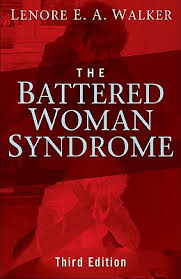
This cycle continues over and over and may help explain why victims stay in abusive relationships. The abuse may be terrible, but the promises and generosity of the honeymoon phase give the victim the false belief that everything will be all right (Lenore Walker).
Lenore Walker’s cycle was used to describe physically abusive relationships, but it applies to relationships wherein there is a pattern of emotional and verbal abuse as well. Abuse is abuse. Whether a person is living with an abusive passive-aggressive spouse or a sexually abusive spouse, this seems to be the cycle. This is the cycle in my marriage. I am currently in the Honeymoon Phase.
What is the Honeymoon Phase like? Well, I get to watch my husband try to be Mr. Awesome. He is trying to project his much hoped for self-image onto all of us. “Look at me! See what I’m doing? Aren’t I great? Look at me help. Look at me participate. I am generous. I care. I am here for everyone. I can listen and respond to needs.” I’ve been in this for nineteen years, and I didn’t always understand what was happening to me. I am, therefore, very good at observing him. I know the pattern. He will eventually grow very weary of attempting to be someone who he is not. He will fail at some point. He will make a mistake, and he will generalize this mistake to his entire effort. I will be accused of something like “picking on him”, and the tension will start to build.
I will then enter the Tension Building Phase. This is when he becomes bored and restless. He will do one of two things. He will either externalize his emotions by becoming highly passive-aggressive towards the entire family, or he will internalize everything and disappear. He will become a recluse and almost never emerge from our bedroom. He will begin to experience somatic complaints like stomach aches and headaches. Often, it is a combination of both. He is nearly impossible to engage when he is like this. He will also be entitled. His entitlement is easiest to observe in the Honeymoon Phase, but it’s still present here. The atmosphere of the house is edgy and oppressive. He will claim not to understand why we are jumpy and tell us that we are ‘being weird’. He has no insight into the fact that his behavior affects others. We have the problem. Never him.
The Acute Abuse Episode is short-lived most of the time. If he’s violent, then it’s an outburst of rage. I am the one he focuses that rage on. He has come at me with a large knife before. I’ve been thrown up against a wall. These two incidents have both involved alcohol. When he increases his alcohol intake, that is my cue. I know that we are headed for some kind of “emotional expression”, and it will most likely be directed at me in some way. At the same time, I find myself wondering if “this time” it will be different. It never is. Most of his abuse is sexual and psychosexual. Were I to tell him this, he would never accept it. He simply does not see himself as an abuser. I don’t know what would happen if my perception of reality were to confront his.
Because my perception of him differs so greatly from his self-perception, he engages in gaslighting. There is a lot of gaslighting here. He may act confused when I try to ask questions of his behavior. He may be outright confrontational. He will blame me or use my past against me claiming that I am a “broken woman” who doesn’t know better. If there’s a card to be played, then he will play it even if it decimates my personhood.
What is the “Get Out of Jail Free” Card? “I don’t remember that.” He claims not to remember any of the physical abuse or expressions of anger and rage. This is when he has been most abusive. This is also gaslighting. I am told that “it didn’t go down like that” as are the children. He does not have to take any responsibility for anything because, in his mind, it never happened. I can guarantee that you will start to feel crazy after nineteen years of “I don’t recall.”
And, after the tension is broken and abusive events have passed, he is sweet, generous, and kind. The cycle starts again.
In my case, the cycle is drawn out. The tension-building phase is the longest. It can last for months and months. We don’t go round and round with each other. He will just be an “asshole” for a long time, and I’ll be lulled into this sense of familiarity: “Wow, I married an asshole.” This is how it has always been, and then POW! Something happens. There is some trigger. The abusive behavior ramps up, and I’m always taken by surprise. Every damn time. It’s as if I’ve believed that he is someone he is not, or perhaps I’ve believed that it really will be different this time.
The last time he was physically abusive was in August of 2012, and, for us, it was really bad. Everything changed for me when he did what he did. He remained in some kind of limbo between the abusive phase and the tension building phase for over two years. This is when I started to become ill. I now have Lupus. Something clicked in him, and he suddenly switched to the honeymoon phase. He is starting to internalize something and complain of stress again. We are on our way to the tension building phase again.
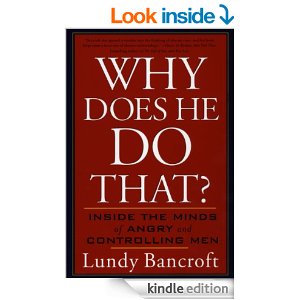
I’m sure that someone would ask me why I married someone like this. Well, I did not. I married a different person. Ask a lot of women in relationships like this who they married, and they will tell you that they married a kind, charming, generous, and wonderful man. He was everything that they had ever wanted. This is the nature of abusive people. They are manipulative. If they are narcissists, then it’s even worse. If they are a male with borderline personality disorder, then…oh boy. You’ll have a Casanova on your hands (The Male Borderline). The point is you quite literally don’t know what hit you the first time the abuse starts. If you have a very wide Resiliency Spectrum as I do, then maybe it seems relatively normal or even “not so bad”. You don’t realize just how bad it is until there’s been enough time to see a pattern.
After nineteen years, I can finally see a pattern. My friends see a pattern. My daughters are talking about him, and I finally went to therapy solely to address this. These are complex situations, and mine is but an example of just how complicated they can be. They do, however, follow a pattern that is similar to Lenore Walker’s template. Seeing the pattern might be the first step in doing something about the abuse. Recognizing that it is as far from normal and healthy as the North Pole is from the South might be the second.
Resource:
The Four Elements of Asshole Behavior
I saw my therapist for the second time yesterday, and we went over the four basic concepts that explain a person’s behavior:
- skills deficit
- emotions
- thoughts and beliefs
- contingency
In the context of my marriage, I am attempting to lay down a history which is, of course, solely based in my perception and narrative, and he is trying to help me understand it from a perspective that is not based in pathology i.e. “Your husband is a narcissist of the fragile variety.”
I tend to view people through pathologies because I live in a household full of pathologies. “Your daughter has mood disorder NOS,” and “Your youngest daughter is HFA-ASD with SPD and GAD,” and “Your daughter has schizoaffective disorder, bipolar type.” I often better understand people through the filter of the DSM-V, and that can be dehumanizing. It isn’t really fair to sit down with a therapist and ask, “So, what is he?”
Well, he’s a person. He might feel to me like a giant lizard a good deal of the time, but he’s a person. I might even call him “Lizard Man” when he’s displaying amygdala-driven behaviors, but he’s still a person. Remembering that is really important so that I don’t engage in splitting (seeing someone as all-good or all-bad).
So, for my therapist to get a better picture of my situation, we had to answer the question: Why is my husband such an asshole? All my friends are asking it. I’m asking it. I may as well type it out loud. So, why? I know that there are readers who have very asshole-y spouses and are wondering the same thing. Let’s dive right in.
Skills deficit: I deal with enough mental illness in my house to be very familiar with the idea of the skills deficit. What does this mean? It means that a person doesn’t know how to act because they were never taught. We’ve all been there except we were usually kids and teens. When I was younger, my mother would make me sit with guests in the living room and entertain them. I would moan about it before the guests were scheduled to arrive. “C’mon, Mom! I don’t wanna!” And, my mother was sure to put me in my place with a very stern, “Oh, you will sit yourself down in that living room and talk to Mr. and Mrs. So-and-So until I say otherwise, do you understand me, young lady?” I did just what she said rather than experience my mother’s wrath; and this is one way that we learn skills. We are parented. We learn how to take care of someone who is sick by helping a sibling or parent. We learn how to navigate awkward social scenarios, how to host, how to engage in small talk, and all the rest of it. Our friends in high school might push us to try to talk to that guy or girl we like, or they might drag us to some stupid party we would rather avoid. This is, however, how we learn the skills and overcome our own internal inertia that seductively whispers, “Oh, wouldn’t you rather stay home in your disgusting pajama pants and watch a John Hughes movie? It’s so comfortable here. It’s so cold and unwelcoming…out there.” The point here is that it’s not easy to learn these skills because these skills are often learned in uncomfortable and anxiety-provoking situations. We’d rather not, but if you don’t learn them, then you can count on being an asshole later in life simply because no one taught you not to be; or, worse, you never cared to learn better.
Emotions: The emotional component seems to go along with at least one of the others. If we pair it with a skills deficit, then we end up with something like, “I don’t understand why you want me to visit you in the hospital. What am I going to do? Just sit there? There are doctors and nurses and people there to look after you (skills deficit), and I feel angry that you constantly insist that I come there and sit with you when it’s clear that there is nothing for me to do and quite obvious that I have better things to do elsewhere (emotions).”
I have had a similar discussion with my husband in years past. He had a clear skills deficit in How To Be in An Adult Relationship. He also had the anxiety and anger to go with that skills deficit. He didn’t understand what he was doing wrong, and no one was going to tell him otherwise.
It is important to note passive-aggressive behavior here. That is an emotion-driven behavior. Anger becomes covert going deep like a submarine in the ocean, and what appears on the surface of the person is the anger bubbling up from deep within–under their emotional ocean.
Thoughts and Beliefs: Everyone struggles with this one, and thoughts and beliefs almost always pair with Emotions. Let’s go for something obvious and relatable. Most women have thought and then believed that they looked fat. What is so harmful about this line of thinking is that toxic emotions almost always follow the internalized belief. If I were able to look at myself and think, “I think I look fat in these pants,” and then move on, then I might be okay. This is seldom the case. What often follows is a cascade of emotions like self-loathing, shame, and anger directed at myself for even feeling like this.
In a relationship, when one partner is engaging in asshole behavior, s/he may have Thoughts and Beliefs about that behavior. I’ll name a few:
- “I don’t have to help with laundry because that’s women’s work.”
- “My husband should know what I want before I ask.” (this is a Theory of Mind problem)
- “I earn a good living and support my family financially. I shouldn’t have to do anything else.”
- “I have been ‘on’ all day at work. I shouldn’t have to be ‘on’ when I come home.”
Passive-aggressive behavior falls under this category as well because this behavior is also about beliefs. The passive-aggressive person has a belief about anger which causes them not to be able to express their anger openly which is why it becomes covert resulting in passive-aggression.
Behavioral Contingency: This is the most complex. It is:
that possibility that there may or may not be a relationship between an individual’s specific response and the frequency and regularity by which that response has been reinforced. Already, there are expectations on the consequences of behaving in a certain way and these, in turn, shape the behavior. (Psychology Dictionary)
The Resiliency Spectrum
I can’t believe that it’s been a month since my last post. I don’t usually neglect my blog for such a long time, but life is changing chez moi. I like to write posts that will, at a minimum, be interesting to read and, if possible, helpful to others. I am in a season of immense change from a spiritual perspective and in a relational perspective as well. Many paradigms are shifting.
I am currently studying with a rabbi, and I find the journey very stimulating and illuminating. I am also attending a synagogue of the Reform persuasion. It is like inhaling fresh mountain air after having been locked in a stuffy, crowded room for too long. I am enjoying every moment. I am learning extraordinary things.
The other thing I finally did was find a therapist. Yet again. I have said for a while now to my friends that I need to find a worthy therapist. It’s one of those off-hand remarks like saying, “I really should go to the dentist,” or “I need to schedule a physical.” For many of us, we know what we ought to do. It is overcoming that resistance that is so difficult.
I feel as if I have spent so much of my life in therapy. One of my daughter’s psychologists suggested that I go back to graduate school and get a graduate degree in psychology: “You’re 75% of the way there already. It would be a cinch for you.” That did not feel like a compliment. It was a reminder to me of just how much time I’ve spent in the Hot Seat. There are very important reasons to go back to the therapeutic environment, and the primary reason I’ve returned is to re-examine my Resiliency Spectrum.
That’s the name my therapist gave it. What is the Resiliency Spectrum (RS)? The RS is a great term for something that we all use to judge whether or not a situation is “normal” or tolerable and whether we have the ability to survive the circumstances relatively intact. For victims of abuse, domestic violence, survivors of long-term domestic abuse, and childhood sexual abuse, the RS is very wide vs. people who have never experienced such things.
Practically speaking, why do men and women who were abused earlier in life often find themselves in relationships and even abusive circumstances repeatedly? Their RS measures their circumstances as “normal” so they don’t realize that they should take action to get help or even leave. Let me make this more personal.
I returned to therapy because I realized that I was having problems in my marriage. I specifically told my new therapist in my intake appointment a few days ago that I had lost my ability to judge what is true and healthy because of his crazymaking behaviors. I knew that he was engaging in gaslighting behaviors, but, in the middle of it, it was becoming harder for me to discern the truth. I shared an incident with him when my husband displayed violent behavior towards me that was rather shocking. My therapist asked me if I had ever called the police. “Well, no. Why would I do that?” I, of course, felt silly after my admission.
The important moment came when my therapist said, “I see it now. You have a very wide Resiliency Spectrum. Being abducted by a sociopath is a 10 on your spectrum. So, your husband being violent towards you is what? A 5? You could probably survive anything. So, we need to adjust your spectrum so that you relearn what is actually acceptable. Just because you can survive it doesn’t mean that you should ever have to tolerate it.”
Isn’t that key? Just because you could survive it doesn’t mean that you should ever have to tolerate it. This is one of the primary reasons I am returning to therapy. I have found this to be a huge hurdle for people exposed to abusive situations. You can get used to a lot and, suddenly, you find yourself tolerating treatment that is absolutely intolerable. Self-esteem starts to plummet. Health begins to falter. Isolation begins. Shame becomes a shroud. Who wants to be identified as a battered woman or a victim of domestic abuse? This is particularly devastating for men. It’s emasculating. No one wants to discuss these things, and few people are equipped to actively listen and act as witnesses. This is why well-trained therapists are the best options.
I do not know how we will proceed. An intake is about two hours, and one covers a lot of ground from family of origin and past traumatic events to current circumstances and goals for therapy. There was a moment during my intake wherein I was very honest about an incident with my husband, and my therapist said, “If it was wrong for you, then it was wrong.” And my immediate response was, “Not in my house. If it’s wrong for me, then I’m wrong.”
I know that this line of thinking is the crux of gaslighting, and it’s emotionally abusive. I know this. I felt very strange hearing myself say this out loud. I grew up with a borderline mother and an abusive father who used gaslighting as his primary means of communication. I simply don’t know how to handle this in my marriage. I’m fearful. There is narcissism present and other things. Where does one even begin?
Step 1: Find a therapist.
Step 2: Go to therapy faithfully.
Step 3: Tell the whole truth to said therapist.
I don’t know what Step 4 will be in these circumstances (I could give you a road map for recovering from sexual trauma and parental abuse), but it’s going to involve that Resiliency Spectrum. Remember: Just because you can survive it doesn’t mean that you should tolerate it.
Resources:

Currently on the Nightstand
Share this blog

RSS


thrivingisthegoal.com
is licensed under a
Creative Commons Attribution-No Derivative Works 3.0 United States License.

 Out of the Mire