Out of the Mire
…because thriving is the goal
Does God Really Hate Divorce?
Why ask this question? Does it even matter? I’m asking the question because I’m going to attempt to answer it. I’m also asking it because I have heard “God hates divorce” more times than I can count at this point, and I think that there is some confusion around divorce because of this statement–or rather the interpretation of this statement. Also, this statement has perpetuated long-term suffering upon people in terrible and often abusive marriages, and I would like to explore the meaning behind it.
So, God hates divorce. Really? I’m not a big fan of divorce myself. In fact, I don’t think I’ve ever met anyone who, upon hearing that a couple is divorcing, says, “Oh, you go get that divorce. I love divorce!” Where does the idea of God hating divorce even come from anyway? It originated in the Tanakh (Old Testament) in the book of Malachi:
“For I hate divorce!” says the Lord.
Why? What is the context of this statement? When you read strong, declarative statements like this in any text, it is vital to attempt to understand what it means in the historical setting, to whom the statement is being directed, and the purpose of it. So, what is going on here?
The prophet Malachi is speaking to the Levitical priests (the Levites) of Israel in this chapter. He begins his prophetic speech by reminding them of the covenant that God made with them. To do this, he tells them who they are and how God sees them:
“Listen, you priests—this command is for you…The purpose of my covenant with the Levites was to bring life and peace, and that is what I gave them. This required reverence from them, and they greatly revered me and stood in awe of my name. 6 They passed on to the people the truth of the instructions they received from me. They did not lie or cheat; they walked with me, living good and righteous lives, and they turned many from lives of sin…The words of a priest’s lips should preserve knowledge of God, and people should go to him for instruction, for the priest is the messenger of the Lord of Heaven’s Armies.” (Malachi 2: 1-7)
That seems clear enough and easy to understand. What went wrong with the Levites?
“But you priests have left God’s paths. Your instructions have caused many to stumble into sin. You have corrupted the covenant I made with the Levites,” says the Lord of Heaven’s Armies. 9 “So I have made you despised and humiliated in the eyes of all the people. For you have not obeyed me but have shown favoritism in the way you carry out my instructions.” (Malachi 2: 8-9)
Ah yes, corruption. This is not a new story. We hear about corruption all the time. How does divorce enter the narrative?
“Here is another thing you do. You cover the Lord’s altar with tears, weeping and groaning because he pays no attention to your offerings and doesn’t accept them with pleasure. 14 You cry out, “Why doesn’t the Lord accept my worship?” I’ll tell you why! Because the Lord witnessed the vows you and your wife made when you were young. But you have been unfaithful to her, though she remained your faithful partner, the wife of your marriage vows. Didn’t the Lord make you one with your wife? In body and spirit you are his. And what does he want? Godly children from your union. So guard your heart; remain loyal to the wife of your youth.” (Malachi 2: 13-15)
For clarification, the priests in Israel were one of the tribes of Israel–descendants of the Israelite tribe of Levi who was the third son of Jacob and Leah. This tribe had certain temple and political duties, and today in Orthodox Judaism those Jews descended from the Levites still hold certain responsibilities in synagogues. It might seem confusing, however, to read the term ‘priest’ because of the religious affiliation with celibacy in other religious practices such as Catholicism. That is not the case in Judaism. Priests married and had children.
What does Malachi go on to say to the priests?
“For I hate divorce!”says the Lord, the God of Israel. “To divorce your wife is to overwhelm her with cruelty,” says the Lord of Heaven’s Armies. “So guard your heart; do not be unfaithful to your wife.” (Malachi 2:16)
In this context, God hates divorce because it is cruel. Malachi ends his prophetic rant with this:
“You have wearied the Lord with your words.
“How have we wearied him?” you ask.
You have wearied him by saying that all who do evil are good in the Lord’s sight, and he is pleased with them. You have wearied him by asking, “Where is the God of justice?” (Malachi 2: 17)
He ends this on a note concerning justice. God does not hate divorce because divorce is by nature a detestable thing. It isn’t some abomination. If it were, then it would not have been historically permitted among the Israelites, and we know that divorce was a permissible social action. What God hated, in this context, was the cruelty and injustice behind the priests’ actions towards their wives.
What does this mean then for our present discussion and understanding?
The reason that divorce exists as an option is to prevent further injustice and cruelty. My interpretation of the statement “God hates divorce!” by means of the transitive property is that God hates cruelty: “For I hate divorce!”says the Lord, the God of Israel. “To divorce your wife is to overwhelm her with cruelty.” If divorce will prevent further cruelty and injustice, then divorce is a perfectly viable path to take. It is in no way wrong, and God does not hate divorce for the sake of hating divorce as so many people have come to believe. To maintain that view is essentially cherry-picking. It is to pick one sentence out of an entire chapter of the Old Testament that provides the meaning for the statement.
This entire passage is actually a strong correction regarding keeping your word and getting your act together particularly with your partners and families. They got married, so act like it. They made promises, so keep them. Treat their partners as they said they would. Stop acting like assholes at home, serving at temple and asking God to come through for them while, at the same time, wondering why he’s not. Have some integrity for God’s sake! Literally! And this applies to both men and women today.
So, if I could reframe this in the positive, then what would it be? Love justice and kindness in your relationships. Be an integrated person in private and public. Keep your promises. Value compassion. Never take your partners for granted.
Why? How you behave in private with those closest to you influences how you will behave in the public spheres. The more integrated you are in your life, the more integrated your character will become, and this matters because as we get older pressures increase. There are more responsibilities. Valuing people, justice, goodness, and compassion enable us to grow, stand up to pressure, and maintain our integrity. When we live double lives, we eventually fail in both our private and public lives. There are a plethora of reasons to avoid this.
So, does God hate divorce in and of itself? No. Does God hate divorce if it is used as a mechanism to promote cruelty and injustice? Yes.
Divorce. No one loves it, but it’s an option if you need it. And, that’s how it’s always been. Even in 2nd century BCE when Malachi was prophesying to Israel.
Big Changes Start with Small Ones
I went out to lunch yesterday with three of my daughters (I have four). We went to our favorite Asian restaurant which happens to be just a few blocks from my house. How many people live within walking distance from one of their favorite restaurants? I can get just about anything I want made vegan, vegetarian, and gluten-free. It is a dream come true for the dietarily restricted diner. Plus, it’s a family owned business which means that one gets to know the proprietors after a bit. It’s like walking onto the set of Cheers–everyone knows your name.
Our family has witnessed their family’s births, deaths, and marriages. I did not, however, know anything about a divorce in the family. One of the women who more visibly runs the restaurant (and whom I just adore) divorced two years ago. I had no idea. That’s when I separated from my ex-husband, too. A few months ago, I emerged from my chrysalis of recovery and decided to go back to my favorite spot. Karen was there, of course, with a ready proclamation: “I haven’t seen you in forever! How are you? How are the girls?” We hugged. She seated me. I didn’t say much. As is her way, she would subtly insinuate herself next to me to refill my water glass and ask, “Really, how are you? What’s going on?” I quietly answered, “I’m getting a divorce. It’s been a rough year.” She paused and looked at me. “I’m getting a divorce, too.” Our eyes met. I thought I might cry. She looked like she might cry. “Okay, okay, we’ll talk later,” she said.
It was the mutual recognition of familiar suffering that evoked that response, I think.
Back to yesterday…
There was a moment when business slowed, and Karen talked to me. She asked how my current life looked. How is post-married life? How are the girls? She fears that she will be alone forever, and she’s not sure how she feels about it. Is that a good thing or a bad thing? Why is it so hard to meet quality people? How does one go about building a better life when you never expected to be in this position?
I talked to my boyfriend about this last night. I shared with him all the questions Karen had. Those were my questions as well when I was still married, and I suspect that questions of that nature are what keep people stuck. The Great Unknown is scarier than what is known. No one wants to be alone. So, they choose the lesser of the two perceived evils–staying in something dysfunctional, abusive, or just plain wrong for them vs. entering into something potentially better but completely foreign.
He responded, “Yeah, we all have criteria defining what we want. We might want someone with tempered wisdom and humor, but do we actually think about the life experiences and effort one has to endure and take to acquire those characteristics? We have to actually put in the work in our lives and character to become the people we ourselves would want to partner with.”
He is right. To attract the people and circumstances that you most desire, you have to become that which you want. If you want a patient partner, then you yourself must become patient. If you want a good humored partner, then you yourself must become good humored. If you want a tolerant partner who doesn’t criticize others, then you yourself must become that kind of person. Why is this true? Well, a patient, tolerant person will not find a critical, impatient, intolerant person attractive nor want to partner with them. So, if we desire positive attributes in a potential partner or friend but lack those very qualities in ourselves and lives, then how likely are we to actually get what we want? This is why that cliché “Become the change you want” works. There is truth within it.
There is nothing easy about any of this. Change is hard. Our bodies are not wired for change. Our bodies are wired for homeostasis. We are designed to maintain the status quo whatever that is, but, in my experience, you cannot achieve a greater sense of purpose and fulfillment without changing. Change is required.
Okay, okay, you might say, but how do you start? What if too much has to change? What if you are generally unhappy, lonely, sick, and confused? It’s one thing to say that you need to change, but what does that look like in real life?
I’ll leave abuse out of this discussion, but I will make this comment. If you are being abused, then make that your priority. You absolutely must leave any circumstance or relationship that is abusive. People who abuse are not likely to stop. Abusive people most often tend to have feelings of entitlement and feel as if they have a right to their behaviors. There is no cure for entitlement and rarely is it curbed in a therapeutic setting. It is symptomatic of much larger personality and character issues (Entitlement and Domestic Abuse).
Abuse aside, how can you begin to get traction in life and make real changes that stick? Here is an example from my life.
One small change at a time sticks far better than many changes made too quickly. Two years ago, I realized that I was consuming far too much sugar daily simply due to putting sugar in my coffee. It might sound ridiculous, but you don’t know how much coffee I drink. The caffeine aside, I had to deal with the sugar first. So, on January 1, 2015 I decided to develop a taste for coffee with no sugar. By mid-2015, I could drink my coffee sans sugar. I am very sensitive to bitter tastes which is why it took me so long to grow accustomed to coffee with no sweetener. I overcompensated for the lack of sugar, however, with half-and-half, but I could drink any coffee without sugar. In fact, I could no longer drink any kind of fancy coffee drink. They were all too sweet for my new palate although I still required some kind of milk be it coconut, almond, soy, or dairy.
At the beginning of 2016, I decided to learn to like coffee black. Blech. Alas, this was the change I was committed to making. By the end of 2016 I was drinking my coffee black. The unexpected side effect of cutting out sugar and milk? I lost 14 pounds in two years. Just from removing sugar and half-and-half from my coffee! Isn’t that somewhat alarming?
The reason I could sustain these changes were:
- They were both small changes.
- I could commit to them consistently.
- My intention was sincere.
- They both blended well into my value system. I value changes that promote health and well-being. Plus, I wanted to drink less coffee. By removing sugar and dairy from my coffee, I now drink less coffee, too. Frankly, it doesn’t taste as good.
Once you witness a positive result from making a change, you will want to apply yourself to making another positive change. You begin to see that your efforts produce results. I started with diet and my social life, and my changes were small and manageable. Seeing positive results builds momentum and courage which is what enables you to start thinking bigger. This principle is exactly how you continue to keep making changes and also how you stay the course that you’ve set.
Now? My life is completely different, and it all started with very small, manageable changes that didn’t really seem that applicable to the bigger problems I had at the time. Cutting out sugar from my coffee in no way seemed to relate to my bad marriage, but it had a direct impact on my ability to view myself as effective in my life. Why?
As funny as it sounds, I had two friends that always teased me for putting heaps of sugar in my coffee. When I showed up for a coffee date and put no sugar in my coffee, one of them said, “Oh my gosh, hell has frozen over. You didn’t put sugar in your coffee! What has happened to you?” I was experiencing change.
We all have something idiosyncratic that others recognize as uniquely “us”. If we stop doing it, then something really has changed in our lives. It’s most likely little, and it may not be that beneficial. Maybe you smoke. Maybe you’re a social drinker. Maybe you emotionally eat. Maybe you watch too much TV or rely too heavily on retail therapy. Maybe you’re ill-tempered and angry too often, or perhaps you’re judgmental or not so secretly bigoted. No one is perfect. We all have areas in need of development. Pick one thing, reframe it, and decide that you will change it.
In my case, I didn’t say, “I will stop putting sugar in my coffee.” That would have put my focus on the sugar. I simply said, “I will learn to like coffee without a sweet taste.” In this way, my focus was on the coffee. So, for example, if you struggle with becoming angry too quickly, then you would not say, “I want to stop becoming angry so quickly.” That statement puts your focus on anger. You would say, “I will develop a more calm and serene character even under pressure.”
Why change the language? Well, people who are angry, for example, do not have “anger problems”. They have no problem feeling anger. They have no problem expressing anger. They do, however, have a lower capacity for peace, self-control, and calm. So, their focus should be on the latter rather than the former. I didn’t have a “sugar problem”. I had no problem consuming sugar. I had a poorly developed palate and sensitivity to bitter tastes. I needed to increase my capacity for consuming and enjoying bitter tastes, and I did. I now no longer enjoy milk chocolate as much as I did and even prefer very dark chocolate. I used to hate dark chocolate. Isn’t that funny?
Small, manageable changes and a change in focus.
That’s how you set your foot on the path of meaningful change.
Showing Up Well
“We live very close together. So, our prime purpose in this life is to help others. And if you can’t help them, at least don’t hurt them.” H.H. The XIVth Dalai Lama
I think it’s not an easy idea to define oneself in relation to others. Before the Enlightenment, humans defined themselves in relation to God. After the Enlightenment, humans began defining themselves in relation to themselves and, thusly, began the fascinating rise of individualism. Don’t get me wrong. I grew up in the West, and I am highly influenced by individualism. I like it. Defining myself in relation to the idea of a collective or group feels quite foreign to me even as a Jew. I would probably get into trouble in that sort of environment as I have a tendency, as a contrarian, to do the opposite of what is asked of me in the midst of group activities. Public school in Texas was hell.
I don’t think that this is what the Dalai Lama is communicating. In fact, I experienced exactly what he is sharing here last night.
I am in grad school, and I missed classes last week due to an anaphylactic reaction that caused all sorts of delightful drama. Falling behind in any kind of medical school is nightmarish, and I have been studying for hours daily since last week in what feels like a feeble attempt to catch up because six tests are on the menu this week. It’s exhausting, and I go to sleep nightly dreaming of anatomy and wake up dreaming of anatomy….“The innervation of the coracobrachialis is…the axillary nerve runs through the deltoids…The supraspinatus stabilizes the head of the humerus…”
In the midst of all this fun we had a typical Midwestern summer thunderstorm complete with hail and straight line winds. Trees were downed. Property was destroyed. Internet was lost. I thought we were lucky to have experienced almost none of this until I was leaving the house very early yesterday morning and saw, upon gazing in my rearview mirror, what looked like half my tree lying in the front yard.
How did I not see that when I went outside, you ask? I lack a good explanation. I was lost in thought, or I blame the prednisone. Clearly, I was not mindful or present or anything else that I claim to practice. In any case, that massive limb came down in the night and was partially lying in my neighbor’s yard, and I couldn’t take care of it at that moment. I was already taking six tests in my head and spectacularly failing them all at once. Test anxiety was hunting me like the wraiths from Lord of the Rings.

I took two tests yesterday and returned home at 9 PM. I was exhausted. Oh yeah, half my tree. Lying in my yard. Only someone had chopped it up, and it was now entirely in my yard. When I went inside, my daughters bombarded me with the tale of The Tree Limb Gone Wrong. My neighbors had been less than kind about that limb, and three of my daughters went outside to try to move it entirely into our yard. They ended up sawing it into pieces while one of the neighbors stood outside passively looking on. It was no one’s fault that a storm caused a branch to fall. It was no one’s fault that I couldn’t move it exactly when they wanted it moved. Passive aggressively putting pressure on my daughters to do it when I’m not there because they don’t want to wait until the evening?
What is the neighborly thing to do?
There is a lot I could say about the situation, but, in the end, I think that there is something more important that my daughters learned and I was reminded of. This behavior is standard for most people. The majority of people are not concerned with their neighbors or anyone near them, and most people match energies with others. In other words, if someone is nice to them, then they might return a casual nicety. If someone is unkind or inconsiderate, then they will return the same energy with a negative attitude and write that person off. This is standard human behavior.
What I told my daughters last night (and not in that pedantic sort of way) was that how they behave in life or towards us should have no impact on how we choose to show up in our small sphere of influence or in our lives. If they choose not to be neighborly, then perhaps they are the impoverished ones in the scenarios. We can feel frustrated by interacting with that kind of energy because it’s negative, but how we show up in the world is still entirely our choice (and, yes, that sort of sucks). That is what the Dalai Lama is saying. Jesus said it, too. He illustrated it in the extreme with the story of the Good Samaritan. He also said, “Love your neighbor.” Confucius said, “Virtue is not left to stand alone. He who practices it will have neighbors.”
The idea of treating others in line with how you want to be treated, or don’t doing to others what you would not want done to you, is ancient. The ancient Zoroastrian text, the Shast-na-shayast from 600 BC says, “Whatever is disagreeable to yourself, do not do unto to others.” The ancient Hindu text, the Hitopadesa, written c. 3200 BC, says, “One should always treat others as they themselves wish to be treated.” According to the Ṣaḥīḥ Muslim 45, the Muslim Book of Virtue, “None of you has faith until he loves for his brother or his neighbor what he loves for himself.” This is a universal concept. Within this concept then is the idea that one does not return unkindness for unkindness. We do not match energies with another person who is aiming something negative or unkind toward us because we ourselves would not want someone to do that to us. When we have a “selfish moment”, and we will, what would we want?
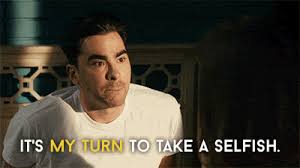
When I’m thoughtless, I hope for forgiveness and compassion. I hope that someone might believe the best about me. If that’s what I want, then that’s what I need to offer to my neighbors. The question arising then is: Who is my neighbor? Whoever is standing next to you at any given moment.
Should their behavior dictate how I show up in the world or the kind of person I choose to be? Well, no.
Is that hard? Yes. I am in no way describing an easy path, but there is such a deficiency of kindness in our world today. Nothing will change if I don’t change. Nothing will improve if I don’t set about to improve myself and my responses. Goodness will not grow if I don’t make compassion a priority. Protests don’t change the world. Compassion does. This, too, seems to be a universal concept.
“Genuine human friendship is on the basis of human affection, irrespective
of your position. Therefore, the more you show concern about the welfare
and rights of others, the more you are a genuine friend. The more you remain
open and sincere, then ultimately more benefits will come to you. If you forget
or do not bother about others, then eventually you will lose your own benefit.” H.H. The XIVth Dalai Lama
“When Jesus landed and saw a large crowd, he had compassion on them and healed their sick.” Matthew 14
“Love of all creatures is also love of God, for whoever loves the One (God) loves all the works that He has made. When one loves God, it is impossible not to love His creatures. The opposite is also true. If one hates the creatures, it is impossible to love God Who created them.” Maharal of Prague, Nesivos Olam, Ahavas haRe’i, 1
“What sort of religion can it be without compassion? You need to show compassion to all living beings. Compassion is the root of all religious faiths.” Basavanna, Vacana 247
“Verily, God is compassionate and is fond of compassion, and He gives to the compassionate what He does not give to harsh.” The Prophet Muhammad
Between Blame and Uncertainty
I learned something new this week. Well, I should say that I relearned something old, and it resonated as if it were new. It’s worth sharing.
There is a phenomenon that almost everyone seems to experience, at some point, after surviving something bad that I’ll call the I Should Have Known phenomenon. This phenomenon isn’t isolated to certain types of events. It can be generalized. When you listen to people verbally process a negative event that has left them in the wake of negative consequences and pain, you may hear them utter, “I should have known…”
You might hear someone say this in a shocked state after a car accident: “I should have known. I noticed the driver swerving a few miles back,” and, from what I have observed and personally experienced, many people often agree! Someone might query “Well, why didn’t you stay behind that suspicious driver on the road?” And, what do you say? “I don’t know. I just should have known.”
The I Should Have Known phenomenon is so common that it’s almost mundane in cases of sexual abuse and domestic violence. If you’re not the one saying it, then someone else usually is via some form of, “How did you not know?”
- “Didn’t you know s/he was bad just by looking at them? I mean, I can tell s/he’s no good just by looking at their face!”
- “How can you live with someone for so long and not know that they’re ______? Surely you would have to be in denial or an idiot not to know that you’re being lied to.”
- “Why would you stay with someone for so long knowing that they were never going to change? Why keep trying? At what point are you volunteering for abuse?”
- “You went out dressed like that! I’d say that you were asking to get raped.”
- “S/he came onto you in the bar and groped you. How did you not know they were gonna turn around and assault you in the club’s bathroom? It’s so obvious.”
What do all these statements have in common? The omniscience of hindsight. I have a saying that I often use with myself: “We are all gods when we look back through hindsight vision.” This is why people often say, “If I could go back in time to one moment, I’d choose X moment and tell myself not to make that choice. My life would be so different now.” Why do we say that? We say this because we know the outcomes of past scenarios–the outcomes that our past selves never could. We know now that our past selves never could have known what was going to happen to them, and there is pain in that. Why?
Why does not knowing the negative outcomes of past events hurt so badly in the present?
I have a theory, and I’m sure it’s not new. Based in my own personal experiences with this phenomenon, I suspect that it has to do with blame and control. Let me illustrate this.
I’ve established that I was abducted when I was much younger. It’s one of those crazy stories that people struggle to believe. It’s a Law & Order: SVU kind of story with many twists and turns. I rarely discuss it. There have been times in my life when I’ve wondered if it was worthwhile to survive it, and I know that I’m not the only one who has experienced this. Surviving was the easy part. Healing from it and learning to live with what happened have been the hard part. One of my bigger enemies in my journey to heal from this event has been my sense of personal complicity. For years, I couldn’t discuss what happened to me in any detail because I believed that I was at fault. I honestly believed that I should have known that the perpetrator who took me was ill-intentioned and evil. Had I known, I could have avoided him. Had I known, I could have protected myself better. Had I known, I could have…I could have…I could have…
But, I didn’t know.
Why didn’t I know?
Overlay this thought process onto my domestic abuse situation.
Had I known that my ex-husband wasn’t ever going to keep his promises and change, then I would not have stayed. Had I known that it was only going to escalate, then I could have protected myself and my children. Had I known that I didn’t have all the information for twenty years, then I could have made different choices. Had I known…
But, I didn’t know.
Currently, I am doing the deep dive into that past abduction experience in therapy, and, wouldn’t you know, one of the first things to arise was, “I should have known.” Feelings of complicity are extremely common. I know that, and yet I enter into it. I feel it. I admit it. Why?
My theory? If I were at fault or to blame in that event, then I can now presently figure out what I did wrong, correct it in the present, and guarantee that nothing so heinous ever happens to me again. I can experience a measure of control. If I’m the “bad” one in the tragic scenario, then the world is a predictable place. I’m the one who needs fixing. This is one of the primary reasons children believe that they are bad and blame themselves when they are abused. If you had to choose between an unpredictable world full of chaos and uncertainty with no true guarantee that anyone would look after you or love you or a reality in which you deserved your abuse, then which reality would be more acceptable? The scenario in which you deserve the abuse.
Why?
If you are inherently bad, worthy of mistreatment or hatred, or just plain stupid, then you’ve got a shot at fixing that, thusly, giving you a sense of control and hope. If you are not bad, deserving of hatred, or unintelligent in any way, then what can you control in terms of outside events? That is the magic question, isn’t it? Because that question is so hard to answer and uncertainty is so hard to deal with, it’s easier to blame oneself and other people for suffering and misfortune. Surely, that person did something to deserve or cause their predicament. I mean, if they did nothing and still got annihilated by life, then what does that say about you or me? Could something equally terrible happen to you, me, or someone we love?
Yes, it could. There are no guarantees, and that is an impossible thought for many people; hence, they blame, wag their fingers, and proclaim judgmentally, “You should have known.” That one sentence is the quickest way to distance themselves from unpredictable suffering and pain. This very belief is what fuels stigma and hatred. It is one of the many reasons people are alienated, marginalized, and mistreated. The victim of suffering becomes the symbol for that which is feared the most, and the quickest way to resolve and quench that fear is to blame the victim for their own suffering.
Well, I can honestly say that there is no way you could have known then what you know now. I have gone over and over seemingly millions of times every detail that led up to my abduction, and the only conclusion that remains is this:
There was no way I could have possibly known that I was living next door to a villain.
Whatever you wonder about in your life be it a past experience, a failed relationship, past abuse, a situation gone terribly wrong, or anything else, I suggest now that there is no way that you could have or should have known what was going to happen. Were that the case, then you wouldn’t be wondering now how you didn’t. The time has come to accept that we did not know and do not know how events will unfold, but we can know ourselves. We can know our own hearts and minds. We can stop engaging blame once and for all, and we can begin to learn how to live with uncertainty in a way that doesn’t make us anxious or fearful. We can get on with the business of building out a life that makes us happy as well as making the world a better place even when we don’t know how anything will work out.
I’ll let Rabbi Sacks close:
“For each of us there are milestones on our spiritual journey that change the direction of our life and set us on a new path. For me one such moment came when I was a rabbinical student at Jews’ College and thus had the privilege of studying with one of the great rabbinic scholars of our time, Rabbi Dr Nachum Rabinovitch.
He was, and is, a giant: one the most profound Maimonidean scholars of the modern age, equally at home with virtually every secular discipline as with the entire rabbinic literature, and one of the boldest and independent of poskim, as his several published volumes of Responsa show. He also showed what it was to have spiritual and intellectual courage, and that in our time has proved, sadly, all too rare.
The occasion was not special. He was merely giving us one of his regular divrei Torah. The week was parshat Noach. But the Midrash he quoted to us was extraordinary. In fact it is quite hard to find. It appears in the book known as Buber’s Tanhuma, published in 1885 by Martin Buber’s grandfather Shlomo from ancient manuscripts. It is a very early text – some say as early as the fifth century – and it has some overlap with an ancient Midrash of which we no longer have the full text known as Midrash Yelamdenu.
The text is in two parts, and it is a commentary on God’s words to Noah: “ Then God said to Noah, ‘Come out of the ark’” (Gen. 8:16). On this the Midrash says: “Noah said to himself, Since I only entered the ark with permission (from God), shall I leave without permission? The Holy One blessed be He said, to him: Are you looking for permission? In that case I give you permission, as it says, ‘Then God said to Noah, Come out of the ark.’”
The Midrash then adds: “Said Rabbi Judah bar Ilai, If I had been there I would have smashed down [the doors of] the ark and taken myself out of it.”[1]
The moral Rabbi Rabinovitch drew – indeed the only one possible – was that when it comes to rebuilding a shattered world, you do not wait for permission. God gives us permission. He expects us to go on ahead.”
You have to be prepared to be lonely, at best misunderstood, at worst vilified and defamed. As Einstein said, “If my theory of relativity is proven successful, Germany will claim me as a German and France will declare me a citizen of the world. Should my theory prove untrue, France will say that I am a German, and Germany will declare that I am a Jew.” To be a pioneer – as Jews know from our history – you have to be prepared to spend a long time in the wilderness…Faith is not certainty, but the courage to live with uncertainty. (The Courage to Live with Uncertainty)
The Neuroscience behind Mindfulness
I just came across this article this morning–Neuroscientists and the Dalai Lama Swap Insights on Meditation. This is a fascinating article on the neuroscience behind meditation and mindfulness. You do not need to practice Buddhism to benefit from reading this. This is a worthwhile read simply because it lets you step into the science behind how your brain functions when you practice focusing…and when you don’t. Why do we suffer from the whims and follies of our reckless “neurowanderings”? Can we do something about it? Well, yes, it seems that we can. Okay, but can we do something about it short of joining a Buddhist monastery? Read on.
P.S.
Any article that I post on my blog will be “archived” under the Enrichment section of my blog for easy access.
Art Can Be Mindful
I’ve written a lot about mindfulness. I would love to introduce you to an artist who has created some beautiful mandalas. His art might enhance your own mindfulness practice and environment, too!
You can find him and his gorgeous art at Mandela Effect Art.
Einstein on Changing Your Life
I read an article in the New York Times this morning entitled:
Want to Be Creative on Purpose? Schedule It
Right off the bat I can tell you that it’s a quick and dirty read and probably true. Written by Carl Richards aka Sketch Guy, the article’s opening thesis relies on artist Chuck Close’s famous quote “Inspiration is for amateurs. The rest of us just show up and get to work.” I love this quote. I love the idea behind this quote. It’s on par with Albert Einstein’s sentiment: ” Genius is 1% talent and 99% hard work.”
The idea presented by both Close and Einstein is something of an iconoclastic notion if you will. If the definition of an iconoclast is “a person who attacks cherished beliefs, traditional institutions, etc., as being based on error or superstition,” then I suppose that an idea could do the same. There is an idea within the subconscious of Western culture and many people that you have to be special, gifted, ultra-intelligent or somehow other in order to do or accomplish something remarkable. People base their identities on this idea. “I am special because I can do X,” or even more common “I am better than that group of people over there because I can do X or because I look like Y.”
The truth, however, is that who we are as people is expressed through our actions and choices. I hold the belief that every human is unique and expresses some aspect of the Divine image making every human intrinsically valuable. We express this value and pursue excellence in our lives not from a deficient self-perception driven by perfectionism but in order to express the worth that we already possess. No one can steal this value from us, but, at the same time, the world can be robbed of witnessing our expression of this Divine essence in us as expressed through our personalities, actions, thought processes, and acts of generosity and charity when we ourselves are stifled due to trauma, various hardships, skewed self-perceptions, or even the most basic forms of human activities such as a lack of desire to act or change. We, too, can be robbed of even understanding and experiencing our own value by these very things because the world around us is not set up to speak the truth. Instead, we are surrounded by perceptual manipulations, deception, violence, and a constant barrage of the reality of endless representations of human suffering in its myriad forms. What does compassion look like? What does goodness look like? What is the face of kindness? With all these songs on the radio about love, why is it so hard to find and experience?
At this point on my journey, I will have to agree with Close and Einstein. There is no good time to start. There is no better time to try. To be frank, life will always be hard, and it will never be easy. So, why not just start showing up in that one area that will not change or get better, and get to work? Take that 1% genius that you’ve got and apply 99% effort.
Now, this might be the moment when someone would say, “I don’t believe in any of that Divine image stuff. I’m average and so is everyone else. Every snowflake is unique and special. Just like every other unique and special snowflake.”
In a way, this point of view makes my case for me even more. Why? Well, the world is not full of Einsteins or Closes. I’ll give you that, but take a look at Albert Einstein the man–not the myth:
“Einstein attended elementary school at the Luitpold Gymnasium in Munich. However, he felt alienated there and struggled with the institution’s rigid pedagogical style. He also had what were considered to be speech challenges…Albert was left at a relative’s boarding house in Munich to complete his schooling at the Luitpold Gymnasium. Faced with military duty when he turned of age, Albert allegedly withdrew from classes, using a doctor’s note to excuse himself and claim nervous exhaustion. With their son rejoining them in Italy, his parents understood Einstein’s perspective but were concerned about his future prospects as a school dropout and draft dodger…
After graduating from Polytechnic, Einstein faced major challenges in terms of finding academic positions, having alienated some professors over not attending class more regularly in lieu of studying independently. Meanwhile, Einstein continued to grow closer to Maric, but his parents were strongly against the relationship due her ethnic background. Nonetheless, Einstein continued to see her, with the two developing a correspondence via letters in which he expressed many of his scientific ideas. In 1902 the couple had a daughter, Lieserl, who might have been later raised by Maric’s relatives or given up for adoption. Her ultimate fate and whereabouts remain a mystery.
Einstein eventually found steady work in 1902 after receiving a referral for a clerk position in a Swiss patent office.” (Biography)
Einstein was like you or me. He was living life while working on all his ideas in the background–the ideas that won him the Nobel Prize. He faced hardship. He struggled. He didn’t even appear to be all that bright as a kid. He dodged the draft! His parents didn’t like the woman he fell in love with due to her race. He was underemployed. Einstein? A patent clerk? Clearly, the human condition is still the same. You. Me. Einstein. We are the same in our humanity. Unique, special, and just like everyone else.
There will never be a convenient time to show up and start doing what you really want. There is never a good time to get something started. There will always be reasons why you should not, and there will always be a case to be made against it.
But, there will always be two reasons why you should.
- You want to.
- You were made to.
So, whatever it is in your life that is keeping you from moving forward and attaining that “something better” space that you just know you were made to occupy, I suggest this with great humility–start showing up and getting to work. A year will pass, and you could be closer to where you want to be if you started today. Or, you could be right where you are today next year. You are as brilliant, talented, and capable as anyone else. If you don’t believe you are, then start there.
If there is never a good time to change your life, then perhaps the best time to try is now.
The Essence of Healing
I wanted to write something germane to your life and process. Something that might speak to you. To anyone. To everyone. Perhaps this might.
I go to therapy every Tuesday. I like to think that I’m ‘getting it done’ whatever ‘it’ is, but, as with all sorts of processes, I stalled. I wasn’t wasting time per se, but I wasn’t hitting it hard. I’ve been at this for two years now which shocks me. I want to finish it…whatever ‘it’ is.
Once again, I was in the Hot Seat, and my therapist was looking at me as he does.
“So, what would you like today to be about?” he asked.
I inwardly groaned. I knew what was on my mind. Fear. I was afraid. I had been feeling dread for a few weeks. A nameless dread. A creeping anxiety that would ooze into me and out of me at the same time until I felt paralyzed in both my body and life. I couldn’t make choices. It’s not that I couldn’t make good choices. I couldn’t seem to make any choices. As much as I’ve learned about cognitive distortions and mindfulness, I still felt caught up in the washing machine of my own inner turmoil. It wasn’t depression exactly. It felt like a flavor of anxiety. A big anxiety. Generalized. A suffocating fog that shrouded every area of my life.
I knew what I was afraid of, and I feared that if I talked about it, then I might empower it. I decided that I didn’t want to talk about it or even give it room; and yet it was taking up all too much room in me. So, I attempted to name it.
I admitted to my therapist that I was very afraid that I would break apart at some point. Now that I’ve written it out it seems rather harmless or silly, but that’s not how it feels. The ‘what if’ questions were dogging me relentlessly. “What if something happens to me that I can’t recover from? What if I can’t endure the pain? What if I am dehumanized to such a degree that I become a dispirited, soulless, desolate woman? What if something happens that I simply can’t bounce back from?” As soon as these questions begin, I freeze. I have no answers for them. I hold my breath. I begin to feel a profound fear that shuts down my thinking brain and activates my limbic system. There is no longer any reason. Only a warped instinct that seeks to hijack all my rational processes and turns me into a reptile.
For months, I thought that if I didn’t acknowledge it, then it might stop. It did not. It festered. I cried trying to describe it. I thought that perhaps just engaging in the act of sharing my turmoil might lessen the burden. It did not.
After I had revealed my fears to my therapist, he looked at me quizzically.
“So, you are afraid of breaking? That something might happen to you that is so terrible you will not be able to recover? That you will become a shell of a woman?” he asked.
I nodded.
“Hasn’t that already happened to you?” he asked looking somewhat confused.
“Has it?” I asked beginning to feel confused as well.
“Well, how desolate were you after you returned from being abducted?” he asked.
“Oh my gosh, I was definitely shattered after that,” I said.
“And how empty and in despair were you when you came to see me two years ago?” he asked.
“I was about as low as I’ve ever been,” I admitted.
“How low were you when you cut your father out of your life? And your mother? How much anguish have you known all in all? How existentially destroyed have you felt?”
I had no answer. I just sat there crying.
“So, it’s pretty clear that you have what it takes to heal, isn’t it?” he asked.
I didn’t consider that. I didn’t want to consider that. I felt exhausted.
“There is a limit to how much a person can actually experience in terms of pain. In terms of physical pain, a person will pass out once that limit is reached. In terms of emotional pain, you’ve probably reached that. There isn’t another level to your pain. You’ve been there. You’ve done that. You already know what it’s like, and you’ve already recovered from it,” he explained.
Honestly, I did not know that. I kept anticipating an exponential increase in emotional pain.
“So, I have what it takes? I don’t need to be fearful that something will break me? I’ve already been faced with the worst and survived it?” I asked feeling suspicious.
“Yes. Your fear is not based in truth although your past experiences certainly legitimize your anxiety.” he said.
“I’m afraid that I’ll have to do it again. That something so profoundly terrible will happen to me that I’ll have to rebuild myself yet again, and I’m so afraid of paying the price again. It is so hard. It is excruciatingly painful. I can’t begin to adequately describe how hard it was to come back and try to live again after being abducted and everything that entailed. After my marriage. After everything that happened within that relationship,” I cried.
“Do you know that you have what it takes to come back though? Should your worst fears come true? Do you have what it takes?” he asked leaning towards me.
And that’s when I was still. I sat with the very things that had been paralyzing me. I went back into the memories of my lowest, most broken places. The moment when I knew that my captor was going to kill me if I didn’t make a break for it. The moment in my marriage when I knew I was going to die from an autoimmune disease if I didn’t get out. What did those moments have in common? How exactly did I survive and make it to where I am now?
Clarity. In those moments, everything became crystal clear for me. I felt little to nothing in those moments. Suddenly, a much deeper instinct came online, and everything came into focus. I heard a clear voice: “Run. Get out. Do whatever it takes. It’s time.” And, I did. Worries about the future fell away. It was very much like standing in the eye of a storm. I grew up in East Texas, the land of hurricanes. When I was a child, I once went outside when the eye of a hurricane was passing over our neighborhood. The winds had been powerful and violent, and debris, pine needles and branches covered everything within walking distance. The calm that descended upon us as the eye passed over was chilling. My mother yelled at me to come inside, but I wanted to experience the ephemeral peace of these legendary storms. This is comparable to what happened to me when I realized that I had to make big decisions about my own survival be it in life and death circumstances or in abusive relationships.
My therapist called those experiences finding “my essence”. And, that is what I would leave you with.
I am convinced that humans can survive anything, but I have never been interested in survival. I have always wanted to live a meaningful life, and my definition of a “meaningful life” has evolved over time. Nonetheless, the idea that we have an essence that is unique to us and cannot be obliterated or annihilated by trauma encourages me. It is fear of annihilation that was at the root of my profound anxiety. How much betrayal could I tolerate? How much suffering could I overcome? What if I reach a point when I finally succumb to suffering and am left in desolation for the rest of my life?
I have to ask those questions as I venture into the darkness in therapy because, at times in therapy, we will stand eye to eye with the monsters. Only you know who your monsters are, but I suspect that we all have at least one. And, our monsters know our names and our softest spots. They know how to kill us be it metaphorically or in real life. Your courage and bravery don’t emerge when you’re on top of the world embracing the joy. Your courage, your essence, is forged when you’re blinded by the utter darkness of your fear, pain, and suffering, and yet you choose to get up and act even if you are guaranteed nothing but more fear, pain, and suffering. In my experience, that’s when your essential self lights up, and you can actually start to see again.
I am still wrestling with my anxiety, but it’s getting better. No one said that the road to building a better life would be easy or even a fair process, but I can state this with certainty. You will know what you’re made of as you engage in this.
Your essence will come forward, and you’ll find that you were capable of a lot more than you ever thought.
Migraines and Anxiety
I want to write something on the more practical side. I’ve written before about the fact that I have migraines. Sweet fancy Moses, do I. Before I was treated by a neurologist, I had roughly twenty migraines a month. My quality of life had plummeted into the Laurentian Abyss.
It is natural to ask if I was contributing to a lifestyle that caused migraines. Nope. I was slammed into by a drunk driver one morning no less than seven times. The injuries I sustained from that crash left me with a very irritated brain, so says my neurologist, and I now have chronic migraine disease. I have done and continue to try to do everything I can to prevent and treat this condition. In the meantime, I want to share some information that might be helpful to you should you take the most successful abortive medication for migraine on the pharmaceutical scene–triptan medication.
The triptan class of drugs is a miracle worker in terms of stopping migraine. One injection of Imitrex into the thigh, and your migraine is halted in about fifteen minutes. For those of us who have endured the seven-day, transformed migraine, this is nothing short of touching the hem of Jesus’ prayer shawl. A year and half ago, I had a major surgery. Between the intubation, anesthesia, and narcotic drugs administered for pain management, I developed a severe migraine in the hospital. Triptans were not administered due to hospital politics and a failure to contact my neurologist. Instead, high and repeated doses of a drug stronger than morphine were administered to me, and it did nothing except increase the migraine pain. Twenty four hours later, after a seizure and repeated projectile vomiting due to the migraine, my surgeon wised up, called my neurologist, and prescribed IM Imitrex. Fifteen minutes later? The migraine was abating. That’s how effective triptans are.
Triptans, however, have a dark side. Think of them like your friendly Shoulder Angel and Devil. They are angelic in that they stop your migraines very effectively. They are positively diabolical in that they do other rather nefarious things, too. What might that be?
Imitrex, known generically as Sumatriptan, increases anxiety levels in people:
“There is evidence suggesting that Imitrex (Sumatriptan) can induce anxiogenic effects in humans. In a double-blind, placebo-controlled study involving 15 patients diagnosed with panic disorder, it was discovered that Sumatriptan significantly increased anxiety symptoms compared to the placebo. While it is unclear as to whether the drug increases anxiety among those without preexisting anxiety disorders, many would speculate that it could.
Results from another study noted that Sumatriptan increased fear of simulated speaking compared to a placebo. Researchers noted that cortisol concentrations increased, vigilance increased, and prolactin levels decreased. It is hypothesized that Sumatriptan exacerbates anxiety by lowering serotonin levels in the synaptic cleft, thereby facilitating opposite serotonergic effects compared to SSRIs (which reduce anxiety).
Additionally, Sumatriptan causes the phenomenon known as “brain fog” wherein you just can’t think clearly, or, as I describe it, you can’t get your shit together inside or out:
“An unfortunate side effect that you may experience while taking Sumatriptan is “brain fog” or inability to think clearly. As the drug kicks in, you may have a difficult time thinking clearly, organizing your thoughts, and may feel as if you’re in some sort of twilight zone – your thoughts are clouded. There are numerous potential mechanisms that may be responsible for inducing brain fog among Sumatriptan users.
Sumatriptan increases blood flow velocity, modulates serotonin receptors (and serotonergic neurotransmission), and alters trigeminal nerve activation. The culmination of these effects may facilitate the induction of brain fog for certain individuals. This brain fog may linger even after the anti-headache effects of the drug have faded due to the fact that your neurotransmission will need to reset itself to a homeostatic baseline.” (Online source)
My personal favorite of all the side effects of taking triptan medication would be the “I’ve become a dumb ass” side effect aka “cognitive blunting”:
“In addition to the already-mentioned side effect of brain fog or “clouded thinking,” you may notice cognitive impairment from Sumatriptan. The degree to which your cognitive function suffers may be based upon the dosage of Sumatriptan administered, your baseline neurophysiology, and genetics. For certain individuals, serotonergic modulation at 5-HT1B and 5-HT1D receptor sites has a noticeably deleterious effect upon cognition.
You may find that after taking a Sumatriptan pill, your ability to stay productive in a cognitively-demanding occupation and/or academic pursuits – is significantly hampered. Fortunately, most cognitive deficits associated with Sumatriptan are transient and normative cognitive function is restored after Sumatriptan is eliminated from systemic circulation. However, some users may notice that it takes a day or two for complete cognitive recovery after experiencing drug-induced deficits.” (Online source)
What does all this mean? Well, what I have observed is that whenever I use triptans now I feel very anxious afterwards for hours. I feel like crying, and my thoughts become negatively distorted. Because I’m so mentally foggy, however, I struggle to mentalize or reframe anything. I just feel stuck or paralyzed coupled with deeply anxious and generally upset. In the middle of this “wave”, I can tell myself that this experience is due to the migraine medication, and it will pass. It’s cold comfort. It still sucks, and I still feel terrible.
If you experience something similar when treating your migraines with triptans, then you are not alone. Many, many migraineurs suffer similarly. I bring this forward because if you struggle with anxiety or any form of it like PTSD, for example, then you might feel something akin to being triggered since you are experiencing a resurgence in anxiety symptomology. We experience anxiety somatically, in our bodies, as much as we do in how we think–cognitively. Rest assured, however, that the cascade of anxiety and depressive symptoms that you might experience while treating a migraine with triptans is actually due to the side effect profile of the drug. It will pass as will the migraine.
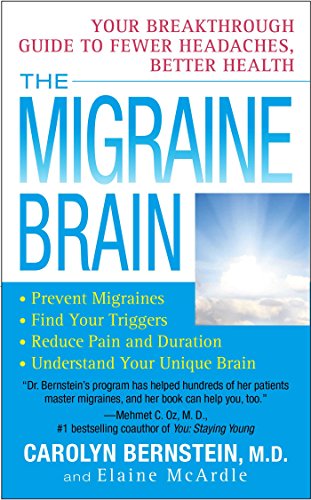
In the meantime, I just discovered this book written by Dr. Carol Bernstein of Harvard Medical School. She is the founder of the Women’s Headache Center near Boston and a migraine sufferer herself. She is a practicing neurologist, too. Perhaps you will find this helpful, too, should you struggle with migraine.
Profound Trauma and EMDR
I have been writing about EMDR and the process of therapy for a few reasons. I often tell people that therapy is good. Go to therapy! But then I’m met with this common response: “Why?” That’s legit. Why indeed. Providing documentation of the actual process, I reasoned, might help people understand why one chooses the therapeutic process over white knuckling it through daily life, stoic and independent.
EMDR is a modality of treatment allowing for the adaptive processing of trauma vs. the maladaptive processing of trauma or repeated compartmentalization of traumatic memories when they arise. We can process our trauma to be sure, but the important thing to note here is whether or not we have adaptively processed it or maladaptively processed it. Doing sound cognitive work with a therapist to address core beliefs followed up by learning what healthy boundaries look like in various normal life situations and relationships as well as internalizing what true validation looks and feels like lay a foundation for the work of EMDR. I have suggested mindfulness as a way to practice developing and rooting new and healthy core beliefs because it puts us in the driver’s seat of our own cognitions rather than in the “washing machine” of every movement, distortion, and whim of the brain and its chemistry. You cannot control the content that your brain puts out. Learning how to respond (or not respond) is entirely up to us. When something like PTSD is at work, however, reacting to the brain’s propaganda and cognitive distortions is habitual and feels necessary. Unlearning this in order to heal and find peace in our own bodies and selves is vital for recovery and eventual flourishing.
Doesn’t that sound nice on paper?
I’ll be truthful with you here. The process is grueling. I have grown to despise EMDR, but it works. My brain is fully committed. I leave a session feeling hollowed out only to feel unsettled and ill-at-ease soon thereafter. Something is coming forward. Something I compartmentalized and didn’t want to deal with. Something I really don’t care to look at now. And then, lo, it’s in the forefront shouting, “Hey! Look at me! Deal with me next!” Must I? Yes. It’s time. Thank you, brain.
The phenomenon that I experience now is one of memories without context or content first. Then the content and context follows. Initially, I will not understand what is happening to me. I will suddenly feel strong emotions usually at an inconvenient time and place. The emotions and thoughts associated with the memory will play out, and my present self will observe the event with great confusion. I will often feel panicked over what is happening. It will almost feel like a panic attack or flashback as the unfolding of the emotional and cognitive memory peaks, and then it will diminish. This has happened a few times, and this usually happens around extremely bad events in my past where there has been torture of some kind. The emotions and cognitions around the event emerge first before the event itself will come forward. I suspect that this is my brain’s way of being helpful–a slow introduction. It in no way feels helpful because I don’t have a clue as to what is happening when it does. Sometimes I think I’m having a hypoglycemic event. I feel like I am the last one to the party every time this happens.
For example, I experienced this last week, and I was caught up in the emotional onslaught very quickly. I eventually retired to my room to attempt to regulate and “get to the bottom” of whatever was overtaking me. I was truly panicking–out of the blue. And there was something else, too. I was suddenly afraid for my life. I felt trapped and utterly despairing. The phrase, “No one is coming for you,” was repeating itself in my mind. I pushed against the entire thing for about twenty minutes until another thought emerged. What if I just leaned into it? What if something beneficial was happening? That felt abhorrent to me, but fighting this experience was producing suffering. So, I tried speaking aloud and saying the one thing that frightened me the most about the entire experience: “No one is coming for you.” Suddenly, it was all there.
My father. His wife. One of their long interrogation sessions inspired by his Special Forces training. Theirs was a folie à deux relationship. She told him what to do, and he did it. She watched and smiled while he remained steely. Most of the time. She was outwardly sadistic. He was internally so. Not this time. He blatantly told me that he was going to kill me via torture using implements that I’d seen around his house. I was very young. They were both into psychological torture. This, more than anything, terrified me. And he punctuated his threats with, “No one is coming for you.” What I find so interesting about this is that this very same phrase was used when I was trafficked. That’s why I fought so hard to escape. Fear of torture. Not death. Torture.
I rarely share details of my past experiences because I find that the sharing itself contributes to a culture of morbid curiosity or even narcissism which is so pervasive on the Internet. Keeping my own experiences generalized allows you, the reader, to tie in your own life experiences as you read which is my goal. So, why would I share this? Torture isn’t exactly the most common of life experiences. I share this particular example because 1) this is my most recent experience with EMDR 2) because I want to elucidate the power of EMDR to aid in healing from trauma–even profound trauma.
Why does something like this matter really? Well, you can’t have an emotional bomb like this in your psyche. You have to diffuse it. You must adaptively process this. This is, by all accounts, a horrible thing, and no person will do as well as they could in life if they don’t heal after it. There is something else though that matters perhaps more. Whenever I find myself in a perceived no-win situation, I panic in an extreme way and begin to feel despair which often paralyzes me. Eventually, I will fight to win, but I can’t problem solve well. I am usually overcome with dread and fear of death. This past torture situation is why. This is most likely the root of it. Many of our present self-sabotaging behaviors and character flaws are rooted in past experiences. No amount of will power will change them particularly if its your past self sabotaging your present. By the way, that’s another reason to go to therapy.
Our brains are designed to do the problem solving for us. Whenever we find ourselves in a situation that produces strong feelings in us, our brains attempt to solve the problem. One way in which our brains do this for us is by looking back over past experiences in order to see how any previous experiences were similar and how they were solved. For those of us with extreme backgrounds, some of our past experiences were deplorable. When our brains go searching for past experiences evocative of the present, we may find ourselves caught up in a renewed traumatic experience. This very reason is why EMDR is vital for living in the present and developing a more meaningful life. Once a trauma is adaptively processed, should the brain draw on a past memory that was traumatic, it won’t pack the traumatic punch. Perhaps it will even be off the table in terms of past experiences that the brain will draw on for present and future problem solving, and we will be less presently influenced by it.
What I must note now is this: You cannot do profound trauma work alone. When I fully assembled this past experience–the emotional, cognitive, and visual memory–I was distraught and devastated. I was in the middle of it and re-living it. I felt in the present what my 7 year-old self felt in the past. I was under the covers in my bed weeping, and I honestly didn’t know what was true in that moment. Was anyone coming for me? Was that true? Had anyone ever come for me in my life? I was plummeting into the emotional-dysregulation-cognitive-distortion-pit-of-despair. Fast. I could see my father’s face so clearly. And his wife’s. Her sadistic grin. His cold eyes. It was all too real.
Then my phone rang. It was him. My boyfriend. Gotta get myself together. Clear the throat, but he knew as soon as I answered. I spilled it all, but I didn’t want to. This? This is too dark. I felt too vulnerable. To be honest, I am sick of myself. I am sick of my process, and I am very afraid that everyone around me is sick of it, too. Who wants to stick around for torture and suffering of this magnitude? I don’t! I want to be done, but he said everything opposite to how I felt.
And this is what you need. People who will believe in you and your healing process when you have grown tired of yourself. When you are afraid. When you don’t like it. When you fear that everyone will leave.
When you’re afraid that no one will come for you.
You must keep going. At all costs. This work is the most important work you will ever do. So, I will say what I always say, keep going.
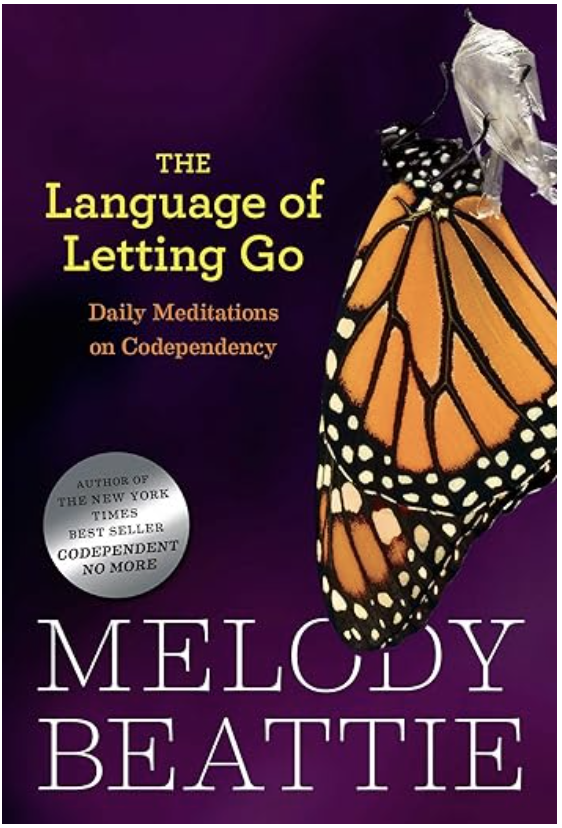
Currently on the Nightstand
Share this blog

RSS


thrivingisthegoal.com
is licensed under a
Creative Commons Attribution-No Derivative Works 3.0 United States License.

 Out of the Mire