Out of the Mire
…because thriving is the goal
The Disgust Cycle in Healing
I want to address something that inevitably comes up during the healing process after a break-up or divorce particularly if your ex-partner was not a very nice person. What do I mean by ‘not nice’?
Well, my marriage ended for many little reasons much like this proverb:
“For the want of a nail the shoe was lost,
For the want of a shoe the horse was lost,
For the want of a horse the rider was lost,
For the want of a rider the battle was lost,
For the want of a battle the kingdom was lost,
And all for the want of a horseshoe-nail.”
The primary catalyst for my separation and divorce, however, was domestic violence. As an aside, I want to make note of something significant for a moment. Less supportive people have questioned me about my divorce including my family. People can be extremely judgmental about divorce, and some groups who we might hope or even assume would support vulnerable families in need even think that domestic violence is not a legitimate reason to end a marriage as noted in this study–“Poll Shows Lack of Conversation on Domestic, Sexual Violence in Churches”. Judgment and blame then become part of the cycle of abuse and even recovery. The victims are initially questioned rather than the perpetrators of violence, and the questions may look like this:
- “S/he was so nice to everyone. You seemed so happy when we saw you. What was going on to make him/her do the things you say?” (the implication being that some outside influence could “make” a person harm another i.e. stress at work or nagging)
- “Well, if it was so bad, then why didn’t you report it? Why didn’t any of us know?” (This question is based in ignorance. The dynamics that keep domestic abuse of any kind in place are shame and fear. With shame and fear in place, one wouldn’t self-report.)
- “If s/he was abusing you enough for you to divorce, then why weren’t the police ever called?” (I was asked this. A few times.)
The first thing to note is that all of these questions smack of victim-blaming. Secondly, there is no perspective-taking present within these questions. Thirdly, there is no acknowledgment of the Resiliency Spectrum. What do I mean? I will use a scenario from my marriage to explain.
There was abuse present throughout my marriage, but some of the abuse did not register as “abusive”to me due to my past experiences with abuse. I was troubled by the behaviors to be sure, but I did not feel traumatized by them. When my ex-husband consumed too much alcohol, he was capable of verbal and physical abuse. Weird things happened. Yes, weird. That’s how I interpreted the interactions: “That was weird”. Even when the “knife incident” occurred, I was still relatively shocked more than anything else. It didn’t register as trauma although it probably should have. When your spouse brandishes a blade and waves it around in your face menacingly, you should feel something other than surprise. I was asked very directly by my therapist, “Why did you not call the police when he did that? That was a felony.”
Well, I had seen my mother do worse things than that. I was so shocked by his behavior that I froze, and then I was far more interested in diffusing the situation. Getting the police involved never occurred to me. I grew up around so much violence that, while I knew my environment wasn’t normative, I wasn’t terribly shocked by it when I saw it again. I am not justifying it. I needed to be recalibrated and reacquainted with what a safe and healthy relationship looked like. The Resiliency Spectrum describes a state of being in which what might be traumatic to one person is not for another. The death of a pet might be a 9 or 10 on one person’s Resiliency Spectrum while the same event might register as a 3 for another.
Who, however, wants to trot out their past abuse stories with other people? Furthermore, who should have to? If you are experiencing abuse, then you are. You have the right to feel safe, secure, loved, and accepted. That’s it.
With that foundation laid, what happens when you bump up against your own Resiliency Spectrum in terms of cognition and emotion? That’s a very abstract question. I’ll put it another way with an example.
I was in a therapy session discussing my ex-husband when a wave of disgust washed over me. I shuddered and blurted out, “Oh my gosh, he saw me naked.” I became nauseous. I tasted bile. I actually threw up in my mouth a little.

My therapist jumped on that immediately. “What just happened there? What are you feeling?”
“I feel disgust. Viscerally.” That seemed legitimate to me.
“Why?” he pressed.
“Well, I…don’t know.”
We went round and round for a while until we came upon the answer:
“Do you believe that you should have known better? Do you believe that you should have been able to discern that he had the potential to abuse you? Do you feel disgust at him or yourself? Are you disgusted with him that he saw you naked or yourself that you revealed yourself to a man who abused you AND you missed all the signs that he could and did?”

Yes, that is exactly how I felt, and I felt tremendous shame over it. I felt disgusted with myself. How did I miss it? How did I not get it for so long? What if I miss it again?
My therapist always turns it around for me, and he did it this time, too. He leaned in and looked at me squarely:
“When you met him, did you believe what he told you?”
“Yes.”
“Did you have any reason not to based upon what he presented?”
“No.”
“Did you do the best you could at that time in your life with all the information and resources you had?”
“Yes, I did.”
“Then you have nothing to feel badly about. Once again, this is not your fault. This is not your fault.”
This is what I mean by bumping up against your own Resiliency Spectrum. Cognitively, I know that it’s not my fault, and most of what I endured, while understanding the behaviors to be wrong, I tolerated to a degree because they were not out of the norm for me. Emotionally, it feels like my fault because I feel like I should have known better. I feel like I should have done something about it sooner. Just because you can tolerate something doesn’t mean that you should.
This is, however, the process of recalibration; the process of aligning cognition with emotion. The feelings of disgust that radiate outwards but originate from within need to be named for what they are. They are more about me than they are about him. I was vulnerable. Yes, he saw me naked, but, in a way, I never saw him naked. That lack of reciprocity caused me to want to judge myself because I kept giving myself away regardless of what I received in return. My own hope was the currency I kept using in the relationship. It cost him next to nothing to be with me, but it left me bankrupt.
If this sounds at all familiar to you, then I suppose I would encourage you by saying that this is part of self-regulation, integration, and trauma recovery. It’s not unusual. It’s a marker on the road of recovery.
If Not Now…
Happy New Year, everyone! Although we are only just stepping into 2017, I hope that it has been good to you so far. 2017 has started out full speed ahead. After 19 years, I have returned to college for a graduate degree. Am I somewhat off my nut? A little.
Here’s the thing. There will never be a good time to rock the boat that is your life. I am, for example, a single parent. Even when I was married I was experientially a single parent. You can peruse the entirety of this blog, read what is obvious, read between the lines, and deduce that I was doing everything, for the most part, alone. I can tell you exactly why I did that, and it was not entirely my ex-husband’s fault. I had developed beliefs around my circumstances that kept me locked into a certain way of thinking–a limited way of thinking.
- I was raised by a single mother. I grew up watching my mother “do it all”. That is the norm for me. My mother never asked for help. If she couldn’t do it, then she figured it out. She once fell out of the attic and broke her leg while trying to fix something even though she knew absolutely nothing about fixing whatever was broken. I am a bit like that. That’s tenacity and stubbornness (or willful stupidity). It has served me well in life, but excessive self-reliance causes imbalance. Plus, it alienates the people in your life who would love to help. Also? Burn out.
- Life does not become simpler as we age. It gets more and more complicated. When I was in my early 20s, my personal welfare and future reality were, for the most part, my biggest concern. I was not personally responsible for the well-being of other humans. Of course, I loved other people and wanted to be available to them, but, by and large, I was looking out for Number One. I am a mother now, and every decision I make will affect my children. I am no longer solely looking out for my own interests and investing in my own future alone. I am considering the effects of my decisions on my daughters and investing in their futures as well as mine. This can give me anxiety and cause me to feel paralyzed at times. When is it ever a good time to make major life decisions? I like homeostasis. Nature and the human body like homeostasis. Introducing big change is risky. Stability vs. Risk. That’s a tough call for me now.
- I have struggled with my health for years. This is common when you have profound trauma in your past–autoimmune disorders and neurological issues like migraines being the chiefest of complaints. I am the poster child for the aforementioned. I have chronic migraines (CM) and cluster headaches, and I have done everything possible over the last thirteen years to relieve them. Pain management is part of my life. I was very fearful to attempt to go back to school while living with a sometimes debilitating condition, and I felt very limited in my future choices when viewing my life through the lens of my daily pain and future health risks.
- I have children with special needs. This was my biggest limitation. I was “on call” 24/7 for a few years. To a degree, I still am. I dropped off the planet socially. I had to be prepared to cancel appointments or social engagements in order to be with one of my daughters. During the worst time of the manifestations of their diagnoses, I did nothing for myself. I rarely slept. This was the most limiting factor of all. At present, my daughters do not spend the night with their father. They see him socially and come home. Being the sole primary caregiver does limit one’s choices. One starts to feel imprisoned in circumstances.
- I felt eroded spiritually, mentally, emotionally, and physically, thusly, contributing to profound existential fatigue. That defined 2016 for me. It felt like I would never be “me” again. Ending a 20-year marriage, enduring two surgeries resulting from domestic violence, therapeutically dealing with the traumatic fallout every single week, managing autoimmune symptoms and pain, and learning to live alone and raise four daughters in a truly single-parent household took an inordinate toll. I could not imagine ever feeling like I was flourishing again.
So, what was the solution? How does one think about the future when the present feels so limited? I chose to reimagine my future and “do it” anyway meaning I chose to make the choice I really wanted as if I didn’t have the present limitations, assuming that my life would adapt and expand for the life I was attempting to build. A bold move perhaps, but what are my options really?
I can either stay in the current smaller space and think small, accepting my perceived limitations, or I can change my view, imagine that my life would expand to fit the life I want, and take a step forward. Then, I applied to graduate school. I am now entering my third week. I won’t lie. It’s been bumpy. There have been complications. It’s winter. I get cluster headaches in winter. Nothing new there. One of my daughters is experiencing an exacerbation in her condition. Nothing terribly new there either. Disappointing? Yes.
What does all this mean? What is my conclusion?
Life is happening around us all the time. That will never change. The very familiar life that I know is happening. It will never be a good time for me to do what I really want. I might as well start doing it now then. I’ve had enough practice managing my life and complicated circumstances. I would think that I can manage all the complications that might arise then while building something better. That’s not a bad conclusion to reach. The only question then: Do I trust myself? Do I believe I can do it?
Yeah, I do. Look what I’ve done so far.
That is what I would offer up for 2017. There will never be a good time to decide to do what you really want. It’s akin to couples trying to decide when to have a baby. There is never a good time to have a baby. Babies change everything. If you want to have a child, then you just have to go for it. Embrace the messy, wonderful, exhausting process in the midst of the already messy, wonderful, traumatic, exhausting process of living.
There will never be a good time in your life for you to reinvent yourself, take a risk, do that one thing you’ve always wanted to do, make that one change you know that you really need to make, or make a plan of action. Life is not set up to ease us down the road of success. Life is set up to hinder us. That’s why we have heroes and heroines. They overcome extreme obstacles and provide us with an example. They inspire us. But, your life is probably full of obstacles, too, and that makes you something of a heroic figure then just waiting to be called up.
What if you’re being called up now?
It really is now or never. The future is but an idea at best, but today is yours. It is all that you have. You will never own tomorrow. It is now, and now is the time.
“If not now, when?” Hillel the Elder
Core Beliefs and Double Distortions
I paused writing about therapy because I wasn’t sure where to start. I wish I could have filmed one session. It was that good. Alas, I will start where I stopped–core beliefs.
Between the breath work and the core beliefs work, recovery is moving very quickly. I am sprinting to keep up. I can tell that there is a change because my mind is quiet. I don’t feel anxious and afraid all the time anymore. The PTSD symptoms are calming down. My pre-fontal cortex is back online which is allowing my executive function to reboot. I can make decisions under pressure and remember them! This is all the neuroscience behind what happens to your brain during a PTSD flare. It’s fascinating.
How does this recovery manifest in real time? For me, as the healing quickens, the blind spots are revealed. What do I mean? Here is an example:
My daughters and I joke around with each other a lot. My youngest daughter is very irreverent, and sometimes she can take a joke a little too far. She is on the autism spectrum, however, and that’s not unusual. She’s learning social skills like everyone else. Well, we were out at one of my other daughter’s choir concerts, and my daughter very saucily joked, “Don’t make that face! Never make that face!” She then pulled a rather ugly face and guffawed. I suddenly felt sucker punched. It came out of nowhere. I almost burst into tears. In the previous moment, I was sound. In the next, I was about to weep.
What happened? A blind spot was discovered. A core belief rooted in trauma, and I had no idea it was there. As I sat in the concert working quickly to contain myself, I heard this thought pass through my head, “What if they’re right?”
“Oh my gosh, I know what this is about,” I heard myself think.
I’ve already explained that my father and his wife were cruel people. When I was young, my father used to videotape me without my knowledge. Then, when friends or my stepmother’s family came to their house, he would put the videotapes on for their viewing, and his wife would announce with sadistic glee, “Everyone, let’s watch these videotapes of MJ!” I was forced to sit in front of everyone while my stepmother in particular made fun of me. She mocked my walk, my posture, my face, my teeth, my body, my hair, and everything she could find to scrutinize. It was an exercise in humiliation and shame. I developed social anxiety to the point of near agoraphobia when I was younger because of this.
My mother did similar things except without the video camera. She just got off on criticism. When she was bored, she would stare at me and begin pointing out my “flaws” be it my haircut, hair color, clothing, skin, nails, my laugh, my accent, handwriting, mood. You name it. My mother would find it and use it against me in some way. Her point? Complete and utter decimation. By the time I was 18, my self-esteem was obliterated.
In college, when I received the letter inviting me to join the competition for the Rhodes Scholarship, I recall thinking, “This must be a mistake. Aren’t I too stupid for this?” It did not matter how well I did. It did not matter how many dates I went on. It did not matter who complimented me or how sincere they were. In my mind, my parents were probably right. I had grown up hearing that I was worthless in every sense of the word.
Well, I don’t believe that any of this is true now, but some tiny, hidden part of me fears that it might be; and, that’s what my daughter’s joke landed on.
So, I told my therapist about my intense reaction. How surprised I was. I didn’t want to talk about it which surprised me even more because I will usually want to talk about everything. He leaned forward as he always does when he’s onto something:
“This is very interesting. Do you see how this core belief is constructed? You have a double distortion here.”
A double distortion? Tell me more please!
“The first distortion is: ‘I have to pretend to be perfect,’ or ‘I have to hide my flaws behind trying harder,’ and that is a lie because you are not inherently flawed.”
I am not inherently flawed. YOU are not inherently flawed.
“The second distortion is: ‘What if they are right about me?’ This double construction depends on the existence of both distorted core beliefs. Take one down, you take them both down. If you do not believe that you are inherently flawed, then there is nothing left to fear in terms of these people being right about you. They are, in every way, wrong and were always wrong.”
Wow. What a gift. I left his office feeling lighter. I thought I really understood the core belief dynamic, but there is so much to it. Some of our core beliefs are predicated or dependent upon something foundational much like an “If…, then…” statement.
“If I am fundamentally flawed, then…”
But, if you are not fundamentally flawed (or fill in the blank with something else), then what might be true? What might the possibilities truly be?
It’s a very positive line of thinking as we close out 2016. Doors open when we ask big questions. Shalom…
The Door by Adrienne Rich
Either you will
go through this door
or you will not go through.If you go through
there is always the risk
of remembering your name.Things look at you doubly
and you must look back
and let them happen.If you do not go through
it is possible
to live worthilyto maintain your attitudes
to hold your position
to die bravelybut much will blind you,
much will evade you,
at what cost who knows?The door itself
makes no promises.
It is only a door.
Embrace the Process of Healing
“If I am not for myself, who is for me? And when I am for myself, what am I? And if not now, when?”— Hillel the Elder
I’m 44 years-old, and I’ve been on the “therapy circuit” since I was 16. As soon as I could drive, I found a therapist on my own and started going. I knew that my experiences and family of origin were well beyond what could be described as normal. My mother behaved just like Joan Crawford from the film “Mommy Dearest”, and my father was indescribably awful. My father’s wife was like a Disney queen. If she could have sent me into the woods with a random huntsman in order to have me “disappeared”, then she would have.
What I have learned is that you can only sustain therapy and counsel for so long. For the intervention and work to be permanently effective, you have to build new neural connections and adaptively process your trauma. Part of that processing involves addressing and changing core beliefs. For that to happen, you have to find the right therapeutic approach which fits your needs not to mention the right clinician. If you don’t like your therapist, then you won’t feel safe. Ain’t nothin’ gonna happen for you then.
You also need to have stability in your life. You can’t do trauma and core belief work if you aren’t safe in your home and lack support. You cannot fight a battle on two or more fronts. The therapist’s office becomes the battleground, and, when you leave that office, the battleground is your mind. Feeling safe in your life is key to actually doing the deep trauma and core belief processing. This is a potential reason why many people don’t get that far in their processing. When there is trauma in the past, there can often be repeated exposure to trauma in the present. Safety feels like a fantasy or luxury rather than a requirement not to mention that one can lose a sense of what it even means to feel safe. Losing control of boundaries becomes a normalized way of life.
As I have engaged in the healing process, I have observed that the pattern has been roughly two years of therapy with time off in between. Years in between. That fits for someone with my past trauma. Both my parents were highly abusive, and I was trafficked. My return to therapy this time was caused by domestic violence, and I was none too happy about it. Alas, I knew that it was necessary. Old traumas can become fresh again when new trauma is experienced. Surprisingly, past trauma that I thought was settled has resurrected, but it has not been bad. It has come from much deeper places that I didn’t even know existed, and I suspect that it is those deeper places that hold the key to lasting healing. I feel much more rooted even now than I have in the past.
Why share all this?
Well, sometimes we get tired of our own process. I even fear that others will get tired of my process.

I have wondered if my entire life will be lived out in a chair in a therapist’s office, and I have felt robbed. But, this is life. This is true for everyone. No, not everyone will endure an abduction or incest or something spectacularly terrible, but no one gets off this planet unscathed. If you are alive, then you hurt. Some hurt more than others. Some are more sensitive to emotional pain than others simply due to the size of their hippocampus. Some people carry epigenetic influences that influence how they process emotional pain. We don’t control everything about ourselves both external and internal.
For those of us with deep trauma, it is our duty to ourselves and others to participate in this process of healing so that we learn to exercise influence over what we can rather than being influenced and tossed about. It’s much like when my hip was injured. I was in pain and limping. I lost mobility and couldn’t sit properly or even walk well. I had to see a rheumatologist and then an orthopedist. I had an MRI and then injections directly into my hip joint. It all sucked. Ultimately, I needed a surgical repair followed up by four months of physical therapy with daily and often painful rehabilitation exercises that I had to do at home. All of this was done to 1) strengthen my hip joint 2) strengthen and repair the surrounding muscle groups that had been overcompensating for the injury 3) aid in healing and 4) teach me how to properly walk again because, due to the nature of the injury, the compensation for it, and the surgery itself, I lost my ability to walk properly. The injustice of this situation is that I received the initial injury in a domestic violence situation. But what of it? It’s my hip. I want to heal. So, like it or not, I had to conform to the healing protocol and put in the work.
This analogy works. As humans, we hurt, and we are vulnerable to myriad kinds of injury. Sometimes we are hurt in ways that defy imagination, and the injustice of our injuries can break us. No one is held accountable. No one takes responsibility, and, due to the stigma often applied to mental health issues and victims of sexual abuse and violence, we are often blamed for our own injuries making us victims twice over. It is impossible to understand. And yet we must learn to walk again. That is the commitment we must hold for ourselves and the people we love–and the people we have not yet met but will. For the people we will eventually love.
There is something within this kind of work that is imperative to acknowledge–hope. We engage in a thorough healing process because we have hope that what we are doing is building something better. We are building a better present that will lead to a better future. We are becoming healthier and safer people so that we can expand our lives to welcome in safe and healthy people. We do this work for a reason. It’s not futile. We are not masochists. We are not stuck. We do not love sitting around and talking about the past. We are shaking off the chains so that we can not only walk again but run. Or even fly.
That is what this entire healing process is about. So, ignore the naysayers and the trolls. Turn away from negative friends and family members. This is your life. Your shot. Grab it and run with it. You can do it. You are worth it. Keep going.
“Our deepest fear is not that we are inadequate. Our deepest fear is that we are powerful beyond measure. It is our light, not our darkness that most frightens us. We ask ourselves, ‘Who am I to be brilliant, gorgeous, talented, fabulous?’ Actually, who are you not to be? You are a child of God. Your playing small does not serve the world. There is nothing enlightened about shrinking so that other people won’t feel insecure around you. We are all meant to shine, as children do. We were born to make manifest the glory of God that is within us. It’s not just in some of us; it’s in everyone. And as we let our own light shine, we unconsciously give other people permission to do the same. As we are liberated from our own fear, our presence automatically liberates others.”–Marianne Williamson
Gridlock and Core Beliefs
It’s taken me a few days to adequately internalize a more profound understanding of core beliefs. The idea of challenging them doesn’t seem like enough to me. I want to uproot them. I want them outta here!
How do I get that done? When I asked my therapist, he didn’t have a great answer, and I suspect that deficiency is because there isn’t one. He said, “We’ve found it. Now that you know it’s there, you can identify it. Call it out when you begin to go there.”
Well, that is not helpful to me. That’s like a squatter living in your house without your knowledge. Suddenly, you discover him and feel shocked and violated. Now what? Every time you come upon the trespasser you’re supposed to shout, “Hey! I see you! I challenge you, o squatter, to squat elsewhere!” And, this describes about just how effective that feels to me…
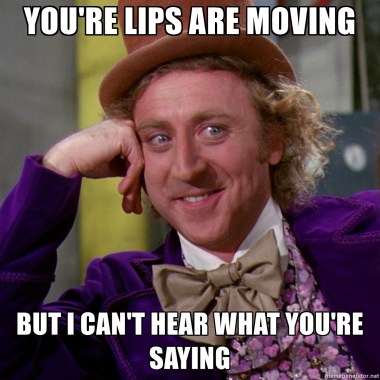
I decided to come at this from a different direction. Instead of looking at these unwanted core beliefs as stumbling blocks that prevent me from healing from trauma, I wondered if my core beliefs would actually be appropriate and helpful to me were I still living in my former circumstances.
How does a person survive being raised by a psychopath, a personality disordered mother with narcissistic and sadistic tendencies, and human trafficking? You survive by becoming a non-person. You manufacture emotional and psychological camouflage so that you move around as unseen as possible. When threatened, harmed, or facing perceived harm, you become even more invisible in order to deescalate the situation quickly. As far as I can tell, my primary, or foundational, belief is “I am void. I am wrong. I am a non-person.” This belief originated in the tacit rules of engagement that were learned from repeated interactions and might look a little like set theory as we put it all together.
Given a set of behaviors A, if u is an element of set A, then…
For me, I figured out the rules with my parents very quickly. Two examples…
- If my father looks at me sideways with that expression, then walk behind him and say nothing.
- If my stepmother speaks to me in that tone, then quickly apologize and sit where I cannot be seen.
- If my mother says anything, then always agree with her lest I experience punishment.
These “rules” for engaging in abusive households lead to a plethora of feelings. I would feel small, frightened, and a strong desire to disappear. Eventually, those feelings changed into beliefs: “I feel like I’m not even a person.”…”I’m not even a person.” But, that belief works in this context because following the rules that eventually spawned this core belief kept me as intact as possible. Imagine what would have happened had I not done so? I would have been killed at some point.
This isn’t always easy to parse, but it’s worth the effort. It takes insight and a willingness to tolerate the pain that might come forward.
Now that the rules are known, what does one do with it? Here is the tricky part. There are triggers that exist within us and without us, and we ourselves can trigger an unwanted belief to activate and overtake us. How? Here is an example.
Remember that before a core belief became a belief it was first a thought (e.g. “I feel worthless.” vs. “I am worthless.”) . For many of us, our physical behaviors reflect our beliefs. Our posture, how we walk, where we sit in relation to others, and even how we stand can reflect how we feel and think. During the last year of my marriage, I began to walk behind my husband in public like a servant. This was exactly how I was instructed to walk in my father’s household. I had to call him ‘sir’ and walk behind him. Well, I never called him ‘sir’ because I thought it was ridiculous, but I did walk behind him. The more unperson-like I felt, the farther behind I would fall. As that old belief resurfaced and increased in me in my marriage, the more I walked behind my ex-husband. And the more I walked behind my husband, the more triggered I became in feeling like a non-entity because I was re-creating an abusive scenario from my childhood that was highly traumatic. My physical behaviors supported the old belief and created a feedback loop. This is the machination behind “old cycles”.
What if I had determined not to walk behind him? That would have been one way to challenge that belief. Making a direct change to the physical expression of that core belief is a very real way to displace it. It is also surprisingly difficult. Self-talk must go along with it: “No, I will not walk behind him no matter how I feel about myself. Head up, shoulders back. Walk next to him.” This creates dissonance between a very real part of yourself that is determined to preserve you and a higher cognitive self that also wants to preserve you. That dissonance is the source of a great deal of panic and pain and the reason so many people drop out of therapy. When you go head to head with yourself, gridlock can ensue, and this dissonance often produces gridlock.
I have seen many people who sit in corners, sit by themselves, stand hunched over, head down, arms wrapped around themselves. Changing your physical expression will actually begin to change your beliefs. This is a very effective way to create new neural pathways and dislodge core beliefs around identity. If you aren’t sure what your core beliefs are, then this is one way to uncover them, gain insight, and experiment.
But, hey, what about that gridlock? What about that pain?
That’s the next post.
Core Beliefs
Okay, I’m going to get right into it. How do you heal from trauma? From the profound shit that keeps you locked up inside yourself?
Well, let’s talk about that because I finally hit the motherlode.
Core beliefs. F*cking core beliefs.
What is a core belief? It sounds innocuous enough. I’m going to use my personal definition. A core belief is something that your subconscious believes to be true even if you cognitively believe the opposite. I’ll give you a basic example.
A person might have come to believe on a deep, emotional level that they are worthless due to how they were treated in their family of origin and subsequent, confirming life experiences. After growing older, reading self-help books, practicing a meaningful spirituality, building rewarding friendships, and going to therapy with a good therapist, they learned that they were in fact not worthless at all. They learned about family dynamics, invalidation, and the toxic power of shame. They learned about emotional regulation, adaptive coping strategies, and mindfulness. For the first time in a long time, things felt different. But sometimes something dark and familiar returned. That cold, clinging fear. The dread that accompanied the voice: “What if you really are worth nothing? What if everyone finds out? What if you are just a fraud? Everyone will know the truth about you. And then they will leave you. What then?”
This is a core belief. It is buried in these “What if…” questions and there’s another one coming up. What happens after the “What then?” What happens after everyone leaves? What is necessary to prevent that? Running? Being perfect? Pleasing everyone? Self-annihilating? Core beliefs like these are the lies that fuel our self-sabotaging behaviors, and they are biologically embedded in our subconscious through repeated exposure to trauma. EMDR is one way to root them out. Here is another way.
After I started EMDR I knew that my brain would open up the compartments and let the memories come forth. How did I know this? I’ve done trauma work before. I’ve also done an inordinate amount of cognitive work. Twenty years of it. I know what’s true. At this point, I don’t need therapy to work out the ins and outs of human behavior or discuss pathologies. I needed therapy to deal with fresh trauma or old trauma that was activated due to fresh trauma. The blessing in this is that uncovered core beliefs from days of yore were discovered.
My root core belief seems to be “I am void”. Apparently, I have gone for self-annihilation. This core belief has permeated my personality and everything I do in various ways. I have struggled with assertiveness. Self-advocacy has always been next to impossible. I do not like attention. I do not like compliments. I do not want to be noticed. I do not want my picture taken. I prefer to sit in the back of every room. I am overly accommodating to the point of self-sacrifice. I will “take the hits” in most relationships to the point of literally taking the hits. I will make myself as small as possible to the point of trying not to exist if I feel under threat. I used to be a chronic apologizer. I even don’t move when I sleep so as not to disturb my partner.
In my mind, I know that I am not void. I am not existentially wrong, but I somehow viscerally believe this to be true. There is literally a fight going on within me over what is going to be the truth, and this needs to be settled.
How would something like this develop? My therapist observed, “You survived because of this belief.” Please note that.
Our core beliefs helped us survive.
He went on to say that I had to make myself as small as possible around my mother lest I draw too much attention and be in her crosshairs. The same was true with my father. Plus, my father tried to kill me. When a parent tries to do that to you, you will struggle with feeling like you should not exist. You will either shut down completely or try harder to prove that you have the right to be there. I continually apologized for existing while, at the same time, tried harder and harder.
“It is common in PTSD,” my therapist said, “for a person to cognitively know what is true but for the subconscious to hold onto a belief that the person denies. This is because the subconscious mind says, ‘I’m not getting rid of this belief! You are alive today because of me! You need me so I’m keeping it!'”
There it was. A core belief sticks around in the brain because a part of us is convinced that we need it for our survival. Because we did, on some level, survive due to believing that! Sweet mother!
“You did survive because of this belief. Your belief that you needed to void yourself kept you alive. It kept you alive in captivity. It kept you intact with both your parents. And it served you somehow in your marriage. Is it any wonder you are struggling now?”
Core beliefs are adaptive even if we don’t cognitively believe them! Son of a…
So, why is there so much pain involved in the process of healing from trauma then? Well, there is a special kind of existential pain when your higher cognitive functions try to tell your subconscious limbic system what to do. There is a space in between what we want to believe and what we truly believe on a deep, visceral level, and that space is filled with uncertainty, pain, and fear. It is what we have known from past experiences and what we do not know about the future. It is the terrible friction of the rubber meeting the road. The grind of the turning of an old thought process into a new one, and it is terrifying. The learning of a new thing when the old has served us even if only maladaptively in the present. And the whole thing is there to prevent the Great Fear from ever visiting us again because we can’t endure such a thing. Not again.
No matter how adaptive these core beliefs might have been at one time, however, they are often wrong. What’s more, they act as translators for all our experiences, thusly, sabotaging our attempts at building better lives. It is painful as all get out to discover them and confront them because they were put in place by bad things like trauma. We held onto them most often to survive. Humans are built for survival. This is why core beliefs can be so bloody hard to let go of. Humans will eat other humans to survive. We will do extreme things to stay alive. We will believe what we have to–even if it’s a complete lie and prevents us from ever being happy or fulfilled.
Furthermore, these beliefs come online when we are not calm. They come online most often when we are triggered. When I feel threatened in some way–even in a small way–the negative “What if” cycle begins and I begin voiding myself. It happens every time. I know some people who begin running. One perceived slight, and they hole up in their house. All communication is cut off. That’s a form of running–isolation. People pleasing? Oh, that usually starts with incessant texting from people who ask if someone is okay. They don’t do it out of generosity. They do it from a place of fear.
So, what do we do about it then?
Isn’t that the question though. Well, you have to challenge the core beliefs. What does that look like?
That’s the next post.
The Power of What If
This idea came to mind yesterday as I was beginning to dread my next EMDR session. EMDR itself is fine. It’s the time in between sessions that I truly dislike. My brain has gone into hyperdrive, and traumatic memory after traumatic memory is pouring forth like Old Faithful. It’s unpredictable just like Old Faithful, too.
In an attempt to make the best of it, I’ve been trying to play Match the Core Beliefs. In my thinking, these memories aren’t coming forward without cause. They must have something in common. So, I’ve been writing them out in an attempt to uncover any hidden core beliefs. It’s actually been a good strategy. As I’ve done this, I’ve felt a bit better–less hypervigilant and irritable but irrationally fearful.
Fearful of what? Nothing and everything. Just…randomly afraid. Afraid that someone I know will die. Afraid that everyone I’m close to will suddenly decide that I’m too something (fill in the blank with whatever quality seems most repellant) and run away. Afraid that another catastrophe will befall my family. Maybe it’s just the ebb and flow of general panic. I am keenly aware of all of it. I can even observe it from a rational distance.
So, this notion popped into my head yesterday as I was observing the flow of my rather anxiety-provoking thoughts. “What if you told yourself the opposite of what you feared to be true? What if, instead of all the cognitive distortions that might actually be legitimate based upon your life experiences, you actively engaged your self-talk and told yourself the opposite?”
Well now, that sounded positively ludicrous! My brain spins tales that make the Brothers Grimm sound like Mother Goose! How could I possibly tell myself something…positive?
Then another thought: “You let yourself get all worked up and run over by the negativity in your mind. Why not let yourself get built up by positivity that you deliberately create? If you are willing to respond emotionally to negativity, then why not take some control and respond positively to better thoughts that you have a say over?”
This little voice had a valid point. I would have been offended were I not somewhat fascinated.
“Okay, how do I do this?”
“What’s making you the most upset? What is weighing on you and causing you anxiety?”
“Where do I begin?” I replied sarcastically.
“The most anxiety?”
Sometimes the answers that come forward are surprising. We think that we know ourselves so well, and, in some ways, we do. Other times, we don’t like something we see in ourselves because it doesn’t line up with our values or our self-assessment. We want to be viewed by others as one way when, in reality, we aren’t that way at all.
I am excessively self-reliant, and it is a value that both my parents upheld fiercely. To ask for help was akin to admitting to stealing. Needing help was a character flaw. Needing help was selfish. If you needed help, then something was wrong with you. It’s like they were raising a tiny Teddy Roosevelt.
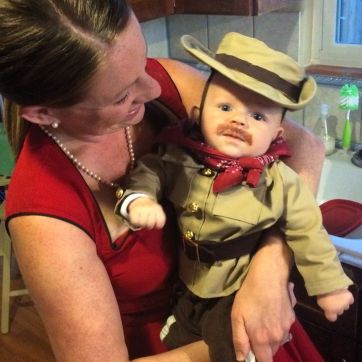
My father insisted that I learn to tie my shoes when I was 3 because I should not need his help for anything. I learned to dress any wound that I had at age 4. As an adult, I find asking for help very difficult, but, at the same time, I find excessive self-reliance as displayed in my parents ridiculous. Asking for help is appropriate and good and yet I have been criticized for my self-reliance. I am, however, heavily conditioned never to ask for help. I was punished severely for needing help as a child. A visceral response occurs in me at the moment that I need it. On some level, I am convinced that people will actually abandon our friendship should I seek their help. This is what one would call a core belief. Core beliefs are not rational. They are often conditioned responses that rise up within us under pressure. I was taught that asking for help=selfish=punishment=abandonment. So, under no circumstances can you let anyone see you sweat. To need is to be abandoned. To need is to be innately inadequate. To need is to be somehow inherently repulsive.
I don’t intellectually believe this at all, but there is a part of me that has been conditioned to behave that this is true. I fear that this is true.
Well, now what? I am very uncomfortable with admitting this. Furthermore, asking anyone for help makes me almost sick to my stomach, but I know that being allowed to help someone is very validating. I also know that refusing someone the privilege of helping can cause feelings of rejection and illegitimacy.
“Ah,” my fearful mind says, “what about being beholden to people?” My mother used to help me and consider it a debt. Nothing was ever given freely. Strings were always attached. That is another reason for my excessive self-reliance. There was no such thing as a gift in my family. I learned early on that everything was quid pro quo.
My reassuring mind then says, “The people in your life now love you, and they know you. They want to be there for you. You can ask them for help. They are not waiting to hold your past against you or even your weaknesses. Love does not do that. So, you can tell yourself that you are safe, loved, and valued in the present, and the people whom you have chosen are for you. No one is going to throw you away or run from you because you feel like you are too much but not enough at the same time. Or, you can continue to buy into the nightmares your brain throws at you.”
Well, that’s cheeky, but it might be true. A part of me gave another part of me a stern talking to, but it got my attention.
When do we say enough is enough in terms of fearful and negative self-talk? If we can go down the “What if…” road that leads to hell, then we can just as easily go down the “What if…”road that leads to heaven. “What if this all goes to shit?”…”What if this turns out so much better than I ever thought it could?” Two mindsets.
Which one do I choose? I know which one I want to choose. I want the path of hope.
It’s hard, and it is a choice. So, keep at it. It does pay off.
A Gastronomic Warning
Firstly, I hope that everyone had a great Thanksgiving. It can be a difficult holiday for people with complicated family circumstances.
Secondly, I offer a warning. Take heed. Day-old ham smells like the business end of Holstein. How do I know this? Well, my lovely friend and her husband were supposed to join us for Thanksgiving dinner. Keeping with tradition, I cooked. I usually cook everything. I, however, never make a turkey. I don’t like turkey. I know, I know. It’s unpatriotic. The turkey was almost our national bird and symbol. I blame my mother and her after-Thanksgiving turkey soup that was, by all accounts, the most disgusting, gelatinous hot mess to ever hit a soup bowl.
Anyway, I won’t make a turkey, and my kids won’t eat one either. My ex-husband really loved the Honey Baked Ham. That then became the tradition, but I’m a vegetarian. Another one of my daughters is also a vegetarian. So, there we were. What would the centerpiece be? My lovely friend and her husband suggested that they would bring some smoked ham for the omnivores. Excellent! Unfortunately, my friend got sick on Thanksgiving Day and was unable to attend. Her husband kindly dropped off the ham for dinner.
One of my daughters was all over that smokey meat as was my neighbor who always joins us for major holidays. It was a fine evening of games, good food, and superlative deipnosophy although lessened by the absence of my friend and her husband. I was up and out of the house very early the next morning, and, upon my entrance into the house, I was practically smacked in the face with a disgusting odor. I yelled out, “Why does it reek of farts in here?”
My ham-loving daughter was the only person within eyeshot, and she looked somewhat culpable. “I don’t know,” she casually said.
“For real. I mean it. It positively stinks in here! It smells like someone lit it up for hours! Why?!” I asked again.
I went into the kitchen, and it was then that I saw it. The ham. Sitting on the counter. I stepped closer and smelled it. It may as well have been emanating green vapors. J’accuse, oh guilty pan o’ham!
At that moment, my oldest daughter came downstairs and yelled out, “Sweet mother, why does the house smell like ass?!” She is a colorful personality with the mouth to match.
Sadly, we had to take the ham out back and shoot it. It is no longer with us. And, I had to open almost every window in our house for an hour.
I learned later that one of my kids took the ham out of the fridge after I’d gone to bed and left it on the counter overnight where it sat until the next day.
Ah yes, refrigeration of leftovers is key to preventing bacterial proliferation. So, heed my warning, and always refrigerate your leftovers lest your house smell like ass, too.
Breathwork and Healing
It feels really weird, for lack of a better word, to write about trauma in such a personal way. I prefer to write about it from the bird’s eye perspective. Flying above the minefield. It feels like it’s not personal anymore. Like it happened in another life, in a land far, far away. Maybe like it all happened to another person.
But, the past informs the present, and the present will no doubt inform the future. We must make certain that we stay on top of that which tries to stay on top of us, or there is no future worth having.
It’s a little too convenient to write about trauma like that particularly when it’s your own. How will anyone know if it’s possible to actually heal? How will I know? I’ve come this far, haven’t I? How much further can I go? I intend to take it to the absolute limit, and I took it one step further today.
As Providence would have it, I won a scholarship to work with a practitioner who does breathwork. I didn’t really know what breathwork was outside of what I had done in physical therapy after a car collision. Admittedly, I really hated that work. I wasn’t too jazzed about doing more breathwork, but I had a feeling it could be beneficial. Additionally, it wasn’t going to cost me much at all. What the hell…
As it turns out, breathwork is a lot like EMDR for the body. Just as trauma lodges itself in the mind, it also rests itself in the body. The breathwork loosens the body memories and enables the trauma to pass from the body while tapping into core beliefs just as EMDR does. On paper, this sounds perfect. It’s a two-pronged approach to recovery and healing, and the timing was perfect.
In practice? I felt dubious. What would it be like? Would I hate it as much as I hated the physical therapy?
My first breathwork session was today, and I was blown away. I thought that it might be an emotional experience. I was not prepared for what came forward. Ten seconds into the actual breathing I felt a strong feeling of suffocation. As I lay on the mat on the floor, I actually felt like I was going to suffocate. I heard myself saying internally, “I’m suffocating…” My rational self tried to reassure me by saying, “No, you are not suffocating.” I told Sarah, the practitioner, what I was feeling. She reassured me. I kept breathing, and the feeling grew stronger. I felt like I was going to choke. I actually could not breathe even though I was breathing. Hot tears were streaming down my face as I breathed in and out. I was suffocating. I was certain that I was suffocating.
Suddenly, the feeling passed. It was easier to breathe, and I felt chilled. I began to tremble from the cold. A space heater was blowing on me, but I couldn’t feel the heat. I only felt cold. Sarah put a comforter on me as I continued to breathe. She said, “You probably know that when trauma leaves the body, the body can become very cold.”
When the session ended, Sarah asked me if anything came to mind as I felt that I was suffocating. Initially, nothing had come to mind. All I could hear was a voice in my mind saying, “I’m suffocating.” Then, I began to remember all the times I had awakened from surgeries with oxygen masks on my face, in pain, being told to breathe. I recalled a particular time when I had almost died in an ICU from my airway closing. I had actually almost suffocated then.
She then gently suggested, “Is it possible that your response was from pre-verbal abuse? Your father sexually abused you orally. You would have choked and most likely felt as if you were suffocating then.”
I was stunned. “Is that possible? To have that body memory? All this time?”
“Yes. That is exactly what this work is for,” she said.
I was speechless and grateful at the same time. To finally clear such a long-standing body memory is, for me, so unexpected. I had no idea that such old, pre-verbal memories could be effectively addressed much less healed in meaningful ways.
I feel quite hopeful.
I left the session in a strange dreamy state. This was not an easy thing to do. I have ten sessions left. I don’t know what lay ahead of me, but I think the process will be very valuable.
Breathwork. Consider this as another avenue for healing as you sojourn.
Resources:
Phoenix Rising
I did not do EMDR at my last session. My therapist was correct. My brain caught on very quickly that it was time to “open it up”, so to speak, and every unresolved trauma left came pouring forth with relentless haste. I was none too pleased about it, but, at the same time, I wanted to grind it out as soon as possible.
Let’s just get this done! I’m ready, but then again…
There were details emerging that I had forgotten. I “forgot” them for a reason. I never wanted to remember them again. I had to go in my room and collect myself more than a few times.
One of my father’s preferred methods of behavior shaping was torture–animal torture in specific. He would torture and kill animals in front of me making sure that I understood that the animal was a proxy for me. If I were to ever disobey or defy him, then what I was witnessing in that moment would be done to me. Yes, this is brutal and horror-inducing. It was supposed to be, but my father had no problem doing that. He had a craving for sadism, and he was very good at planning and carrying out torture in all its forms. The US government had paid him to do it for years. He had a gift after all.
Recalling it all in such detail was, needless to say, extremely unpleasant, and that is what was discussed in therapy. How does one put meaning to the meaningless? Truly, how?! This is why some sorts of trauma–the nihilistic sort–are so hard to come back from. Watching your parent torture and kill animals in front of you all the while knowing that he would really rather be doing that to you counts as an annihilating sort of trauma. It breaks you down in a way that few other things can, and the brain can never make sense of it. It is next to impossible to adaptively process it. It goes right alongside something like incest.
So, what does one do? How do we adaptively process something so unspeakably horrible? Evil even?
My therapist actually hit a wall in session at this. Speaking only for myself, I can usually process something if I can add meaning to it. No matter how horrible, if I can take meaning away from it, then I can adaptively process it. That is how I’ve managed to make peace and heal from almost everything I’ve experienced–even the trafficking. But, some of things my father did have languished in a compartment in my mind, untouched, because I did not know what to do with them. The time has come, and all I have been able to do is circle those memories like a wolf under threat.
During session, as my therapist sat in his chair looking puzzled, the story of a Jewish man came to mind. He had survived Auschwitz and immigrated to America to begin again. He lost his entire family. All of them. He was completely alone in the world. He enrolled in medical school as a non-native speaker and became a physician. He got married. He had children. He built a life with everything against him. Can you imagine the horrors he witnessed? The depth and weight of the grief he carried? Can you imagine having no one to speak to about it? Can you imagine there being no one in the entire world left who knew you? You would be a stranger everywhere you went. No friends. No family. No countrymen.
So, how did he get up again? That is the question I asked in session. This man. Many, many people have done what he did. They overcame insurmountable odds and built something much bigger than they were. What is that quality? Why even bother? I eventually said, “I think he must have continued on because he had hope. Why else would a person continue to try if not for hope?”
And that was the moment that my therapist looked at me and said, “Is that why you keep going? In all the absolutely terrible things that your father did to you and made you witness, how did you continue to get up again?”
I had to think about it. It was hope, yes, but it was something else. He never broke me, and that is what he had tried to do. Yes, he did torture me, but I never called him ‘sir’. I never gave him what he wanted. And, I always believed that if he was ever successful in breaking me down to a point that I did break, I would get up eventually. I would resurrect. He was powerful, but I was somehow more powerful because he could not snuff me out entirely.
And I was right.
And therein lies the meaning to all of the meaningless trauma.
If you are alive and breathing, then you were not completely annihilated. You were not broken down into nothingness. You may have seen and experienced things that you worry you won’t ever be able to tell another person lest you traumatize them in the telling. I understand this. But, your breath and heartbeat both tell you that you can rise again, and that means more than you might realize.
Your life might look like a pile of ash right now, but sometimes starting over from nothing is exactly what is necessary in order to build something new. Discovering that you can’t be erased, that you have what it takes, that you are, in fact, a survivor removes the self-doubt that has kept you from getting up and walking an uncertain road. Once you know, however, what you’re really made of, the uncertainties that lie ahead aren’t nearly so scary because you’ve already been scared. The future? As uncertain as it is, you know you have what it takes now.
And knowing that you have what it takes to face every uncertainty is worth more than almost anything. That is how you turn trauma into meaning. Lead into gold. That is emotional alchemy. And that’s how you get up again.
So, keep going no matter where you are in your process. You might still be dealing with lead. Just get up. Start walking. That is how it begins. Every story must have a beginning before you get to the middle. And every narrative has a dénouement and a terrible villain; otherwise, there would be no need for a hero.
And every phoenix needs fire and ash before it rises again.
Keep going. Make that your mantra.
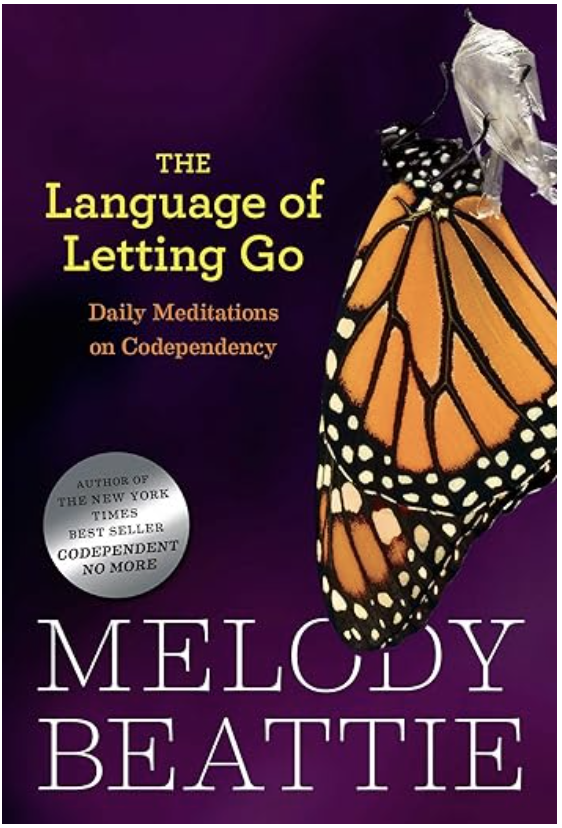
Currently on the Nightstand
Share this blog

RSS


thrivingisthegoal.com
is licensed under a
Creative Commons Attribution-No Derivative Works 3.0 United States License.

 Out of the Mire