Out of the Mire
…because thriving is the goal
Another Saturday Night
I was prepared to publish a completely different post, and perhaps I will. But, as I was cleaning my kitchen, another thought came to mind.
Why do so many people with deep trauma never reveal it even if much of it is adaptively processed? Why? Why do we refrain from telling our stories or tell highly redacted versions?
Aside from the obvious reasons like stigma and boundaries, are there other reasons? I think so.
The healing process takes so damn long. Healing from deep trauma feels like the work of a lifetime, and, in my experience, people grow weary of that process. So many well-meaning people grow tired of the subject, verbal processing, and resultant affect, and the inevitable question arises: “Why can’t you just be happy? Isn’t it time for you to move on?”
Funnily enough, for many of us dragging that deep trauma around, we ask ourselves the same question. What’s more, it isn’t that we aren’t “happy” per se. It’s that there is work to be done, and, like the mail, it just keeps on coming.
There is a unique weight associated with deep trauma, and it’s hard to explain what it feels like to someone who hasn’t experienced it. Why can’t we just get over it? Frankly, I don’t know. Why can’t I just get over it? Why can’t you just get over it?
Imagine all those Syrian refugees. Do you think that they will ever be able to “just be happy”? I can’t answer that, but I do know that they will never forget their current and past experiences. Victims of human trafficking? From personal experience, I can say that you can go on to build a good life if you survive it, but it takes a long time. And, no, you don’t forget any of it. Should you be unfortunate enough to witness other people get tortured or even murdered…? No. You will not forget that, and you will likely never get over that. If you yourself survive torture, then, no, you will not forget that. And, sometimes, your brain does not survive it fully intact. Deep trauma leaves trenches. Not small scars. Your brain is actually changed on a neuronal level by trauma.
Sometimes you find yourself wanting to simply talk about it particularly if a long-dormant memory springs to life, but you won’t. It’s not that you can’t. You won’t. Why do we not talk about our past experiences? Honestly, it’s because they are too horrible to inflict on another person. It takes a special person to be our witness, and, truthfully, it’s almost worse to see the shock and horror followed by the pity that overtakes people’s faces when they hear the narrative account. They reel back fully incredulous. You can almost see them begin to wonder if you are really a sane individual; or, maybe you’re just a big faker feigning normalcy. Either they lose their words and stare at you, or, worse, morbid curiosity sweeps over them; and the uncomfortable questions begin.
“You were actually abducted? Wow. How did that happen? How did you get away? Like…literally…how? What happened to you when you were there? Did the FBI get involved? Did you see really bad things? Oh! What was the worst thing that you saw?”
What is the worst response? Being blamed for whatever it was that ended in your experiencing trauma. The victim blaming response. “What did you do to cause this? Surely, no one would ever do a thing like that if you didn’t instigate it.”
The problem with all of this is that you know that nothing in all of this is to be normalized, but, since this is all a part of your story and life experience, it’s your normal even if it is as far from normal as the East is from the West. This is why it is so alienating. You are on the outside of the bell curve in terms of life experiences, and you don’t know who your people are. Do you even have a people? Where do you go if you’re a refugee, a torture survivor, a survivor of prolonged abuse of any kind? Who do you talk to about your inner darkness? Who might understand it? Who won’t grow weary of hearing about yet another terrible thing that happened to you? Who won’t blame you for your own suffering or judge you in some way?
For me, it gets put aside and processed, for the most part, alone because blame and judgment slow my process down. There are some things that I fear to bring to the light of another person. Judgment is more than I can bear at this point. I grow tired of saying, “It doesn’t matter what anyone thinks.” It does matter on some level not because I long for approval. No, it’s not that. It is something quieter and deeper and harder to get at.
I think that when you’ve grown up being thought of so poorly by the people who were supposed to be your biggest fans and supporters, the idea of being accepted and even approved of becomes almost a fantastical notion. A dream. One develops a veneer in order to survive and push forward. At some point, however, the need to be cared for, liked, and accepted becomes apparent. A desire for devotion emerges. To feel chosen. Preferred. Wanted. Safe. Special even. So, to endure even more judgment for trying to fight to heal from events that were undeserved and completely out of one’s control just brings on pain and further ontological alienation. It is easier to say nothing or omit information by broadcasting an edited reality to the world beyond than to be honest. And, I sometimes wonder if this isn’t the reason why autoimmune disorders are so common among people who have experienced trauma.
There is great comfort when we are invited to talk about what we’ve experienced and how we are experiencing it now in a validating and safe environment among people who truly care for us and won’t grow weary of the arduous journey. Being able to authentically work our process in safe relationships without fear of judgment is probably one of the best entry points to a quickened healing process. This is a true gift.
So, as you make your way in your process, be on the lookout for that environment and those people. They do exist.
A Hard Saturday Night
I want to pause the EMDR button and talk for a moment. I have to process something, and I do that most often through writing. This is germane, I think, to this blog’s content in some way. So, I’ll do it here. Plus, it just might speak to someone.
Have you ever felt completely misunderstood? Not in words. Not as if you misspoke. No. Something worse. Existentially misunderstood. As in you were unseen for who you are. Worse, not seen, accepted, or understood by someone you thought actually did understand you.
I had that moment a few weeks ago, and the feeling won’t leave me. It comes back to me on and off when I’m not even thinking about anything related to, well, anything important. It just appears, and I’m right back in the moment.
I had been in my house, doing whatever, and I was asked, out of the blue, “Do you ever do anything fun? Like…ever?” Actually, it wasn’t really even a question. It came out more like a statement. A judgment. And it landed hard. I felt stunned. I didn’t know what to say. I was instantly hurt, but I lost my words. I wanted to stand up for myself, but I didn’t know how. What could I say? I felt awash in inadequacy and shame.
Do I ever do anything fun? How do I explain this?
I am a single mother with four daughters, but in order to explain this I have to go back in time.
I write another blog all about my experiences with mental health and my daughter, Grace. In 2011, unbeknownst to everyone, she was in the prodromal stages of what appeared to be childhood-onset schizophrenia. Frankly, it was nightmarish for my entire family. My youngest daughter was born screaming. Literally, she was pulled out of me screaming, and she did not stop screaming. The nurses had to move us to a separate room away from the other new mothers and babies because she was causing such a disturbance. She continued to scream for two years solidly. For real. She rarely slept for four years. I developed terrible migraines due to extreme sleep deprivation and the car accident I experienced while pregnant with her. She was diagnosed with a slew of developmental issues one of which was, of course, an autism spectrum disorder. I thought that she was going to be it, so to speak, in terms of stress.
Nope. Schizophrenia in a fifth grade child is an entirely different sort of terrible. I had little to no rewarding personal life when Grace became ill. My entire life was about caregiving and special needs advocacy already. Grace didn’t achieve meaningful stability until 2013, and, by then, I was a shell of a woman. For a year, I could not predictably take Grace out of the house. I had to let all ambitions for a personal life or even a future go. No. I did not have fun. Ever. I lived and breathed caregiving. Social workers and therapists were in and out of my house weekly because Grace could not go to them. Her diagnosis was so serious that we qualified for state assistance. Every therapist and social worker we saw had never met a child with her diagnosis. It was a terrifying time.
All I did was go to her school to meet with someone. Go to specialists. Go to the hospital. Meet with neurologists and neuropsychologists. Try and build a care team that could help her. And, I did this entirely alone. I had three other children whose needs were skyrocketing. Plus, I had a husband who decided to entirely check out of the marriage as well as all parenting responsibilities while generously deciding to throw in the occasional round of abuse when it felt good.
No. I was not having fun. I was getting very sick. First, my neurologist thought I had MS. I had multiple MRIs. I had a lumbar puncture. Numerous blood tests. I was put on more and more medication. I was sent to a rheumatologist. I was diagnosed with SLE.
No. That was in no way fun. I had no family support because I have no family. I have a few friends. That’s it, but who wants to rely too heavily on friends? Friends have lives and their own responsibilities!
These were very dark days. There were moments I just wanted to fade away and die. I started to lose hope.
So, here I am now. Building something from the ashes of a former life. I feel really good about it actually. My daughters are very proud of me. I’m proud of my daughters. We pulled together, and we took steps to turn our lives around. I’m not in a domestically abusive relationship anymore. My health is improving, and I am learning to have fun again for the first time in literally years.
So, to be judged so directly for having a life that doesn’t measure up to some arbitrary standard of what “fun” should look like when I’ve come so far was very painful for me. And, I have not even discussed the effects of domestic violence on one’s identity. Even if I were to have had completely healthy children, I endured years of abuse in my primary relationship. Learning to recover and heal an identity after that takes time. Learning to speak up, learning to practice self-care, learning to even know what you want when you’ve been deprived of being allowed to want, learning to stop hiding your personal tastes lest you be mocked, learning to relax enough to engage in fun, learning to give yourself permission to enjoy life again…this is all part of the healing process.
I thought, perhaps naively, that this process was understood and who I was as a person was seen. To feel “on the outside” in a relationship is painful. It’s alienating. There is no intimacy there. Just a feeling of bleakness. Desolation.
I don’t wish to experience these kinds of interactions. Sometimes I find myself wanting not to disclose anything to anyone. It is far easier to simply play a part. No one needs to know anything because it feels as if one is judged anyway. These are my feelings speaking right now–not my reasonable self.
Yet we are wired for intimacy and connection. There are people in the world, very rare people, with whom we do connect. Those kindred souls who truly get us. When we are with them we feel like we’ve come home. We are on the inside of something grand and almost magical when we are with them. Sometimes I find this human need for others almost unfair. As my daughter says, “I just want to live with the cats and not bother with people.”
But my cat puked on me when I was sleeping last night. So, I don’t know what to say about that. Alas, we humans are not meant to be alone. Sometimes feeling truly understood for who you are, where you’ve been, how you’ve suffered, and why you do the things you do is the most healing thing of all. It is exactly how you need to be loved in order to recover and grow into the next stage of becoming.
It’s just a hard Saturday night. That’s what it is.
EMDR in Real Time
With all this talk about EMDR, I have been asked, “Yeah, but what is it? What do you do exactly?”
That’s a question I would ask. I would want to know. “Trauma work” sounds ominous. So, what does it look like? Let’s talk about that.
I’ve already laid the foundation for the methodology behind EMDR, but, essentially, what you are doing when you do trauma work is addressing and healing core beliefs. Core beliefs are what seem to anchor traumatic memories to that maladaptively processed part of our brains, and core beliefs also keep the past feeling like the present particularly if you developed a core belief during a traumatic event which many of us do.
For example, I have a core belief that is lodged in my brain, and it surfaces during extreme trauma. That core belief is: “Always fight. Always win. Always survive.” This doesn’t feel like something I believe with all my heart. I don’t chant this mantra and feel warm and fuzzy. That’s not how this core belief functions. It almost feels like a line of code. There is almost no emotional content attached to this “core belief”. When I, however, find myself in a circumstance when I am squeezed beyond what I can tolerate, this code begins to play–“Always fight. Always win. Always survive.”
Is this a good core belief? That depends on who you ask. This is the Delta Force mantra, and it was drilled into me by my father who was a member of the special forces in a branch of the military. I don’t like that something of this nature is in my head largely because he put it there through hours of military-like torture during my childhood. On the other hand, this core belief has enabled me to survive extreme circumstances and acquire mental resiliency along the way. Some core beliefs that you acquire can be useful even though they aren’t really yours. Keep that in mind as you do your work.
So, when you sit down with your therapist to do EMDR, you will have a specific memory in mind that you want to process. You will discuss the memory with your therapist. They will ask you questions about it, judging for themselves how intense the memory is for you, and whether or not you are dissociative around this memory. It’s necessary to know that because a great deal of emotional content is filled in during EMDR, and the goal is to safely process that content.
EMDR itself simply requires sitting in a chair. Each therapist will do something different. Some therapists will have you hold in each hand something that lightly vibrates in order to stimulate each hand on and off. My therapist merely had me follow the movement of his hand back and forth for 60 to 90 seconds at a time. The eyes must move in EMDR. This is how the brain is activated. During each 60 to 90-second interval, you insert yourself into the memory you are trying to process and see what your brain shows you. Your brain will reveal very interesting things to you that you most likely forgot.
The first memory I chose for EMDR this time around was a childhood memory centered around my father and his wife. My father was more abusive than my mother. My mother’s intention most of the time was never to deliberately abuse. She is a victim of life as much as I am in some ways. He, on the other hand, was deliberately and systematically abusive, using the mutilation of animals and physical and psychological torture to try to breakdown my personality. Consequently, I grew up utterly terrified of him, but, at the same time, secretly defiant. To this day, however, I struggle with freezing and not being able to speak when I am startled or feeling extreme fear. This is all due to past trauma. Most of my remaining traumatic memories in childhood revolve around him.
So, the EMDR session merely begins with recalling the memory from the best point, and, during recall, watching my therapist’s fingers move back and forth. He stops the clock, so to speak, and asks what I experienced in terms of bodily sensations, emotions, and memory recall. He will also ask what thoughts came to mind. Painstakingly, we went through that first memory. I remembered certain details that I had forgotten. My therapist had to pause once or twice. He cried when I cried and said, “I don’t like to pass judgment as a therapist, but I gotta say…your father was a very bad man.”
Yeah, he was.
Nothing new came through for me until the end. During the final round, remembering the worst of it, I heard the thoughts of my six year-old self come forward loud and clear. My father was physically abusing me in a brutal and somewhat sexual manner. And, I heard my very young self say to herself, “I hate you. I am NOT bad!”
After my therapist’s fingers stopped moving, he asked, “What did you remember?” I told him. There was nothing new in terms of my memory of the events other than I was reliving the physical aspect of the abuse. I did not remember, however, that, at that age, I believed myself to be good. I knew that he was wrong, and I didn’t deserve what he did to me. The shock and trauma of the abuse overrode an underlying core belief that actually served me and would serve me now.
That put a completely different spin on that memory. Yes, I was a victim, but I was a defiant victim. I knew the truth. I just had to endure what he was dishing out, and I survived it mentally intact. We discussed the emotional content of the memory. It was deemed adaptively processed. Sometimes when a foundational memory like this gets processed, other memories that were attached to this one by default are automatically processed, too. Sometimes it’s just a matter of finding the right starting point. This is why EMDR provides resolution so quickly in certain circumstances. Address the core belief, and every memory with the matching core belief is affected.
That’s EMDR. It is one of the best ways to engage your trauma head-on and process it while healing at the same time. It is highly effective and worth every bit of intention and effort that you bring to it.
Just Do It
“Adventure will hurt you, but monotony will kill you.”
I don’t know who said this, but this feels quite true. In fact, I would change it were this my quote to this:
“Adventure will no doubt hurt you, but passivity will certainly kill you.”
Making a choice to take risks and pay the price for the injuries you incur along the way will cost you in numerous ways. That is a guarantee. You might feel a lot like this:

Doing nothing? Make no mistake. Doing nothing is a choice, too, and we pay for that passivity in ways that injure us in very painful and even unexpected ways. Hidden ways.
It’s good to dream. It’s good to engage in thought experiments. It’s good to want. It’s key to want actually. It’s imperative to wish and desire, but a moment must come in your life when you are willing to put all that on the line and do. And, only you can decide when the time has come to toss self-doubt and fear aside, put your feet to the road, and begin living and creating the life that you have known all along you were truly meant to live.
What is true?
“There is little faith involved in setting out on a journey where the destination is certain and every step in between has been mapped in detail. Bravery, trust, is about leaving camp in the dark, when we do not know the route ahead and cannot be certain we will ever return…The lesson is, the rewards in life don’t always go to the biggest, or the bravest, or the smartest. The rewards go to the dogged; and when you’re going though hell, to the person who just keeps going…Dreams, though, are cheap, and the real task comes when you start putting in place the steps needed to make those dreams a reality…Are you the sort of person who can turn around when you have nothing left, and find that little bit extra inside you to keep going, or do you sag and wilt with exhaustion? It is a mental game, and it is hard to tell how people will react until they are squeezed…But I also knew if I could somehow replace my doubt with hope, my fear with courage, and my self-pity with a sense of pride, then I just might be able to do this.” Bear Grylls, Mud, Sweat and Tears
Grylls is right. It isn’t about being inspired or making lists or doing research or wondering what it might be like to change your life. It is about tenaciously engaging your life and changing it one painful step at a time until you are where and who you want to be.
There is no short cut. There is no pill. There is no easy answer. There is only effort, perseverance, and dedication, but it’s well worth it.
So, pick your day. Pick your time. Choose your goal. And decide. And then…do it. That’s actually all there is to it. Set your intention, stop listening to all the naysayers in your life, and begin to let your imagination of yourself and your life grow into the size of the life and identity that you know are really yours–even if you feel unworthy of it. If it belongs to you, then go out and fight for it. Even if it might take years to accomplish. This will be the best fight you ever fought, and you will win it.
Why? Because you were born to win it.
So, get out there and dial up the awesome. It’s time.

An EMDR Tip
I start EMDR today. Oddly enough, I’ve had very detailed nightmares for three nights. Nightmares in Technicolor.
I am not one to have nightmares. I have elaborate dreams from time to time, but this is different. These dreams are like my worst fears come to life, and I’m stuck in them. Or, it’s past trauma being acted out against me by the people in my life now whom I trust. It’s very weird, and I don’t like it.
Were I to step back and take a deeper look, I would say that my brain is priming the pump. It’s preparing to do the work of opening up the doors into the memories of past trauma. It’s beginning to play out the movies of what is actually stored in the unprocessed or maladaptively processed memory bank so that the actual process of EMDR goes well.
I gotta be honest here. This is extremely unpleasant. I was not myself yesterday. I was crying on and off all day. I know what I’m in for, but it’s time to do the shit work so that this shit can end. For good.
So, should you start therapy and begin to do trauma work, take heart. You might encounter something like this. I think that our brains like to help us out, but it sure doesn’t feel like a helping hand. It feels like the trauma merry-go-round. It’s not. It’s momentum gathering.
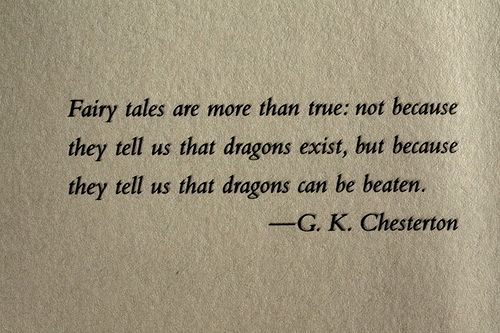
I’m off for the day. Time to go slay some dragons…
The Event Horizon
I had coffee with a friend tonight. I think it was just supposed to be an easy “how’ve you been” sort of coffee, but that’s not what it was.
How do I explain this? I have met few people in my life who experientially understand deep trauma, and, realistically, that’s a good thing. I would rather not meet people who have suffered profound trauma. The world needs less of that. I would rather not cause my therapists to acquire secondary trauma just by being my therapist, but it happens. Seeing one’s therapist cry is not a goal. It’s painful.
So, my friend and I circumlocuted. We talked around the subject of our current therapeutic circumstances because neither one of us wanted to actually get down to the nitty gritty. We know each other’s stories, but neither one of us wanted to discuss details. We are both neck deep, yet again, in the therapeutic process. I know why she’s in therapy. She knows why I’m in therapy. We’ve both been riding the therapy train on and off for years. We’re both tired of it. When does it end? It does end, doesn’t it? Eventually?
What choice, however, do we have? Complex PTSD does not heal itself, and C+PTSD is not the same thing as PTSD. There are different kinds of trauma. Acute trauma exists. It sticks with you for a while. It’s painful, and it throws a wrench into the physiological works. I don’t minimize it at all. Profound trauma, however, that annihilates one’s identity is a different animal. It changes a personality. It can change the course of a life. It can leave a person forever broken if not effectively tended to.
I wish I could understand it. Why do some people find functionality in the midst of it and others wither and die? Theories abound, but that’s about it. How is it that some people left Auschwitz, for example, immigrated to America with no family left alive, and started over successfully? How is it that refugees from war torn countries build new lives for themselves after watching family members, friends, and fellow countrymen die in front of them in sometimes very grotesque ways?
I have been a witness to extraordinary violence to both animals and humans, and I will always carry those memories. That’s what the EMDR will be addressing. My friend has as well. She doesn’t know anyone else who has experienced anything close to what she has except me and I her. And, much to my surprise, she actually understood what I meant by the term the Event Horizon.
What is the Event Horizon? Well, it’s the name I’ve given to an all-encompassing emotional experience that overtakes me out of the blue. I dread it. I first experienced it after my ex-husband moved out. It was very surprising to me. I was all but elated that I was free from the oppressive circumstances that I had no idea what this emotional shit storm was about. It felt like a primal fear had taken hold of me, and the overwhelming nature of it was so strong that I felt like I might die. My friend knew exactly what I was talking about. She had the same experiences.
Really? I was relieved that I wasn’t alone. I asked her what she thought this was about. When I told my therapist about it, he just nodded and said, “It’s trauma.” Trauma?! Well…I’ve been dealing with profound trauma since toddlerhood. I’ve never experienced this before. Why now? Her input? How many rounds of major trauma have I experienced? I’m on my third go-round: 1) Mother and Father 2) Abduction and trafficking 3) Domestic violence. I think the domestic violence got to me in a special way, hence, the onset of the repeated Event Horizon experiences.
What fuels the Event Horizon experiences? Dread. Fear. Panic. Inordinate grief. Profound emotional pain. The brain spins its tales. All brains tell stories. Brains do that. My brain spins nasty tales based on past experiences except my past experiences are so extreme that, when in the midst of one of my Event Horizon experiences, I can’t be reasoned with. I simply have to white knuckle it until it passes. The stories my brain throws at me are all plausible based on past experiences. Unfortunately, I’ve been kidnapped. I’ve been raped numerous times in the trafficking environment. I’ve endured the “breaking in” process. I’ve seen another person murdered. I’ve endured torture. I’ve been betrayed by people I trusted implicitly. These are experiences that are very difficult to process. They don’t make sense. They are hard to put meaning to. What’s more, they profoundly erode one’s ability to trust others, and, honestly, they leave me feeling as if I’m on the outside looking in in terms of social interactions. That is one of the primary and lasting effects of this type of trauma. Where does one belong? What is normal in terms of life experiences? I can tell you what is normative for my life experiences.
Intellectually, I know what should be normal and healthy, but, on a deeper level, I wish I had more normative life experiences.
This is exactly why I will forge ahead with EMDR. All of these life experiences, as bad as they were, can be adaptively processed and should be. I don’t want to experience the Event Horizon anymore, and I don’t want to maladaptively identify with this trauma any longer either.
So, as I forge ahead, I encourage and even challenge you to do the same. No matter what your trauma looks like or feels like to you, you don’t have to live a life beholden to it. I refuse to. So, I will keep going. No matter how hard it becomes.
Fight for the life you want. That’s a fight you and I will never regret.
My Borderline Mother
If you’ve read my blog in any detail, then you know by now that I have a mother who expresses her emotions and general psychology through a diagnosis of borderline personality disorder. If I were to follow Christine Lawson’s archetypes, then I would classify my mother as the Queen/Witch with a sprinkling of Medean Witch thrown in for good measure.
No one in my family knows my mother. Not the way I do. Well, my former stepsisters know her in a very distinct way. We spent our late childhoods and adolescence together under her reign of terror. I don’t say that to be dramatic. It was seven years of a ceaseless nightmare. When I was a child, I used to watch “Mommy Dearest” over and over again because it felt…familiar. The exacting nature of Faye Dunaway’s portrayal of Joan Crawford. The obsession with the wire hangers. My mother insisted that my sock and underwear drawer was organized perfectly lest she dump it out onto the floor and make me refold every item again and await her exacting inspection. My closet was to be organized by color and season. That made no sense to me. Every Saturday was cleaning day, and my room was to be military clean to the point of a literal white glove test and a perfect quarter bounce off my bed complete with hospital corners. If I failed any part of her inspection, I had to clean my entire room again. Drawers were turned out onto the floor. Invective was launched at me like live grenades. I was, at times, violently dragged around my room, my face shoved down into perceived imperfections from streaks on windows to visible footsteps in previously vacuumed carpet.
Everything had to be perfect. All the time.
My stepsister defied my mother once. She was beaten so harshly for saying ‘no’ to her that a few of her ribs were broken. She was so bruised that she could not sustain physical touch for at least a week.
These are just small details in a sea of stories about my mother. I watched my mother lose herself to her own talionic rage on one Christmas Eve morning. She tried to kill my stepsister. She assaulted the other one.
My mother remembers nothing. To her, this is all just water under the bridge. I am characterized as an unforgiving person because I remember. I am bad because I carry the marks of trauma. She might say, “Well, you know, I have struggled with anger over the years.” That’s one way to put it, I guess. Strangling the life out of a person is just a normal thing to do then during the holidays when you feel angry because there are crumbs on the counter. Guests are coming! Chop, chop! Never mind. I’ll just kill you over it. Merry Christmas, one and all.
This normalized response is crazymaking. There is absolutely nothing normal about a childhood like that. There is nothing normal about witnessing another human being do that to someone. Being made to feel like a bad person for saying so is…fucking nuts.
Why say this?
My mother wrote me a letter last Christmas as she always does. It’s the Merry-Christmas-You-Are-A-Bad-Person-For-Not-Letting-Me-In-Your-Life-and-You-Have-Robbed-Me-of-Happiness letter. I’ve received one every year for the last five years. Her pathology is on full display in each and every letter. I would compare it to a fruitcake full of nuts, but perhaps that’s too crass. Suffice it to say, I’ve noticed the calendar. I’m due for another demeaning and judgmental letter. This year, I launched a pre-emptive strike and wrote her instead. I mailed it this morning.
In reality, I actually only replied to her last letter–almost a year later. I have been working on a response for almost a year. There are a few people (i.e. almost everyone I know) who will all but scold me “Airplane” style for contacting her in any way, “Get a hold of yourself, MJ!”:
But, I feel rather like the pilot blazing a trail through the terminal. I don’t want to sit here and passively take it for another year, dreading every December trip to the mailbox. I’ve worked too hard to get where I am. I wanted to speak up rather than ignore her. No, it won’t change her. It won’t change anything, but speaking up might continue to change and empower me. That’s a good reason to respond to her, I think.
I don’t experience my life, memories, and even my own personality as I once did. Everything has evolved, and that’s a good thing. I don’t feel as I once did where my mother is concerned either although I know enough to be cautious by now. What I have learned on this long and winding path called ‘recovery’ is that telling the truth is important. Speaking up is valuable, and it’s important that we do so. It’s important because we are changed when we hear our own voices in the midst of the din of naysaying, accusations, and other nonsense. We may be talked down to, accused, disbelieved, and rejected. I’ve experienced all of this, but your healing is catalyzed when you feel the resonant power of your own voice as you say, “No, that happened, and that was wrong. I am truthful, and I am good. And whether or not anyone believes me or supports me, I can say that I know what is real, and I am stronger for having said so.”
Ultimately, this is why I responded to my mother, and this is why I feel peaceful. I’m not scared of her, but I do feel slightly vulnerable. Between her and my father, I have witnessed the absolute worst in humanity. Hands down. For those who prefer the light, the darkness holds little appeal.
So, speak your truth. Be brave even if you’re afraid. You are in good company, my friends.
EMDR and You
Let’s talk about trauma for a moment. I’ve mentioned EMDR in other posts, but let’s really discuss it for clarity’s sake.
What is EMDR?
“Eye movement desensitization and reprocessing (EMDR) is a therapeutic approach that emphasizes the brain’s intrinsic information processing system and how memories are stored. Current symptoms are viewed as resulting from disturbing experiences that have not been adequately processed and have been encoded in state-specific, dysfunctional form (Shapiro, 1995, 2001, 2007a). The heart of EMDR involves the transmutation of these dysfunctionally stored experiences into an adaptive resolution that promotes psychological health. For EMDR to be applied effectively, the clinician needs a framework that identifies appropriate target memories and order of processing to obtain optimal treatment effects.” (EMDR and the Adaptive Information Processing Model)
Does that sound like a mouthful? Let’s simplify it. Imagine, if you will, that your brain has two buckets for storing memories of experiences. We will label one bucket “adaptively processed” and the other bucket “maladaptively processed”.

In your adaptively processed bucket, all of your life experiences that you have “processed” as understood are dropped–even the bad ones. You have understood them and given them meaning. They might have been traumatic at one point, but they no longer resonate with that painful quality. You can recall them without feeling triggered. You can now look back and say, “Ah yes, I understand that now. I can derive something from that. I can put meaning to that suffering.” Or perhaps there is no meaning to add to the experience, but you can find a place for the experience. It has been adequately processed, and it doesn’t hurt acutely any longer. It is a memory at rest, untethered from other memories.
 The Maladaptively Processed Bucket
All of your maladaptively processed memories are dropped into the maladaptively processed bucket. These are memories of traumatic experiences that your brain cannot understand or give meaning to. They tend to have a “snapshot” quality about them and emerge quickly when a new experience occurs with similar emotional echoes. Here is a helpful explanation about how we learn and store memories:
“Consistent with other learning theories, the AIP model posits the existence of an information processing system that assimilates new experiences into already existing memory networks. These memory networks are the basis of perception, attitudes, and behavior. Perceptions of current situations are automatically linked with associated memory networks (Buchanon , 2007). For example, the reader can make sense of this sentence because of previous experiences with written English. Similarly, burning one’s hand on a stove goes into memory networks having to do with stoves and the potential danger of hot objects. A conflict with a playmate (“me first”) and its resolution (“we can share”) is accommodated and assimilated into memory networks having to do with relationships and adds to the available knowledge base regarding interpersonal relations and conflict resolution. When working appropriately, the innate information processing system “metabolizes” or “digests” new experiences. Incoming sensory perceptions are integrated and connected to related information that is already stored in memory networks, allowing us to make sense of our experience. What is useful is learned, stored in memory networks with appropriate emotions, and made available to guide the person in the future (Shapiro, 2001).” (EMDR and the Adaptive Information Processing Model)
This explains why traumatic experiences are hard to get over particularly repeated exposure to trauma. One traumatic experience in a lifetime of relatively positive experiences is unwanted and damaging, but repetitive traumas create what I call a Trauma Train. Every new trauma is like a car being added to a locomotive which is the original trauma. Soon, small events, which may not in and of themselves be horrible, feel catastrophic because they echo the original trauma which may have been devastating.
What does this look like in real time?
I’ll use the example of molestation during childhood. 1 in 4 women experience sexual abuse during her lifetime and 1 in 6 men experience it. This is common. I’ll tell this in a narrative form:
Jane was sexually abused by her stepfather. It started when she was 9 years-old. He fondled her on and off for a few years, and he made her watch him masturbate. She doesn’t have many visual memories, but she remembers how she felt. She remembers her acid stomach when he touched her in her bathing suit area, and she remembers how his hands felt touching her body. Her stepfather would always put his hand around her neck. Consequently, Jane hates to wear turtlenecks and scarves, and she feels very nervous and even gets migraines when she gets indigestion. She doesn’t really know why. Jane has never enjoyed dating. She hates the particularistic feeling of butterflies in her stomach. That feeling makes Jane want to run away and hide. She doesn’t like men to touch her, and she doesn’t like to make out or be intimate in any way. The feeling of their breath on her neck makes her want to vomit. The thought of having sex is too much for her. She once saw a penis, and she did throw up. Jane feels defective, alienated, and terribly lonely. She doesn’t want to feel alone. She doesn’t know why she struggles so much when her friends enjoy dating and going out. She just stays home and dreams that one day she’ll feel more confident.
What can be said about a scenario like this?
“Problems arise when an experience is inadequately processed. Shapiro’s AIP model (1995, 2001, 2006) posits that a particularly distressing incident may become stored in state-specific form, meaning frozen in time in its own neural network, unable to connect with other memory networks that hold adaptive information. She hypothesizes that when a memory is encoded in excitatory, distressing, state-specific form, the original perceptions can continue to be triggered by a variety of internal and external stimuli, resulting in inappropriate emotional, cognitive, and behavioral reactions, as well as overt symptoms (e.g., high anxiety, nightmares, intrusive thoughts). Dysfunctionally stored memories are understood to lay the foundation for future maladaptive responses, because perceptions of current situations are automatically linked with associated memory networks. Childhood events also may be encoded with survival mechanisms and include feelings of danger that are inappropriate for adults. However, these past events retain their power because they have not been appropriately assimilated over time into adaptive networks. The AIP model views negative behaviors and personality characteristics as the result of dysfunctionally held information (Shapiro, 2001). From this perspective, a negative self-belief (e.g., “I am not good enough”) is not seen as the cause of present dysfunction; it is understood to be a symptom of the unprocessed earlier life experiences that contain that affect and perspective. Attitudes, emotions, and sensations are not considered simple reactions to a past event; they are seen as manifestations of the physiologically stored perceptions stored in memory and the reactions to them. This view of present symptoms as the result of the activation of memories that have been inadequately processed and stored is integral to EMDR treatment. ” (EMDR and the Adaptive Information Processing Model)
The purpose of EMDR then is to transmute these inadequately processed memories to adaptively processed and integrated memories:
“After successful treatment, it is posited that the memory is no longer isolated, because it appears to be appropriately integrated within the larger memory network. Hence, processing is understood to involve the forging of new associations and connections enabling learning to take place with the memory then stored in a new adaptive form.” (EMDR and the Adaptive Information Processing Model)
EMDR works. It moves those maladaptively processed memories to the adaptively processed bucket. I have done EMDR in the past, and I am about to embark on the process again. I highly recommend EMDR to anyone who wishes to move from living in a triggered, traumatized state to a more integrated state. My therapist recently told me that EMDR can address the lesser discussed PTSD symptom of the sense of a foreshortened future, and that blew my socks off! If EMDR can actually address and heal that, I might do something crazy like…er..post a picture of myself wearing an ugly Christmas sweater on my blog.
I’ll keep you posted. In the meantime, keep EMDR in mind if you are looking to heal from trauma. It’s a well-groomed trail out of the mire.
Further Reading:
EMDR and the Adaptive Information Processing Model: Potential Mechanisms for Change
The Red Herring Effect
I was about to hit my stride when I wrote “Your Narrative Brain and Trauma Recovery”, but then Rosh Hashanah and Yom Kippur came around; I became contemplative and pondered the nature of healing and what keeps us trapped in the same cycles. What is the nature of this repeating trek around the same mountain? Why do we do this? Posing the question in different terms, what prevents us from actually progressing and stepping onto the path to a new place? A destination of our choosing?
I suspect that it has something to do with truth and our capacity for grief. Resiliency in a word.
What is resiliency?
“Healthy, resilient people have stress-resistant personalities and learn valuable lessons from rough experiences. Resilience is the process of successfully adapting to difficult or challenging life experiences. Resilient people overcome adversity, bounce back from setbacks, and can thrive under extreme, on-going pressure without acting in dysfunctional or harmful ways. The most resilient people recover from traumatic experiences stronger, better, and wiser.
When hurt or distressed, resilient people expect to find a way to have things turn out well. They feel self-reliant and have a learning/coping reaction rather than the victim/blaming reaction that is so common these days.” (Al Seibert, PhD)
It’s the learning/coping reaction when distressed that I want to discuss largely because we live in an age that is saturated with information. There is too much to know and too much information to sift through. How do we discern good and useful information from bad and useless information? When does doing helpful research turn into avoidance behavior and an excuse not to engage in decisive action? The world has changed drastically in the last twenty years, but humans have not. We are still the same. We still need to cope. We still need relief from our suffering. Our maladaptive coping strategies just look more sophisticated, and we might look more resilient than we actually are.
What point am I trying to make?
Sometimes in our process of trying to shake loose our bonds, we might feel like we are doing a more effective healing work than we really are. Using my own journey as an example:
It’s no secret that I hail from an abusive family of origin. My father and his wife were paragons of godly virtue and morality in public but nightmares behind closed doors. It was systematic abuse meant to breakdown my personality, and it was intentional. After I left my family, I felt ambivalence towards my father, but I felt nothing short of hatred towards my step-mother. It was white hot, and I felt ashamed to feel such intense negativity. I wanted to rid myself of it. Ground it. No matter what I did, I couldn’t. She bore witness to all he did. She egged him on. She suggested certain actions. I believed that some of the abuse would never have even happened had she simply been silent. I blamed her entirely. To me, it was her fault.
But was it?
As I progressed through the therapeutic process, I observed that I had placed all the blame for my father’s abuse upon my step-mother because I could not come to terms with what was actually true. It was my father who abused me. My father. And, fathers are not supposed to abuse their children. There had to be a reason for the extreme scenarios that I experienced. I felt that I could reason my way through my experiences, but logic simply does not apply to the excruciating pain left in the wake of trauma. Was my step-mother responsible? Yes, she was. She enabled the abuse, but my father was responsible for my well-being. He was supposed to model paternal love, caring, and nurturing, and he did the opposite. My step-mother had nothing to do with his failure. That was all on him.
Sometimes, during our healing process, our mind casts out a red herring. A red herring is something that is intended to distract us from the more relevant issue. Sure, my step-mother and I had things to resolve. She was culpable, but my focus on her guilt distracted me from the more relevant issue–my father’s misdeeds. If I was ever going to heal, then I had to stop focusing on the lesser crimes, release my hatred, and turn my attention toward the real issue that I was so vigorously avoiding. I had to accept the hard truth that my father failed spectacularly in his role, and I was suffering inordinately for it. It was very hard to accept. Why? His spectacular moral failures led to questions about myself that were too painful to ask much less answer, but that is exactly why the therapeutic process exists. It provides us with the context to dig our way through and out of the mire of the grief, pain, and confusion that the trauma of abuse leaves us with. It is imperative, however, that we use the desire for truth as our shovel as it were.
That relentless drive to know the truth of our circumstances as well as the truth behind our habits, coping strategies be they maladaptive or healthy, and those things that fuel our thoughts and beliefs is what goes to stoking resiliency. I am convinced of this.
So, be on the lookout for any red herrings in your life. They often feel like truth, and in some ways they are, but they can keep you chasing your tail and circling the mountain for years when, in fact, you really want to find the road that leads you to the life you most desire.
Further Reading:
- The Resiliency Advantage: Master Change, Thrive Under Pressure, and Bounce Back from Setbacks by Al Seibert, PhD
- The Survivor Personality: Why Some People are Smarter, Stronger, and More Skillful at Handling Life’s Difficulties…and How You Can Be, Too by Al Seibert, PhD
Atonement and Forgiveness: Another Perspective
The Jewish New Year is fast approaching. In the Jewish calendar, the month before Rosh Hashanah is called Elul. In Jewish thought and tradition, the month of Elul is considered to be a time when God is “in the field”. He is to be found. The veil is thin. Draw near. So, what is the deal with Rosh Hashanah? It leads up to Yom Kippur. Why does that matter? Isn’t Yom Kippur a line in that Train song? “How could you leave on Yom Kippur….” Why does this even matter? Let’s talk about it.
The subject of Rosh Hashanah and Yom Kippur is vast, but, in very simple terms, Elul is a time of stocktaking and introspection. “Chassidic master Rabbi Schneur Zalman of Liadi likens the month of Elul to a time when “the king is in the field” and, in contrast to when he is in the royal palace, “everyone who so desires is permitted to meet him, and he receives them all with a cheerful countenance, showing a smiling face to them all.” (Chabad) As a Jewish writer points out, “As the month of divine mercy and forgiveness, Elul is a most opportune time for teshuvah (“return” to G‑d), prayer, charity, and increased ahavat Yisrael (love for a fellow Jew), in the quest for self-improvement and coming closer to G‑d.” (Chabad)
Christianity has a similar tradition found in Lent which precedes Holy Week and Easter, and Muslims observe Ramadan (The Muslim Lent: Ramadan Explained) So, the idea of engaging in contemplation for the sake of personal betterment, increasing one’s awareness of our neighbor, and increasing our intimacy with God is indeed common. To what end do we engage in this? There is a reason to be sure.
Have you ever met a person of faith, regardless of whatever faith they followed, who seemed to represent that faith beautifully? You may not have believed what they believed, but, after you spent time with them, you thought to yourself, “That was a lovely human being. I respect that person so much.” Conversely, have you ever met a person who made you feel sick to your stomach just by being near you? What seemed to amplify their noxious personality was their proclamation of religion. You left their presence thinking to yourself, “Whatever they believe I feel mandated to personally oppose for the sake of all that is integrous and good in the world!”
I have had both experiences, and, in terms of faith and personalities, there may be a reason for that. Furthermore, it’s entirely redeemable albeit unpleasant. From what I’ve observed, it comes down to what one believes about present accountability.
I’ve written before that I grew up within Christianity. I almost went to seminary. I am, however, Jewish. I can trace my family back to the time of the Spanish Inquisition. We fled as conversos and maintained a secret and not so secret Jewish practice for centuries. The tradition was passed to me when I was around ten years-old. It is very hard to be Jewish alone, however, as there is a lot that one can’t learn by oneself. I have learned a lot in a year since “coming out” of the converso closet. One of the more fascinating things that I have learned has centered around Rosh Hashanah, the Jewish New Year, and Yom Kippur.
Elul, the month before Rosh Hashanah, as I have explained, is a time of contemplation in order to ponder how your year went. How did you do? How did you treat others? Do you need to make anything right? What would you like to do better? It is a time to look to the immediate past, assess the present, and adjust one’s trajectory. Rosh Hashanah is then the entry point into the new year complete with seder when one begins to ask to be the head and not the tail. Victorious and not defeated. The greeting on these two days is “L’shanah tovah” which is actually a shortening of “L’shanah tovah tikatev v’taihatem” which means “May you be inscribed and sealed for a good year.” Rosh Hashanah begins a ten day period of time that ends with Yom Kippur; this period of time is known as the Days of Awe or the Days of Repentance:
“One of the ongoing themes of the Days of Awe is the concept that G-d has “books” that he writes our names in, writing down who will live and who will die, who will have a good life and who will have a bad life, for the next year. These books are written in on Rosh Hashanah, but our actions during the Days of Awe can alter G-d’s decree. The actions that change the decree are “teshuvah, tefilah and tzedakah,” repentance, prayer, good deeds (usually, charity). These “books” are sealed on Yom Kippur. This concept of writing in books is the source of the common greeting during this time is “May you be inscribed and sealed for a good year.”
Among the customs of this time, it is common to seek reconciliation with people you may have wronged during the course of the year. The Talmud maintains that Yom Kippur atones only for sins between man and G-d. To atone for sins against another person, you must first seek reconciliation with that person, righting the wrongs you committed against them if possible.” (Judaism 101)
This entire idea shocked me when I learned about it. Growing up in a Christian environment, it was very foreign. What kind of exacting accounting of my choices was this? My first response was fear. I shared what I had learned with a friend who practiced Christianity, and their response was to dismiss it: “That’s nonsense. Jesus covered all our sins. We are free and forgiven.” Is that true? Let’s look at Matthew 5. Jesus explains very directly:
“23-24 This is how I want you to conduct yourself in these matters. If you enter your place of worship and, about to make an offering, you suddenly remember a grudge a friend has against you, abandon your offering, leave immediately, go to this friend and make things right. Then and only then, come back and work things out with God.”
Yom Kippur is referred to as The Day of Atonement in Leviticus 23. Leviticus was written between 1440 and 1400 BCE. Jesus was born sometime around 7 BCE. Jesus was a practicing Jew as we all know. He would have observed Yom Kippur, and he would have taught those who listened to his teachings how he interpreted Torah. What is Jesus saying then? What is the greater implication?
In the words of Rabbi Moshe Brennan, “Yom Kippur is primarily about asking for God’s forgiveness. Making amends with humans is a separate thing.”
That’s what Jesus was talking about. We can’t go to God and expect him to forgive us for something that is between us and someone else. We have to do the work of resolving that before we attempt to resolve our personal issues with God. Furthermore, our refusal to engage in this has a direct effect on the coming year:
“One of the ways we can demonstrate that devotion (to God), says Germantown Jewish Centre’s Rabbi Annie Lewis, is to repair the relationships in our lives, to follow not just the spirit of the law, but the very letter of it. “ ‘Yom Kippur’ comes from kapporet, which means to cover over something,” she explains. To draw on God’s abounding compassion, she says, we have to cover over the holes in our lives caused by past failings. “God will not grant us forgiveness from something we have done to another person until we seek forgiveness ourselves from the person. Yom Kippur is a powerful time to work on these relationships.” (Understanding Yom Kippur’s Focus on Atonement and Forgiveness)
Hence, the ten days that lie between Rosh Hashanah and Yom Kippur exist to allow us to make amends and settle accounts not only with God but with everyone in our lives. It is a time to do the hard things.
“Atoning and forgiving is only difficult if you are doing it right,” says Rabbi Eli Hirsch of Mekor Habracha, a Center City synagogue. “Offering quick and easy apologies means that you probably are not taking responsibility for the pain you’ve caused. And it’s interesting that we can sense when an apology is insincere…But God wants us to make amends because he cares about our relationships with each other. He demonstrates that by forgiving us again and again.” (Understanding Yom Kippur’s Focus on Atonement and Forgiveness)
This is what was missing in my religious experiences growing up. This is what has been missing in my religious experiences as an adult. I would watch the people around me mistreat their fellow congregants in big and small ways with little remorse. Sometimes quick apologies were offered, but when forgiveness was not easily granted for pain inflicted a judgmental insult was rendered, “How can you be a Christian then? God forgives me! I have grace.” Actually, no, you don’t. It’s very clear here that if we wrong another person, then we have to make amends. God does not do the work of forgiving us on behalf of another person if we haven’t actually sincerely apologized to that person and asked how we can make amends for hurting them. Going further, it’s inappropriate for us to even be in church or synagogue offering worship to God when we know someone has something against us particularly if the reason they are hurting is our fault! Even Jesus said that. The grace of God is not unmerited favor. The grace of God is an empowering presence that equips us to do the things in life required of us that we may never have been able to do without it.
It’s shocking, but it’s necessary to know. We really are accountable for our actions towards other people. In the now. To love God well means to love others well. In the New International Version translation of the New Testament, the word ‘sin’ is mentioned 127 times. ‘Love’, on the other hand, is mentioned 232 times. People matter. You and I matter. How we are treated matters, and how we engage others on a daily basis matters. We cannot engage in all manner of bad behavior towards our fellow humans while engaging in religious traditions, and then expect forgiveness from God. We actually have to find the people we hurt and do something about it. That is exactly why we require grace. Why? Because doing that kind of work is scary and extremely difficult. We often find out in the reconciliation process that we might not be as awesome as we thought we were, and it can throw us for an existential loop. Weighing our self-perception against other people’s experience of us can be quite painful, but it can often be the catalyst to immense personal growth. This is the gift of the Days of Awe. This tradition exists for our well-being and healing. Not for God’s.
I want to stop for a moment and address something. I have experienced abuse and trauma. What if a former abuser approaches you and asks for forgiveness? I have experienced this; not only was I frightened by the experience but I was also confused.
“But some things seem impossible to forgive. As the founder of JSafe, a Jewish organization dedicated to helping victims of domestic violence and child abuse, Dratch should know. How could atonement be made for those crimes? How could forgiveness ever be granted?
“Repentance is the obligation of the perpetrator and forgiveness is the prerogative of the victim,” Dratch explains. “In many cases, abusers follow the same steps as those who have committed other wrongs: admitting guilt, taking steps to make sure that the behavior is not repeated and sincerely apologizing to the victim. Those three things can take a lifetime to accomplish. Many abusers will not even admit their crimes and so can never earn forgiveness.”
Whether or not the abuser asks for it, victims often try to forgive as part of their healing process. “Jewish law does not oblige a victim to forgive,” Dratch clarifies. “But when you hold on to hurt or anger, you hold on to the crime and allow it to define you. By forgiving, people who have been controlled by others take control over their minds, bodies and self-images. They say, ‘I will not allow your actions to influence me any more. I will be the person that I want to be.’ ”
Forgiveness is very different than consequence, Dratch says, and one of those consequences is punishment. “Someone may hurt you and you may forgive, but perhaps you don’t want that person in your life anymore, or perhaps not in the way they were before,” he says.
Lewis also believes that forgiving is the key to Yom Kippur, even if there can be no concomitant forgetting. “What happens in the past doesn’t go away,” she says, “but we find a way to integrate it into the new people we become through the work of teshuvah, seeking to repair our relationships with ourselves, with God, with other people.”
The cycle of forgiveness has been constant for thousands of years, and has applied to all Jews, regardless of their importance. God loved Moses completely and forgave his sins, but that forgiveness did not mean that Moses was allowed to go into the Promised Land. That exclusion was the result of the wrongs he committed.
That’s the other purpose of Yom Kippur, Hirsch believes. “It is a cautionary tale that we carry with us,” he says, “because when it comes to forgiveness, God has the final say.” (Understanding Yom Kippur’s Focus on Atonement and Forgiveness)
It’s interesting, isn’t it? In the end, we are not intended to be victims. We are supposed to be active in our lives. We make choices. We make amends. We approach God. We interact. We engage with ourselves and others. It makes sense. We have options, and we exercise those options. You don’t have to be Jewish to take advantage of the spirit behind Elul and the Days of Awe. Doing a self-inventory, engaging in contemplation, engaging God, and checking in with the people in your life with humility and openness may be a practice you find rewarding and catalyzing.
Further Reading:
- Understanding Yom Kippur’s Focus on Atonement and Forgiveness
- The Jewish Heart: The Secret of Elul
- What is Tashlich?
- The Three Kinds of Forgiveness
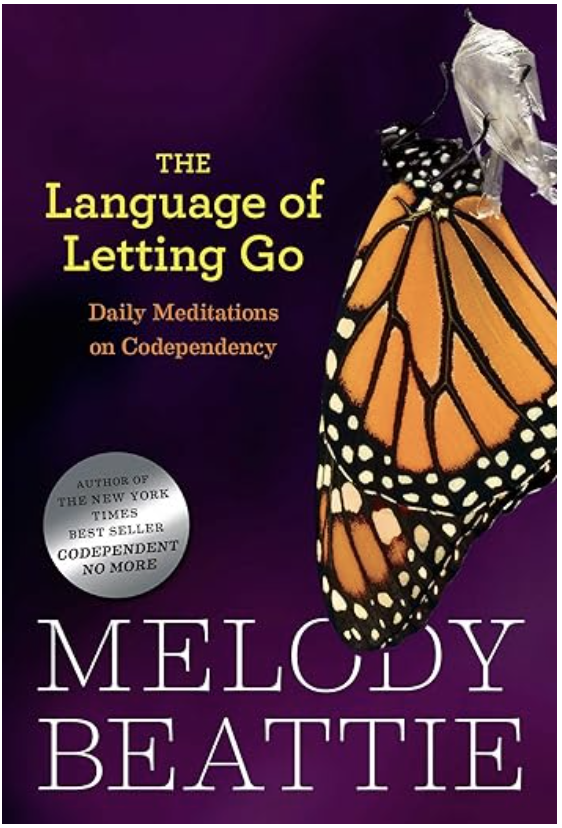
Currently on the Nightstand
Share this blog

RSS


thrivingisthegoal.com
is licensed under a
Creative Commons Attribution-No Derivative Works 3.0 United States License.

 Out of the Mire