Out of the Mire
…because thriving is the goal
Magical Thinking
I have learned something about getting on with life. There’s no easy way to do it, and there’s no good time to do it. What’s more, there is absolutely no pain-free way to do it either. Hollywood has played a bigger role in our view of building a life than any of us would have imagined, I think. I think that Disney has most likely played an even bigger role. There are no absolute happy endings. Pain will always be mixed with happiness. These Disney-efied enhanced versions of reality are constructed to trade on our hope so that we will spend money to escape our own less than ideal realities. I sound cynical, but I’m really not. I am and have always been a hopeful realist.
I wonder, however, where people get some of their ideas. Why do people believe that running to the side of a life-long abusive parent as she lay dying will result in a miraculous reconciliation? Where does that idea originate? It’s magical thinking. A true personality change is not likely to occur in the last twenty minutes of a person’s life even as death looms. Insisting that the victim of years of abuse be the one to build that bridge isn’t right either. And yet, we see scenarios like these on the silver screen, don’t we? An adult child of some kind of abuse is weeping at the bedside of a dying parent. The parent is resistant to reconciliation, hardened from a life of bad choices. The adult child reaches out once again, “But I love you! Don’t you know that?” The parent’s lips quiver. Finally, in their last moments the dying parent utters, “I know. I’m sorry. I’ve always loved you…I just…couldn’t be what you needed. I’m really sorry.” End scene.
These scenes find their way into our subconscious, and, when bad things happen to us, we come to expect the happy ending. Where’s my Hollywood ending? Where’s Prince Charming? When will my horrible stepmother be forced out of my life by my fairy godmother? In fact, where is my fairy godmother?
Why am I suffering so much? What did I do wrong?
And then the stage is set for magical thinking. What is magical thinking? Essentially, magical thinking is the attribution of causal relationships between actions and events which cannot be justified by reason and observation. I see a lot of magical thinking in religious environments. For example, I knew a woman whose car suddenly broke down. It was an old car and needed replacing. As her car was being towed to the repair shop, she cried, “I must not have given enough in the offering plate last Sunday.” She correlated her own perceived lack of generosity with her offerings at church with her car breaking down. God was, therefore, punishing her. That’s magical thinking.
Another example of magical thinking is when a woman is blamed for her own rape based solely upon what she is wearing or, even better, due to her sexual history. Her accusers are correlating her choice in skirt or even her past sexual partners with an attacker’s will to hurt her. One has nothing to do with the other, but these are correlations made all the time.
I have seen magical thinking at work when Christians wear crosses and correlate the wearing of that cross with perceived favor in daily experiences: “I got such a good parking space downtown! Always wear your cross! God blesses you in the best ways!” Another example of this is seen after tragic natural disasters. One house was skipped by a devastating tornado. Amid hundreds of destroyed domiciles, the owners of the “spared” home are standing on their roof holding a sign that reads, “Thank you, God, for saving us!” So, God favored only one house amidst hundreds? The “Angel of Death” passed over that community, and only one family was spared? This is magical thinking.
Magical thinking works for humans because it’s much more comfortable to believe that your fate is somehow determined than that you’re a member of a group of intelligent beings who 1) are responsible for your actions and 2) chaos exists, and it affects all of us regardless of our faith or depth of character.
This is why the Disney-ification of important life experiences such as falling in love, coming of age, and childhood is so potent. It reinforces our tendencies toward magical thinking rather than personal responsibility. Let’s be honest. Who wants to see that movie?
What if there are no Happy Ever Afters? That has to sink in for a moment. What if, however, we were meant for something better than Hollywood or Disney’s idea of happiness? That’s a better question.
What does it really mean to be happy? This, to me, is a far better place to start. If we look at the icons of our girlish fantasies, what might we find? Cinderella found her prince, and she was taken to the castle. In reality, a princess has few choices. She’ll live in a different sort of prison bound by allegiances, duty, and tradition. Snow White ended up the same way. In the Ivory Tower with the prince. In fact, many of the stars of our beloved fairy tales were princesses, but to be a princess is to be bound. Who really wants that job? You belong to the State. You are never really yours again. Your uterus will never be yours again. That is for certain. Your primary job is to carry on the bloodline.
What about the modern fairy tale “Pretty Woman”, a film I personally love? Again, how might that story continue? You know that she’ll end up in therapy, and he’ll have to go, too. You can’t just walk away from a life of prostitution and abuse and simply call it good.
What I’m trying to say here, however awkwardly, is that there is no easy road no matter how beautiful or promising it all looks in the beginning. Fairy tales are not real, and magical thinking gets us nowhere. In religious environments, it can lead to shaming and blaming, and it alienates vulnerable people who need to be welcomed in to the fold. In other spheres of life, it prevents us from taking action. We simply say things like, “It will get better.” How? How does anything get better without doing something? “Well, you know, time.” Time? How does time do anything? It simply passes while we stay the same. Attributing meaning or power to time is, once again, magical thinking. Time does not heal much. It does, however, give us opportunities to take steps towards achieving a goal whatever goal that might be.
I know something for certain. Nothing gets better without our own diligent efforts. We are fully responsible for ourselves. We create our happiness. In both Judaism and Christianity, one of the core beliefs is that we are created in the image of God. Our introduction to God in the entirety of our sacred texts, the Bible, is as Creator. We share in that nature. We are creators. We create our words by speaking them into existence. We create our inner landscape and climate by creating belief in the thoughts that ebb and flow in our minds. We create the atmosphere in our homes and relationships by creating the attitudes that emerge from within us. We are creators all the time. We create with every choice we make. This is the path forward even if we are still carrying our pain.
It may feel like a blessing and a curse, but it is our responsibility as humans to learn how to do this so that we can ultimately experience the freedom–and happiness–for which we were made.
Faith is taking the first step even when you don’t see the whole staircase.
Martin Luther King, Jr.
An Assertiveness Serendipity
There must be a strange connection between my need for assertiveness practice and ordering drinks. It’s always the drinks! I just wrote a post on assertiveness yesterday and how helpful grumpy baristas can be in our assertiveness practice; and, last night it happened again–the wrong drink.
My husband and I went out to dinner to celebrate our 19th wedding anniversary. We always go to the same restaurant. I’m not sure why we do that. Are we preparing to be elderly people who dislike change? We even went at 4 PM! The Early Bird Special?
I ordered a mocktail to drink rather than a cocktail. Between my neurologist and my newly acquired rheumatologist, I’m on five prescription drugs! No drinkies for me. It was some sort of blueberry-citrus concoction that sounded lovely on the menu. I was given something similar except it came in a martini glass, and it tasted very intense. Mocktails are usually served over ice. This tasted strongly of limoncello and mint. I began to wonder if I was served the wrong drink. An alcoholic drink. I stopped drinking it as soon as I began to feel weird. A little woozy (I am a very cheap date).
Sure enough, when the bill arrived my husband said, “Yep, they did give you the wrong drink. They served you something called The French Riviera.” Oh really?! Did they now? Well, here I am again only now I have to talk to a server rather than a grouchy barista. My husband, however, had only skimmed the bill and paid it promptly. He told me in passing about my drink. I felt irritated. Why should we pay $11 for a drink that we did not order? He simply said, “It doesn’t matter.”
This is where I could feel my inner Yosemite Sam rise up, and this is the moment I knew that ten years of practicing assertiveness was beginning to pay off.
“What? Did you say that it doesn’t matter? It most certainly does matter! Why did you pay for that? I didn’t order it, and I didn’t like it. They also prepared the wrong drink! I didn’t order an alcoholic beverage! What if I was allergic to alcohol or couldn’t have it for some reason? It’s their mistake. They needed to know. And, I matter! What I want matters. That’s the bottom line here.”
You know that look that men get on their faces when they’re terrified that they’ve really stepped in it with their wives? That look. That’s the look that began to take over my husband’s face. I felt amused.
I wasn’t going to fight over a drink. It felt strangely empowering and reassuring at the same time to know that I could finally put into words that very deep feeling that comes with wanting to stand up for oneself. The feeling that many of us grow up with–“Hey! What about me? Aren’t I worth something, too? Aren’t I worth fighting for?”
Yes, we are, and, as I’ve often suspected, we are the ones who will fight for us. We are our best advocates. Ironically, we often learn how to be assertive and self-advocate by doing for others first. Once we’ve got that down we can finally internalize that elusive truth–we are worth fighting for, too.
Opportunities to learn are everywhere. Even in French restaurants.
The Three Kinds of Forgiveness
We are right in the middle of the holiday season. Hanukkah is here. Christmas Eve is the day after tomorrow. Kwanzaa begins on Friday. These are holidays that involve gathering with communities and families. Because of that, the holiday season can be a much anticipated season of joy or, conversely, pain for people. It’s probably bittersweet for most. No family is perfect, and no community is without its flaws.
But, what about those people who have found themselves in exile? I want to talk about that. Sometimes I think I’ll be able to put this idea to rest, but I’m asked about it often enough that I think it will be a topic that is always discussed. Ultimately, that topic is forgiveness.
So, what does forgiveness mean exactly? Let’s go back to what the Jewish rabbis taught keeping in mind that Jesus was a Jew, too. He would have been aware of these ideas. There are three kinds of forgiveness as explained by Rabbi Irwin Kula in his book Yearnings: Embracing the Sacred Messiness of Life:
- selicha
- mechila
- kappara
Mechila, Rabbi Kula explains, is the only kind of forgiveness that we can ask for and expect to receive, and I suspect this is the forgiveness referenced in the Lord’s Prayer. It is akin to a legal pardon. It translates to simply saying, “You don’t owe me anything for what you have done.” What’s more, it doesn’t have to register emotionally. It’s an act of the will. We engage in mechila daily whether we know it or not. It’s not necessarily having the metaphorical slate wiped clean, but it’s enough. It’s not what we yearn for, is it? It’s not transformative forgiveness in which we are cleansed as white as snow, but our debt is cancelled.
When does mechila apply? Well, I’d say that we engage in this type of forgiveness in all our relationships.
- “Sorry I was late.”
- “Sorry that I broke your favorite vase.”
- “Sorry, Mom…”
- “Sorry, Dad…”
- “Sorry, Honey…”
- “Sorry, Robert, that I interrupted you during your presentation.”
How many times do we owe someone an apology? How many times do we take a joke too far? How many times have we embarrassed someone or insulted someone or forgotten something important? How many times have we unintentionally hurt someone’s feelings? To err is human. If we have relationships, then we will be engaging in mechila almost daily. Here is the problem. Many well-meaning, or sometimes not so well-meaning, people expect others to apply the principles behind mechila to extreme circumstances where mechila no longer applies.
This is where selicha becomes relevant. As Rabbi Kula explains, selicha is a process rather than a moment in time, and it’s not something we can ever expect or ask for. It’s a forgiveness born of a heartfelt empathy for the transgressor, and an ability to see the widest possible context, even the positive outcome of the conflict. Selicha takes time particularly if the hurt is great. It often unfolds in the course of living and growing together. Kula goes on to say that pain can coexist with healing and forgiveness, becoming softer and less central over time. “Often we emerge stronger, clearer, and wiser when we wrestle with forgiveness, no matter the outcome…Even if reconciliation occurs, it doesn’t mean the relationship continues where it left off.”
Clearly, selicha is not mechila. What a refreshment and relief to see a religious leader finally differentiate between types of forgiveness. It is healing because there are those of us who have been browbeaten, judged, and alienated by people in religious circles for committing to the process of sechila while being told that we were, in fact, unforgiving and wrong. The truth of the matter is that not everyone can be lived with. There are abusers who will continue to abuse. There are unsafe people in the world who, given an inch, will take a life. And, there are those of us who do wrestle with forgiveness with great commitment. It’s just that our process and life may not look like someone else’s. Perhaps that makes others uncomfortable. Not everyone’s family looks the same. Not every child has a grandparent, and not every man and woman has a relationship with a mom or dad. We all must make our way and create a good life. We all must wrestle at some point. Rabbi Kula states this clearly:
Forgiveness so often comes into play in bold relief when it comes to our mothers and fathers. Everyone has to come to terms with negative or conflicted feelings about their parents, no matter how loving the relationship. What makes it so difficult is that we have three sets of parents: the ones who raised us and with whom we actively struggled; those who live in our memory today; and our living parents (assuming they are still alive). The parents in our memory have larger-than-life dimensions. They are the ones who adored us and ignored us, whom we idealized and demonized. Our parents today are people like us, with fears and flaws, trials and conflicts. And they likely will never live up to our childhood expectations and hopes, which are often still with us in adulthood, whether we’re aware of them or not. Our job is to separate these three manifestations and work as best we can toward reconciliation, trying not to carry too much baggage of the past into the present, while always engaging with it. Our first great shock is when we realize that our parents are not God, and our next shock is when realize that God is not our parent. This realization is the beginning of forgiveness for our parents and for God. (168 Kula)
The principles of mechila cannot be applied here. Selicha is a process rather than an event. Sometimes it’s a lifelong process. Sometimes relational reconciliation is not possible. Nonetheless, selicha is still vital to our healing. Wrestling with forgiveness is still part of healing for our own well-being regardless of whether we will ever be able to return to a relationship with the person or group that harmed us.
The final form of forgiveness is kappara, and, according to Rabbi Kula, it is the forgiveness that we all yearn for. Kappara can only be granted by God. It can’t be earned or asked for. According to Kula, it comes after asking and all the work. It can’t be predicted or expected. It is the kind of forgiveness that wipes the slate clean. It cancels out the offense. Rabbi Kula wrote, “In Christian language, it is grace.” He goes on to write, “In psychological language, it’s an inner experience of return, of feeling whole again. We are able to integrate our transgressions into a more expanded self. And we likely have a sense of expansion, of tremendous relief and elevation.” I have had this experience just as I have experienced mechila and continue to experience selicha.
What does this mean for us? Well, I want to emphasize that there is more than one way to forgive. That’s plain to see. So, if you have ever been judged or condemned because you have not been able to quickly bounce back from a painful situation and easily attain “relationship re-entry”, then I encourage you to let yourself off the hook. Secondly, if the holiday season amplifies feelings of pain or heartbrokenness in you due to difficult circumstances, then I offer an opportunity to reframe:
There’s a story about the Israelites receiving the second set of Ten Commandments on Yom Kippur…After forty days atop Mt. Sinai, Moses came down with the tablets. What could be more holy? But contrary to popular belief, these are not the set the Israelites received. When Moses saw the people worshipping the golden calf (a blatant defiance of the first three commandments), he did the unthinkable. He smashed the tablets in rage. Then he returned to the mountain for another forty days, during which time he managed to convince an even more enraged God not to destroy the people. When Moses returned to the Israelites he brought new tablets that he himself had created. These were the commandments the people received, and this is the event Yom Kippur remembers.
There is no great moment of healing or repair in this story. Yes, of course, the people showed regret but, as in our own lives, the slate is not wiped clean. Something even more amazing happens. Moses places the old, smashed tablets in the Holy Ark along with the new, intact ones. The relationship continues; the covenant is renewed with the brokenness on the inside. There is no perfect reconciliation, no permanent forgiveness, nor forgetting. But betrayal is not the last word. There is a larger context. Love and betrayal can merge into and out of one another in astonishing ways. There is always a more enveloping pattern–and forgiveness is the most enveloping of all.
The mistakes we make and the wrongs that are done to us need not imprison us in some dark place. Rather we should always remember that wholeness and brokenness can be held together in a sacred place. The tradition teaches that in the days of the ancient Temple, the Ark resided in the innermost chamber called the Holy of Holies. This place was so powerful that only the High Priest could enter the room, and then, only on Yom Kippur. On this day we are meant to remember our brokenness; and this alone is healing. As the Hasidic Master Menachem Mendel of Kotsk taught, “Nothing is as whole as a broken heart.” (179 Kula)
Life is messy. People make mistakes. Sometimes they make horrible mistakes–repeatedly. Seemingly irreparable mistakes. As the tradition teaches, however, brokenness and wholeness are woven together. There is no magical moment when this happens. I do believe this. Pain does indeed coexist with healing, but the existence of pain doesn’t negate the healing attained. It just means that you’re human. You’ve lived. You’ve got life experience. With that life experience comes wisdom.
With that, I wish you all, dear readers, a blessed holiday.
Resources:
Yearnings: Embracing the Sacred Messiness of Life by Rabbi Irwin Kula
The Burden of WHY
I feel compelled to write this out, but I want to write it carefully. I don’t want to trigger anyone. I don’t often write explicitly about my past sexual abuse largely because I identify less and less with it. I have aggressively and relentlessly pursued healing. One of my greatest fears is living a mediocre life. I have never wanted to be held back from a better purpose or larger destiny as it were because of the base actions of other people. I have never been content to settle if there was a possibility for something greater and more life-giving. I am extremely ambitious in this way. That ambition has saved my life many times. I won’t apologize for it.
That being said, I have, on numerous occasions, begged to know why. This need to understand our journey and our circumstances is inherent to being intelligent creatures. We need to know why things happen. Why is there evil? Why is it allowed such free access to us? Why are children abused? Why do good people die young? Why did X event happen to us then? We need to know. We want to know. We believe that we’ll be able to finally close the book on our pain and move forward. Knowing why must be the solution, right?
I’m not so sure.
Yesterday, I witnessed a sexual predator in action in a local coffee shop. I reported his behavior to the manager. Had I not been sexually abused as a child and trafficked as a teen, my first and only response might have been disgust and anger. I, however, was afraid. I was very afraid. It was irrational, and I knew it. So, I contained that fear and did the right thing. The only thing. Honestly, he was so overt in his deviancy that the police should have been called. I was simply too afraid to do that, and I was too fearful that I wouldn’t be believed. That’s old wiring. I decided to let management deal with him. That seemed appropriate to me.
I left feeling very anxious. I’m good at displaying false bravado while I’m crumbling on the inside. I don’t have time to crumble even if I need five minutes to do so in order to put myself back together again. One must keep going. I came home and continued on with the evening, taking care of everything and everyone, putting on my brave Domestic Goddess face. I answered a friend’s text later. She asked me how my day went. I told her about the incident with the man at the coffee shop. Her visceral response matched mine. She then shared with me about one of her very ill patients. He was failing to thrive because of injuries inflicted to his throat by his stepfather through repeated sexual abuse.
I couldn’t breathe. That stopped me. She knows me fairly well, but I don’t discuss the details of my early childhood sexual abuse.
I rarely break my silence.
That’s what happened to me when I was young. I had recurrent infections in my throat and tonsils starting at a very young age. The infections did not respond to antibiotics. The infections spread to my ears. I almost lost my hearing. This went on for four years. Finally, my tonsils and adenoids were removed when I was in Kindergarten. My father moved out of our house when I was six. I never had a throat or ear infection again.
I haven’t ever connected those two things before–my constant infections with his sexual abuse. I did yesterday. Of course! I was ill constantly as a child. I was ill all the time as a teen. I have struggled with autoimmune disorders of one kind or another my entire life. Trauma affects our immune system. Science is revealing this more and more. On an epigenetic level, we are changed by it.
As I put 2 and 2 together, I felt all the scar tissue in my throat burn and come alive. It was the strangest sensation. It almost itched. I was immediately nauseated. My head started swimming. I started trembling, and I could almost feel my father’s hatred again. This is a flashback. I know this terrain very well. The panic begins to rise like bile in your throat. Your heart pounds, and you feel an immediate need to run. Run for your life. My immediate thought was, “I don’t think I ever wanted to know why. I never wanted to know why I was so sick all the time. I don’t want to know this. Why my throat was so sore all the time when I was so little…I don’t want to remember this.”
Why I hated cream gravy for so long.
We are often spared knowing why to protect us. Knowing why is a different burden to bear. It’s a different sort of trauma than the actual trauma itself.
I am, however, a different woman today than I was ten years ago. I am not in the same place, and the foundation for my personality and character is far more healed and developed. I believed and knew, in those very intense moments last night, that I was not only okay but that I was already healed and fully recovered which was why I was able to understand and bear the burden of the WHY. The truth is that I have healed from what he did to me. There are certainly scars in my being just as there are scars in my throat. Sometimes I can feel them, and they flare up in inflammation from time to time; but that doesn’t mean that I’m not healed. It doesn’t mean that I’m not okay. It doesn’t mean that I’m not strong and able to bear the burden of this WHY. It doesn’t mean that I can’t let that burden go.
If you are struggling with something very painful right now and desperately want to know why, then I gently encourage you to set aside that question–for now. Instead of asking why, ask what you must do to heal. Ask what you must do to rebuild. Ask what the necessary steps are for you to be able to receive and give love again. Begin to imagine yourself as a whole and thriving person. Then, ask what steps you need to take to progress from where you are now to how you see yourself in your imagination. If you can’t even imagine yourself as flourishing, then start there. Begin to try to dream again. This is an effort worth attempting.
The WHY does come and with that comes a certain weightiness that requires a different sort of strength. When we don’t get to know why, I’ve learned that it’s because we are being protected and cared for so that we can become who we were meant to be in order that we can flourish and move beyond enduring.
So that WHY doesn’t matter anymore.
Shalom…
An Early Morning Thought
This isn’t a post written in any sort of academic style wherein I cite important sources. It may not be empowering in any way, but it will be truthful.
My husband has been gone since Sunday. Away on business. I looked forward to his leaving simply for a bit of space. He works from home now, and I’m never alone. I’m an introvert. Never having any personal space or time alone has done something to me. I live with a ceaseless sense that the walls are closing in on me. Twenty minutes alone while showering and drying off isn’t cutting it. Going to the grocery store alone, if that ever happens, isn’t enough. That’s not being alone. It’s been over two years since I’ve had any meaningful time by myself.
I thought that his temporary absence would be a relief, but it hasn’t been. As soon as I came home from taking everyone to school on Monday, I felt pain. I started crying. I couldn’t stop. I have cried for three days. I tried to stop, but I just started again. It’s not an easy sort of cry either. It’s that awful wrenching sort of crying that feels closer to a heave. It racks the body. It leaves one feeling completely raw and exhausted. Excised. Almost out of body and depersonalized.
I began to wonder if this was a purgative experience. Is this something cathartic? Catharsis. I hear people use that word as if it’s something we should seek out. “You should do that! It would be cathartic!” Like it will be pleasurable. The body holds memories, stress, and emotional pain as easily as our hearts do. We stuff it all down to get through seasons of life. What does it feel like to allow it all to come forward and out?
It feels horrible. It’s like emotional and psychic vomiting. For days. I would say that I don’t recommend this, but, then again, it’s probably purposeful. Necessary even. When the buck stops with you, as it does with me, and almost everyone around you looks to you to be the problem solver, the resource, the source of comfort, and the mom even if you aren’t their mother, it becomes vital to compartmentalize personal pain and stress. I have mastered that skill. The problem with relying on this strategy repeatedly is that all my available compartments seem to have overflowed. I never had a chance to go back and check out exactly what I had put in them. I had no time. It wasn’t even a matter of time management. It was simply the season of life in which I have been.
When my husband left, every overstuffed and overflowing compartment presented itself and dissolved: “DEAL WITH ME NOW!” I was inundated with two years worth of pain, grief, sorrow, disappointment, and fear. It felt as if I had nowhere to turn. No one to talk to. No one would understand. Who wants to get that call? “So…uh…I’m freaking out. Do you have three days?”
I’m not the only person who experiences this. Is there a better way to deal with pain and suffering as we go? Compartmentalization is necessary. It’s a very useful skill, but we have to be able to go back and take a look at what we set aside and deal with it in a better way. Clearly, stuffing every painful moment into a box and saying, “I’m fine. Don’t worry about me,” isn’t the best way to go. It doesn’t go away. It stays right where you put it, and, eventually, it comes back up when you are emotionally too full up, too stressed, and overwhelmed–like emotional acid reflux. How convenient.
I can only speak for myself in this, but I think that we need people in our lives with whom we can be truly vulnerable. That thought terrifies me. Truthfully, I’d rather have a pelvic exam. So, hear me out.
We need at least one person who we can let go in front of, shed all our many personae in front of, cry in front of. I don’t cry in front of people. I’m afraid of being judged, and I’m very afraid that once I start crying I won’t be able to stop. I don’t want to go that low, but that is what is necessary. We need a safe person who will go low with us. Someone who will go into our mess and not try to clean it up. Someone who won’t even comment on our mess. That used to be my husband ages ago, but he’s part of my mess now. I think that if everyone had just one person whom they could count on to enter into their messiness knowing that they wouldn’t be judged, shamed, or told what to do to get their act together, then there would be a decrease in mental illness diagnoses and autoimmune disorder diagnoses. If we knew that we could stop carrying around all our burdens and honestly share them with just one other person while authentically doing the same for them, we would get better in ways we couldn’t anticipate.
For many people, this person is a therapist, but therapists don’t come to your house and watch movies with you. They don’t eat too much chocolate with you. They don’t have fun with you, and they don’t give you the chance to be a friend in return. We climb out of our messiness and pain and leave our shit behind for a while when we climb into someone else’s life and go low with them. We expand and learn in ways that we simply cannot in therapy. This is where we really start learning to trust people, and I hate learning to trust people. I really do. Every major figure in my life whom I’ve ever trusted has betrayed my trust. That’s true for a lot of people. We become like emotional hedgehogs. We quill up quickly when we feel threatened and make hissing noises warning people to keep away. The world is full of emotional hedgehogs.
There is no other way around it. Humans were made to change, and we’re made for relationships. This tells me that we have to figure out a better way to heal faster, and we have to figure out how to live from a place of authenticity and willingness without feeling that our hearts are under threat.
Do I know how to do that? Uh…no. But, I see that it’s necessary and important. I see that there are necessary risks to be taken if we want to be happy, and those risks don’t have to come at the expense of our dignity, our identity, or our hearts. In fact, we take those risks to ensure that those very things flourish.
I have no idea how to implement this, but at least I can conceptualize it.
That’s a starting point.
And The Award Goes To…
I used to have another blog, but it has gone to bloggy heaven. It wasn’t a sex blog per se. I talked about sex in the context of healing after trauma or long-term abuse. I really liked that blog. I loved writing it. When the topic of your blog, however, is presumed to be sex you are immediately welcomed into the community of the “sex bloggers”, and I’ll say this–the “sex blogging” community is a very supportive community. They are quick to comment, fast to encourage, and love to give awards. Who doesn’t love to get an award from one’s community? We passed around a lot of awards.
After a while though, one has to be creative about how to accept an award because with the award comes the questions and the inevitable list of nominations. I ran out of answers and blogs to recommend. Alas, this isn’t that blog nor is it that community. So, now what?
The lovely WritesinPJs of My Life in Pajamas dropped this on my About page yesterday:

Such a kind gesture (Thank you!). I sort of panicked. There would be questions! And other blogs to pass it on to! Eeek! Should i just express my thanks and run and hide? That didn’t feel quite right. I decided to go with the flow.
Ahem.
There are rules with every bloggy award, and here they are:
- Thank the blogger who nominated you providing links back to their website. Check
- Display the logo on your blog. Check
- Answer the ten questions set for you. But I like it in here! It’s private…OOoooOOOOkay….
- Make up ten questions for your nominees.
- Nominate ten people.
WritesinPJs’ Ten Questions of My Life in Pajamas
- Which historical person (known or unknown) would you choose to spend a day with? This is a hard question. There are so many people I would want to spend the day with, but I’m going to go with Jane Austen because 1) she is my 7th cousin and 2) it is said that she may have had autism. I would like to see how she experienced her world and get to know a family member. Plus, I would like to see if her ASD is what let her see her world so differently, thus, allowing her to write what and how she did. That is often the case.
- You can give one animal the gift of speech. Which animal would you choose? One of my housecats. I don’t know which one. One of them looks terribly judgmental most of the time. Maybe I don’t want her to be able to talk.
- Your life is being filmed as a biography. Which actor would you choose to play you? Damn, I have no idea! If Liz Lemon of “30 Rock” were a real person then she could play me although we look nothing alike and I would never pee in a vase to kick someone out of an apartment. I have too much in common with that character though.
- Someone offers to buy you a free home anywhere in the world. Where would you live? It would be romantic to say Paris or some exotic locale, but I’ve lived abroad and traveled through a lot of countries. It never ends up being as awesome as the calendar photos look. I always come back to one place: The North Shore of Lake Superior. I’d want to live there.
- Which song have you loved longest? Ack! This is hard, too! Uh…when I was very little I used to try to sing the harmony in “Black Water” by the Doobie Brothers. I remember lying in the back seat of the car trying to pick one part to sing at the end of the song and loving it.
- You’re going to wear the exact same outfit for one year. What does it look like? Black skinny trousers, black boots, grey cashmere sweater, grey pashmina.
- You can choose to make any book real, and live in that world. Where and when is it? Oh, this is a hard one! I’m going with The Velveteen Rabbit. If you love something long enough and hard enough, you can make it real. Even a hard heart. I want that to be real.
- The one thing you most want to be remembered for is…? That I was kind.
- The best choice you ever made was…? That I put the pursuit of my career on hold and stayed home to raise my daughters.
- A common misconception about you before getting to really know you is…? Most people have said that I look like I have it all together. This is laughable to me. Does anyone have it all together? Just because I showered, got dressed, and brushed my hair? I don’t have it all together. Not by a long shot.
MJ’s Ten Questions
- What are your greatest strengths?
- What is your definition of happiness?
- If you could become fluent in a foreign language in one year, then which one would you choose?
- If you had a million dollars that you had to donate to one charitable cause, then which one would you pick and why?
- If you could master a new skill in a year by taking a class, then what skill would you most want to learn?
- What novel have you read more than once by choice?
- If you were allowed access to a Tardis (Dr. Who’s “time machine”), where in time would you go?
- If you were allowed to go back to high school and change one thing, what would you change?
- What are you presently looking forward to?
- What food do you absolutely hate and refuse to eat no matter what?
And the nominations are…
Here’s the thing. I don’t follow that many bloggers anymore. Some of my favorite bloggers stopped blogging. Sniff. I don’t read ten blogs. I don’t know that I read five regularly now that at least four of my favorite blogs shut down. That sounds terrible, but it’s a time issue for me. Not a lack of interest. And, some bloggers I know keep their blogs private. So, with that in mind, I offer you my very wee list knowing full well that I wish it were longer.
The Kindness Blog–this blog has a massive following now, but I’ve been following it for a long time. So, I have no expectation that there will be a response to this award. Alas, I am desperate to add to my very paltry list!
Thank you once again, WritesinPJs, for thinking of me and my space on the blogosphere. Your questions were great. I wish I did have ten blogs to nominate because I really want ten people to answer my questions!!
To my readers, thanks for playing along.
Shalom, MJ
Affective Deprivation Disorder and Alexithymia in Marriage
I have written somewhere in here that my marriage has been difficult. If you’re married for nearly two decades, then I think, at some point, there will come hard relational times. It’s inevitable and normal. I am someone who doesn’t like to put up with hard times. I feel driven to fix them. I want to know what’s behind the problem. If I am experiencing what I feel is pointless suffering, then I will do whatever it takes to either end it or, at least, add meaning to it. I am the opposite of passive.
I seem to be married to my foil. If I am a hare, then he’s a tortoise. Nay, a rock. I run around him. Over and over again. This can be good if it creates stability in a relationship, but it has created inertia and so much more.
After a while, one must ask: What is going on? Why am I in such pain? Why am I sick all the time? Why does he say that he’s happy when I feel like a black hole has opened up in my chest?
Let me introduce you to Affective Deprivation Disorder:
Affective Deprivation Disorder (AfDD) is a relational disorder resulting from the emotional deprivation sometimes experienced by the partner (or child) of persons with a low emotional/empathic quotient or alexithymia.
Coined by researcher Maxine Aston, AfDD was first applied to partners of adults with Asperger Syndrome, many of whom showed disturbing physical and psychological reactions to the lack of emotional reciprocity they were experiencing in their relationship. Maxine was later to broaden AfDD‘s applicability to include disorders other than Asperger’s such as depression, eating disorders, posttraumatic stress disorder, personality disorder, and substance abuse disorder in which the same low emotional intelligence or alexithymia is a key relational factor.
To qualify for a diagnosis of AfDD some or all of the following indicators in each category must be present:
One Partner must meet criteria for a diagnosis of one or more of the following:
• Low Emotional Intelligence
• Alexithymia
• Low Empathy QuotientRelationship Profile includes one or more of the following
• High relational conflict
• Domestic abuse: emotional and/or physical
• Reduced marital or relationship satisfaction
• Reduced relationship qualityPossible Psychological Symptoms of AfDD
• Low self esteem.
• Feeling confused/bewildered.
• Feelings of anger, depression and anxiety
• Feelings of guilt.
• Loss of self/depersonalisation
• Phobias – social/agoraphobia
• Posttraumatic stress reactivity
• BreakdownPossible Psychosomatic Effects
• Fatigue
• Sleeplessness
• Migraines.
• Loss or gain in weight.
• PMT/female related problems.
• ME (myalgic encephalomyelitis).
• Low immune system – colds to cancer.Similar symptoms experienced by the SAD sufferer, are experienced by the AfDD sufferer. Yet there is an even more damaging effect for the AfDD sufferer insofar as it is another human being, they probably love, who is unintentionally responsible for their emotional deprivation. Emotional reciprocity, love and belonging are essential human needs, if these needs are not being met and the reason why is not understood, then mental and physical health may be affected. Awareness and understanding can eliminate this.
AfDD is a consequence of the relational situation a sufferer is in, therefore it is possible to find ways to rectify this. Just as sunlight restores the balance in SAD – emotional input and understanding can restore the balance in the person affected by AfDD. Relationships when one partner has alexithymia can work if both partners work together to understand their differences and develop a better way of communicating, showing emotional expression and loving that works for both of them.
The following treatment issues can be explored with those suffering AfDD:
• Rebuilding Self Esteem
• Having a voice
• Looking at negative responses.
• Looking at self image.
• Building confidence.
• Becoming assertive.
• Attending a Workshop.Finding Self
• Identifying Parent – Child roles.
• Changing learned helplessness.
• Rebuilding self.
• Rebuilding family and relationships.
• Rebuilding a social life.
• Finding support. (Maxine Aston)
What is alexithymia?
Alexithymia/ˌeɪlɛksəˈθaɪmiə/ is a personality construct characterized by the sub-clinical inability to identify and describe emotions in the self.[1] The core characteristics of alexithymia are marked dysfunction in emotional awareness, social attachment, and interpersonal relating.[2] Furthermore, individuals suffering from alexithymia also have difficulty in distinguishing and appreciating the emotions of others, which is thought to lead to unempathic and ineffective emotional responding.[2] Alexithymia is prevalent in approximately 10% of the general population and is known to be comorbid with a number of psychiatric conditions.[3]
Alexithymia is defined by:[9]
- difficulty identifying feelings and distinguishing between feelings and the bodily sensations of emotional arousal
- difficulty describing feelings to other people
- constricted imaginal processes, as evidenced by a scarcity of fantasies
- a stimulus-bound, externally oriented cognitive style. (online source)
My husband is alexithymic. He also has crippling anxiety combined with what looks to be disturbances in his personality. He has low emotional intelligence to be sure and poor cognitive empathy. He cannot name his emotions, and he has no idea why he does things. We are not able to have meaningful discussions about anything. We have never been able to do this. When we were in the first year of our marriage, I thought he was being difficult. I had never encountered another human being who could not name their own emotions.
“How do you feel?”
“I don’t know.”
“Well, I understand not being sure about something, but…”
“No, I mean I don’t know what I feel.”
He couldn’t identify or describe any of his emotions outside of feeling “depressed” or very angry. He had constant feelings of getting sick (somatic complaints). He lacked empathy, and he didn’t understand why I expected him to be able to anticipate needs or intuit things. I assumed that he was capable of that. As an example, when I was pregnant with our first daughter, I was put on bed rest for the last few weeks of my pregnancy due to an inability to walk from pelvic instability. I had no friends where we lived as I hadn’t lived there very long. I was, therefore, unable to go to the kitchen and prepare food. I would have to sort of slither up the hall on my side to make it to the bathroom. I literally could not walk or stand. I was famished when he would get home. He was never able to remember that I was home and unable to meet my needs. One evening, he came home with food and ate in front of me. He didn’t ask how I was, talk to me, or even engage. He just sat there, glazed over, and ate his food while playing computer games. He rarely greeted me. I was so frustrated and angry. He looked at me with wide-eyed innocence and asked, “What’s wrong with you?” Obviously, nineteen years later I can see the flaws in my much younger self’s hidden expectations. Just call him and ask him to bring food for you, younger self! He can’t read your mind! The point I am making is that he was completely unaware of the “other” in almost all circumstances. Pregnant wife on bed rest unable to walk? He just didn’t get it or understand why that had anything to do with him or why he had any responsibility there. It bewildered him.
That is, however, a typical interaction. It has played out over and over again in different contexts over the years from him not visiting our baby and me in the hospital when she was thought to have meningitis to his bringing the Lord of The Rings trilogy to my labor and delivery because, “There will be a lot of waiting around.” It ranges from the comical to the spectacularly hurtful. For years and years, our daughters and I have observed this very obvious lack of emotional response and wondered why he didn’t like us. What had we done wrong? My oldest daughter has spent the last six months coming to me in tears over her feelings of loss where her father is concerned. She has wondered if something is wrong with her. She has asked the classic question:
“If he loved us, then why doesn’t he try?”
Last night, I sat on the edge of my bed and cried. I felt like I was crazy. It is so hard to describe what it feels like to be married to this. I told myself yesterday that if I could make myself more like him, then maybe it would be better. If I could remove all emotional desire from myself, then I would be able to do this. I actually asked God to make me like Spock. That has to be one of the weirder prayers to ascend. Like some warped psalm.
“Oh God, make me like Spock. Purge me of emotion. Oh my soul, shut the hell up so that only my brain will speak and my heart will sleep a thousand years.”
Poetic but not possible. I found a better thing to ask. I asked for a sense of being accepted and validated by someone. I felt so misunderstood. Like not one person understood the exact nature of what I was experiencing, and this was so isolating. This sense of isolation is intolerable to me. This morning, I found all this. I just stumbled across the word ‘alexithymia’ and AfDD. I then immediately found a paper about AfDD. Read this:
The lack of empathy in these relationships is one key to their impacts. A lack of empathetic attunement disables the individual’s ability to recognise, interpret and to verify subtle emotional signals expressed by intimates and contributes to an impoverishment of emotional interaction. The interaction becomes further compounded when the unverified partner or family member reacts negatively to feelings of being misunderstood or neglected. In this sense the affective deprivation experienced in such relationships refers to the deprivation of emotional-attunement, emotional validation, and intelligent emotional responding. To the extent that people look to their significant other for validation, the lack of such validation can corrode their sense of self and lead to a discouragement of self expression whereby large portions of the individual’s emotional repertoire become deleted from the relationship (Goleman, 1996b). In Asperger’s relationships this tendency to eradicate emotionality and take on Asperger’s characteristics has been labelled becoming “Aspergated” (Stanford, 2003). The failure to understand and validate legitimate emotional experiences or behaviours of the other typically creates or exacerbates negative emotional arousal in the invalidated individual/s, potentially leaving each member of the relationship displaying some measure of dysregulated affect (Fruzzetti, A.E., & Iverson, 2006). (Affective Deprivation Disorder: Does It Constitute A Relational Disorder?)
This phenomenon does not just apply to intimate relationships with certain people on the autism spectrum. This would apply to other contexts as well. I cannot tell you how validating this paragraph was for me, and I see just how important my being in DBT with my daughter was. I was there to learn to self-validate. The notion was introduced to me two years ago in David Schnarch’s landmark book The Passionate Marriage in which he says that self-validation is the key to differentiation in marriage and, thus, success particularly if there is gridlock. That struck a chord in me then. I learned how to self-validate in DBT. I learned on a much more practical level how to be mindful, how to suspend judgment, and how to be effective in relationships without sacrificing self-respect.
This has been my greatest downfall. I have slowly given up pieces of myself. I truly have deleted large pieces of my emotional repertoire in this relationship because of repeated rejection. How can one not do that? Knowing, however, that I am not the only person to experience this is tremendously validating. Knowing that there is a white paper written about this very dynamic tells me that there is a common experience out there, and common experience means that I’m not isolated. I am part of a group. I may not know anyone else who is experiencing this, but I now know that others know exactly what I know.
The interesting thing about alexithymia is this. It is a trait that can be comorbid with other psychiatric disorders:
Alexithymia is considered to be a personality trait that places individuals at risk for other medical and psychiatric disorders while reducing the likelihood that these individuals will respond to conventional treatments for the other conditions.[6] Alexithymia is not classified as a mental disorder in the DSM-IV. It is a dimensional personality trait that varies in severity from person to person…
Alexithymia frequently co-occurs with other disorders. Research indicates that alexithymia overlaps with autism spectrum disorders.[8][41] In a 2004 study using the TAS-20, 85% of the adults with ASD fell into the impaired category; almost half of the whole group fell into the severely impaired category. Among the normal adult control, only 17% was impaired; none of them severely.[41][42] Fitzgerald & Bellgrove pointed out that, “Like alexithymia, Asperger’s syndrome is also characterised by core disturbances in speech and language and social relationships”.[43] Hill & Berthoz agreed with Fitzgerald & Bellgrove (2006) and in response stated that “there is some form of overlap between alexithymia and ASDs”. They also pointed to studies that revealed impaired theory of mind skill in alexithymia, neuroanatomical evidence pointing to a shared etiology and similar social skills deficits.[44] The exact nature of the overlap is uncertain. Alexithymic traits in AS may be linked to clinical depression or anxiety;[42] the mediating factors are unknown and it is possible that alexithymia predisposes to anxiety.[45]
There are many more psychiatric disorders that overlap with alexithymia. One study found that 41% of Vietnam War veterans with post-traumatic stress disorder were alexithymic.[46] Other single study prevalence findings are 63% in anorexia nervosa,[47] 56% in bulimia,[47] 45%[16] to 50%[48] in major depressive disorder, 34% in panic disorder,[49] 28% of social phobics,[49] and 50% insubstance abusers.[50] Alexithymia also occurs more frequently in individuals with acquired or traumatic brain injury.[51][52][53]
Alexithymia is correlated with certain personality disorders,[54]substance use disorders,[55][56] some anxiety disorders,[57] and sexual disorders,[58] as well as certain physical illnesses, such ashypertension,[59]inflammatory bowel disease,[60] and functional dyspepsia.[61] Alexithymia is further linked with disorders such as migraine headaches, lower back pain, irritable bowel syndrome, asthma, nausea, allergies, and fibromyalgia.[62]
An inability to modulate emotions is a possibility in explaining why some alexithymics are prone to discharge tension arising from unpleasant emotional states through impulsive acts or compulsive behaviors such as binge eating, substance abuse, perversesexual behavior, or anorexia nervosa.[63] The failure to regulate emotions cognitively might result in prolonged elevations of the autonomic nervous system (ANS) and neuroendocrine systems which can lead to somatic diseases.[62] Alexithymics also show a limited ability to experience positive emotions leading Krystal (1988) and Sifneos (1987) to describe many of these individuals as anhedonic.[5] (online source)
I’ve discussed personality disorders at length on this blog, but I’ve never discussed alexithymia. I have never had a therapist discuss this with me either. Many of us leave families where there has been abuse or trauma with symptoms of AfDD, but those clusters of symptoms have never been named. It’s all been lumped together under depression, or anxiety, or PTSD, or “Stop whining and get over it.” I would like you to read this:
Emotional reciprocity, love and belonging are essential human needs, if these needs are not being met and the reason is not understood, then mental and physical health may be affected. (Maxine Aston)
Yesterday, I asked someone if it was normal to want reciprocity and belonging in a marriage. I didn’t know if that was a normal thing to want. I felt extremely confused. Was it something that was bad to want? Reading this statement this morning has been a powerful validation for me. It has been the plumb line that I have needed so that I can see where long-term exposure to wrong thinking and unhealthy behaviors and beliefs have landed me. I also asked these questions when I was emerging from my family of origin. You will find yourself on shaky ground if you are in a relationship with someone with a Cluster B personality disorder.
If any of this rings a bell for you, I encourage you to look through the resources at the end of this post. One of my takeaways has been that I didn’t get here riding his dysfunctional coat tails as it were. I helped. I participated in creating the current atmosphere, and I will be the one to rebuild my own happiness. It has always been this way. Knowing, however, that my experiences have names is powerful. Knowing that what I want is legitimate is equally powerful.
Validation is healing. I hope I have provided some for you should you need it.
Post script: This post has numerous comments some of which are very brave and personal. I would ask that people who comment refrain from judgment and psychoanalysis. The comment section is a place to share thoughts, ideas, and common experiences. It is not a place to “concern shame”, judge, and go on the offensive out of a defensive posture. Thank you for civil and kind discourse. Remember, everyone is trying to heal. So, let’s contribute to that process–not hinder it.
Resources:
- Alexithymia and Attachment Style
- Affective Deprivation Disorder by Maxine Aston
- Affective Deprivation Disorder: Does It Constitute A Relational Disorder by Harriet F. Simons Ph.D and Jason R. Thompson
- Marriage with Asperger’s Syndrome: 14 Practical Strategies (this is actually very enlightening and validating as well particularly if you think that your partner may have an ASD)
- How to Identify Strong Emotions by Kevin Redmayne
Endnote: As of 2016, I have been separated from my husband; we are divorcing. An excellent resource is Lundy Bancroft’s book Should I Stay or Should I Go: A Guide to Knowing if Your Relationship Can–and Should–Be Saved.
Related blog post: Should I Stay or Should I Go?
Please read: Epilogue: Five and a Half Years Later for an update to this post as of June 2020.
What if
Fairy tales, then, are not responsible for producing in children fear, or any of the shapes of fear; fairy tales do not give the child the idea of the evil or the ugly; that is in the child already, because it is in the world already. Fairy tales do not give the child his first idea of bogey. What fairy tales give the child is his first clear idea of the possible defeat of bogey. The baby has known the dragon intimately ever since he had an imagination. What the fairy tale provides for him is a St. George to kill the dragon. Exactly what the fairy tale does is this: it accustoms him for a series of clear pictures to the idea that these limitless terrors had a limit, that these shapeless enemies have enemies in the knights of God, that there is something in the universe more mystical than darkness, and stronger than strong fear. –G.K. Chesterton
Many of us may have grown up with the sanitized Grimm’s Fairy Tales, but the authentic tales of the Brothers Grimm were gory tales of terror meant to instill fear in children. Why? Why deliberately scare children? The world was wild, chaotic, and men had evil intentions. Children needed to know to stay on the path. Do not trust a stranger. Do as you are told or there would be consequences. Terrible, nightmarish consequences. Cannibalistic old women lurked in those dark glens. Plump, pink thighs were exactly what they craved, tempting innocents with candy.
Are we any different today? Stranger danger? The media outlets sensationalize every child abduction. We put the metaphorical fear of God into our children, and evil still lurks…tempting with candy.
We still believe in dragons, do we not? The bogeyman still haunts us. Evil is still very real. Sharon Tate was on the cover of People. She and her unborn child died at the hands of Charles Manson’s sycophantic followers. If there were ever a face for evil in our culture, then it’s Charles Manson. Who else do we think of?
Ted Bundy, Jeffrey Dahmer, the anonymous Zodiac Killer, or even the faceless men and women running child porn and human trafficking rings. Evil is splashed on the cover of the front page reminding us once again to be ever vigilant like Little Red Riding Hood’s mother and lurking online like the wolf wearing Grandmother’s night cap.
We are acquainted with nightmares. Many of us have our own personal dragons. We have grown up with bogeymen. We still live with fear. We are waiting for the other shoe to drop, for the nightmare to return.
I can speak for myself in this.
Yes, evil is evil. I have read the fairy tales. I have known the dragons intimately ever since I had an imagination. Have I seen St. George kill the dragons? Do I know that limitless terrors have a limit? Do I know that those shapeless enemies have enemies, too? Do I know that something in the universe is more mystical than darkness? Something is stronger than strong fear?
This is where the media limits itself and the fear mongering in our culture cannot pass. We are left with only uncertainty about our own power and a certainty that there will be a far bigger dragon tomorrow splashed across tomorrow’s front page. Another bogeyman will be stalking the crosswalks of our neighborhoods next week, and rumors of war will inundate the ether.
Terror is the shapeless monster. Fear is the wolf lurking in all its forms. Anxiety, obsessions, adrenaline pumping, panicked thoughts, racing, running, and blazing a trail of chaos through the landscape of our minds, turning out the light of peace, bringing darkness.
Where is the woodsman and his axe? Who will kill this wolf? Where is St. George come to slay the dragons of despair, violence, depression, and emptiness that terrorize and perpetuate the entropy? Where can we hide from such behemoths?
What if I am the woodsman? What if you are? What if I am St. George? What if you are? What if the resilient, fearless knight who rescues the oppressed from the Great and Terrible Thing is not without but within? What if our path through the Lonely Woods into the deep wilderness following breadcrumbs isn’t to lead us to an oasis or a way out but to ourselves, our brave selves? Our mighty selves. Our stronger-than-strong-fear selves. Our something-in-the-universe-more-mystical-than-darkness selves. Our limitless-terrors-have-a-limit selves.
Our shimmering selves.
What if wherever we are right now in our lives, however hard or wonderful or messy or painful or beautiful it might be, there is an opportunity to clearly see the dragons flying overhead, set our arrow, and let it fly. At last, limiting the terror. Expanding our resiliency. Dampening our fear. Growing bigger. Slaying another bogeyman. Getting a taste for it. Finding out that we might have a craving for freedom after all.
Even if we have to fight for it. We have finally found our will to power.
What if we find out that we’re St. George, and everyone was really wrong about us? We are strong!
What then?
Life has more possibilities when you’re the dragon slayer, doesn’t it, rather than the princess in the tower waiting to be rescued?
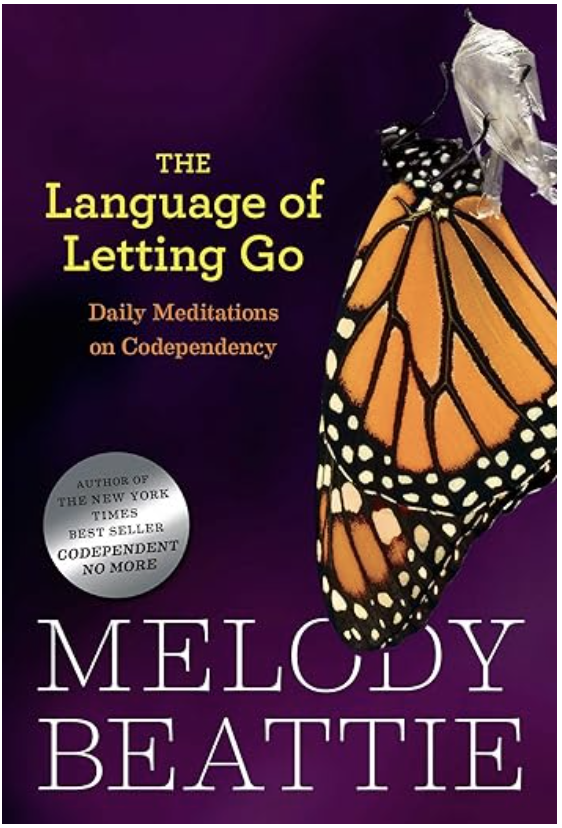
Currently on the Nightstand
Share this blog

RSS


thrivingisthegoal.com
is licensed under a
Creative Commons Attribution-No Derivative Works 3.0 United States License.

 Out of the Mire