Out of the Mire
…because thriving is the goal
Safe People
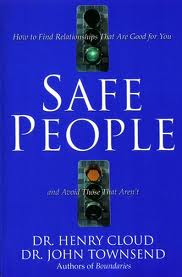
After my last post, I wanted to pause and discuss the idea of a safe person and what that means using Drs. Cloud and Townsend’s book Safe People. On their website, Cloud and Townsend ask the question: What are safe people? This is a crucial question for adult children of borderline parents (and really all humans) to ask because in order to heal the cognitive impairments inflicted by years of trauma experienced in a borderline relationship safety must be established. In all my communications with my mother, I have insisted that she focus on learning to become a safe person, but, as I have pondered this notion, I have asked myself what it might mean to specifically be a safe person.
According to Cloud and Townsend, a safe person exists within the boundaries of a safe relationship. Keep in mind, Cloud and Townsend operate within a Christian worldview; I’m using their material as a template for this discussion; so, I’m going to change it a bit in order to make their points more accessible to all worldviews. A safe relationship is one that does three things:
- Creates an atmosphere of peace, joy, and vitality in life and brings this into other atmospheres.
- Encourages and models healthy communication and relationships.
- Encourages our personal development and stokes an inner ambition to pursue and express our worth.
Cloud and Townsend did a survey of their clients and community asking them to describe to them what a “safe person” meant to them. These are the results of their survey:
- A person who accepts me as I am.
- A person who loves me no matter how I am being or what I do.
- A person whose influence develops my ability to love and be responsible.
- Someone who creates love and good works within me.
- Someone who gives me an opportunity to grow.
- Someone who increases love within me.
- Someone I can be myself around.
- Someone who allows me to be on the outside what I am on the inside.
- Someone who allows me to become the “me” that God intended.
- Someone who helps me become the “me” God sees in me.
- Someone whose life touches mine and leaves me better for it.
- Someone who touches my life and draws me closer to God as I understand Him.
- Someone who helps me grow into Divine character.
- Someone who helps me love others more.
What we see in this list are themes founded upon love, unconditional acceptance, accountability, and encouraged growth and development. We also see that a safe person sees good things in us and calls that forth. They encourage us when we are discouraged, and they don’t judge us. There is no jealousy, relational aggression, or competition. They respect our holistic needs including our spirituality–whatever that looks like. The idea of spirituality is important because abuse does affect the spirit. Accountability is the idea that someone in our life sees the best in us and holds us to that with the intent to encourage us not to settle for life’s lesser loves but to pursue the higher calling for which we were designed. We all need a person like that in our lives.
The next question I would ask is: How do I recognize a safe person? This has been one of my bigger struggles. When we engage in the process of recovery we become excellent at problem-solving in that we are always looking for what doesn’t work. When asked “What do you want?” my response would always be “I don’t know, but I can tell you what I don’t want.” I didn’t know what a safe person looked like, but I was fairly certain that I could recognize a perpetrator. Part of healing our cognitive impairments and developing new neural pathways is learning how to recognize a safe person. When we begin to recognize what safe people look like we also begin to practice being safe. Since safe people don’t judge others, we should not judge others either. Since safe people look for the good in us, we should be looking for the good in others as well. This requires different neural processes, and activating the frontal lobe calms the brain’s alarm systems and gives us practice in empathy.
So, what are the three qualities that describe a “safe person”?
- Dwelling: Dwelling refers to someone’s ability to connect with us. The Greek word used here means to “encamp” or “reside.” The origin of this word has to do with the human body as the place where the spirit resides. Safe people are able to “dwell in the flesh.” They are able to connect in a way that we know that they are present with us.
- Grace: This means that someone is on our side; they are “for us.” Grace implies unconditional love and acceptance with no condemnation. Relationships in which people shame or condemn us are ultimately hurtful and do not produce growth. They require us to be different than we are in order to be accepted. Love that must be earned is basically useless. Grace does the opposite. It says that you are accepted just like you are and that you will not be shamed or incur wrath for whatever you are experiencing. I would characterize this as validation.
- Truth: Truth implies many things, but in relationships it implies honesty, being real with one another, and attempting to be vulnerable. Many people think that safe relationships are relationships that just give grace without authenticity going both ways, but ultimately these relationships can be destructive as well. We need people in our lives who will be honest with us about their own lives, too; people who will match our level of sharing. This is called reciprocity. We also need friends who will tell us the truth. We all have blind spots. If they see something in us that we can’t, then we need friends who will take the risk and tell us. There is imbalance, however, if that dynamic doesn’t flow both ways. A friendship isn’t a mentorship.
In summary
Good safe relationships are ones where:
- We can be present with another, connecting on a deep level.
- We receive grace and acceptance with no condemnation, giving us freedom from the fear of rejection.
- We can speak the truth to one another in vulnerability enjoying a validating environment.
I read Safe People over ten years ago, and I was deeply affected by it. I realized that I had few safe relationships in my life. It was then that I saw how UNsafe my mother was. I also realized that I had to reeducate myself on how to be a safe person. How you might define safety in the context of relationships might differ from how Cloud and Townsend define safety, but the important issue is that you assess your relationships. Are you safe in your relationships? I’m not merely talking about your physical safety although that’s priority one. The shocking fact, however, is that it’s easier to heal from physical abuse than it is from emotional abuse. Longterm emotional trauma lasts far longer cognitively speaking than does physical abuse. This is why it is imperative that we all take the time to do relationship assessments.
- Are my relationships safe?
- Do they meet the “safe people” criteria?
- Am I able to develop and grow in my current relationships?
- Do I feel accepted for who I am in my current relationships?
- Do I feel loved?
- Am I honored as a separate person?
- Am I allowed to share who I am and tell the truth without being made to feel faulty?
- Are my key relationships reciprocal?
- Are my relationships validating?
- Am I a safe person?
I encourage you to read Safe People: How To Find Relationships That Are Good For You And Avoid Those That Aren’t by Drs. Cloud and Townsend. As with all self-help books, you may not agree with all the content, but it is the only book I’ve found that addresses this important topic. It’s worth the time.
Understanding The Borderline Mother, Part I
I continually try to get away from the topic of borderline personality disorder on this blog, but I find that art is imitating life. I can’t get away from it in my life either. Why fight it? I’m going to try to make it work for me then.
I think I’ve attained a measure of objectivity–as much as I can–where my mother is concerned. She hasn’t been an active participant in my life for almost half a decade. I believe that this is an essential part of growing new neural connections and healing the cognitive impairments inflicted by a borderline mother be they Waif, Hermit, Queen, or Witch. Listed among the resources on this blog is Christine Lawson’s book Understanding The Borderline Mother. I had read parts of her work a few years ago, but I never read it in its entirety. After my mother’s latest contact I decided to sit down and finish the book. I stopped after completing the section on the borderline types–the Waif, Hermit, Queen, and Witch. It was very dark and difficult material to read particularly the section regarding the Witch. My mother is a Queen/Witch, and, as much time as I have dedicated to healing my memories and integrating my identity, there is no getting around the fact that reading about the Witch is simply painful and hard to read. Alas, just because something is hard to read doesn’t mean it isn’t necessary and even helpful.
What I gleaned from my reading is that almost all BPD mothers shift on this borderline spectrum of types. My mother could, at times, behave a bit like a waif, but she was by and large a Queen/Witch. Currently, she appears to lean towards Hermit behavior because she has little to no friends, but what gives each BPD their type or “flavor” is their motivation. This motivation seems to originate in their childhood experience. Lawson states: “Like a broken record, the borderline’s behavior seems compulsively driven, with the aim of eliciting what she lacked as a child. The Waif needed to be held (to be enveloped by safe, loving arms), the Hermit needed to be soothed (to be comforted, reassured, and protected), the Queen needed to be mirrored (to see a positive reflection of themselves in their parents’ eyes), and the Witch needed to control (to elicit predictable responses to expressed needs). Although no child’s emotional needs can be met perfectly, the degree to which these needs are met significantly influences personality development.” (Lawson 44) Lawson goes on to assert that “therapists have the opportunity to study the effects of trauma retrospectively. With hindsight, it seems clear that the degree to which a child’s emotional needs were met following a traumatic experience determines whether or not serious personality problems develop. Understanding the borderline’s inner experience, therefore, requires understanding her early experience and the feelings that were repressed.” (Lawson 44) Marsha Linehan, a pioneer in the treatment of BPD, postulated that the key factor leading to the development of BPD is “an emotionally invalidating environment”. She goes on to describe an emotionally invalidating environment as:
“One in which communication of private experience is met by erratic, inappropriate, and extreme responses. In other words, the expression of private experiences is not validated; instead it is often punished and/or trivialized…Invalidation has two primary characteristics. First, it tells the individual that she is wrong in both her description and her analyses of her own experiences, particularly her views of what is causing her own emotions, beliefs, and actions. Second, it attributes her experiences to socially unacceptable characteristics or personality traits…” (Lawson 45)
What I find fascinating about Linehan’s hypothesis is that almost all children of BPD mothers are treated exactly as Linehan describes above, but not all children of BPD mothers become borderlines themselves. Interestingly, I not only had a BPD mother, but my stepmother also meets the criteria for a malignant personality disorder. My father also appeared to have strongly antisocial tendencies. Three primary caregivers with personality disorders who were also highly abusive. What made the difference? Why did I only end up with codependency and PTSD? Lawson states that “children can be exposed to a variety of a traumatic experiences and yet develop healthy personalities given certain circumstances. Studies indicate that the single most important factor affecting resiliency in children is the conviction of being loved. The effects of parental abandonment, abuse, and neglect can be mitigated if children have access to a relationship with a loving adult such as a teacher, a minister, a neighbor, or a relative who is empathically attuned to the child’s feelings.” (Lawson 43)
This is terribly fascinating to me–the conviction that one is loved. I really had to stop and ponder that. To be frank, nothing will ever convince me that my father or his wife even liked me much less loved me. I always believed that those two humans enjoyed a certain kind of loathing, even cultivated their hatred with pleasure, towards me. It was a fact of life. Looking back, I do believe I thought my mother loved me. Compared to my father and his wife, she seemed gentler and kinder. He was so cold in his affect, and nothing I did could ever thaw him. It doesn’t pain me to write about him now. I feel completely ambivalent about him. Thinking about his wife, however, causes my skin to prickle a little bit. I’m a synesthete. Sometimes when I meet people I see color around them. It’s not true for everyone, and I don’t control it. I once met one of my daughter’s English teachers, and her face was poopy green. I tried to get past it whenever I met her, but she was always poopy green when I saw her in the halls of the middle school. As it turns out, if a teaching style had a color, hers would have been poopy green, too. Well, the first time I ever laid eyes on my stepmother, I was six years-old, and she had a pitch black line running down her face and over her entire body. To me, it looked cartoonish as if someone had painted a black stripe down the front of her body. I had never seen such a thing before that. To this day, she is the only person I’ve ever seen colored in black, and, aside from the man who abducted me, she is one of the most malevolent people I have known in motivation and desire to harm with the skills to manipulate to match.
I think that this is probably one of the more damaging things about growing up with borderline personalities; it is very difficult to accept that borderline love is not really love at all. My mother told me every day that she loved me. She insisted on closing out her phone calls with “I love you”. When I began to leave Borderland, I started questioning the meaning of those three words. What does “I love you” mean to my mother? I knew what “I love you” meant to me, and it was this realization that my definition of love wasn’t matching her outward expression of “I love you” that pricked my brain. It lodged itself there like a splinter. Every time she said “I love you” I wondered rather than simply accepted. For the child of a BPD mother to even begin to wonder is very dangerous. If you are the adult child of a BPD mother, then you understand the crisis. We are not allowed to question. Our compliance is not a suggestion. It is a demand, and it is absolutely essential if we are to survive our borderline mothers.
Lawson was very good to provide a tool for her readers–a visual aid if you will.
Variations in Maternal Functioning
The Ideal Mother
- Comforts her child
- Apologizes for inappropriate behavior
- Takes care of herself
- Encourages independence in her children
- Is proud of her children’s accomplishments
- Builds her children’s self-esteem
- Responds to her children’s changing needs
- Disciplines with logical and natural consequences
- Expects that her children will be loved by others
- Never threatens abandonment
- Believes in her children’s basic goodness
- Trusts her children
The Borderline Mother
- Confuses her child
- Does not apologize or remember inappropriate behavior
- Expects to be taken care of
- Punishes or discourages independence
- Envies, ignores, or demeans her children’s accomplishments
- Destroys, denigrates, or undermines self-esteem
- Expects children to respond to her needs
- Frightens and upsets her children
- Disciplines inconsistently and punitively
- Feels left out, jealous or resentful if the child is loved by someone else
- Uses threats of abandonment (or actual abandonment) to punish the child
- Does not believe in her children’s basic goodness
- Does not trust her children
(Lawson 36)
She then goes on to describe in depth the BPD types (which i summarized):
The Waif Mother: The darkness within the borderline Waif is helplessness. Her inner experience is victimization, and her behavior evokes sympathy and caretaking from others. Like Cinderella, the Waif can be misleading as she can appear to have it together for a short time. The Waif’s emotional message to her children is: Life is too hard.
The Hermit Mother: The darkness within the borderline Hermit is fear. Her behavior evokes anxiety and protection from others. Like Snow White, the Hermit feels like a frightened child hiding from the world. The Hermit’s emotional message to her children is: Life is too dangerous.
The Queen Mother: The darkness within the borderline Queen is emptiness. Her inner experience is deprivation and her behavior evokes compliance. She is demanding and flamboyant and may intimidate others. The Queen feels entitled to exploit others and can be vindictive and greedy. The Queen’s emotional message to her children is: Life is “all about me.”
The Witch Mother: The darkness within the borderline Witch is annihilating rage. Her inner experience is the conviction of being evil, and her behavior evokes submission. The Witch can hide in any of the other three profiles as a temporary ego-state. She is filled with self-hatred and may single out one child as the target of her rage. The Witch’s emotional message to her children is: Life is war.
The Medean Mother is the most pathological (and rarest) type of Witch. (Lawson 38)
This is the simplest foundation I can lay for talking about borderline mothers. It seems a little impossible because nothing is simple when it comes to borderline mothers. As soon as I think I’ve got a good handle on my mother’s behavior and motivations, she does something surprising. In some ways, I want to inoculate myself against her so badly. I don’t want anything that she does from here on out to surprise me, but what would such a thing render in me? Would I have to become heartless or cynical? What is the difference between expecting the worst from someone and expecting…
…expecting a person to behave according to what they have always offered? It just so happens that they have always produced behaviors on the outside of the bell curve meaning deviant or abnormal. Adult children of borderline mothers are essentially programmed never to betray their parent in thought, word, or deed. Speaking about a BPD parent in a therapy session can cause a cycle of illegitimate guilt and shame to overtake an adult child rendering them helpless. Honestly, the only thing that was strong enough to motivate me to stand up to my mother was my instinct to protect my daughters from her. Early in my recovery process, I had no ability to advocate for myself. I saw no reason to even attempt to try. She was too powerful, and I was worthless. My daughters, on the other hand, were different. I was determined to protect them from her as well as give them a life I never had. Finding that seed of power within oneself, I believe, is imperative when embarking on an endeavor such as separating and individuating from a borderline mother. It took me a decade to do it. Looking back, I see that I had been trying to get away from her for years, but she continually clipped my wings if not dismembered me altogether.
If you are alive, however, then there is hope. We are not our mothers. The cycle can stop with us. We can separate, individuate, and differentiate from these women. We are not responsible for meeting their emotional needs. They are. We are not their figurative or literal punching bags. We are worthwhile people worthy of love even if we can’t believe that there’s truth in that statement. Just because a deeply wounded, disordered person mistreated us, lied to us, abused us, and traumatized us does not mean that our worth is up for grabs. It simply means that someone hurt us and we need a community of healers to tend to us and teach us how to grow up again. We need new mothers and new fathers. We might need new sisters and new brothers. We might need to hear over and over again that we are loved, beautiful, intelligent, and good through and through so that the cognitive impairment done to our hippocampus can be repaired. We might need to live in a new environment free of loud noises, oppression, and intimidation so that our amygdalae begin to calm and we stop startling. There is a spectrum of needs among adult children of borderline mothers, and these needs are all legitimate. I’ve also learned that whatever boundary an adult child of a borderline parent needs to set in order to feel safe is acceptable. One should never feel guilty for wanting to feel safe, secure, and cared for. Those are essential requirements for any and all relationships.
It seems pretty clear, doesn’t it? Alas, nothing seems clear when it comes to our borderline mothers. I can tell you from experience that the view is much clearer further down the road.
Keep going.
I Want Your Sex – Sexual Identity and the Church
Having written on the topic of sexuality and the Church just a few days ago, this seems an appropriate post to reblog not to mention that this was written by a very good friend. She succinctly raises some pertinent points as well as shares her journey of sexual development within and without the context of the Church. Please take the time to read her post. It’s thoughtfully written without judgment but also with the necessary vulnerability that the topic deserves.

I have had many things on my mind lately. I’m a thinker. I like to sit and ponder things, churning them over and over again in my brain until I either come to some sort of conclusion or I realize I need to put this line of thinking aside for the time being.
I read a very interesting post on a friend’s blog, one that got me thinking about the deeper levels of identity and ignited within me, again, the question of why the faith community in general is afraid to “go there” with certain topics. Specifically, why do we avoid the subject of sex and healthy sexual identity? Especially with those who have been sexually abused, enslaved, or otherwise mistreated?
I’m not going to blast anyone for their sexual orientation or their kinks. Jesus never did, why should I? I am going to state right off the bat, this…
View original post 2,697 more words
Gaslighting and Distortion Campaigns

I want to talk about a specific topic–gaslighting. What is gaslighting? Gaslighting is a form of emotional abuse and/or psychological manipulation and intimidation wherein a person, the abuser, presents some kind of false information to the victim in an effort to manipulate perceptions and memory. The end result of this manipulation is that the victim of the gaslighting feels crazy and doubts their own intuition and ability to remember information, observations, and events or even trust themselves. The term ‘gaslighting’ was taken from the play and subsequent adapted 1944 film “Gaslight” starring Ingrid Bergman. The plot involved her cruel husband’s deliberate effort to drive her crazy by dimming the gaslights but claiming that it was only her imagination when she commented on the flickering of the lights.
Why discuss gaslighting? Well, it’s something I’ve not discussed yet, and it only just occurred to me that if you have a manipulative or abusive person in your life, or even someone with these tendencies–then you’ve probably been gaslighted.
My mother contacted me this week through my husband, and, as is her usual manner, she pretended to be loving, but she was entirely self-centered. The tone of the email was demanding and controlling. After I read it, I felt confused and crazy. I felt like I was the one with the problem. I didn’t understand what was being done to me; I’m usually so clear in my thinking. I let it sit for a day as is my habit but then came up empty–“Why do I feel crazy?” A few hours later, a very clear thought popped into my mind: “You are being gaslighted.” It was a stunning moment of clarity. I wanted to slap myself on the forehead like the actors do on the V-8 commercials. I yelled out, “She’s been gaslighting me for years!” My husband yelled from the bedroom, “Who’s been gaslighting you for years?” Oh…right. My inner monologue just went live.
Gaslighting was not something that my therapist and I ever covered in therapy. While my therapist did teach me how to talk to my mother–perhaps while she was trying to gaslight me–he never used the term. I now know how to deal with a person when they are “diverting”, but there are other gaslighting techniques that feel shocking in the moment. My father’s first go-to manipulation technique was gaslighting. I am seeing now that my mother uses gaslighting more often than I realized. If I feel crazy, then someone’s probably gaslighting me.
So, what does gaslighting look like in action?
- Blocking and Diverting: gaslighting techniques whereby a person changes the conversation from the subject matter to questioning the victim’s thoughts and controlling the conversation. This can also show up in the conversation as the logical fallacy known as the ad hominem attack. (“You’re just bitter.” “You’re throwing my past in my face.” “I guess I’m just a bad mother then!” “Well, I guess I’m just a failure!”)
- Trivializing: this technique involves making the victim believe his or her thoughts or needs aren’t important. ( “How can we move on as a family if we aren’t talking to each other?” “How could I ever deal with _______? Just get over it and be happy for God’s sake!” “Oh, I have some problems controlling my anger, I guess, but you just need to get over everything and forgive. Good people forgive.” “So what that I’ve ignored you for five years? I’m talking to you now. Let’s just let the past go…” )
- Abusive “forgetting” and “denial” can also be forms of gaslighting: This is an interesting gaslighting technique. A person can deny or “not recall” any behavior they choose citing that they don’t remember. ( “I never said that.” “I don’t remember doing that.” “I don’t remember your wedding going like that. I remember it going wonderfully! How could you possibly be angry with me for something I don’t even remember!” It’s from this point that an abuser will often move directly into countering which calls into question the victim’s capacity to remember events and information correctly–“I wonder if perhaps you are even capable of remembering things properly. I mean, I remember enjoying myself. Maybe you’re just a bitter person.” This is an ad hominem attack.)
- Countering: this technique involves an abuser vehemently calling into question a victim’s memory in spite of the victim having remembered things correctly. ( “You have a child’s memory. I’m an adult. That’s not what happened.” “You don’t remember it correctly.” “You were mentally unstable due to __________. I’m certain you don’t really remember how things really were.” )
- Withholding: a gaslighting technique where the abuser feigns a lack of understanding, refuses to listen, and declines sharing his emotions. (“I don’t know what you’re talking about. That was never said to me. I don’t have to sit here and listen to this!” “You’re just trying to make me feel guilty!” “You’re always using my past against me!”)
What does gaslighting look like specifically? I’ll use the latest contact with my mother as an example or object lesson.
My mother emailed my husband on Wednesday. She wanted to know how we were “supposed to move forward as a family” if there was no contact. Please take note that we have two competing assumptions. She assumes that I want what she wants. I don’t want to “move forward” as a family. I want to be respected as a separate person with a separate identity. I also want to hold her accountable for her behavior. She does not want this. She wants to do what she wants at all times without consequence even if what she does meets the criteria for abuse.
In her email, she directly asked the question three times. Intermingled throughout the email were declarations of “we miss you all so much” and “we’ll do whatever it takes to be in your lives again” punctuated with “I want to know how things are supposed to get better and how we are supposed to be a family if we’re not talking.” It was not really a loving email. It was a demanding email. She was not able to see that her premise was one-sided. She assumed that moving forward as a “family” was a mutual desire or possibility. She wants to be a family with me.
Do I want the same thing? The nature of her illness will not allow her to entertain such thoughts. If she wants it, then everyone wants it. It is important to understand this when you deal with certain personality disorders. This isn’t just a deficit in empathy. This is a breakdown in both cognitive and emotional empathy (Social cognition in BPD). She also addressed the issue of her friend who phoned me last fall. As it turns out, my mother did indeed condone her friend’s communication with me in order to act as a mediator even though she knew I didn’t want that. She attempted to say that she never told her friend that her therapist was trying to contact my therapist, but, according to her, these misunderstandings happen “when people aren’t talking”.
Where is the gaslighting?
- Trivializing: My mother has now decided that she wants a relationship with me after five years of ignoring me. It’s important to really understand that. Is it a reasonable expectation to call a person after five years and pretend that everything in the relationship is just as it was five years ago? No, it’s not. Five years ago, my mother was already unkind and abusive. Her washing her hands of me allowed me to make enormous progress in my healing process. Calling me up and saying, “Hi! I wanna come visit now. I’ve decided that I don’t want to be alone anymore, and you should be there for me. It doesn’t matter how I treated you in the past. I’m your mother. Sorry about that. So, what’s a good time for a visit?” is wrong! It trivializes the magnitude of her transgressions.
- Withholding: She is also withholding any kind of understanding of her actions–“I don’t understand. I was angry. So, I didn’t talk to you for a few years. We’re family. I’m coming to visit. I don’t want to be alone now.”
- Blocking, diverting, and the ad hominem attack: If I try to hold her accountable for her actions, my mother’s favorite gaslighting technique is to block or divert. Her first line of defense is to say something like, “Well, I’m so sorry that I’m such a failure!” or “You’re just trying to make me feel bad!” or “Well, I guess I knew that you couldn’t be counted on to be reasonable. You claim to be a Christian, but really you’re just bitter, resentful, and unforgiving!” She’ll aim for character assassination in a heartbeat.
- Withholding again: It’s important not to miss her reasoning behind the misunderstanding regarding her friend. “If families don’t talk, then these kinds of things happen because we can’t clear things up right away.” She is essentially blaming me for the misunderstanding because I am the one who has declared the moratorium on contact. She is engaging in withholding here because she is refusing to understand the wrongdoing. I asked for no contact, but she chose to send her friend to act as a mediator instead of respecting the boundary. Whatever misunderstanding happens from there is fruit of the poisonous tree. There should have been no contact. That phone call should never have occurred and would never have occurred had she respected my boundaries in the first place.
What is the best strategy to handle blocking, diverting, and the ad hominem attack?
- “If you want to talk about your feeling like a failure, then we can in a moment. But, right now, we’re talking about this.”
- “If you want to discuss your perception that I’m deliberately trying to make you feel bad, then we can after we finish discussing this poor choice you made.”
- “If you want to discuss your perception that I’m a no good Christian with a bitter nature, then we can after we’ve discussed your inappropriate behavior.”
This is the best strategy for countering this gaslighting technique. It keeps you in control of the conversation. Mind you, if you’re talking to a person with an untreated personality disorder, then be prepared for a big emotional expression. It’s very difficult to bring accountability to the table with an untreated personality disorder, but at least you won’t get steamrolled and feel crazy at the end of it.
Along with my mother’s email came an epiphany that, to me, was even more sinister than gaslighting–the vilification or distortion campaign. What is a distortion campaingn?
One of the classic behaviors of a person suffering from Borderline Personality Disorder is the vilification campaign. The target is the person against whom the perpetrator Borderline conducts the vilification. The intent is to destroy the target’s reputation and thereby destroy the target’s relationships with family and friends, employers, co-workers, doctors, teachers, therapists, and others. The intent may even be to force the target to leave the community, put the target in prison, or even kill the target. As with so many things involving Borderlines and their typical inability to understand or respect boundaries, there really are no limits. They will use basically any means available to them to cause damage to their target, including denigration, endless disparaging remarks, fabrication, false accusations, and even teaching others (including their children!) to lie on their behalf as part of their vilification campaign. (online source)
As it turns out, my mother told her friend last fall that I was an emotionally unstable woman due to my experience with human trafficking–something that happened almost twenty years ago! This was what my mother’s friend was referring to when she said, “Now, now, I know what happened to you in Florida…” She was trying to reason with me thinking I had gone off the proverbial deep end. My mother has also gone to other family members and claimed that I have cut her off for no good reason. She has told others that I am keeping her from her grandchildren. She has cried in front of them. She has told friends and family how wounded and alone she is, and it’s ALL…MY…FAULT. I have been completely vilified. Why? So that she can garner sympathy.
What stunned me yesterday was learning that she used the most painful of my life experiences to gain the upper hand in crafting the appearance of her being the victimized one. I felt like I had the wind knocked out of me. I thought that I knew the entirety of her capabilities. I was wrong.
What is the antidote to this kind of suffering?
It is imperative that you know who you are. Your identity has to be worked out, properly fenced in, and defined by something much more powerful than the one manipulating, disempowering, and vilifying you. In my case, there are people in my life who know me well, and they stand by me. They can vouch for my character.
A bigger more powerful truth always snuffs out a lie that feels true in the moment. This is why gaslighting and distortion campaigns are so toxic and damaging. They both take truth and manipulate it in order to victimize and oppress. In order to avoid victimization, we have to know who we are and what our permissions are. What do I mean about permissions? We were made for freedom and empowerment. We were made for clear thinking which is the definition of self-control. We were made for an immensity of joy and peace. And, we were made to experience these things within our relationships. We were not made to be oppressed, victimized, abused, and hurt in the name of toxic love. We were not made to take responsibility for other people’s “stuff”. We were not made to overcompensate for other people’s willful passivity. We were made to be the star of our own stories. So, if you are starring in someone else’s story, then get out of their story and allow that person to expand. If someone is pushing you out of the starring role of your own life story, then push them out of your story so that you can stand up straight and expand into your proper place. This is God’s intention for all of us.
Once again, if you feel victimized and crazy, unable to trust yourself or your instincts, then you may be experiencing some form of manipulation. For further education:
How do you know if you are being gaslighted? If any of the following warning signs ring true, you may be dancing the Gaslight Tango. Take care of yourself by taking another look at your relationship, talking to a trusted friend; and, begin to think about changing the dynamic of your relationship . Here are the signs:
1. You are constantly second-guessing yourself
2. You ask yourself, “Am I too sensitive?” a dozen times a day.
3. You often feel confused and even crazy at work.
4. You’re always apologizing to your mother, father, boyfriend,, boss.
5. You can’t understand why, with so many apparently good things in your life, you aren’t happier.
6. You frequently make excuses for your partner’s behavior to friends and family.
7. You find yourself withholding information from friends and family so you don’t have to explain or make excuses.
8. You know something is terribly wrong, but you can never quite express what it is, even to yourself.
9. You start lying to avoid the put downs and reality twists.
10. You have trouble making simple decisions.
11. You have the sense that you used to be a very different person – more confident, more fun-loving, more relaxed.
12. You feel hopeless and joyless.
13. You feel as though you can’t do anything right.
14. You wonder if you are a “good enough” girlfriend/ wife/employee/ friend; daughter.
15. You find yourself withholding information from friends and family so you don’t have to explain or make excuses. (Are You Being Gaslighted?)
The Second Emancipation Proclamation
I’ve been thinking about sex. I have a lot of questions about sex. I’ll explain. The cause du jour right now in both sacred and secular circles is human trafficking. Celebrities from both spheres are jumping on the sexual slavery bandwagon, waving “Stop Slavery” signs, and holding fundraising efforts of various kinds to funnel money into the anti-sex trade effort. It’s as if everyone woke up at the same time and realized that men, women, and children were being abducted and forced into prostitution. Sexual slavery must be a new phenomenon. No. It’s not. Prostitution is called “the world’s oldest profession” for a reason. As long as people have been having sex, there have been men and sometimes women making money on the backs of other human beings. Sexual slavery and human trafficking is a very old crime. What’s new? Social media, the Internet, and the immediate availability of information. This is most likely why everyone and their cousin are better informed about the sex trade than they were twenty years ago when I was abducted and whisked away to a port city to be sold.
It’s very hip these days to wear a piece of jewelry or t-shirt made by an organization that has declared war on human trafficking, isn’t it? One can drink Fair Trade coffee that donates part of their profits to the cause. One can give offerings at church to organizations that are aligning themselves with these organizations, and I support doing all these things. I wear the jewelry. I buy the coffee. It’s all about awareness, they say, and there are even websites and handouts one can check to learn how trafficked women behave. These are actually really good things because it’s important that we pay attention to our environment. Had my neighbors been paying attention to me and the man living next door to me, I may not have been abducted. It’s that easy after all. Save a woman, man, or child.
Then what?
I’m quite serious. You have your trafficking victim. There s/he is. Out of the life. You’ve done it! Now what? That was me twenty years ago, and I was only captive for one week. It was by all accounts the most terrifying seven days of my life, but I was already a victim before I was taken. I’ve written at length here about my prior victimization, and it’s what made me an easy target for the man who took me. Many people who are taken are from abusive homes. Traffickers are savvy people. They don’t take strong people with good boundaries who have a good sense of self. They take girls and boys who have already been broken in as victims by their families and communities. We make great slaves.
So, I ask this question: What does the church and all these earnest people who are working so hard to get these women, men, and children out of the life intend to do for them once they are freed? What can they do?
I ask this question because the Christian community that I have come to know in the last forty years can’t do much when it comes to serious sexual victimization. Why? I think it’s because most Christians are still going round and round about sex and sexual identity. I only know one Christian woman who is comfortable talking about sex, and she is the one person who has been willing to “go there” with me in terms of talking authentically with me about sexuality, the nitty-gritty of sex, and sexual identity.
This needs to be heard. God works through people. A sexually abused person needs to be able to discuss sex, sexuality, sexual identity and the nuances of the sex act in a safe environment free of shaming attitudes and embarrassment if they are to progress, mature, and heal. Shaming, religious, and judgmental language must be eradicated completely in these discussions, and most Christians I know simply can’t discuss sex without including shame, judgment, and religious attitudes. This is one reason why it has taken me almost twenty years to develop a healed sexual identity. I had no one to talk to after my trafficking experience, and I fumbled my way through social experiences in the dark. I was completely ashamed of myself believing I was an intrinsically broken, defiled woman after I had been trafficked. No one in the Christian community was willing to talk to me about sexual trauma, healing, development, or even dating, and I was brimming with questions.
Whenever I tried to ask a question I was met with shocked expressions and even told that my curiosity was sinful–sexual thoughts aren’t virtuous or noble after all. I once tried to tell part of my story to a Christian woman I admired and was told that my story was not wanted. She didn’t want to know it. She didn’t want to feel burdened. So, I was left alone in life with my trauma and desire to understand human sexuality and intimacy. People in my faith community continually said that they wanted to end sexual slavery, but they didn’t want to get their hands dirty. I think that this is still very much the case.
People in the West are willing to donate money, buy jewelry and t-shirts, and even volunteer their time to packing boxes and going on mission trips, but are they willing to invest in longterm mentoring? Are they really willing to come alongside one of these victims and support them for possibly years to come while they suffer with PTSD and attempt to build a life, wade through the landmines of attempting sexual intimacy, and discover their true identities after having them shattered? This is not for the faint of heart, and the church at large needs to be prepared for its calling. Setting captives free is not just about donating money. It’s about building relationships and calling forth identities. It’s also entirely not about being comfortable. What kinds of questions did I have on my journey towards sexual healing? What was I dying to ask another woman?
In the beginning of my journey, these were some of my questions:
- How do I have an orgasm?
- Why don’t I feel anything ‘down there’?
- Do you feel anything ‘down there’?
- I can’t stay present when I’m in a sexual situation. Is that normal?
- I feel nauseated when a boy tries to hold my hand. Why?
- I really want to enjoy kissing, but as soon as he tries to kiss me deeply and I feel his tongue I want to throw up. Is that normal?
- I sometimes feel like I’m not even in my body. Do you ever feel like that?
- I’m scared of men. Are you ever scared of men?
In the middle of my journey…
- I’m supposed to “get wet” and feel aroused, but I can’t. I can’t seem to get myself to feel aroused at anything, and I feel so frustrated at this. Do you know why? Can you help me? What do you do?
- I’m terrified of my husband’s penis. Do you feel like that?
- During sex, I feel paralyzed. I feel like I can’t speak. I feel like I can’t use my voice. I try, but I just can’t. He wants me to tell him what I like, but I freeze. What is wrong with me?
- I don’t like sex. I just do it to make him happy.
- I feel like I’m going to vomit when my husband wants me to perform oral sex. What can I do to make this better?
- I don’t want my husband to look at me when I’m naked. I don’t want him to see me. I feel ashamed and embarrassed. I know that men are visually stimulated, and I feel badly for depriving him of this experience. What can I do? I feel too vulnerable.
- I’ve never had an orgasm. Am I supposed to be doing something? My husband feels inadequate. I feel broken. Maybe I am.
- What about masturbation? Should I be doing that?
These are just a few questions that I wanted to ask someone, and I’m not unusual. These are very direct and honest questions about sex, sexual identity, sex in the context of marriage, and sex after trauma. These are all valid and normal questions that anyone who is attempting to progress might ask. Do you think anyone in the church is prepared and equipped to answer these questions? No, but they should be because there are droves of people who desperately need to ask these kinds of questions yet they feel they can’t. Where do they turn to try to get some answers? Pornography. Porn gives us some sense of what sex is like albeit a very skewed example. The problem that many of us face who have been sexually abused, particularly for those of us who have been trafficked, is that we don’t know what ‘normal’ is anymore when it comes to sexuality. We don’t know what a normal sexual response looks like. Normal is gone. So, we need to be able to ask questions of others so that normal and healthy can be defined again. If healthy people with healthy life experiences aren’t willing to talk to us openly and free of shame about the human sexual experience, then what are victims of sexual abuse and human trafficking supposed to do? I can tell you what many of us have been doing.
Suffering in silence.
Why are people so shocked that Christian men and women have pornography and sexual addictions? Why is anyone shocked at the adultery statistics in Christian marriages? If victims of sexual abuse and human trafficking can’t get the help they need from their own faith communities, then what about everyone else with lesser but equally important needs?
I no longer suffer in silence. I ask the questions that I need to ask, but I also have a much smaller circle of friends now. I’m no longer ashamed to say that I have a sexual identity, and I’m on my way to healing it. It’s time that the church gets a major spiritual “chiropractic” adjustment in order to get herself straightened out when it comes to sexuality and sexual healing, or she will be utterly irrelevant when the next Emancipation Proclamation is fulfilled and all the slaves finally come home.
What Does Love Look Like?
I had a discussion last night with a friend wherein she recounted a discussion she had with someone in her church. Her conversation was almost identical to myriad conversations I’ve had with well-meaning Christians throughout the years of my journey. One such conversation went something like this:
“I don’t understand why you won’t talk to your mother. Don’t you think it’s time to be loving? I think you really just need to love your mother. Just love her. Really show her what God’s love is like. Your grandfather was so critical of her. I’m sure she just needs a little gentleness. You need to forgive her.”
Another conversation sounded like this:
“It’s really important to honor your parents. I don’t think cutting off a parent pleases God. Whatever your father did, it couldn’t be that bad. My father has yelled at me a time or two. I’ve wanted to run off and not talk to him, but that’s rebellious. You are being rebellious. It’s not honorable. Don’t you want it to go well with you?”
If you think these responses are uncommon, then you would be mistaken. They are, in fact, the most common responses I’ve received from Christians. Why? I suspect it’s because people assume things. If I mention “mother” or “father” many people might imagine their own parents. If their parents fall within the bell curve for normal human behavior, then it might be hard for them to imagine what abnormal human behavior looks like. Does it look like what they see on an episode of Law & Order? No. It’s worse.
Let’s address the first common statement about being loving. Usually, after a statement extolling the virtues of Christian love, scripture is quoted. 1 Corinthians 13 is a favorite. That chapter of Corinthians is one of my favorites, too, so this puts me on common ground with a person allowing me to begin a conversation. It’s important to ask some necessary questions.
- What does it look like to love a pedophile?
- What does it look like to love a sociopath?
- What does it look like to love a sadist?
- What does it look like to love a narcissist or a phallic narcissist?
- What does it look like to love an addict who just won’t give up their addiction?
Let’s take it further.
- What does it look like to love a sadistic mother who used to lock you in a room so that she could engage in orgies?
- What does it look like to love a father who burned you on the face with a cigarette lighter and laughed about it?
- What does it look like to love a brother who molested you repeatedly as a child?
- What does it look like to love an uncle who dismembered your kitten in front of you so that you would never tell anyone about his repeated sodomy?
- What does it look like to love a mother who tried to murder members of your family in front of you?
- What does it look like to love a parent who tried to sell you in exchange for car repairs?
- What does it look like to love a parent who verbally, emotionally, and spiritually abused you for your entire childhood and adolescence?
These are very real circumstances for people. It takes enormous courage to break free from families where this depth of dysfunction and deviancy is in place. It is precisely the love of God that empowers victims of abuse to experience their own worth and make an attempt to leave what they know even if what they know is Hell. The love of God is goodness personified, but it’s also raw power. When it’s present it extinguishes darkness leaving us very vulnerable. God tenderly exposes all the areas in us that He is chomping at the bit to touch and heal, but we are very fragile whether we know it or not. We can only do so much at a time. When it comes to being loved by God and loving others–it’s first things first. You must know that you are loved. This is written very clearly in the command to love your neighbor as yourself. That command was written with an implicit assumption. It assumed that you had internalized the love of God and would, therefore, extend that love to those around you. In other words, within the command there is another command to love yourself. Know your worth. Treat yourself kindly and with respect so that you can teach others how they ought to treat you. Let the goodness of God invade your inner life so that His goodness might overflow in your life and touch others. That is what that command in action looks like. It all starts with you and God.
So, what does loving people who hurt us look like then? It starts with teaching them how to treat us because that’s exactly what God teaches us. What did Jesus say? Love the Lord your God with all your strength, soul, and mind, and love your neighbor as yourself (Luke 10:27). Loving others is not a warm, fuzzy feeling. It’s an act of the will. In the case of abusers, it’s often an act of getting the justice system involved because natural consequences are part of teaching others how to treat you. That actually is love in action. We teach our children about natural consequences because we love them. We teach other adults in our lives the same thing because we want them to be successful, too.
- If you molest a child, then the police will be called. You will not be allowed access to other children. You may spend time in prison and become a registered sex offender. This may be the only boundary that will keep others safe and prevent you from acting out dangerous fantasies.
- If you abuse me verbally, then I will not spend time with you. You need to learn how to treat others with respect. This will help you become more successful in your relationships.
- If you get drunk at my parties and behave badly, then I will not invite you to my parties. You need to learn about limits and what’s acceptable socially. This will help you become more successful socially.
- If you rape women, then you will (or at least you should) go to prison. You also will have a hard time getting a date. Violence against women is never acceptable, and you need help in figuring out why you feel empowered when you are victimizing others.
- If you abuse your children, then they will not want to have relationships with you as adults. They will not trust or grow attached to you. You need help in determining why you believe that you deserve the trust and respect of your children when you have not earned it.
Are any of the above statements mean or unloving? No, they are simply natural consequences for poor choices. Is that unloving? NO! Natural consequences pave the way for a person’s character development, maturity, and sense of self-esteem. If a person is allowed to feel the consequences of their poor choices, then they are more likely to change their behaviors and learn to make better choices. This is part of how humans grow and develop into better humans. That is, in fact, the most loving and merciful thing that can be done for them. When we protect people from the natural consequences of their poor choices, we are not being loving, Christ-like, or kind. We are not respecting their boundaries or allowing them to engage in their own process of development. We are also engaging in codependent behavior and maintaining a false peace which is, in fact, contrary to what God wants. Take a look at what Jesus says in Luke 9: 3-5:
“Take nothing for your journey,” he instructed them. “Don’t take a walking stick, a traveler’s bag, food, money, or even a change of clothes. Wherever you go, stay in the same house until you leave town. And if a town refuses to welcome you, shake its dust from your feet as you leave to show that you have abandoned those people to their fate.”
Is Jesus being cruel here? No. Is He being unloving? No. He has given the disciples a commission to go out and heal people for crying out loud! They are essentially fulfilling their calling, doing what Jesus has asked of them. If a town didn’t want it, then the disciples were to shake the dust from their feet and move on. Keep going. Were they to stay back and plead? How about sacrifice their own identities for the well-being of the town? Did Jesus say that they were to deny themselves in order to be like Him? NO! Did he suggest that they stand around and be verbally spat upon or stoned for the good of the Kingdom? No, He didn’t. He told them to offer up His peace. If it wasn’t accepted, then move on.
God is loving. Far more loving than any human being, but God’s love is not codependent or enabling. He desires our freedom and wholeness.
So, what about the issue of honoring our parents? How do we honor parents who have abused us? I actually spent a long time in therapy working this through because it was deeply important to me to honor my parents. Why? Because I absolutely love God, and I wanted to honor Him. I came to the conclusion with guidance from a seasoned pastor that to honor your parents means to forgive and bless them. For many of us, this takes time. It’s a process, not an event. There are people in the world who have suffered extraordinarily at the hands of their parents, and it is wrong to make assumptions about why a person might cut the parental bonds. It is not rebellious nor sinful to leave a parental relationship. Furthermore, it is not for anyone to judge. That very difficult decision is between God and the person making it. He is the only person to judge such a thing. For the sake of argument, could it ever be a pure act of defiance to cut off a parent? Sure. That is, however, not what I’m discussing here.
Statistics say that 1 out of 4 women has been sexually assaulted. For men, it’s 1 out of 6. Let’s put those numbers in a context so that they become more meaningful. How many victims of sexual abuse knew their perpetrators? Recall the scandal that hit the media a few years ago about pedophilia in the priesthood in Boston. So, let’s try that first Christianese statement again except let’s change the context. You’re now talking to a male adult who was once the victim of repeated sexual abuse by his parish priest:
“Well, Jim, I just think that the Lord would have you love him. He just really needs to be shown the love of God. Just love him to pieces. Keep going to church and live out the love of God. You’ll get over it.”
Does that sit right with you? It shouldn’t. We’ve just victimized the victim, ironically, with the love of God.
Let’s try this on for size:
“I know that your father molested you when you were young, but we are called to honor our parents. It’s not right for you to confront him.”
The commandment to honor our parents does not give parents a free pass to treat their children like chattel, and it does not mean that adult children can’t seek justice and healing outside the parameters of the parental bonds. This must be made clear.
What is really being communicated when well-meaning people say things like this? They are primarily communicating ignorance and a lack of empathy. They are also communicating that they have not experienced the love of God in the way that perhaps the person to whom they are speaking requires. Great suffering is shocking. We need to be prepared to be shocked, and we also need to be prepared to allow people to figure things out. We also need to be prepared to not know the answers. Get very comfortable with saying, “I don’t know why either.” The church at large has spent an inordinate amount of time re-victimizing victims by misinterpreting Biblical texts. She has preached the message of forgiveness without truly understanding what it means to be restored and healed. She has preached self-denial without understanding relationship or God’s sense of justice. It has largely been a message of “keep the peace”, but it’s a false peace. There is no life, wholeness, forward progress, hope, or a real future where there is no truth. If the church is keeping a false peace, then there is no room for truth because keeping a false peace is all about denial. God has never done denial nor should we.
The good news here is that there is a place for everyone is God’s Kingdom because God doesn’t look upon us and see us as sinful or broken. When he looks at each of us, He sees something good. He sees you where you will be. Not where you were. He is God of the future. Not a god of the past. So, for those of us who have been defiled, shamed, and beaten, there is hope for healing and wholeness. This isn’t a gossamer notion or an illusion. It’s a reality. For those of us who are trapped in the sticky web of religion, boxed in by a god cast in our own image or the image of someone far more nefarious, there is hope, too, because God is the ultimate iconoclast. He loves to reveal Himself and His nature as something beyond anything we could ever imagine. Whoever you are, it’s these encounters that change us transforming us from who we were into who we really want to be–an integrated, healed human bearing the image of God Himself.
And what is God like? Well, Moses got a glimpse when God passed before him:
“The LORD passed in front of Moses, calling out, The LORD! The God of compassion and mercy! I am slow to anger and filled with unfailing love and faithfulness.” Exodus 34:6
This is a far better starting point than the false loves we’ve met along the way.
Shalom…
The Lie of The Model Woman
I have NEVER reblogged another post in my blogging career, but I highly recommend that you read this. It’s well-written and truthful. The woman who wrote this has recently graduated from seminary, and I find her perspective and humor refreshing. Her name is Christina Gibson, and you can find her at her own blog–The Roundabout Way.
Experiencing Abundance
I read something interesting today:
“Abundance is the experience of plenty, often called prosperity…You are prosperous to the degree that you are experiencing peace, health, and plenty in your world….In our culture, however, abundance is often equated only with money, the pursuit of which may throw our body, mind, and spirit out of balance, and, therefore, threaten our creative flow.” The Twelve Secrets of Highly Creative Women, Gail McMeekin
What stood out to me immediately was the use of the word “experience” implying that we could possess peace, health, and plenty, but if we are unable to experience it, then we would not live prosperously. Isn’t that interesting? This might be the result of “scarcity thinking”. Gail McMeekin, a life coach, calls “scarcity thinking” a saboteur–the voice that says that you do not have enough even if you do. She goes on to say that “scarcity thinking…worships lack rather than plenty. [It] comes from fear and a lack of trust that your needs will be taken care of.” Scarcity thinking is a form of anxiety. I’m very familiar with it. I’ve always called it the Poverty Paradigm, and it’s plagued me for most of my life. It’s completely irrational, and it is indeed an enemy to our peace of mind and forward progression.
I recently realized that I grew up with little to no resources, but my mother did a fairly good job hiding it. My father grew up in poverty, and, during my parents’ separation, he cleared out their checking account and left us with no financial resources, hightailing it to California. My mother was too proud to ask her parents for help so she turned instead to my beloved pickle jar. I had been literally saving all my pennies hoping to fill the jar to the brim with coins. Instead, my mother used my spare change to buy food insisting that I help her count out the coins. It was powdered milk and peanut butter and jelly sandwiches for weeks after that. After their divorce, my father refused to pay child support leaving my mother in a consistently precarious financial position, and I became the pawn in bitter fights over money. There was never enough. I was always wearing clothes that were too small and worn or hand-me-downs from some family my mother knew. I always felt guilty. I was the reason we never had enough. If only I would stop growing or needing something.
My mother didn’t handle finances well either. When she married a second time, her new mother-in-law set up a savings account for me. She deposited money into that account on my birthday every year. After that marriage ended I discovered that my mother had drained that account; it was empty. When my grandfather passed away a few years later he left me a specific amount of money with instructions to invest it. My mother took half the money for herself against the execution of the will. When I was living in France, I injured myself in a rather embarrassing way and was forced to stay overnight in a French hospital. It took two years for the hospital bill to pass through my insurance company and reach me. As it turns out, the insurance company paid the bill directly to my American address, and I was to directly pay the French hospital using those funds. My mother essentially stole that money and never told me that the insurance company had paid the bill. She left me with a $1000 bill that I had to pay out-of-pocket. Due to my mother’s behavior around money–more specifically my money–I developed a scarcity complex around money and finances. As soon as I had money, my mother would steal it. At least that’s what I came to believe.
Combine growing up with an impoverished life experience and a mother who steals with a captivity experience, and I developed a major scarcity complex. If I even felt remotely trapped, I panicked. These feelings were very specific to feeling trapped financially–out of options. Some people might relate to this more on a physical level as in a sense of claustrophobia. There are those who don’t like tight spaces like elevators and MRI machines. They are suddenly overcome with panic and a strong urge to flee. I can tolerate elevators and MRI machines. I could not, however, tolerate emotional tightness. I suffered from emotional claustrophobia. What triggered it? Ironically, abundance triggered my panic more than anything else. Income tax refunds, bonuses, and inheritances caused enormous panic attacks. Why? In my mind, abundance of resources attracted their devouring. I never held onto anything extra for long because someone–my mother–would always steal from me. So, what did I do with the surplus? I couldn’t save it. That would attract attention. You have to get rid of it as quickly as possible so I spent it. I paid bills, repaired the cars, registered my girls for classes, donated it, whatever needed to be done…Just get rid of it. Does this make sense? Nope. Not at all.
Lack also triggered panic. Not having enough, of course, made me terribly anxious, but I always experienced my life as lacking so I lived on the edge of panic for years. This is why I have credit card debt. I was always trying to pre-empt a crisis of scarcity particularly where my children were concerned. I didn’t want them growing up as I did with old, ill-fitting clothes and powdered milk. So, I made all my choices from a place of fear. This way of life, however, is not sustainable. How did it change?
I locked myself in the bathroom one day, sat in the bathtub, and wept. I was taken over by panic. I’m sure I was paying the bills, perceived that there wasn’t enough for something, and freaked out. My husband, however, must have heard me. He picked the lock on the bathroom door and found me in my irrational, anxious state. “What are you doing? Why are you freaking out?” I was not going to answer that question. Clearly, I was totally fine, huddled in the bathtub, shaking like a leaf. “I paid the bills.” My husband shrugged. “So…you paid the bills. And? Did we have enough to pay the bills?” I thought about it. “Yes…” He sat on the toilet and looked at me. “So, you are upset because you paid that bills and we had enough?” I thought about what he said. “We are living paycheck to paycheck. I can’t do this anymore. I’m so tired. If something happens…If…” My husband said, “Stop. No more of that. Did we or did we not have enough? Do we have a house? Do we have food? Do the cars work? Do the girls have what they need? Is your mother coming to drain our accounts? Does she even have access to our accounts? Yeah…I know how you think. Tell me…do we right now have what we need?” I couldn’t argue. “Yes, we have what we need today.” He took my hands and pulled me out of the tub, “Then, you are okay, and we are okay. No more panic.”
That moment in my bathroom was the very beginning of my recovery from crippling anxiety. It all started with one question: “Do you have what you need today?” My scarcity complex was deeply rooted in something far more sinister than merely fearing my mother’s thievery. Feeling trapped is a common form of anxiety, but those feelings usually tie in to something else. For me, I relate feeling trapped to my time in captivity when a murderous sociopath was threatening to kill me. In my brain, feeling trapped is connected to fearing death. They are one and the same. This is why I was so paralyzed by feelings of financial tightness.
To me, financial tightness=no options=being trapped=being in captivity=threat of death, ergo, financial tightness=threat of death
When we believe that we are about to die, our limbic system kicks in and we are no longer rational. Instead, we are usually stuck in fight-flight-freeze mode. This is anxiety in action. No amount of therapy is going to reach a person who is ruled by their limbic system. The point of a good treatment plan is to stop the anxiety before escalation occurs and the limbic response hits us hard and fast. The only way I was able to break my anxiety cycle was to figure out what I was believing. Anxiety, I have learned, is the fruit of a very poisonous tree. It’s not the seed. The tree itself represents the thoughts that drive and continually cultivate the anxiety, and the seed is the belief from whence it all grows.
In my case, I was not able to experience the abundance in my life because I could not see it. A seed was planted by my parents’ actions and my abduction fertilized that seed. I believed that if I ever had money particularly a surplus, then it would be devoured in one way or another. Irrationally, I believed my mother would steal it. These beliefs manifested in thoughts like:
- “It’ll be okay when _______ is paid off.” (Any thought that begins with “It will be okay when…” is magical thinking.)
- “I better spend this now because I don’t know when we’ll have money again.” (Catastrophizing as well as failing to plan based on avoidance behavior)
- “I don’t know what we’re going to do…” (Irrational thinking as well as catastrophizing)
- “I feel like we never have enough.” (Feeling like one never has enough is very different than reality.)
- “I feel like we never have any options.” (Thinking with feelings).
All of these thoughts are cognitive distortions and prevented me from thinking clearly about my situation. My anxiety prevented me from making good financial decisions. The feelings of entrapment activated my limbic system because those feelings were tied into a traumatic experience. My brain was merely doing its job and attempting to protect me. I was stuck. So, how did I overcome this anxiety? It’s taken me a few years, but I stopped dealing with the anxiety and addressed the root of it. I looked at what my mother did and addressed specific memories associated with being in captivity. Truthfully, it was very painful, and I didn’t like it. I also realized that I had a habit of saying, “It’ll be okay…” during escalation. I changed my language to express the truth: “It is okay.” and “I am okay.” I had to tell my brain that I was, in fact, okay. It didn’t need to step in and protect me. Was I still trapped? Nope. Was my mother coming to plunder me? Not at all. Was someone coming to abduct me? No! Sometimes I had to stop and take stock of my existential state in the middle of a mall or restaurant. There were times I was on the verge of freaking out, and I would start my mental checklist. The notion that we do not have control of ourselves is not true. We, in fact, have far more control over ourselves than we think. Our brains just have to be convinced of that.
Now, someone might say that their level of anxiety is far worse than mine was. That might be true. I will say, however, that it is possible to gain ground in recovering the enjoyment of peace of mind and learning how to experience abundance–in even perceiving abundance. If I can disentangle that mental mess, then I know others can disentangle theirs. So much is possible. Sometimes it’s just a matter of beginning to question our conclusions and ask questions again to reignite a process. Do we even believe that we can minimize our anxiety? What do we believe about anxiety anyway?
At this point, I don’t think I believe that anxiety should be merely managed. I think that it’s possible to do so much more than manage it. I think it can be lessened to the point of minimization so that we experience what I might call healthy levels of anxiety. Anxiety isn’t all bad. We need it to give us an edge at certain times. Do I still feel anxious? Yes. I was anxious yesterday, but I was okay.
And, I’m okay today. Does this mean that I will never have a panic attack again? I might. But, I will still be okay when I do, and knowing that changes everything about how I feel today and my ability to perceive abundance in my current circumstances.
Playing Church
I think I’ve blogged myself into a corner. Do you ever feel like you have to censor yourself, or that you can’t present a part of yourself as you truly are? That’s how I’m feeling, and I’m not quite sure how to go about resolving that. I suppose one just attempts to write something…
I have allowed myself to stand on the outside of the faith community for a while now. I used to be knee deep in it, and, then, as I’ve written here, I was ‘shunned’ out. I hadn’t done anything wrong as in morally failed or “sinned” to use the religious parlance. Wrong was done to me, and I was judged as ‘unclean’. Read 2 Samuel 13 to see this dynamic in action in the account of “The Rape of Tamar”. This is not an uncommon reaction. Historically, how many women have committed suicide for bringing shame to their families and communities after being raped? I loathe the term ‘rape culture’ for a few reasons, but it exists for a reason. In the 21st century when a woman is raped, what are the odds that at least a few people are going to inquire after what she was wearing at the time of the assault? Not that long ago, a woman confided in me that her husband was beating her. She wanted to know if my husband was beating me, too. She had begun to normalize domestic violence. Why? When she reached out and asked her former youth pastor for help, his response to her had been, “Well, what are you saying to your husband that makes him feel the need to hit you?” He then went on to lecture her about female submission.
These are not the only stories I could tell you about my experiences in the modern-day Protestant church. I have made lifelong friends with people I’m privileged to know. I’ve experienced generosity and kindness that has shocked me. I’ve experienced beauty and connection that I believe I’ll likely not know elsewhere. This is not the norm in my experience.
I want to present you with a name. If you are a Christian you might recognize this name. If you are not, you may or may not. Ted Haggard. Any takers? Who is Ted Haggard? Ted Haggard was the president of National Association of Evangelical Churches (NAE) from 2003 to 2006. He was head pastor of New Life Church in Colorado Springs, CO, and he was one of the superstars in the evangelical world. Everyone knew who Ted Haggard was. He wrote books and led conferences. I met Ted once. He was a charismatic man, very likable. He was very down-to-earth with an excellent sense of humor. One young pastor I knew at that time refused to watch “Seinfeld” because it was too worldly, but after Ted told a joke from one of the “Seinfeld” episodes he loosened up a bit and permitted himself to watch the show from time to time. A scandal broke, however, that destroyed Ted and his family. A man came forward alleging that he had been having an affair with Ted for three years. This wasn’t just any affair. It was a paid affair with a male escort and masseur involving the occasional use of meth.
What do you think happened? If the church doesn’t still quite know what to do with women who are raped and men and women who are sexually abused, then what do you think the church did to their possibly gay, adulterous leader? One word: Annihilation. The word ‘annihilation’ comes from the Latin word ‘nihil’ which means ‘nothing’. The church community quite literally brought Ted Haggard to a state of nothingness.
When it comes to following church protocol on what to do when a member ‘falls’, Ted did it right. He dotted every ‘i’ and crossed every ‘t’. That was somehow not good enough. I suspect that the Board of Deacons and church members were so incredibly horrified by the fact that he was caught having sex with a man that they needed him shamed. Punished. Had he been caught having an affair with a woman, then I suspect he would have been treated a bit differently. I suspect that they would not have made him and his family leave Colorado Springs. Did you get that? Part of his severance package was exile!
Now, I’ve heard all kinds of justifications for the poor treatment of Christian leaders when they fail, and they are all just that. Justifications. The truth about this situation is that Ted’s exile did not end with a geographical change. He was relationally exiled as well, and no one from the evangelical community would befriend him until one pastor decided to talk to him–Michael Cheshire. What motivated this man to reach out? A friend’s blatant honesty:
A while back I was having a business lunch at a sports bar in the Denver area with a close atheist friend. He’s a great guy and a very deep thinker. During lunch, he pointed at the large TV screen on the wall. It was set to a channel recapping Ted’s fall. He pointed his finger at the HD and said, “That is the reason I will not become a Christian. Many of the things you say make sense, Mike, but that’s what keeps me away.”
It was well after the story had died down, so I had to study the screen to see what my friend was talking about. I assumed he was referring to Ted’s hypocrisy. “Hey man, not all of us do things like that,” I responded. He laughed and said, “Michael, you just proved my point. See, that guy said sorry a long time ago. Even his wife and kids stayed and forgave him, but all you Christians still seem to hate him. You guys can’t forgive him and let him back into your good graces. Every time you talk to me about God, you explain that he will take me as I am. You say he forgives all my failures and will restore my hope, and as long as I stay outside the church, you say God wants to forgive me. But that guy failed while he was one of you, and most of you are still vicious to him.” Then he uttered words that left me reeling: “You Christians eat your own. Always have. Always will.” (online source)
There it is. The truth. This is how post-modern Western culture views the church today. As ontological cannibals luring people in with promises of hopes restored, new life, healing, and forgiveness, and, once they have you, you are a potential victim if you don’t fall in line, perform, try harder, go to church every Sunday, drive out lustful thoughts, submit, have your devotional times, try to attend those Wednesday services, too, make it to additional worship services, tithe (don’t forget additional offerings), volunteer for something at least once a month at a minimum, go on a mission trip, sign up for a prayer ministry, get involved, attend a conference, attend the prayer breakfasts, don’t drink, don’t eat too much, remember to reinforce the Sunday School teaching during the week with your children, if you’re a wife you must never deny your husband sex when he wants it because it’s your duty as a wife to provide him with sex no matter what, no pornography, attend the men’s group for purity in marriage, attend the women’s Bible study, never masturbate, don’t watch R-rated movies, don’t watch PG-13 rated movies, don’t mix with secular people, in fact, avoid the culture altogether, stay home and meditate, read the Bible, and sing worship songs.
It’s religious bullshit. Plain and simple. If you have performed your duties under the watchful eye of church leaders and fellow religious congregants, then you are safe from punishment. You have appeased the angry deity except in this case the angry deity is not God. It’s the people in power in the church and the Christian community at large. How do I know this? Read what happened to Michael Cheshire when he befriended Ted Haggard:
But then the funniest thing started happening to me. Some Christians I hung out with told me they would distance themselves from me if I continued reaching out to Ted. Several people in my church said they would leave. Really? Does he have leprosy? Will he infect me? We are friends. We aren’t dating! But in the end, I was told that my voice as a pastor and author would be tarnished if I continued to spend time with him. I found this sickening. Not just because people can be so small, but because I have a firsthand account from Ted and Gayle of how they lost many friends they had known for years. Much of it is pretty coldblooded (sic). Now the “Christian machine” was trying to take away their new friends (online source).
What did Michael Cheshire start figuring out?
I had a hard time understanding why we as Christians really needed Ted to crawl on the altar of church discipline and die. We needed a clean break. He needed to do the noble thing and walk away from the church. He needed to protect our image. When Ted crawled off that altar and into the arms of a forgiving God, we chose to kill him with our disdain. I wrestled with my part in this until I got an epiphany. In a quiet time of prayer, Christ revealed to me a brutal truth: it was my fault. We are called to leave the 99 to go after the one. We are supposed to be numbered with the outcasts. After all, we are the ones that believe in resurrection. In many ways I have not been aggressive enough with the application of the gospel. My concept of grace needed to mature, to grow muscles, teeth, and bad breath. It needed to carry a shield, and most of all, it needed to find its voice (online source).
The statement has been made more than once or even twenty times that God cannot use Ted Haggard anymore. What human being gets to decide that? Do you? Do I? I think that Ted finally has the credibility to be quite useful because he is no longer removed from the masses, protected in the ivory tower of evangelical Christianese and “Bless you in it”. He’s suffered. He’s been at the bottom of some very dark pits. If you were in need, feeling ashamed of yourself and abandoned, who would you want to talk to? Ted Haggard or Leith Anderson, the current president of the NAE? I’ve also met Leith Anderson. I can tell you who I’d want to cry in front of, and it wouldn’t be Leith…
No, I think the one thing that was missing in the way Ted Haggard and his family was treated was the presence of God. Why does the church seem so…irrelevant now? Because she forgot that she doesn’t exist to perform nor should she be trying to protect her reputation. She exists to be in a relationship with God, and the love, friendship, intimacy, healing, hope, and restoration that is a by-product of that would overflow into the world around her. She doesn’t exist to judge or moralize. She exists to go into the dark corners of the world and sit with those that the world has cast aside not to be a participant in that very deed! Not an avenging angel deciding the fate of those whom she deems worthy while condemning the guilty. Michael Cheshire came to his own conclusions:
The Ted Haggard issue reminds me of a scene in Mark Twain’s, Huckleberry Finn. Huck is told that if he doesn’t turn in his friend, a runaway slave named Jim, he will surely burn in hell. So one day Huck, not wanting to lose his soul to Satan, writes a letter to Jim’s owner telling her of Jim’s whereabouts. After folding the letter, he starts to think about what his friend has meant to him, how Jim took the night watch so he could sleep, how they laughed and survived together. Jim is his friend and that is worth reconsideration. Huck realizes that it’s either Jim’s friendship or hell. Then the great Mark Twain writes such wonderful words of resolve. Huck rips the paper and says, “Alright then, I guess I’ll go to hell.”
What a great lesson. What a great attitude. I think of John 15:13, “Greater love has no one than this: to lay down one’s life for one’s friends.” Maybe it’s not just talking about our physical life. Perhaps it’s the life we know, the friends we have and lose. Maybe I show love when I lay down the life we have together to confront you on a wrong attitude or action. Maybe we show no greater love than when we are counted with people who others consider tainted. Becoming friends with Ted was a defining moment in my life, ministry, and career. Sure, I lost a few relationships, but I doubt they would have cared for me in my failures. So really, I lost nothing. If being Ted’s friend causes some to hate and reject me—alright then, I guess I’ll go to hell (Going To Hell with Ted Haggard*)
Michael Cheshire isn’t the first guy to be singled out for hanging out with a known “sinner”. I would say he’s in a good company.
The Son of Man (Jesus) came eating and drinking [with others], and they say, ‘Behold, a glutton and a wine drinker, a friend of tax collectors and [especially wicked] sinners!’ Yet wisdom is justified and vindicated by what she does (her deeds) and by her children.. Matthew 11:19
The question on my mind is: Who does the Christian church love more–herself and her reputation or their God and the people he loves? I judged Ted, too, when I found out what he’d done, but it wasn’t for his moral failures. It was because he was so bloody arrogant. That was the quality that stood out to me the most when I met him–his hubris. He dripped with it. It was all too easy for me to sit in my comfortable home and point my self-righteous finger at a fallen church leader disdainfully proclaiming that pride comes before a fall and didn’t I see it coming and blah blah blah. Judgment is too easy.
Why is our church culture treacly sweet, emasculating to men, relationally aggressive among women, patriarchal, overrun with cliques, and about as deep as the neighborhood kiddie pool? Because it’s easy. Because it’s what has always been really.
But, what about making it all personal? Take away the religion. Take away the duty. Take away approval-seeking. What do you have left?
When my relationship with God became that–a real relationship made of blood, bones, tears, and heart–everything changed, and there is no going back to church culture and religious effort. Trying harder and appeasement. Fear of what everyone might think of me if I didn’t sign up for a women’s Bible study. Fear of…whatever. It’s fear, however, that is motivating this kind of treatment of others when they are laid bare before us, exposed and vulnerable. Ashamed and burdened with their failures and profound disappointment in themselves. Do you really think they need an entity like the church telling them what they already fear to be true? They already know. They fucked up. They really did. Like Ted, if you were caught with your pants down with another man (that’s not your spouse) and a crack pipe in your mouth, don’t you think you’d feel pretty awful? It’s not the job of the church to bring conviction–never condemnation— to the world. That’s the job of the Holy Spirit. It’s the job of the church to participate in the ministry of reconciliation and healing. I think that many people who go to church may not have ever become acquainted with God.
That’s what will change the church. Meeting God all over again. Why? Because , quite frankly, to know God is to be utterly loved, and once you have experienced that sort of love–that depth of goodness and kindness–you’re changed. Once you have received that sort of compassion, you can’t help but offer it. Nothing in your life is untouched by his kindness, and judging others is no longer addictive. Can you imagine a church like that? Kind, gentle, loving, compassionate, free of judgment, full of self-control, and endlessly patient with all your failings and attempts to start over? Well, that’s what God is like, and the church is supposed to reflect that nature.
So, then, yes, I can imagine it because that’s God’s idea for his people.
How do you think Ted Haggard would have fared in that church? Do you think he’d still live in Colorado Springs?
Shoot Christians Say
.A friend of mine sent this video to me yesterday instructing me to “watch it and learn”. It was in response to a story my 12 year-old daughter decided to trot out during the middle of Thanksgiving dinner when three guests were seated at our table–The Story of The One Time Mom Lost Her Temper.
“Oh, you should have heard our mom when she found out that the cats were using the hall closet as a litter box! She got steaming mad. She even used the F-word! She told us to stop lyin’ around on our….she used the A-word there, and then she said ‘You girls are supposed to change the cat litter!’ Get down there and change the effin’ cat litter…except she used the F-word. Yep. My mom swore at us.”
Then my 9 year-old makes her own contribution.
“That’s right, Mom. I never knew what the F-word was until you said it.” (A complete fabrication! She used to ride the school bus. Enough said.)
I just sat at the table. Completely dumbfounded. One friend was stifling his laughs while another tried to reason with the girls as to why their mother might use “colorful” language. I looked at my friend’s husband and said, “I have never in my life sworn at my children EXCEPT this one time, and they decide to tell THIS story? Now?” He replied with amused understanding, “At Thanksgiving dinner.”
I tried to defend myself by saying that the girls didn’t change the cat litter for three weeks so the cats chose the hall closet as their new venue for relief. In so doing, we lost four pairs of winter boots, the hardwood floors in the closet are damaged, and the closet smells like a urinal. Not to mention cleaning out that closet was one of the more disgusting chores I’ve had to do in a very long time.
So, the receipt of this video was all very tongue-in-cheek, and I confess that I do, on occasion, forget to watch the videos he sends. I was, however, too interested to pass this one up. “Shoot Christians Say”. Why, do-diddle-dee-dee, I simply had to check it out, and, by golly, was I more than surprised. Son of a bee sting, are these two fellas gifted at capturing the essence of evangelical church culture. I laughed out loud throughout most of the video because they have delineated the aspects of church culture that, well…How do I put it? Give me the creeps. The strange, abbreviated way of talking to each other, the constant use of the word “fellowship” (yep, it’s true, y’all), referring to people who do not adhere to Christianity as a faith practice as ‘seekers’ and environments that might be tolerable to them as ‘seeker-friendly’, the “group” and conference culture, the Gnostic practice of labeling all things that don’t pertain to their understanding of Christianity as “secular”, and that push to find an accountability partner as if we have all suddenly stepped into a 12 Step Group.
I wish I could tell you that this parody was altogether false, but I spent years in churches where the congregants talked and interacted in the exact manner that these two guys portray. It smacks of something completely phony, treacly, and somehow off. Some people may find this video offensive, and I challenge you to ask yourself why. If it is offensive to you, as a Christian, then is it offensive because they are wrong? Or, is it offensive because they are right?
**I’m not able to embed the video so just click on the link.
Currently on the Nightstand
Share this blog

RSS


thrivingisthegoal.com
is licensed under a
Creative Commons Attribution-No Derivative Works 3.0 United States License.

 Out of the Mire