Out of the Mire
…because thriving is the goal
The Masterpiece Within
As I’ve been taking a brief respite from blogging to gather my thoughts after the sexual harassment problems crescendoed, some interesting things moved to the foreground. And, you can always count on me to share them if there’s something valuable in the mix.
My boyfriend was in town for two weeks. As with any relationship, you are usually discovering new things about each other as the relationship grows. I really enjoy that aspect of relationships. So, a few days before he returned to home base, the whole family went to a water park. My youngest daughter was fully prepared to drag him around to the water slides, and he was game for anything. The weather was perfect for the day’s activities.
It should be noted that my boyfriend is athletically gifted and a natural competitor. He has successfully competed in many sports and earned a black belt in aikido. He was a free diver and is a very strong swimmer. So, when he casually challenged me to a race in the pool, I suspect that there was an expectation that I would lose. I am not known for my athletic ability. I don’t discuss athletics or past athletic glory. I don’t usually like competing. I am the last person to join a team, and I’m afraid of projectiles. I feel awkward most of the time.
As we gripped the edge of the pool preparing to race, bets were made on who would win. I’m pretty sure everyone bet on him. Except I smoked him. By almost an entire body length. Everyone was shocked including him. I wasn’t. Why? Well, this leads me to the reason for this post.
I was a competitive swimmer in my youth. Not just a run-of-the-mill competitive swimmer. A “prodigy”. I hate that word, but that’s what he called me. Who is he? He was my coach, Mike*–a former Olympic swimmer. Mike approached my stepfather during one of my practices to tell him that he would like to coach me personally; he felt that I had the potential to compete internationally. Of course, my stepfather became enamored of him and the idea of it all. Thus began the pressure and the time commitment. I trained 8 hours a day. It was brutal. I swam because I loved it. I did not love training.
Something else, however, was going on. Mike was a pedophile. Every time he would get into the water to adjust my stroke he would slip his hand into my swimsuit. He must have sexually touched me fifty times or more. I remember feeling confused, helpless, and violated. Finally, however, I felt angry so much so that one day I got out of the pool and left the facility. I quit training altogether that day. Without an explanation. My family was extremely angry and held it against me. The beloved pedophile coach? He didn’t say a word. My high school coach? He was livid. No one understood my decision aside from Mike–he knew why I stopped training. Everyone else continued to bombard me with the same question: “Why would you throw away your gift?”
I didn’t know how to self-advocate with words when I was that age. I was surrounded by male athletes and aggressive adult men. My mother had borderline personality disorder, and my father and stepmother were also very abusive. Walking away was the only thing I knew to do in terms of self-preservation. I never competed again, and I never told anyone what happened. I just absorbed the accusations and the label: “You are a QUITTER.”
It all came rushing in this week after I gave my boyfriend a beat down in the pool. My daughters saw me swim. My youngest asked me with awe how I could swim like that. My other daughter asked me why I didn’t swim anymore. And, I remembered. I never even discussed any of this in therapy. It’s not something I think about. It feels like a gossamer memory. Like it almost happened to someone else. Almost.
Consequently, I have been thinking on it for the first time in over 25 years. What is there to be learned, if anything, from this old memory making itself freshly relevant? I was reading a rather timely commentary written by Rabbi Jonathan Sacks Kt MBE in which he discusses the idea of inheritance and identity (“The Lost Masterpiece/ Pinchas 5778”). Rabbi Sacks tells the story of a man named Mr. Onians who spent his life collecting paintings from estate sales. At the end of his life, he had amassed a large number of works that had to be auctioned off after his death. His children saw little value in his collection even though these paintings were so valuable to their father. What no one knew, however, was that there was a lost masterpiece in the collection of mediocre canvases, and Rabbi Sacks’ retelling of how this was discovered makes the reading of his D’var Torah a bit exciting. He brings his story around to a passage of Torah (Old Testament) wherein the spies returned from their reconnaissance mission in Canaan full of fear proclaiming that it was impossible to enter it, thusly, causing the people to declare that they should return to Egypt with a new leader. Well, everyone declared this except for five women and Caleb and Joshua, the two spies who felt confident that Canaan was totally “doable”.
But, who are these five women? Zelophedad’s daughters. I have never heard of this guy or his daughters! Why are they special? I will let Rabbi Sacks fully explain the importance of both the lost painting and Zelophedad’s daughters:
“A great art expert, Sir Denis Mahon (1910-2011), was looking through the catalogue (of Mr. Onians’ paintings) one day when his eye was caught by one painting in particular. The photograph in the catalogue, no larger than a postage stamp, showed a rabble of rampaging people setting fire to a large building and making off with loot. Onians had bought it at a country house sale in the 1940s for a mere £12. The catalogue listed the painting as the Sack of Carthage, painted by a relatively little known artist of the seventeenth century, Pietro Testa. It estimated that it would fetch £15,000.
Mahon was struck by one incongruous detail. One of the looters was making off with a seven branched candelabrum. What, Mahon wondered, was a menorah doing in Carthage? Clearly the painting was not depicting that event. Instead it was portrait of the Destruction of the Second Temple by the Romans. But if what he was looking at was not the Sack of Carthage, then the artist was probably not Pietro Testa.
Mahon remembered that the great seventeenth century artist Nicholas Poussin had painted two portraits of the destruction of the second temple. One was hanging in the art museum in Vienna. The other, painted in 1626 for Cardinal Barberini, had disappeared from public view sometime in the eighteenth century. No one knew what had happened to it. With a shock Mahon realised that he was looking at the missing Poussin.
At the auction, he bid for the picture. When a figure of the eminence of Sir Dennis bid for a painting the other potential buyers knew that he must know something they did not, so they too put in bids. Eventually Sir Dennis bought the painting for £155, 000. A few years later he sold it for its true worth, £4.5 million, to Lord Rothschild who donated it to the Israel Museum in Jerusalem where it hangs today in the memory of Sir Isaiah Berlin.
I know this story only because, at Lord Rothschild’s request, I together with the then director of the national gallery, Neil MacGregor, gave a lecture on the painting while it was shown briefly in London before being taken to its new and permanent home. I tell the story because it is so graphic an example of the fact that we can lose a priceless legacy simply because, not loving it, we do not come to appreciate its true value. From this we can infer a corollary: we inherit what we truly love.
This surely is the moral of the story of the daughters of Zelophehad in this week’s parsha. Recall the story: Zelophehad, of the tribe of Manasseh, had died in the wilderness before the allocation of the land. He left five daughters but no sons. The daughters came before Moses, arguing that it would be unjust for his family to be denied their share in the land simply because he had daughters but not sons. Moses brought their case before God, who told him: “What Zelophehad’s daughters are saying is right. You must certainly give them property as an inheritance among their father’s relatives and give their father’s inheritance to them” (Num. 27:7). And so it came to pass.
The sages spoke of Zelophehad’s daughters in the highest praise. They were, they said, very wise and chose the right time to present their request. They knew how to interpret Scripture, and they were perfectly virtuous.[1] Even more consequentially, their love of the land of Israel was in striking contrast to that of the men. The spies had come back with a negative report about the land, and the people had said, “Let us appoint a [new] leader and return to Egypt” (Num. 14:4). But Zelophehad’s daughters wanted to have a share in the land, which they were duly granted.[2]
This led to the famous comment of Rabbi Ephraim Luntschitz of Prague (1550-1619) on the episode of the spies. Focussing on God’s words, “Send for yourself men to spy out the land of Canaan” (Num. 14:2), Luntschitz argued that God was not commanding Moses but permitting him to send men. God was saying, “From My perspective, seeing the future, it would have been better to send women, because they love and cherish the land and would never come to speak negatively about it. However, since you are convinced that these men are worthy and do indeed value the land, I give you permission to go ahead and send them.”[3]
The result was catastrophic. Ten of the men came back with a negative report. The people were demoralised, and the result was that they lost the chance to enter the land in their lifetime. They lost their chance to enjoy their inheritance in the land promised to their ancestors. The daughters of Zelophehad, by contrast, did inherit the land – because they loved it. What we love, we inherit. What we fail to love, we lose.” (“The Lost Masterpiece/Pinchas 5778″)
I am going to come at this from a different angle than Rabbi Sacks because he compares the paintings to Judaism which works well. As a Jew, I appreciate his midrash of sorts. I, however, want to make a different suggestion in terms of identity based upon Mr. Onians’ vast collection of mediocre paintings, and I’ll use my experience with my coach as a jumping off point.
After I quit training with Mike, many people thought poorly of me. In my family, being labeled a “quitter” was probably the worst thing you could call a person. I disappointed a lot of people, and many people in my community looked down upon me not to mention my peers. For years, I was told that I didn’t have what it takes to accomplish anything meaningful because people perceived that I had quit when things got hard. The social injury was real as was the shame. They were missing information.
And this phenomenon has followed me. My family judged me harshly when I ended my relationship with my mother. No one could fathom that the woman they knew publicly was monstrously abusive to the point of homicidal behind closed doors. So, I was labeled as “a bad daughter”. A “quitter” of relationships.
When I finally ended my relationship with my father, who was my first abuser, his wife told everyone they knew that I was a prostitute. A prostitute! I suspect that’s the worst label she could come up with at the time. Consequently, there are still people in a small Texas town who believe that I am somewhere in the world earning a living as a sex worker. It is ludicrous.
What’s my point?
We might find ourselves surrounded by mediocre people and circumstances much like those paintings. Or, worse, perhaps we are surrounded by the human equivalent of velvet Elvis paintings and Dogs Playing Poker.
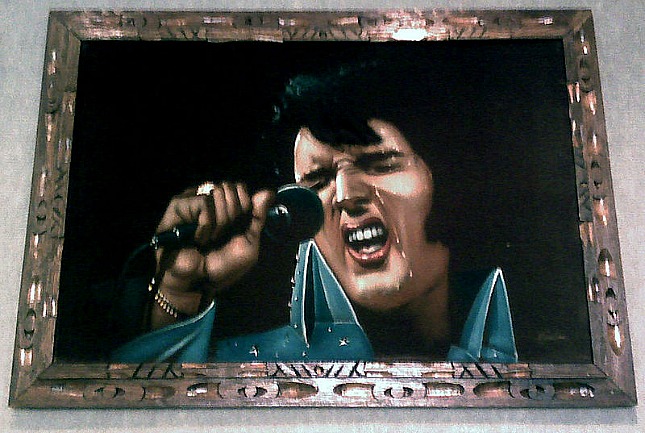
We have to find the “masterpiece” in the mix, and it’s damn hard particularly when you’ve been labeled and victimized. Furthermore, I don’t know one person who doesn’t bear at least one label and hasn’t been victimized at least one time. So, what do you do then?
Using my experience as an example, I did not throw away my “gift”. I simply chose not to share it because the price was too high. Sure, I could have been trained by a former Olympian and potentially gone on to compete on the world’s stage, but Mike would have stolen my budding sexuality and innocence from me as payment for his coaching. I already had a father who had done that to me. I didn’t want to relive it in the pool. What everyone else interpreted as quitting was really self-advocacy. I preserved myself, and I never internalized what Mike did to me. I left it behind and also left the experience intact. I was not a quitter. I was an overcomer. Therein lies the “lost masterpiece”, and that masterpiece gets to be inserted into the larger part of my identity. It was a bad experience, but it did not contribute to a degeneration of my internal identity. It helped me form a stronger sense of self.
We must, at some point, look at who we are now and who we are becoming with intention, the past be damned. In order to change our trajectories in life and head in the direction that we want, it is vital to examine the metaphorical canvases surrounding us. Like the Onians family, did we collect them? Who put these images on our walls? Do we need to take some down? Get rid of all of them? What have we inherited that we actually never wanted? There are masterpieces in there somewhere to be sure, but where are they? How do we identify them? Lastly, what do we love about our lives that we want to bring forward with us, and what do we wish to leave behind? We will inherit what we love. In order to do that, we must decide what we find lovable first. And that means taking a very personal inventory. We may not be who we once were. It is not possible to walk long distances and explore new possibilities in someone else’s shoes–even if those shoes were once ours and just don’t fit anymore.
“I won’t tell you that the world matters nothing, or the world’s voice, or the voice of society. They matter a good deal. They matter far too much. But there are moments when one has to choose between living one’s own life, fully, entirely, completely—or dragging out some false, shallow, degrading existence that the world in its hypocrisy demands. You have that moment now. Choose!”
—Oscar Wilde
*name changed
Comic Relief
Life has a way of hitting the Reset button, and I must admit that I appreciate that. And, honestly, this Reset is too good not to share.
One might perceive that I am all Doom and Gloom what with writing a blog like this, but that is far from the truth (In fact, I just spent ten minutes dancing to K-Pop in my bedroom as a study break. I highly recommend BTS’s “Illegal”).
Anyway, after the visit to the Respondent’s attorney this morning to sign the settlement agreement, I went to visit my lovely esthetician for some *ahem* personal waxing. I just wanted to feel like a normal human being again, and, besides, I already had the appointment scheduled. I felt it was time to get my focus back. There’s nothing like having hair ripped out of sensitive body parts to do just that.
Brazilian waxing is an odd experience. I won’t lie. I am by nature a very modest person. I hated labor and delivery for this very reason. All those people sauntering in and out of the room while your body is on full display? I never grew accustomed to it. I could say it’s my disposition combined with being raised by stoic Scandinavians in a very gender-biased Southern culture. The advice I was given for almost all contexts of life was, “Remember to keep your knees together, dear.” Consequently, the fact that I can even lie on a table in a Figure 4 position and tolerate hot wax being poured and torn off my lady parts is an authentic victory for me. I feel empowered and ultra-hygienic when I leave my esthetician’s house. It’s one of those luxuries that I don’t take for granted.
So, there I was today, lying on her table, recounting the past month’s events as she loudly empathized with me. She’s like my Jewish auntie: “Oy, no! Did he really? I can’t believe it! What did you doooooo?” ::rip::
As I waited for her to finish, I looked up at the ceiling. It was then that I saw it. A spider. Before I could say anything, he descended directly onto my chest. I managed to yell out, “SPIDER!”
My esthetician shrieked and started hitting me in an attempt to kill the spider. I was stuck on the table. There was wax on me, and, you know, I had no pants on! Where was I going to go? I couldn’t offer any assistance at all.
“Did you get it? Did you get it?” I asked, feeling helpless.
“No…no….not yet…no,” she quickly answered.
More hitting. Then shoving. It crawled on my arm. I felt it. I screamed. Then, it crawled under me. She shoved me to the side of the table.
“Is it in my hair?” I asked beginning to panic. I am somewhat terrified of spiders.
“I got it!” she exclaimed.
For a moment, we were silent and wide-eyed, and then we started laughing almost hysterically. I’m not sure why. I think that she is afraid of spiders, too, and we were experiencing a massive dump of stress hormones. I felt ridiculously vulnerable lying almost buck ass naked on her table while a spider crawled on me, and she had to kill an insect she feared.
I gave her an extra big tip and left her house feeling a little more like myself than when I arrived. So, I’m hitting the books, studying for my first midterm tomorrow, and getting on with things spiders and settlement agreements be damned.
And thank you for sharing the journey with me. I have appreciated that more than I can adequately say.
Shalom, MJ
Meet the Parents
If you are new to my blog, I will bring you up to speed.
In January 2017 I enrolled in 4-year graduate degree program in order to specialize in Traditional Chinese Medicine and integrative medicine. A month after I began my program, a man in my program began harassing me. At first, I brushed it off as obnoxious behavior, but I started changing how I dressed in case it was more; I was anxious. I stopped wearing make-up and started wearing hoodies, ponytails, jeans, and Converse sneakers. In other words, I dressed like my 14 year-old. Alas, he continued to target me including unwanted sexual touching and battery. This continued intermittently for a year.
I documented every encounter in detail. I reported it to my college’s administration, thusly, beginning what has come to feel like the Battle Royale. The college administration would not implement Title IX procedure or policy due to cronyism. I had to attend classes with him, tolerate continued nonverbal harassment, and then finally another confrontation. Finally, I petitioned the court for an Harassment Restraining Order (HRO), and it was granted although temporarily because the Respondent (the harasser) contested it meaning I have to appear in court for a hearing.
This brings me to the present. His family asked to meet with me in order to reach a settlement agreement to avoid the hearing. Initially, I thought, “Why would I do that? I’m going to do my best to keep that HRO.” Then, I spoke to another woman at my school who has endured the same process. I’m incredulous. What are the odds? Two women in four months filing for HROs from two male students in the same graduate program? I then opted to file an official complaint with the Department of Education’s Office of Civil Rights (OCR), and, after a telephonic interview and review of my complaint, they will be officially investigating my college for discrimination.
So, yesterday, I met with the Respondent’s family for three hours at a local restaurant. It was surreal. They don’t want a hearing. They want to reach a settlement agreement. It was long and exhausting, and, to be honest, I truly empathized with them. I’m a mother. I understand their point of view. They were honest with me. They recognized their son’s deficits and his wrongdoing. It must be noted that his family is from another country and culture. Their culture’s family norms differ from popular American family norms. If an eldest son commits acts like he has towards me, then it brings shame to the family as a whole; and, the family as a unit takes on the debt–not just the individual. I understood this, and this is largely why I agreed to share a meal with them. I am not litigious by nature and prefer negotiations when at all possible. As a lawyer who is near and dear to me said, “If you are litigating, then both sides have lost.” The pending hearing would require litigation.
They did not bring their attorney with them. I mirrored that as a sign of cooperation. And, what I can say with complete confidence is that you should never attempt to do anything like this without an attorney. They wanted me to sign a contract agreeing to drop the HRO. They were very concerned that their son’s life would be ruined with the label of “harasser” or “sexual harasser”. As concerned as they were for me and my sense of safety, their concern was always first and foremost for the future of their son. I expected that. Parents are the best advocates for their kids–even when their kids behave very badly.
I had to push quite hard for strong contractual stipulations and be able to defend my position in a persuasive way in order to convince them. I succeeded on the points that mattered the most, but the experience did not feel empowering. I felt blamed somehow. They blamed me because I sought out the legal system for help because their son would not respond to “Stop,” and “Leave me alone.” This morning as I negotiated on the phone, his father asked me, “Are you trying to ruin his life and future?” I paused, took a breath, and answered, “No, we are in a settlement agreement because your son refused to comply with the school’s code of conduct and violated his second warning. He is now suspended for a third violation and restricted by an HRO granted by a judge. He is ruining his own life. I’m merely insisting that the document I sign is enforceable in a court and protects me and your son. Isn’t that what you want, too? Legal protection for his interests?”
After that, the negotiations went smoothly. I am not thrilled with any of this. In the end, the Respondent will continue on with his life and educational privileges, and I will have absorbed the wrongful acts. It doesn’t feel just enough.
I have been sitting around in my pajamas all day today. I have midterm exams next week, and I just don’t care. That will pass. I will rebound, but what I can say is that this is the “real” reality of sexual harassment. The other woman at my school who was forced to file for an HRO? Her harasser will return to complete his education after she graduates. My harasser will continue his medical education as well. What are the truly meaningful consequences for these men for harassing two women for over a year? What kind of medical practitioners will these men become?
I am profoundly troubled by the unknowns, but this is what I do know:
Never sign anything without consulting your attorney.
Also, attorneys cost not a little money which is likely why victims of harassment probably don’t receive the advocacy they deserve nor report the harassment. It has been a pain in the ass the whole time complete with insomnia, panic, anxiety, and crying jags. And, it’s not over. The OCR investigation is only just beginning, but I’m ready for it. Appropriate changes will be made and enforced–by the Feds!
At least when I leave this school, I’ll have left a mark on it–for the better– even if my harasser still gets to attend classes there.
Why Reporting Harassment Matters
Amidst the #Metoo movement and Harvey Weinstein perp walk, one might begin to believe that dealing with the nuts and bolts of reporting sexual harassment would suddenly get easier. It really hasn’t, but it doesn’t mean that you shouldn’t. You totally should.
Realistically, it might cost you something. Why? Well, reporting it doesn’t mean that it will stop. You might actually experience retaliation. You could get fired if you’re being harassed in the workplace and report it. Teachers could treat you differently if you’re being harassed at school. You could become a pariah if the person harassing you is well-liked.
In the past month, I’ve witnessed all of this, and I am trying to figure out exactly how I feel about it. I was never naive about what could happen when I decided to report my harasser to my college’s administration. The last time I reported sexual harassment I was fired. I actually lost my job! The company was in the middle of an IPO, and they didn’t want any trouble. Rather than fire the harasser, they fired me–the woman who talked.
The best part of this story, however, is that, during that time, I was having coffee once a week with a man who was a former FBI special agent. We originally met at Starbucks where I often studied. He was a regular. I was a regular. Somehow, his regular coffee visits turned into coffee with me. We discussed politics and current events, and he liked French literature which is what I was studying. He always wore a seersucker suit with a bowtie. His name was Charlie. He retired from the FBI and became a foremost expert in administering polygraph tests. Think Robert DeNiro’s character in “Meet the Parents”. He traveled all over the world administering polygraph tests. I would try so hard to tempt him into telling me stories about his latest trips, but the man was a vault. He would just smirk and redirect the conversation.
On the day I was fired from my job for reporting sexual harassment, I went to Starbucks seeking sugary consolation and ordered the most fattening drink they had. I found a hidden corner table, licked whipped cream off a spoon, and cried. Charlie came in for his regular black coffee and saw me. He was always very affable and gentle, but, when he saw me crying, he wasn’t affable at all. He became the FBI agent. The interrogation began. Why was I crying? Who did it? What happened? I told him the whole story complete with the disgusting details of the harassment and the humiliating firing while stuffing a peanut butter cookie in my mouth. He nodded. He pulled out his business card, wrote a number on it, and said, “Call this number and tell them I sent you.”
It was a lawyer. I groaned and told him that I didn’t want a lawyer. I just wanted to put the situation behind me. He insisted. I reluctantly called the number the next day. The woman on the other end of the line curtly told me that everyone was busy until I said, “Charlie told me to call.” Suddenly, she said, “One moment please.”
In a matter of seconds, a male voice was on the line. He arranged an appointment the next day, and I met with him. As it turns out, the lawyer I met that day was former White House counsel, and he was exceedingly polite and accommodating. He listened to my entire story. Had “The West Wing” been a TV show at that time, I would have felt like I was in an episode. In the end, it was decided that there was nothing I could do. I was wrongfully fired, but some injustices you just have to swallow. That never felt right to me. I think men and women are just plain tired of swallowing against their will.
Ten years later, a class action lawsuit was filed by a class of women in that company that fired me, and they won. And, I received a check in the mail for a few thousand dollars. As it turns out, that company made a habit of firing women who reported sexual harassment. My reporting the harassment–and being fired–established a record. There is no legal record if you don’t report the harassment. That is one reason why you must report harassment. It is vital to establish a record. In this way, if someone is harassed after you and they report it, the record shows that others have made reports as well. And, this is how you build a case.
Why is building a case important? Well, in the case of institutions, it becomes vital because an individual case of harassment can rarely take down an institution or, at a minimum, bring disciplinary measures. Institutions have far more resources in terms of money and legal representation than any one person; but if a group of people (like a class) can show a pattern relating to an institution (like a group of women and my former company), then traction can be made in terms of legitimizing complaints.
In my current situation, I reported to my school’s administration that I had been harassed. They failed to implement Title IX policy. I documented that. My harasser harassed me again. I documented that and reported it. The school failed to implement Title IX policy again. I filed for an HRO and a judge granted it. My harasser is contesting the HRO, and I have to attend a hearing. I also reported the Title IX implementation failure to the Office of Civil Rights (OCR). The OCR has contacted me, and I speak to them this week via a phone interview. If the OCR decides that my case is not severe enough to pursue, then at least there will be a record. If anyone else reports anything to the OCR in the future, then my case will be on record and will also establish a pattern.
Proper documentation and reporting are vital even if you are afraid. In fact, I can guarantee that if you are experiencing harassment, you will be anxious. I am, but fear of intimidation and retaliation is exactly why harassment in various settings has been allowed to persist. Yes, this is exhausting. Yes, I don’t even want to go to school. I’m weary of looking at the administrators. Had they done their jobs in the first place, I wouldn’t be in this position. I can state with certainty that I don’t want to go to court. Alas, the rest of society is in a position to put a stop to a culture that condones harassment because large numbers of people standing together with a unified voice are far harder to intimidate and retaliate against than a select few. Maintaining that unity over the longterm is how we will change this culture.
I encourage you to initiate change by educating yourself and those around you. We can potentially build a world where #Metoo won’t even be a thing anymore.
Sexual Harassment 101: What Everyone Needs to Know (The Guardian)
Resisting Rulemaking: Challenging the Montana Settlement’s Title IX Sexual Harassment Blueprint (this is published in Notre Dame Law Review and provides an excellent “blueprint” for what schools, colleges, and universities should do under Title IX policies and procedures in the context of harassment. It is also excellent in terms of educating oneself in the language of Title IX and what one’s rights are as well as what one should expect in terms of what Title IX provides. It is a must read if you attend a school that receives federal funding aka FAFSA funding.)
Reporting Sexual Harassment and Trauma
In a state of anxious frustration, I wrote about sexual harassment a few month’s ago. Another student was sexually harassing me, and my school’s administration was less than stellar in their handling of the situation. Well, they really didn’t handle it. The situation is still “pending” in that other women have come forward with similar complaints about the same student. I have learned that this student is a known offender, and the administration had known about his propensity to harass women for at least a year if not longer prior to my complaint. And, they did nothing. What’s more, he is studying to be a healthcare practitioner! Do you want to spend time alone in a room with a guy like this? I do not. Alas, my school seems oblivious to the implications of graduating a predator, and I’m personally very alarmed by this.
I’m profoundly troubled not to mention I have two classes with this person. He sits directly behind me in one them and mouth breaths the entire time.
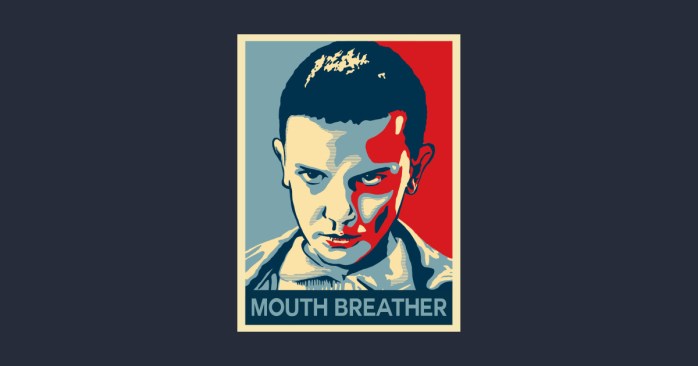
Or, he turns around and stares directly at me glaring in a menacing way. Either way, it is uncomfortable and disconcerting. Knowing now that the school administration lied to me about his history of harassment fires me up. I am taking action, but, at the same time, I feel tremendous anxiety about doing so. And this is where the rubber meets the road in terms of how both men and women must deal with social injustice in institutions.
Why is it so difficult and fear provoking? When faced with taking on an institution like a corporation or a college, why do so many people weight the costs and decide to absorb the inequity of the injustice?
The first reason is because institutions tend to exist well after complaints are made against them largely because they have almost infinite resources compared to complainants. They often have a fleet of lawyers on retainer compared to the sole advocate that a complainant brings to the table. This alone is often enough to deter a person from pursuing a complaint. Institutions have financial resources that dwarf an individual’s bank account, and they have the will to go the distance in terms of the legal process. Most individuals don’t have the time, energy, or money to devote to that process.
The second reason many people don’t pursue complaints against institutions is fear of retaliation. People need their jobs, and students need to finish their degrees with the favor they’ve earned from their teachers. Filing complaints can often obliterate favor, provoke bullying, and get you fired. I was once fired from a job after I lodged a complaint of sexual harassment in my workplace. The harassment was prolonged and severe. A man in my office actually locked himself in the women’s bathroom with me and forced himself on me and engaged in forced sexual touching. The company was in the middle of an IPO. Rather than fire the man for harassment, the company fired me for saying anything. This culture of gender discrimination is common, and it has become evident the world over what with the cascade of revelations following the Weinstein Effect and the #metoo movement. So many men and women tolerated the intolerable for fear of retaliation.
I filed an official complaint with a governmental body that oversees colleges and universities, and I’m very fearful. My fear is based in past experience with sexual trauma, and this is the third reason people often don’t report sexual harassment. It provokes latent feelings of fear associated with past trauma that were never fully resolved. In my case, it is so difficult to resolve the original trauma. It is known on my blog that I survived human trafficking. I was abducted when I was 18 years-old by a neighbor who masqueraded as a real estate agent. In reality, he was a participant in an international human trafficking ring. He was wanted by Interpol and other international law enforcement agencies. I was taken across the country to a port city to be sold at auction. Yes, there are super-wealthy men in the world who actually get together and bid on women in order to buy sex slaves. If you’ve seen the movie “Taken”, it was startlingly similar to that except Liam Neeson didn’t rescue me. I ran for my life and succeeded against all odds. It was by far the weirdest and worst experience I’ve ever had.
I never had a chance to accuse my perpetrator in a court. I did, however, live in fear of his finding me and taking me again for years. He became the amorphous fear that haunted me. He became the ultimate retaliation. My escape and survival represented the complaint. I was convinced that he was going to rain vengeance down upon me for staying alive. Consequently, I learned to stay hidden in my life. Don’t complain. Be quiet. Swallow mistreatment. While my experience is extreme, it’s not difficult to make a comparison to other experiences. When we have experiences in life that cause us to feel fear in terms of speaking up and self-advocating, we may discover that absorbing mistreatment is the better path if only to get us through the moments. This might be adaptive in those moments, but, later on, this can become a habit. This habit can become maladaptive later causing us to become victims of mistreatment and abuse. We lose our ability to self-advocate and even begin to invite mistreatment largely because we lack a standard for how we should be treated. We will tolerate anything because we are too fearful to say ‘no’. And the fear is no longer valid. The original object of our fear is long gone. But, the fear remains, and the fear is no longer purposeful. This purposeless fear is what I feel today. It’s real, but it serves only to limit me. It is purely trauma-based.
This is why I’m such a fierce advocate of healing trauma. Our post-trauma brains served us once. We survived our traumas, and that’s brilliant. We should feel proud that our brains and bodies did that for us. At the same time, post-trauma responses often become self-limiting because they do not serve us once the situations that cause trauma pass. We must learn to deactivate the mechanisms in our bodies that keep us locked into Trauma Brain and Trauma Body so that we can do what must be done like report sexual harassment or advocate for those being victimized and not get triggered while doing so.
I do not know what will happen now that I’ve made an official complaint. I’m not happy about this situation, but I did the right thing. That has to be enough for now.
Jerry Seinfeld on Pain
It might be springtime where you live, but we just got hit with a doozy of a blizzard that dropped over a foot of snow on us. And it’s still snowing. Go home, Mother Nature. You’re clearly drunk.
I thought I would use my time wisely indoors, but I didn’t. After studying like a maniac for my hellish finals I crashed. I decided to watch “Comedians in Cars Getting Coffee”. Now, I loved “Seinfeld” the TV show, but Jerry Seinfeld the man doesn’t seem quite so affable playing himself. He’s a bit of a trope really which disappoints me–guy gets rich and famous and doesn’t have to pretend to be a good person anymore because he can buy favor and has more money than he can spend. You can observe this in the episode with Trevor Noah which is worth watching just to listen to what Trevor Noah has to say.
While Noah and Seinfeld are having coffee, Seinfeld does say something rather notable, and it threw me a bit because, to date, I haven’t heard Jerry Seinfeld say anything noteworthy.
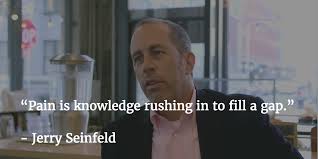
He illustrated his point by saying:
“When you stub your toe on the foot of the bed, that was a gap in knowledge. And the pain is a lot of knowledge really quick. That’s what pain is.”
That is an interesting perspective on pain. Very rational. I like it. I tend to be emotionally driven; so, I appreciate a highly rational perspective on pain. It brings balance to my overly internalized process which often becomes dangerously introspective and too contemplative. Perseverative even.
Of course, there is no wisdom here concerning how to deal with whatever new information is causing pain. It is merely another perspective. Void of blame and accusation. I think that’s why it’s appealing.
You may find it to be a useful perspective the next time you stub your toe in real time or metaphorically.
Lunch with My Mother
Well, I did it. I saw my mother and stepfather. I wasn’t nervous at all until about an hour before I had to leave, and then it hit me. I was suddenly scared that she was going to be unkind to me. I was also scared that I wouldn’t have what it takes to withstand it.
My mother’s unkindnesses usually began as passive aggressive comments about my appearance, and, for some reason, I always experienced that as more painful than most of her other criticisms. It’s so high school, I know, but I think that’s why I found it hard to bear. Growing up, we put up with a lot of social garbage. We don’t expect to come home to it as well, but my mother was the ultimate Mean Girl. I feared that I was about to go out to lunch with that persona again. Frankly, I’m over that, and I’m really over pandering to that to keep the peace.
But, it doesn’t mean that the remarks don’t sting. They do because mothers have a way of making them feel very personal because they know us.
In my previous post, I described my mother like Faye Dunaway’s portrayal of Joan Crawford in “Mommy Dearest”. That’s accurate. Socially, however, my mother used to be very much like Lucille Bluth, the mother on “Arrested Development”:
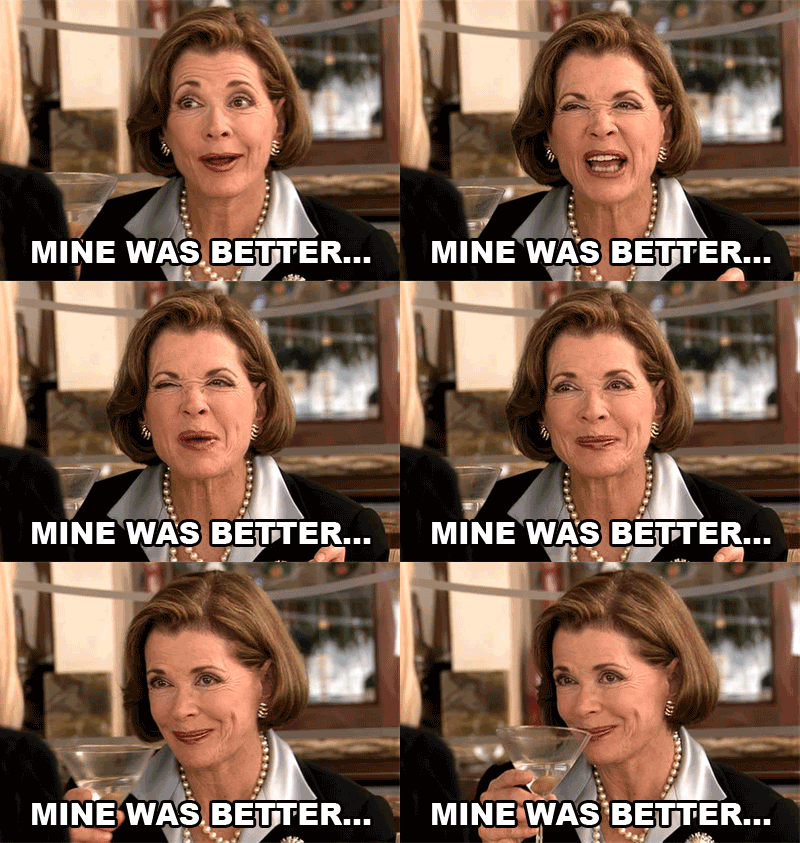
Two of my daughters wanted to see my mother as well, and my other daughter decided to externalize her anger towards my mom twenty minutes before we had to leave causing conflict between all of us. I was functioning at capacity at that point. It made the drive to the restaurant a time of “trying to get one’s shit together” rather than a time to just relax. In other words, I was trying really hard not to cry.
When we arrived, I saw my mother and stepfather sitting in the restaurant, and I froze for a second. My stepfather hasn’t changed. He’s hardly aged. It’s the weirdest thing! My mother, on the other hand, has aged a lot. In ten years, she looks to me like she’s aged twenty years. She looked frail and small. The girls went ahead of me, and, as soon as they saw us, they stood up. My stepfather started tearing up right away and hugged them. My mother told them how much they’d grown and how beautiful they looked.
Pause: I have never heard my mother tell anyone that they look beautiful. She never gives compliments. That startled me. I was starting to wonder if she might say something nice to me.
Play: She came over to me and hugged me. She then said, “Oh well…don’t you look…older. And all grown up now. And…older.”

I sat with it for a minute. Older. Of all the things to say that’s what she went with. What makes this funny is that I joked with friends that she was going call me old: “I’ll wager that my mother is going to say I look old or something,” and, sure enough, she did! It could have been so much worse and, in times past, usually was. So, I moved on in the moment.
The lunch lasted a long time. Everyone behaved. I saw my mother as just a woman. She was no longer this powerful perpetrator who had power over me. She was a woman with health problems whose health was declining. She didn’t say anything new or unusual, but she still clung to a certain narrative particularly about me:
“Aren’t you glad I so strongly encouraged you to take Latin now that you’re in medical school?”
She has always taken credit for that and brings it up whenever she can. I just nod my head now. It doesn’t cost me anything at this point to let her have it. She did indeed encourage me to take Latin I. Not four years of it. It doesn’t matter anymore. It’s time to let it go.
There was no drama. There was very little jockeying for power. She appeared to really want to try to reconnect without the past bad behavior. We all saw a movie after lunch, and then we parted ways although she was her typical self when she told the guy filling our popcorn order to layer the butter:
“Young man, I want you to layer the butter. Laaaaayer it! Do you understand? Really layer it. I want it layered! Layer the butter!”
Classic mom right there. You know what? I have never had popcorn so perfectly layered with butter. That kid spent so much time trying to layer that popcorn with butter because he could feel my mother’s eyes boring into his back! I just stood back and watched. She has zero assertiveness problems. NONE.
All in all, it was a positive experience, and I didn’t feel triggered. My daughters had positive experiences as well. She didn’t display any past borderline behaviors, and my stepfather was, as always, himself.
I did feel very drained when I got home as did my daughters. It was emotionally exhausting. I have final exams this week, and I couldn’t study at all. I could hardly process a thought. I think the significance of the event didn’t land until yesterday. I woke up feeling completely trashed.
I don’t know when I’ll see her again, but I know that they will want to visit. I feel okay about that at this point. I’ve worked really hard to achieve this state of mind. A few years ago, I would not have imagined ever feeling that a day like that was possible not because of my mother per se but because I couldn’t imagine feeling well enough emotionally. I honestly didn’t feel triggered by her–even by the remnant behaviors that would have triggered me in the past. Calling me “older” would have bothered me simply because it could be perceived as a criticism of my appearance, and I used to be hypervigilant to things like that. My mother’s demands upon the guy at the movie theatre would have triggered me in the past because that’s how she was towards me all the time. I would have identified with him too much. Her mentioning Latin class for the millionth time would have triggered me because my mother overly identified with my accomplishments always taking credit for everything I did. It was as if she were me, and I would have felt diminished and engulfed by her.
But now? It all felt irrelevant. I told my friends that she called me “older”, and we all laughed about it–a lot! My boyfriend didn’t hold back either. People filled in that gap for me so that what she said wouldn’t find a place in me. I don’t need my mother’s approval or emotional support, and most of the trauma associated with her has healed. It is very possible to achieve that given time and effort–as much time as you need. I’ve needed over a decade.
So, if you find yourself estranged from a parent and harbor even a flicker of hope that perhaps you will one day see them again under better emotional circumstances, don’t give up that hope. It’s possible. I don’t say this with a Pollyanna-esque attitude. I am in no way BFFs with my mother. It was one lunch, and it went well. That may be all that we ever achieve. Quarterly lunches if that. I may not see her for another year, but I feel very good that I did see her. It feels like an accomplishment.
I wonder if that’s because I’m older…

Becoming Strong
Today is a momentous day. I see my mother at noon today for the first time in almost ten years. At least I think it’s ten years.
I have some long-time readers who will know that this is a big deal. I have many readers who aren’t familiar with this situation. To quickly recap, my mother has Borderline Personality Disorder (BPD) and clinical depression. I have always had great compassion for her. I spent most of my life feeling responsible for her well-being to the point of parentification, and, due to her inordinate fear of abandonment and simultaneous fear of engulfment, my mother exploited my natural people pleasing disposition to an abusive degree.
I was a non-entity growing up. I was only allowed the personality, will, and opinions that she permitted me to have. I was all at once The Good Child, Bad Child, and Scapegoat*. My role changed according to her momentary whims. I have written extensively about BPD on my blog, and I fear repeating myself. I also don’t want to stigmatize the diagnosis as it’s already a charged one pregnant with assumptions and implications.
What I want to discuss is achieving a reality in which one could see a formerly close family member who was also a perpetrator of profound abuse. How is something like that possible? There is a reason BPD gets a bad rap. While the disorder can express itself in various ways, when it expresses itself through manifestations of talionic rage bystanders are in danger. Emotional dysregulation is a hallmark of BPD, and this emotional turmoil manifests in myriad ways to loved ones. Children are the most vulnerable to subsequent trauma. So, how does one move from a post-traumatic state to a confident state of mind? Or, at least, confident enough for a meet-and-greet? That is a valid question.
A few friends are not thrilled that I’m meeting with my mother. They know the stories of her past behavior. They have witnessed her fight every boundary I put up. For those of you with a close family member carrying a BPD diagnosis, you’ll be able to read between the lines here. For readers who are not familiar with anything I’m attempting to gently imply, I’d recommend watching “Mommy Dearest” if you are at all curious. Faye Dunaway’s portrayal of Joan Crawford is spot on in terms of representing a woman with BPD, *Queen/Witch subtype. My mother is a *Queen/Witch, and my mother behaved a lot like Joan Crawford in this film.
So, what have I been doing for the past ten years then that helped me heal?
I made a career out of going to therapy. While my father was abusive in his own right, my mother’s abuse proved to be the most psychologically pervasive and damaging. She was in my head. I used to have crippling social anxiety because I could almost hear her voice in my head criticizing me largely because my mother openly ridiculed me publicly by critiquing my appearance throughout my adolescence. My hair, my face, my teeth, my body, and general appearance were all in her crosshairs, and she looked gleeful as she crushed me. It was as if she had to humiliate me in order to feel good. She was a bully. So, I spent years dealing with everything that she did including her rages which caused her to act out extreme physical violence against other people. Her public sadism is actually what I’m most anxious about today.
I practiced being assertive. This is still very difficult for me. I was not permitted to say no or have a differing opinion with either of my parents. I recall saying no to my mother only one time. She slapped me across the face so hard that my head snapped back. My father was a Green Beret and Army sniper in Vietnam. You just didn’t say no to him. Ever. I grew up very afraid of authority, but, at the same time, my natural personality is assertive and a bit contrary. I will stand up for myself and other people. So, part of the recovery process has been looking for opportunities to be assertive even if it’s only returning coffee drinks that have been made improperly–something that makes me sweat.
I stopped being friends with people who were exploitative and took advantage of my nature. What do I mean by that? People who are naturally kind are easy to exploit because we will absorb relational inequities believing that somehow our personal sacrifices will help the other person. Believe me, they won’t. We will build the bridge to get to the other person in the relationship because of an empathetic nature. It is, however, worth nothing that women have a tendency to do this more than men due to social gender biases as noted in this study– A study by the Harvard Business Review(link is external) showed that only 7 % of female MBA graduates attempted to negotiate their salary with their new employers while 57% negotiated.
“I was raised to be an educated, polite, and respectful girl. You might have been, too. I was taught to think of others and their well-being. I consciously made an effort to treat others how I wanted to be treated. In short, I was always trying to be a good girl.” (Are You a Good Girl?)
I was definitely raised like this. It wasn’t a choice. It was a necessity. For survival. There are men who were raised like this as well, and I don’t want to discount that. I have met men who struggle with something like The Dutiful Son. They, too, must be educated, polite, and respectful always thinking of others and their well-being, willing to sacrifice themselves and their interests for the benefit of their family. The “Good Girl” phenomenon isn’t isolated to women. This spans the gender gap.
I also thought that this was the way of the world:
“I naively thought this was the way everybody was raised. I assumed everyone would go out of their way to treat each other well. I thought we were all living in a world where we respected each other and each other’s choices. I thought being considerate towards others would mean others would be equally considerate towards me. Turns out, I was wrong.” (Are You a Good Girl?)
I re-examined that assumption because I discovered in the past ten years that many people are not interested in personal development, bettering the world, or even being kind. There is a lot of brokenness in the world, and needs often drive behaviors far more than intention:
“…there have been plenty of people who saw my being polite as an opportunity to test my boundaries. There have been many who saw my being kind as a sign to trample all over me. Apparently, when you’re seen as a good girl, people think they can get away with anything, because they know you’ll continue to behave like a mature, respectful adult regardless of what’s thrown in your face.
Worst of all, I found myself getting sucked into the role more and more. I tried so hard to please everybody around me. I checked in with people to make sure they were OK with the life choices I was making. I said yes to things I would never dream of doing on my own. I became an obsessive perfectionist, especially when it came to how I presented myself and what I did. Best of all, I pretended to enjoy all of this and did it with a smile on my face. Sometimes I was so deep in it that I started to mistakenly believe I did. It was terrifying and exhausting, all at once.” (Are You a Good Girl?)
Does this ring true for anyone? It’s an interesting description, isn’t it? Living a life without personal boundaries. And, it’s all too easy to do that when you come from a family wherein you were not permitted to have any. I think that building a life with appropriate boundaries, starting at the identity level and moving outward like rings on a tree, is the most important thing you can do for yourself and your relationships when you come from an abusive family of origin. After that, learning how to enforce them in the context of interacting with people particularly with people who will challenge them comes next.
What does that look like? Life coach Susanna Halonen lists concrete actions to take that will go to building and reinforcing personal boundaries:
1. Ask for what you want and deserve.
Want to take on a new project at work? Ask for it. Want a raise or a bonus? Justify it to your boss. Want better treatment from your inconsiderate friend? Tell them.
2. Say no.
People will always ask for help. You probably do, too, as do I. There is nothing wrong with that, and nothing wrong with helping. Unless you’re exhausted. Wiped. And burned-out. You can’t say yes to everything, and you can’t help everyone. You have to put yourself, your health, and your well-being first and foremost. If you don’t, there will be nothing left of you, and then you will be able to help no one.
3. Speak up.
If somebody disrespects you, don’t ignore it. If somebody is being rude, point it out to them. If somebody tries to change you, tell them you’re happy with who you are. If you don’t speak up, nobody will hear you. If you don’t put boundaries up, people will keep pushing them. Be brave, be bold, and be loud.
4. Stand your ground.
There is nothing wrong with living your life according to your values. There is nothing wrong with making the life choices that are right for you. There is nothing wrong with you. Believe that — and stand tall with it. People often try to influence your life trajectory or give clear opinions on what they think you should do, especially if you’re a good girl. Don’t let them sway you. Thank them for their input, and tell them that you have made your decision based on what you think and feel is right.
5. Treat others how you’d like to be treated.
Transforming from a good girl to a strong girl doesn’t mean you start being rude. You will continue to be polite, considerate, and respectful — but you will no longer do so at your expense. (Are You a Good Girl?)
My final thoughts on this might be that personal development is a lifelong process as is healing. Some things stick around in our minds. We do not forget them, and I’ve concluded that we should not forget certain things. It is important to remember the profundity of our past experiences so that we always know our own strength. Recovery and healing are so much harder than many people understand and yet here we stand. So, we cannot forget. You are resilient today because you were once hurt then. And that is ultimately why I can see my mother today. I withstood the worst that she was capable of, and none of it got the best of me. I’m still me. There is no power in that place anymore. That is why I remember. Your former battlegrounds and fields of defeat can become the place where you ultimately forge your greatest victories. The places where you overcome, shake the dust off your feet, and walk away.
May you forge new victories as you keep going.
Further Reading:
Currently on the Nightstand

Share this blog

RSS


thrivingisthegoal.com
is licensed under a
Creative Commons Attribution-No Derivative Works 3.0 United States License.

 Out of the Mire