Out of the Mire
…because thriving is the goal
Annual Rituals
We celebrated Passover last night with the customary Seder–the ceremonial dinner for the first night or first two nights of Passover. My house is usually the gathering place. It is a big job. Traditionally, the preparation that goes into preparing one’s home, kitchen, dishes, and even inner self for Passover is daunting. In many observant homes, there is separate dishware that must be used during Passover. One’s house must be cleaned thoroughly (“kashered”) in order to rid the house of “chametz”, or any kind of leavened bread or leavening. All uneaten and unopened leavened food products must be donated while opened and partially eaten leavened food products must be disposed of. The kitchen must be thoroughly cleaned, and there are detailed instructions on how to do this. I learned just last week that the Israeli army just replaces all their metal kitchen shelving with Passover shelving. When Passover is over, out comes the non-festival shelving.
I have kashered my house a few times. The result? My house was clean. It felt clean, but I was exhausted. It helped me, however, experience the spectrum of Jewish observance. Today, I can’t be that observant although there is something about going through all your kitchen shelves and drawers and thoroughly cleaning them that scratches a particular itch. It cannot be about what is “good enough” though. It is about preparing my mind and heart for what this particular Seder will speak forth. What does that mean?
Every year, the Seder is different. For those of you who are still mystified by what I’m saying when I say “seder”, the Seder is essentially a meal directed by a liturgical ritual. The word “seder” itself means “order”, and we follow the order of this customary Passover meal from a text called the Haggadah.

It is the same order every year because the Haggadah tells the same story–the story of the exodus of the Jews from Egypt and God’s deliverance of the Jews from slavery. I like a very meaningful, thoughtful Seder because one of the key elements of the Seder is to read this story as if it were happening to you. In fact, the Haggadah that we used stated: “In each generation, everyone must think of himself or herself as having personally left Egypt.” The texts are supposed to be read as if you are living them out. This is why they remain relevant. What could be analogous to your life experience in the present? Who are you in the text? Who is your personal Pharaoh? Are you experiencing a metaphorical plague? Do you feel enslaved to something and require help or intervention? Do you feel hopeless? As our Haggadah said, “Our Seder goal is to relate personally to the Passover story.”
I remember going to a Seder at synagogue a few months before my marriage ended. I felt on edge, scared, and almost hopelessly uncertain about my future. My oldest daughter was about to graduate from high school, and I had three other daughters to think about. I needed surgery for an injury I sustained from my now ex-husband, and I had no idea how I was going to keep going forward. What did that Seder speak forth at that time? I looked around the table I was sitting at and saw people around me who would help me. I saw a community. I slowly began to realize that I would not leave “slavery” alone. I would go out with a group. I could try, and I did. Only two months later. My life, three years later, has changed dramatically–for the better.
What did last night’s Seder speak forth? At the end of the Haggadah, we read this:
“Redemption requires our participation. The Midrash says that God did not split the sea until one person, Nachson Ben Aminadav, took the first step into the water. If we take the first step, God will help us the rest of the way.” (A Family Haggadah)
Whether or not people believe in God’s intervention (or even a Divine) need not detract from the greater meaning of the experience. There are Jews who do not believe that God intervenes into the affairs of mankind. What I want to emphasize here is that action is required in order to obtain any sort of freedom from that which creates personal inertia and bondage. It can be almost terrifying to take first steps particularly when a big life choice is at hand. Divorce? Marriage? Career change? A confrontation that might drastically change a relationship? Moving to another part of the world? Going to therapy for the first time? Choosing colleges? Dating again after a long-term relationship? You name it. If it feels daunting and freezes you up in your life, then you’ve got a personal Egypt. In my experience, taking first steps often creates momentum and opens doors. I am experiencing this phenomenon right now in my life, but so often we don’t experience a fulfilling or meaningful life because we are stuck. We feel paralyzed or too fearful to take a first step. Or, we don’t know what the first step even is.
Engaging in the annual Seder ritual can prepare our hearts and minds for self-examination. If we have a relationship with God, then the Seder sets aside time for conversations about very specific situations in which we can listen to what God might say to us about our very personal Exodus story. If we are not theists, the Seder is still of value because the ritual itself provides time to reflect, look back, and then look forward. Because the Seder is an annual celebration, we experience an opportunity to track the trajectory of our lives, and this is what I find so interesting. I can look back a few years ago and recall what I took from that particular Seder–what I internalized as a much needed truth and encouragement. Yesterday, I contemplated where I had been and where I was going in the context of my present circumstances. I hope everyone who attended our Seder was able to enjoy some contemplation even though a Seder at our house is a little more like a festival celebration at the Goldbergs.

We try to be solemn and honor the sacred, but, in the end, it just ends up like that. My daughter’s boyfriend joined us. One man in a room full of loud, opinionated women. He said very little. I’ll crochet him a Pokemon yarmulke for next year. He’ll fit right in.
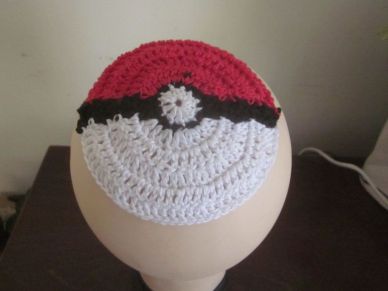
Making time–even if it is once a year–to contemplate your path and examine your state of freedom is a part of the Seder experience. You do not have to be Jewish to make this idea a part of your life. It is rewarding, useful, mindful, and helpful in terms of crafting a life that not only fulfills you but contributes to the betterment of the world around you.
It is another way to enjoy life so that you can keep going.
Being Julius Caesar
Did everyone make it through the Ides of March intact? When I was in high school, I was the only student in the history of my school to study Latin 3 or 4. Nowadays, schools would delete the offering, but I guess the school administration just forgot about the classes. I signed up for it and was promptly put in the corner of the Latin 2 class. There was no curriculum to speak of forcing Ms. Jennings, my Latin teacher, to make it up. She decided that translation was the way to go. So, for two years I translated Ovid, Catullus, Cicero, and, my nemesis, Virgil–author of The Aeneid. I was that kid who sat in the back of the classroom and talked to no one.
In the middle of all this classical, academic conviviality (I do not include Virgil here), we Latin students were forced to re-enact ancient Roman practices from time to time. During December, for example, we had to run around the halls yelling, “Io Saturnalia!” You can imagine that this might have caused a ruckus. Ms. Jennings liked the juxtaposition of ancient life and modern, and she really liked to insert ancient traditions into our modern ones. I won’t even discuss what she did with Easter. But, the Ides of March was like giving her center stage. The Ides of March was a date on the ancient Roman calendar that corresponded to March 15th. In the ancient Roman imagination, the Ides of March was roughly equivocal to the American April 15th in terms of emotional weight. You know, tax day. Except to the Romans, March 15th was the day that you must settle your debts. It bears a similar weight, doesn’t it? On April 15th, all Americans must settle their debts with Uncle Sam. The Ides of March then became the perfect day to assassinate Julius Caesar in the Senate. Sixty senators were seeing to it that Caesar settled his debts with Rome.
Every March 15th, the entirety of the Latin classes had to run around the school pretending to be the sixty senators conspiring to find and assassinate Julius Caesar. No one wanted to be Julius Caesar. Where was the fun in being murdered by a pack of overzealous high schoolers while muttering, “Et tu, Brute?” during feigned death throes? I, of course, had to be Caesar. I didn’t exactly participate. I tried to evade capture. I was scolded by Ms. Jennings for eluding the assassination: “The Ides of March was not an assassination attempt! Now, go out into the halls and die gloriously!” It felt personal. Being a placeholder for Julius Caesar. I didn’t want to be assassinated particularly by a bunch of underclassmen who were still figuring out how to conjugate sum (I was a total Latin snob in high school I admit with shame). Alas, I had to die, and I resented it. I resented it because the two people playing Brutus and Cassius, the assassins, lorded it over me for weeks in typical teenage fashion. Their account of how they found me, how I died, and their ultimate victory over high school Rome became bigger, badder, and more ridiculous with each taunt and retelling.

I’m annoyed even now as I retell this story. What’s even funnier is that when I am presently forced to participate in group activities, I immediately remember being Julius Caesar. I remember how much I hated it. I remember how it felt to be stalked in the halls. I remember how embarrassed I felt to have to wear those ridiculous togas made of bedsheets (yes, we had to do that) to every class. I went to an urban Texan high school! No one lets you live that down! I didn’t sign up for that nonsense, but we were graded on our participation; and I was Julius Caesar destined to die on the Ides of March–in the hallways during passing time. O the mockery!
Why do we do this? Remember the past when we experience life now or even try to plan an upcoming event? What does a past event like the Ides of March Latin Class Extravaganza have to do with my future participation in a group presentation on ovarian cancer? This has something to do with it:
“Professor of Psychological and Brain Science Kathleen McDermott, of Washington University, cites results of brain scans demonstrating that when subjects imagine potential future events it is the memory processing centers in the brain that light up.
Further, subjects with amnesia are unable to imagine the future. We have to look back in order to look forward. Harvard psychologist Daniel Schacter asserts: Memory is set up to use the past to imagine the future.” (Re-story Your Life)
I love this explanation. When we plan, imagine, and attempt to engage in anything, our brain relies on past events and experiences to support us in terms of expectations and potential futures in order to, in a way, help us erase uncertainties. Humans don’t do well with uncertainty. So, our brains, whether we know it or not, do a lot of the heavy lifting for us by connecting past stories together to weave a narrative flow that will help us predict an outcome.
But, what if we don’t have good stories? Or, in a specific case, what if I’ve only had bad experiences with group projects, and I’m now being assigned a group project? What do you suppose my new narrative will be? What feelings will become intertwined within the potential futures my brain brings forth? Realistically, I know that I will not literally be assassinated, but the entire high school endeavor was one of awkward disempowerment and feeling singled-out. That defines “high school” for many people. I know people who still struggle with the emotional impact of their high school experiences due to the narrative mark it left upon them. If their past narratives are never re-examined, then how do you suppose they approach new life experiences when their past narrative identity is still partially rooted in such negative events? If I never re-examined my Julius Caesar experience, would you want to partner with me in a group? For real, would you? I wouldn’t.
This idea is applicable to so many life experiences. One single event can change our narrative–the story we tell ourselves about ourselves and our place in the world, in our personal relationships, and even our relationship with ourselves.
So, how do we incorporate this idea and make it work for us?
“Our stories are always shifting, moving and incorporating this moment and the next possible moment. Our stories are fluid.
Psychologist and storytelling researcher Dan McAdams explains that our stories make up our narrative identity. But we don’t live one story or one identity. Instead, this narrative of self is ongoing, always integrating the latest information and developing into something new.
McAdams:
The stories we construct to make sense of our lives are fundamentally about our struggle to reconcile who we imagine we were, are, and might be in our heads and bodies with who we were, are, and might be in the social contexts of family, community, the workplace, ethnicity, religion, gender, social class, and culture writ large.
So how exactly do we take on the challenge of rewriting our story? We can start by seeing ourselves “in the middle.”
Like all good plots, the middle of our story includes themes that form a coherent narrative. But the unsettling secret is that each of us is both the protagonist and the narrator of a story in which we have no idea what will happen next.” (Re-story Your Life)
There it is again. That dreaded uncertainty. What is going to happen to us next? Recall the research. We can only imagine what will happen to us next by relying on our past memories–that’s the part of your brain being used when you imagine your future. So, for crying out loud, what then?
I’m going to rely on Willy Wonka for guidance:
“You can’t get out backwards. You have to go forward to go back.”
“For many of us, the uncertainty that comes with middle age brings an inclination to solidify the story. In the effort to control our anxiety about change, we form a kind of crust over the current. In time the crust hardens. We set the past: this is what happened, these are my regrets and these are my triumphs, no need to look back any further. What’s done is done.
Next we fix the future with our expectations and demands: this is what will happen. We expect to live without further twists or evolutions. While this may calm our anxiety of the moment, we deprive ourselves of creative involvement with our becoming.
Since plot twists are the secret to a great story, we need to get creative with ours.” (Re-story Your Life)
If you want to go back and look at what is hindering you, then you have to begin to move forward. You can’t go back to go forward. You have to go forward to go back. You will only know what you are afraid of, what is paralyzing you, what your greatest struggle is, and from whence they originate when you begin to try to leave your residence. Looking forward gives us a reason to look back–to gauge our starting point. Looking back continually is futility because we gauge nothing except where we once were. It provides us with no present perspective or even trajectory. It only provides distortion. You don’t even gain new information. No one makes a plan with old information.
It sounds daunting, doesn’t it? But, what is left? I could remain Julius Caesar in my mind whenever I’m called upon to do a group project dragging my past into my present effectively demoting myself perpetually. That is very un-Caesar-like. Or, I could create a better narrative for myself in which I engage the uncertainty while also feeling certain that no one I work with will ever try to hunt me down in a high school hallway again while wearing a bedsheet toga in order to mock stab me. This I actually can feel certain about.

The idea is absurd, and I deliberately chose an absurd example to better elucidate the idea. What we so often fear will overtake us will not, or, if it could, it will not affect us in the same way because we are not the same person now developmentally, emotionally, mentally, and spiritually. We are very different people in the present than we were in the past, but we recall the past with the perspective of our past selves rather than with our more developed present perspectives. So, while what we fear could, for the sake of argument, happen again, we would respond very differently because we are far more resilient and capable because we have lived life and matured–we have gained skills. It is in this exercise that we discover our deficiencies. If we find that in going forward we truly are hindered by a lack of skills or an inability to recall the past from the present due to pain or trauma, then we have new information. From here, we can create a new plan of action and implement it. And, this new plan of action is actually moving forward.
This is a very big idea to be sure. I sit with it a lot. It is, however, such a powerful idea. We have immense say over our potential futures, and our influence comes from choosing to move forward even when it’s hard and scary.
Go forward to go back. This is a very effective way to keep going.
Resources:
Re-Story Your Life: The ongoingness of being
Choosing the Healing Path
To bring you up to speed, one of the reasons I started this blog ages ago was to process having a relationship with my mother. My mother has borderline personality disorder (BPD), but she also has other co-morbid disorders. When I was growing up, my mother had sadistic tendencies. In fact, my mother used to meet all the criteria for Sadistic Personality Disorder, excepting the last one, which was removed from the DSM before publication of the DSM-IV:
Maladaptive patterns of motivated behaviour, usually evident for at lease several years.
This additional disordered component of her personality, I suspect, made her that much more impossible to live with. What I have always asked, however, is: Are the above pervasive patterns of behavior motived by sadism or fear? Some of the behaviors listed above, aside from the last one, are not uncommon in BPD but are also not motivated by sadism but rather a crippling fear and a need to control. With my mother, it was both. It depended upon which persona was calling the shots in the moment. Was her Witch persona dominating her mood, or was her Queen persona at the forefront? If you could determine that, then you would know the motivation and what you were in for.
She refused treatment for most of my life, and, when she was forced into treatment after a suicide attempt, she masterfully played the part of a depressed woman deceiving her treating psychiatrist, thusly, never receiving the correct diagnosis or treatment. I have described knowing her as living under a Reign of Terror. It is strange in retrospect to feel love for someone who is so dangerous and malicious. In her worst rages, she could become homicidal. To everyone else, however, she was charming, lovely, and the life of the party. No one in my family believes me when I try to convey just how bad it really was behind closed doors. They just hound me and ask, “How is your mom? Why don’t you just reconcile? Forgive her.” If only it were that easy…
So, it is no surprise then that my mother writes me a letter annually. I don’t speak to her anymore, and I won’t let her see my children. That was over ten years ago. It’s funny how something starts. She got angry at me because I made a suggestion about her business. She decided not to speak to me. That was her M.O. Typically, when my mother would run off to her room to sulk and freeze me out, I would seek her out and kowtow. The kowtowing was very important. She had to see a certain kind of degradation to accept me again. If I didn’t do this, I would be subjected to days of a slow-burning rage that would eventually explode. Then, I would have to kowtow and take responsibility for her feelings anyway. This time, however, I didn’t call her. I went against a lifetime of programming and refused to act out that toxic script. I thought perhaps that she would eventually call me. I am her daughter after all.
She never did. For years. In all of that I finally saw the reality of our relational dynamics. I was the engine of our relationship, and I also saw how co-dependent it was. I was a classic enabler mostly because I was terrified of my mother. I would do anything to avoid rousing her rage. Anything. I lacked any distress tolerance for it. I still struggle with tolerating displays of anger. My first response is to run away as fast as I can.
My mother waited for something like 4 years to call me, and when I asked her why she waited so long, she said, “I got angry. I’m not now. So, how are you? I want to visit.” Four years. I was so angry at her nonchalant attitude and entitlement. I told her to go to a therapist and figure out why what she was currently doing was wrong. I then ended the conversation. Since that phone call, the letters have been arriving. Usually in December. Some of them are twisted and strange. Some of them blame me for her misery. Some of them plead with me. The 2017 Letter was different.
This letter was either written by another person, or she’s been in therapy. She acknowledged that she has engaged in abusive behavior. She acknowledged that she put me in harm’s way. She acknowledged that I would live with the effects of her abuse for the rest of my life. She apologized. My mother doesn’t say things like this. I was shocked. She asked if we could talk. I thought about it for six weeks.
I decided to send her my email and cell number. She has not reached out except to wish me a pleasant New Year. After years of letters begging to see me, beseeching me, she is silent when an open door is presented to her. I suspect that she is waiting for me to call her–as always. Finding that reality is the same makes me sigh.
I will not call her, and my choosing not to call her isn’t because I’m stubborn. It is because it is not my responsibility to make amends. It is hers. Part of the very difficult process of making amends is making those very difficult phone calls. No one wants to do it, but that is part of the process. Were I still enabling her, I would spare her the suffering and make the call. But, I see now that this very particular kind of anxiety and suffering associated with making amends are exactly what matures people. It is a consequence of their choices, and people have to be very familiar with the consequential experience.
I don’t feel responsible for my mother’s emotional state anymore. I have felt released from that relationship for years, and I don’t expect anything from her. I don’t expect her to come through for me, be better than she is, or even do an ethical or moral thing. I expect her to still engage in needs-driven behaviors meaning that if doing something meets her needs, then she will choose that over doing something to meet the needs of another person. And that need could be the off-loading of her rage or relying on everyone else around her for emotional regulation. It could be almost anything really.
I don’t feel angry towards her anymore. I feel at ease. I do, however, feel disappointed. So much was possible and went unrealized.
My description of my mother is not meant to be representative of BPD. She is herself. My experience with her is unique unto itself. So many people grew up with abusive parents and have either walked away or are still trying to figure out how to navigate those relationships while also attempting to find their own peace and healing. What I can say is that it is possible to heal and experience peace after an abusive childhood. It won’t just happen though, and time doesn’t heal you.
You heal you. Your active engagement in a startlingly truthful process is what heals. Seeking it out ruthlessly and fearlessly no matter what it costs you. Staying willing. Pushing through. Partnering with people who will tell you the truth about you and how you live and do relationships. Finding a community of people who model healthy interpersonal habits and love. This is what heals you. And, getting rid of the relationships that are slowly (or quickly) killing you. You can’t choose life and death at the same time and expect to thrive in your life. Death will win out every time because we continually operate at a deficit and never move forward. That’s the definition of survival. That isn’t how one wants to live if the goals are healing and expanding.
That is something I have learned along the way. As always, keep going, and don’t forget to choose life as you do.
A Healing Hypothesis
I’m supposed to be doing homework, but it’s cold and snowy. I am entirely unmotivated to study the alimentary canal.
A thought occurred to me when I was stuck in traffic a few days ago. I’ll start with a question.
How many times have you fallen down or gotten hurt? If you really had to answer that question with accuracy, what would you say? I don’t know if I could answer it. I’ve injured myself a lot. I’ve eaten it too many times to recall with any accuracy. Falling off my bike? I fell into a pile of gravel once, and that was a bloody disaster not to mention humiliating. I almost fell onto exposed rebar once and barely escaped impaling myself. I sound like I starred in MTV’s “Jackass”. I’ve almost drowned more times than anyone should just because I overestimated my own swimming abilities in relation to ocean conditions. I was bitten by a shark once. It didn’t keep me from going back into the water. I’ve been mildly electrocuted twice. These are all ridiculous injuries. My injuries probably sound tame compared to some people. You know, the adrenaline junkies? Their tales of thrill seeking are epic. Compound fractures and missing teeth. As soon as they can stand upright, they’re clinging to another rock face like Spiderman.
Why do we get back up again after we get hurt and get after it with relative confidence? Why don’t we fall apart? I really thought about this. Why do little kids fall, skin their knees, cry, and then get up and start running again?
Because they know that they will heal and be okay. They don’t have faith that it will happen. They know. We have evidence that we will heal because our bodies are designed to do that. We watch our wounds heal. We feel the itch of the tissue regenerating.
Many of us think that it’s odd when parents coddle their children just for getting scratched up.

Why? Because scratches heal! Broken bones heal. We recover from surgeries. We are tougher than we look and even feel. So, most of us are not too afraid to take reasonable risks with our bodies in terms of getting in a pool, riding a bike, running fast, rollerblading, rock climbing, etc.
Why are we then afraid to take risks emotionally? This feels like a very legitimate question. I’ve been pondering the question and wondering what a sound answer might be. The answer I came up with is that we might believe that we won’t heal. Or, we don’t know how to heal when we sustain an emotional injury. Wouldn’t it be easier to take emotional risks if emotional healing occurred in the same way that physical healing did?
I pose the question this way because uncertainty acts as a primary source of anxiety for almost all of us. We might be willing to try new things if we knew more about the outcome. In terms of physical risks, we are far more likely to take risks because we know that our bodies heal. But, our hearts and minds? Well, that’s different.
How familiar is this? “I don’t know if I want to get involved. I could get hurt, and I just don’t know if I can go through that again…”
If I break my leg, I can go to the ER. If I break my heart, where do I go? How exactly do you heal a broken heart? How do you heal from major trauma? How do you heal from chronic anxiety? There are too many opinions to give a discrete answer.
And there is another element at play here. Culture. If I break my wrist or lacerate my arm, is there anyone who will tell me that it’s not possible to have my injuries treated? Will someone point at me and say, “Good luck with that. You’re going to suffer for the rest of your life with that broken wrist.” No. That’s ludicrous. Going further, if I slipped on wet pavement after a thunderstorm and fractured my elbow, would anyone tell me, “All concrete sidewalks are bad. Never trust a sidewalk. You will always get hurt! From now on, only walk on grass lest you break your elbow again.”
No. You will not hear that.
Will you hear Broken Elbow songs on the radio? Will you be bombarded with chorus after chorus about the depravity of concrete sidewalks and even roadways and the danger they pose to your vulnerable elbow? How the sidewalk beckoned you, promised it would support you as you walked and its blatant betrayal? How dare it collect water and mislead you permitting you to slip and break your elbow! Those rakish sidewalks! Manipulative elbow-breakers!
Uh…no. You will not hear that. But, how many songs do we hear and even love that are all about the broken-hearted? How many movies do we watch repeatedly that are devoted to the heart break experience? You haven’t truly lived until you’ve had your heart torn out, right? There is a collective belief that being heart broken is terrible and almost romantic. And, for some, impossible to recover from.
I want to challenge this. I want to start by putting an idea out there that we are capable of healing emotionally and mentally just as we are capable of healing physically. It makes no sense that our bodies are designed to heal as efficiently and elegantly as they do, but our psycho-emotional selves would not. I hypothesize this because the ability of our bodies to heal and maintain that ability is so heavily dependent upon the state of our psycho-emotional state. In other words, if we are unhappy, anxious, scared, and in a state of emotional pain, our immune function is impaired. When we are happy, at peace, and well, we don’t get sick; we heal better; we fight off cancer; and we thrive.
If this is potentially true, why are so many of us suffering psycho-emotionally? An idea came to mind as I was turning these questions over in my mind. I thought of my grandfather. My grandfather grew up on a farm on an island that was rather remote. During one winter, he and his brother were sledding, and, during the downhill race, my grandfather hit a tree and broke his tibia. He sustained a compound fracture. With no medical help nearby, my grandfather’s family did the best they could to attend to the fracture. It never healed properly. For the rest of his life, he suffered with circulation issues and pain in his leg and even ulcers as he aged. All this because his injury wasn’t properly set and healed improperly. Note here that his injury healed. The body did what it does. It healed. It just healed improperly because the healing needed an outside intervention to direct the healing.
I suspect that our minds and spirits heal, but, like my grandfather’s leg, without outside intervention to direct a healing process, we heal improperly resulting in improper “blood flow” leaving room for infection and incessant pain. Had this type of problem presented today, surgery would be done to re-break the tibia, reset it, and induce a proper healing. Rehabilitation would be done during the healing process in order to direct the body’s healing process. The body knows what to do. Sometimes its energies need direction.
Applying this paradigm to our psycho-social selves, what would happen if we believed that we can and do heal? What would happen if we viewed our current psycho-emotional state as a healed state in which perhaps our injuries were not set properly? Our body has the ability to heal. It healed. At the time of the original injury it did not receive the appropriate care it needed to heal so that it would return to its pre-injury state?
Was my grandfather’s leg still broken? No. Did he do the best he could at that time with the resources he had available to him? Yes. Did anyone blame him for the scars in his leg? No. If he had undergone a reparative surgery to correct the poorly healed injury, would that have been a shameful thing to do? No. Would that have been beneficial? Yes.
Therapeutic interventions, nutritional changes, psychiatric supports, various types of exercise, pursuing healthy relationships, making important changes in your life to bring about healthy changes, using different healing modalities, etc. are all reparative changes to “reset” breaks that didn’t heal properly. Changing our language around our own healing process goes a long way into changing how we view ourselves, and that goes a long way into eradicating shame and fear of uncertainty.
Once you begin to believe that you can and do heal, you may find yourself making changes that you’ve only dreamed of. It is an idea I’m considering. It’s got somethin’…
So, as always, keep going.
Further Reading:
The Emotional Immune System
Developing Grit
It’s been too long since my last post. Forgive me, faithful readers.
I was not prepared for how I would feel after I reported the ongoing sexual harassment–the Sean Situation.
One imagines that it would be empowering. From experience, I can tell you that it really isn’t. For me, it’s embarrassing, and, when you read the numerous accounts of men and women who delay initial outcries, one of the reasons that they do not say anything after sexual harassment and/or violence is shame. There is something keenly embarrassing and humiliating about being touched, groped, sexually harassed, and verbally harassed. It is supposed to be that way. These encounters are not mutual. They are embodiments of the power differential. One person has the power to coerce. The power to push down. The power to silence. The power to cause another person to mistrust their own instincts. The power to shift blame onto a victim.
For me, disclosing these experiences to people in power, to the people who will make decisions on how to proceed, was not ideal. I felt rather like a curiosity. The Dean of my school wanted to meet with me. He read my disclosure. He stared at me with his ever-present smile and asked, “What do you want me to do?” I felt confused.
That’s the moment I knew that I was going to have to take a strong position. The administration would not advocate after all for their students even with a perpetrator among them. I wrote the administration a very diplomatic but strongly worded letter citing their own policies concerning harassment on campus. I used their own definitions of harassment and sexual harassment and juxtaposed it with my on-campus experiences with Sean as already disclosed for the legal record. I asked them to implement their policies. As a result, Sean was reprimanded. His teachers were notified of his behaviors and will monitor him.
I see him in class every week. It is impossible not to notice him. He sits in front of me.
That’s it.
Someone might ask, “What was so bad about that?”
I try not to describe any of this from the mindset of feeling victimized per se. I don’t enjoy that feeling. I like feeling strong. I don’t, however, want to disclose personal information to anyone at my school about my life in terms of my former marriage or the reasons that marriage ended. After you escape an environment wherein there was domestic violence and abuse, there is something almost magical about the idea of starting over. Going to a new place where no one knows you. No one knew you when you were drowning or looked like the walking dead for a few years as you were trying to figure out how to leave.
In a legal disclosure, you must disclose everything that occurred between you and the person harassing you–even why you didn’t report it initially. In explaining the situation to one of my teachers who has come to know me fairly well, I gave him background information. I felt compelled to disclose that I had experienced domestic abuse in my former marriage. This was the primary reason I didn’t report Sean’s behavior for a year. I wasn’t sure that he was even harassing me. Compared to what I had been experiencing, his behavior was somewhat oppressive, but I didn’t require surgery for any of it. My compass was somewhat broken. That information was passed on to the teachers on the administrative board of my school who are also teachers I see daily. They now know very personal information about me–information I really wanted to remain private. In the grand scheme of it all, does it matter? No. In terms of cultivating dignity, does it matter? It sure as shit does.
Rebuilding a sense of dignity and keeping it might cost you something, and advocacy be it for yourself or others will most definitely cost you something. Sean won’t be able to harass other people now. To be honest, I didn’t expect to feel so personally disrupted by it. I thought I would just sail through it, but I didn’t. After the disclosure and meeting with the Dean, I didn’t want to leave my house. I didn’t want to go to school. I felt some kind of re-victimization by the entire process particularly when I had to tell the school to implement their own policies. Do the right thing even if only for the sake of doing the right thing!
I think, however, that doing “the right thing” probably always costs us something whatever the right thing happens to be. It is why it is so exhilarating and encouraging when you see someone do it. And, it’s why you have to find some kind of identifying strength in doing it in private. There are many times when we make decisions to do the right thing, and no one will ever know what we did. Only we know. We know how much it costs, and we know how it feels not to be validated for it. You must learn to self-validate and find some kind of strength that endures in the knowledge of your own integrity. This is essentially grit.
This is the back end of resiliency and character development. At some point, making better choices and living with integrity become the only decision to make because you no longer care what anyone knows or thinks about you. You only care about what is the best and most integrous decision for the circumstances–regardless of public opinion or personal cost.
Honestly, I want to be in the company of people like this. People like this make the world better. There is no shortcut to this sort of character development. It happens through suffering and a commitment to bettering oneself in spite of and with it along with a refusal to embrace cynicism and bitterness.
So, if there could be a bright side to closing the chapter on this circumstance, then perhaps it is knowing that I was true. I know what I value. I know what I want.
And, you know, knowing what you want is a big deal. There was a time when I wasn’t sure about anything.
2018 sure has been interesting, hasn’t it?
As always, keep going. You never know what’s waiting for you around the bend…
The New Year Begins
Happy New Year, y’all!
So far, 2018 has been eventful. Two weird things have happened. I shall begin with grad school.
I just started my second year at a Traditional Chinese medical school. Only three more to go!

Anyway, I have zero complaints about my program excepting one. His name is Sean, and he’s been harassing me for about a year. I didn’t recognize his behavior as harassment until it was pointed out to me and labeled as such. I thought he was just a really annoying, clueless arse of a guy who needed some serious mentoring.
Last Friday, I reported his behavior to one of my professors in an attempt to get some advice. Sean is in one of my classes this term, and he targeted me in class almost as soon as class began. He then used your run-of-the-mill intimidation tactics later on the same day. I found his behavior to be annoying at best and fear inducing at worst. My professor happened to be the newly appointed chair of the Bio-Western Medicine Department; I didn’t know that. With that position comes legal responsibilities such as mandated reporting. After I ran my situation by him, he went ballistic.
He has a strong “dad energy” about him and an established moral code. My seeking advice on whether I should ask the teacher of my shared class with Sean to run interference for me turned into a huge legal matter. The college’s attorneys were called. I had to write a statement for a legal record. I now require escorts. The police may be notified in order to establish a better record. They will seek to expel Sean due to the nature of his harassment. Frankly, I was and continue to be stunned.
And, I’m now somewhat scared. I don’t know what’s going to happen in the coming weeks. Sean is also retaliatory.
So, as I pondered all my interactions with Sean as I wrote out the disclosure, I wondered why I waited so long to say anything. Why did I not report the harassment sooner?
I think the primary reason that I didn’t report anything was that I didn’t know that what I was experiencing was truly sexual harassment. I’ve been sexually harassed in the workplace before, and it was severe. A fellow employee started with highly inappropriate remarks like, “Wow, you look really wet today.” If I he found out that I had been on a date, he would pass my desk and taunt me: “I bet you rode that guy like a bucking bronco…” Finally, one day, he cornered me in the women’s bathroom and refused to let me leave. To me, this is a clear example of sexual harassment.
I reported him after a few months of his on-going acts, and the company fired me. Not him. They were in the middle of an IPO and didn’t want any trouble. That’s how it was twenty years ago. If a woman reported sexual harassment, she was often not believed, or she was punished in some way.
In this case, I had to ask myself if I was still operating under that premise. No. That wasn’t it. What caused my inaction? I think that one of the primary causes of my personal confusion was the fact that there were witnesses to almost all of Sean’s misbehavior, and no one acted surprised or indicated that his actions were out of the norm or a violation of social mores–save one person. She and I both agreed that he should not be working with patients. He was predatory. Neither of us knew what to do about it. I don’t know why it didn’t occur to us to report him.
I realized yesterday that we do look to those around us to gauge the normalcy of a situation. If everyone seems okay with someone else’s behavior but I’m not, then what? Am I overly sensitive? Do I have a reason to feel uncomfortable? Am I easily “triggered” because of past trauma? There is a lot of room for self-judgment here, and other people judge, too. There is such a long tradition of sexual misconduct and its normalization within our culture. Simply look at Harvey Weinstein and the narrative accounts that have exploded and expanded around him. His actions against women are utterly deplorable, and many people knew what he was doing. There is no defending him. And yet when questioned, the people who lived and worked around him say, “Well, he was a terrible guy, but we didn’t know he was doing that…”
That isn’t true because when these same people are pushed to tell the truth, they confess, “I suspected, but I was afraid of him. I didn’t want to lose my job.”
Fear of retaliation is a very real thing. Fear of not being believed, I think, is the other reason people don’t report. Bullying and sexual harassment are largely normalized behaviors, and targets of said behaviors have to prove that they didn’t misunderstand the “attention” far more than the accused has to prove, well, anything. Women also have the burden of defending their lifestyles, choice of clothing, and sobriety in terms of whether or not they made themselves vulnerable to harassment.
In fact, sexual crimes against men and women are the only crimes in which a perpetrator can openly admit to the crime but be declared innocent of any wrongdoing. What do I mean by this?
If a man is accused of sexual assault, he could say that he was confused because the woman was dressed quite scantily. He thought she was interested in him sexually, and he never recalled her saying ‘no’. This explanation is still enough in some states to exonerate someone. He could even admit to raping her and still use this explanation and muddy the waters. If a woman got drunk at a party and became apparently flirtatious even to the point of dancing in only her underwear, a man could rape her and claim that he misunderstood because she was almost naked. And, he could go so far as to say that he heard her say ‘no’, but her state of drunken undress communicated–to him–otherwise. She would then be blamed for her sexual assault and told to keep her clothes on and refrain from drinking at parties.
Now, if we apply this logic to other crimes, then anyone standing outside holding their wallet would be blamed for getting mugged. A thief could easily say, “Well, they were holding their wallet right in front of me. I assumed they wanted me to have it. So, I took it.” Car thieves should be jacking far more cars since cars are everywhere. If it’s in public and on display, then isn’t that an invitation to steal it? Well, no, that’s just ludicrous.
And yet we still blame victims of sexual crimes and find ways to normalize myriad forms of sexual harassment. Women, I have found, are especially good at this particularly when they witness it, and I have been wondering why this is. I wonder if it’s because most women have been sexually harassed at one time or another, and we have grown accustomed to it. Perhaps we don’t recognize it when we see it, or we believe that we just have to put up with it because it’s just part of being female. Sort of like cramps. We see another woman enduring harassment, and we shrug. Welcome to the world, honey. It’s a man’s world. Get used to it.
Also, many successful men and women are often judged to have domineering, entitled personalities. Women can sexually harass, too, and the idea of ambitious, entitled, mercurial personalities binging on success and bringing in loads of money to corporations is practically a trope. With that cliché comes the meme of the handsy boss who takes what s/he wants, and everyone who works with him/her just has to put up with it. This is exactly why Harvey Weinstein got away with rape and sexual harassment for so long in Hollywood. It is, in part, why sexual harassment in work and educational environments is known about and tacitly condoned–these people are really good at what they do. So what’s a little ass-grabbing here and there?
I think the tide is changing around this issue. That may be why my college is taking such swift action. I am not especially angry about any of this. I have questions more than anything. How could this have gone on for a year? Why didn’t I recognize it for what it was? Why didn’t anyone else even after witnessing it? Sexual harassment is very slippery and hard to pin down, and it is this way by nature. It is subjective in experience, and, when left unchecked, it can become dangerous. This is where I’m at now. He has the potential to become retaliatory, but that is something that can be reported to both the school and police. I watched and waited for too long.
The other weird thing that occurred happened yesterday as I was studying. A patron of Caribou Coffee approached me as I was hard at work, nose deep in my text books. He is a rather inappropriate personality, always telling disgustingly shocking jokes involving body parts and sex. I have never liked him. And, he loves to find me when I’m sitting in the corner unable to flee so that he can blitz me with his dirty jokes.
Yesterday, however, he apologized to me for “being that guy”. He explained that he had been at a bar and witnessed another man harassing women with shock jokes and crude sexual energy. He observed how the women responded to him, and he didn’t like it. He realized that he was that guy. He said that he knew he needed to grow up and stop. His mother had recently passed, and he wanted to do something better with his life.
I was truly surprised to hear him say this. Sometimes I feel a little cynical and wonder if people want to be better. He did. It was a welcome reminder considering the circumstances.
People can and do change.
So, what does 2018 hold then? Well, I think I can say for sure that it is worth investing energy in your own safety and personal care. What you would do and want for others close to you, you must do and want for yourself. This is how my boyfriend put it to me last night as I was voicing my concerns over this current legal matter. He asked, “What would you do or want for one of your daughters if they were dealing with a guy like Sean at their college?”
Are you kidding? I would be driving to school daily to pick them up and lining up escorts until it was all settled. I would be seeing to their personal sense of safety 24/7. He indicated that this was what I should be enforcing for myself. Oh boy…
So, for you, whatever situation you may find yourself in currently, ask yourself how you would handle it were it happening to someone beloved by you. Then, apply that answer to yourself. That is your standard. It’s hard, isn’t it? This is the beginning of self-compassion.
Perhaps this is the theme of 2018. Practicing self-compassion.

Do for yourself what you would do for others. This is an outstanding starting point when you don’t know what to do.
Happy New Year once again.
Keep going…
The Holiday Revisited
My daughters and I did something a bit unusual for us yesterday. For the first time in my life and henceforth theirs, we did not celebrate Christmas Eve. When I was married, our family was interfaith in terms of family tradition, and my family of origin defines the word complex in terms of faith traditions. This year, we celebrated Hanukkah, but it wasn’t quite that easy. I grew up amongst Scandinavians. Dyed in the wool Scandinavians. For my family, Christmas is all about the traditions. The food. The holiday decor. The annual trek to Ingebretsen’s for the food. The music. It was never about the gifts. It was an excuse to be Swedish or Norwegian. I mean, to really be Swedish or Norwegian.
I have always associated Christmas with Scandinavia. With my grandparents. With their home cultures. And with very cold weather. It has never felt like a spiritual tradition to me for this reason, I suspect.
So, yesterday, Christmas Eve, the evening upon which all good Scandis celebrate Christmas, I did not. This year, my daughters and I re-examined our family traditions. Going forward, what do we want to keep, and what do we want to leave behind as we re-create our family?
A divorce changes everything. In our case, it changed it for the better, but the dynamic in our home is still vastly different now. We can practice Judaism openly without fear of reprisal from family members. We do not have to keep anything for the sake of keeping it just to appease–to keep a false peace. We can be deliberate about our practices, and that freedom to choose feels like a privilege.

So, what did we do? This might sound funny, but…we watched Christmas movies all day. We stayed in our pajamas and chose movies that we liked or remembered liking. “White Christmas” was the front runner. I made the traditional cookies that my Great Aunt Evelyn always made during the holidays while we lounged and reminisced. The last movie of the night was Nancy Meyers’ “The Holiday”. I saw this movie in the cinema in 2006 which blows my mind because I so clearly remember it. The part that hit a nerve in me when I saw it then and nearly ran me over last night was Kate Winslet’s monologue:
“What I am trying to say is I understand feeling as small and as insignificant as humanly possible. And how it can actually ache in places that you didn’t know you had inside you. And it doesn’t matter how many new hair cuts you get, or gyms you join, or how many glasses of Chardonnay you drink with your girlfriends. You still go to bed every night going over every detail and wonder what you did wrong or how you could have misunderstood. And how in the hell for that brief moment you could think that you were that happy. And sometimes you can even convince yourself that he’ll see the light and show up at your door.
And after all that, however long all that may be, you’ll go somewhere new, and you’ll meet people who make you feel worthwhile again, and little pieces of your soul will finally come back. And all that fuzzy stuff, those years of your life that you wasted, that will eventually begin to fade.”
In 2006, as I sat in the dark of the theatre watching Winslet so brilliantly speak out these words, I ached inside. I knew that something was terribly wrong in my life then. I knew that I was diminishing. I was not on the right path. I wasn’t playing the right part. The character of Arthur Abbott, played by Eli Wallach, remarks to Iris, Winslet’s character, during their first dinner together why she is miserable in her life:
Arthur Abbott: He let you go. This is not a hard one to figure out. Iris, in the movies we have leading ladies and we have the best friend. You, I can tell, are a leading lady, but for some reason you are behaving like the best friend.
Iris: You’re so right. You’re supposed to be the leading lady of your own life, for god’s sake! Arthur, I’ve been going to a therapist for three years, and she’s never explained anything to me that well. That was brilliant. Brutal, but brilliant.
That is what struck me last night eleven years after I’d seen this movie for the first time. You know, if I could sum up why we go to therapy, it would be Arthur Abbott’s remarks–to learn to play the leading role in our own lives. Not a supporting role to someone trying to usurp that role in our lives. To be the star of our own story. It isn’t an elegant process that happens in two weeks as it does in “The Holiday”, but it can happen.
So, that is what I would wish for all of you as 2017 comes to a close. I wish for all of us that we would become the leading men and women of our lives–the stars of our stories. The stories might be adventure, fantasy, romantic comedy, drama, slapstick, epic, or sitcom. It’s my guess that they will be all of the above.
May it be a life worth living and story worth telling in the end.
Shalom and keep going.
And Merry Christmas, everyone!
Pushing Back against Malignant Core Beliefs
I want to talk about negative core beliefs and dissonance–and perhaps a way to challenge them effectively. Bear with me as I get there. I have written a lot about my last two years in therapy with a neuroscientist. I didn’t know initially that he was an official neuroscientist (who taught at the college level) who also happened to be a social worker, but that’s what he was. He specialized in “difficult cases”. I didn’t think of myself as a difficult case per se, but I imagined that my history would qualify me for that label once my full case history was trotted out.
I’ve written before that my most powerful negative core belief is “I am disposable. I am expendable.” It is hardwired. I have processed almost all of my maladaptive core beliefs at this point, but this one is like the final boss in a video game. I can take it on over and over again, and over and over again I lose. It’s not “online” most of the time, but when it’s activated, I fall. I cannot refute it. There is no line of thinking that will stand up to it. No amount of EMDR has defused it. This is why I agreed to continue therapy after my therapist moved. To try to get at this particular core belief.
And then…
As I was sharing my frustration and fear about dealing with this with someone close to me, an idea was brought forth. He commented, “You can’t nullify a person, right? That came up for you early on in therapy. Your sense of morality doesn’t allow you to do that. You view all people as significant regardless of past acts. Is this true?”
Well, yes, I do. Frankly, it has made dealing with my parents a pain.
He continued, “Philosophically speaking, would you find it immoral to view another human being as disposable?”
Yes. I would. Humans are not disposable.
He then asked, “So, would it violate your own sense of morality and personal philosophy to view yourself as disposable? To agree with that?”

Why had I not asked myself this before? How had I not seen it from this perspective? I do not believe that I can have a double standard. There are not two sets of rules in the universe. If it is true for others, then it must be true for me. That is one aspect of integrity. How I view and treat other people must also apply to myself. If I view other people as having inherent worth and in no way disposable, then how could I view myself in an opposite way?
This is where the arguments start. This is what I would like anyone who has a profound struggle with a deeply embedded negative core belief to take note of. Challenging a core belief doesn’t change it. You must think of this like a boxing match. Once you find a statement or a strong sense within yourself that you can hold onto that matches the strength of your negative core belief–that matches its energy, then you can throw the first punch. Like this:
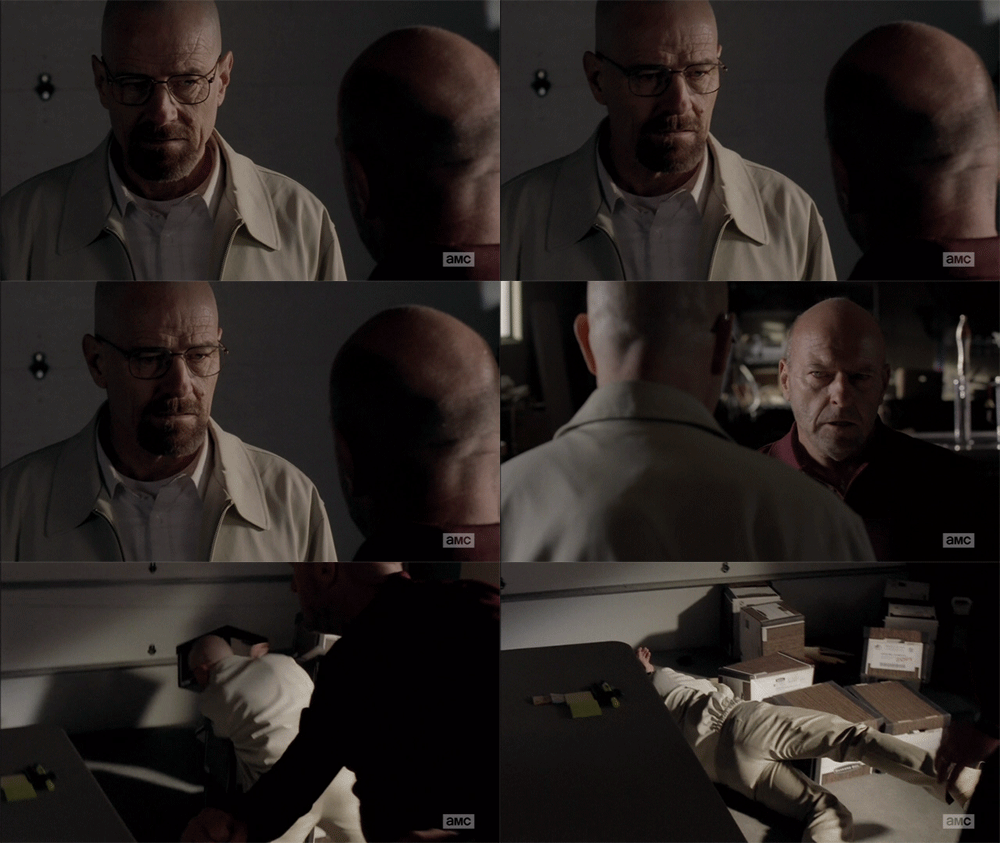
What will happen next? Heisenberg, your profoundly negative, most likely biologically embedded core belief, will get up and come at you with evidence. That is exactly what mine does. Heisenberg is cold, mean, and extremely smart. He uses evidence from my past to prove why I am disposable, and the case is airtight. And, the more you listen, the worse you feel. The more monstrous that core belief becomes. As if it takes on a life of its own until he’s doing this:
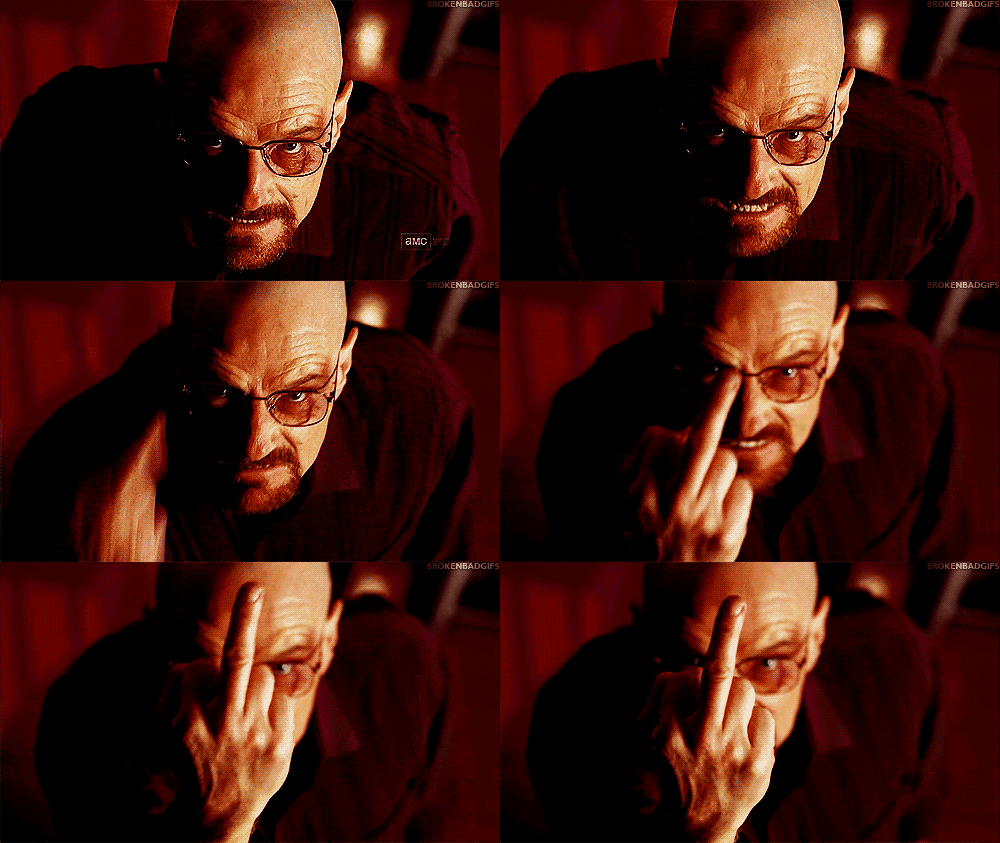
Those feelings that you have at this moment are defined as “dissonance”. Why? They are the gap between what you are starting to know is true about yourself or situation and what you feel is true about them. This gap can be shallow or a deep abyss. This is why emotional dissonance can be so dangerous and hard to manage. This is where the spin-outs and target behaviors can happen. I typically freeze and can’t reach out. Emotional eating, cutting, high-risk behaviors like gambling, high-risk sex, substance abuse and emotional dysregulation are all common manifestations of falling into this gap.
Now, a negative core belief doesn’t sound that bad on paper. Why would someone react in such an extreme way? It is a matter of what that core belief represents and triggers. In my case, my negative core belief centering on expendability was literal. I was trafficked. I had a literal price tag put on me and was sent to an auction. Men actually bid on me. It was the most dehumanizing experience that I could never have imagined as an 18 year-old. I was put through experience upon experience meant to rob me of a sense of identity so that I would come to experience my own person as an object void of self. That is the purpose of the “breaking in” process. Once you are no longer a person, you are compliant. The problem for me in all of this was that I fought the process in captivity and left that environment with a sense of self albeit a very traumatized, compromised one. Years later, when there is a trigger, the past becomes present, and I am faced with this old but very effective lie. It is biologically embedded with the actual trauma. This is the neurology of trauma and beliefs acquired with trauma. This is why we suffer so much when we flashback–even with something as seemingly benign as a negative core belief.
Part of battling it out in the therapeutic process is identifying that which you solidly believe to be true with someone who can parse your language. When someone gets to know you, they can often help you discover your values and truths–the truths that you take for granted. This can prove to be quite useful when you can’t see what’s true anymore staring up from the bottom of your dissonant abyss.
What is a better strategy? Don’t fall into the abyss. Well, that’s brilliant. How do we avoid that? Go back to that moment when Heisenberg is giving you the finger. In the past, I didn’t have anything that could adequately refute the case he made against me. I would fold every time and free fall. Now? I still feel the onset of panic when that profoundly negative belief comes online, but I honestly know that it cannot be true because it does not line up with any of my beliefs about humanity. How could it be true? Once I sat with that, I let it go further. If I’m not expendable or disposable but a person treated me as if I were, then who in that situation had acted badly? Me or the other person? Clearly, the other person. This is an easy conclusion, but it is a very difficult idea to internalize when you grow up under gaslighting conditions or presently experience them:
“We treat you like this because you are bad.”
The truth is this:
“We treat you like this because we are bad.”
Change one word in that statement and the meaning is completely different. Gaslighting is very common: “You are the problem which is why we hurt you. You are the problem which is why you were sexually abused. You are the problem which is why X happened to you.” What perpetrator is ever going to admit, “I have the problem which is why I hurt you”? Nary a one most likely.
So, there you are staring down Heisenberg. He’s coming at you with your terrible belief, triggered by something that you can’t control like a phone call from that person, something a person said to you, a feeling you had when something happened that made the past present in an instant. It could be anything. When this experience is beginning to crescendo, do not try to change how you feel. Do not try to change Heisenberg. He never changes. Bring in your own strength–your own hitter. I figured this out because I realized that some of our very malignant core beliefs do not belong to us. They originated in our trauma and are not natural to our personalities or nature. We may have held onto them because they helped us navigate extreme and painful circumstances, but they no longer help us. They hinder us. This is the definition of ‘maladaptive’.
This is what a solid refute will do to your Heisenberg:
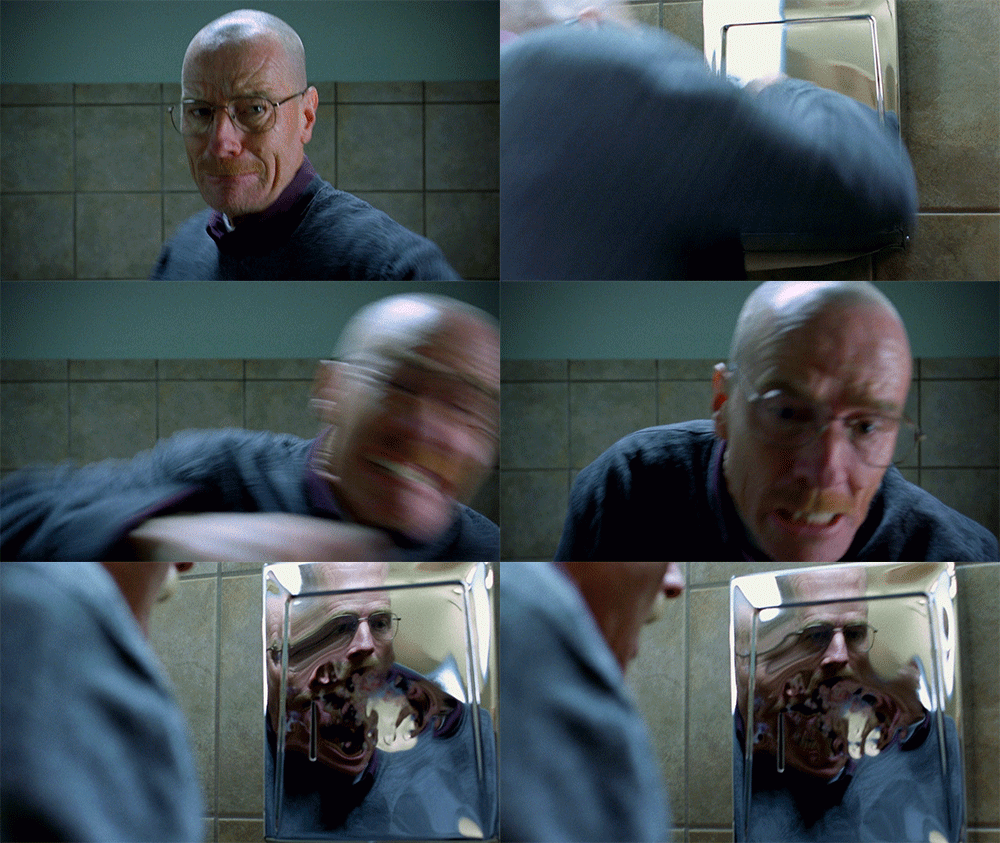
Your challenge will become the wall to your Heisenberg. Heisenberg does not stop showing up when stress shows up. Your neural connections have created a fantastic pathway for him. The more you use your challenge against him, however, the more you weaken his pathway until there are potholes in your neural connections. It will look something like this:
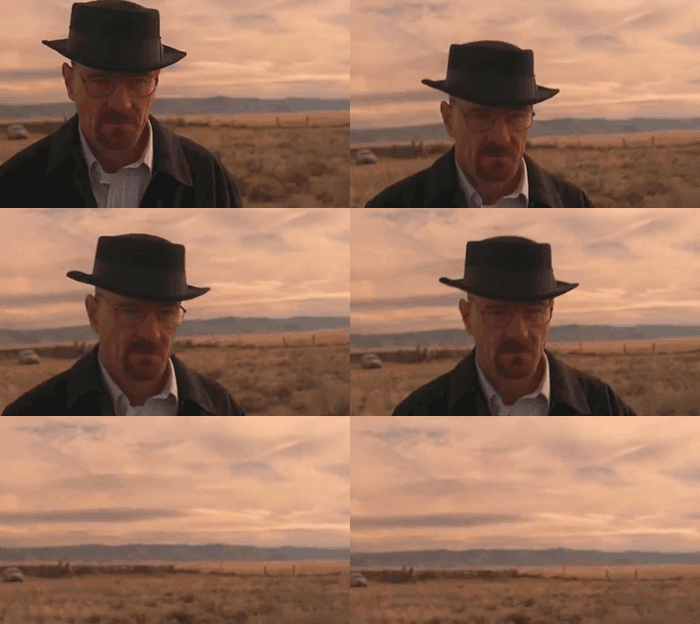
After a few months of challenging Heisenberg with the same new thought that might be one of your beliefs: “I can’t be disposable because it violates my own personal sense of morality,” my personal Heisenberg is starting to do this:
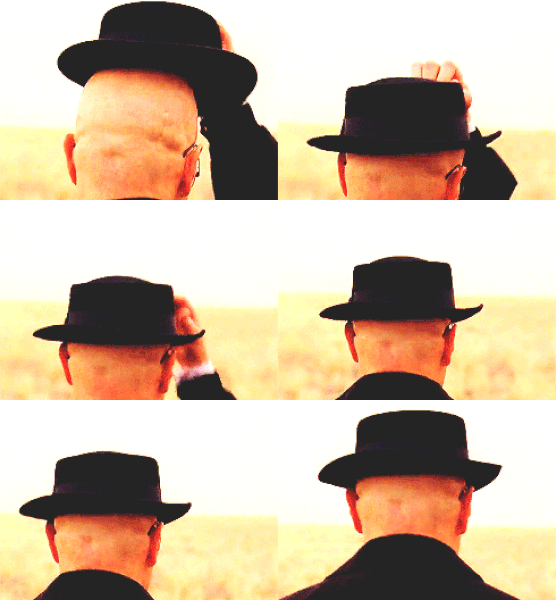
He leaves before anything serious starts.
In my mind, I thought for years that dealing with negative core beliefs was all about changing them, but then I realized that a negative core belief was a lot like Heisenberg of “Breaking Bad”. Heisenberg, much like Dr. Jekyll’s Mr. Hyde, was an evil alter ego. A negative core belief is a negative alter ego of a functional, adaptive thought. It’s a thought gone rogue. It served a purpose, but its present existence has long outlived its original purpose. Now it just keeps on comin’ because that’s what it does. Like a cancer.
I can try to kill Heisenberg or strengthen my other thoughts in order to overcome him. Where is the effort better spent?
So, the key here is finding the right challenge. That is the most important part of the process in taking down a malignant core belief and arguably the most difficult. I would assert, however, that the prior work done in therapy, which included EMDR, laid the foundation for present insight.
The other strategy I have used in the past and model in this post is externalizing and naming a toxic feeling in order to separate it from yourself and your identity. I have identified my most feared maladaptive core belief as “Heisenberg” in order to differentiate every idea associated with it from myself and my identity. This draws a distinct line between me, my own thoughts, my hopes for my present and future, and what I would like to think about. This is highly effective for dealing with negative emotions.
For anyone experiencing the abysmal free fall or struggling with repetitive negative thoughts rooted in malignant core beliefs, there are strategic ways to deal with them and eventually defeat them. It takes time and consistency, but it is possible.
Keep going.
Maybe C is for Catalyst
I want to talk about how finding out what motivates you can lead to personal liberation. To do that, I will take you back to my junior year of college. I was something of a fresh-faced know-it-all with something to prove. I didn’t really know what I wanted in terms of a future career. For most of my life, since the age of 4, I was certain that I was going to be a doctor, but then I discovered the theatre. Yeah, that old cliché.
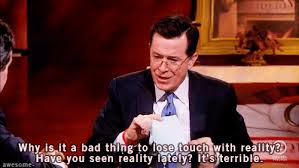
So, I did what many confused perfectionists do. I went to college and hit it hard. My entire identity became about doing well in college. Learning, of course. That was my priority, but I could not do poorly in anything. I had to receives As on everything. In my mind, I was proving my parents wrong about me. What I didn’t have the insight into then was that I was building an identity around performance and actually fortifying the very lies that I was trying to disprove. My worth became proportionate to my professor’s evaluations of me. I entered college a perfectionist. I became a superperfectionist during college. Every mistake I made grated on me and drove me harder. I studied all the time. I lacked a social life, and that seemed justifiable to me. I was building a foundation for a future career path–whatever that would be.
The results of these painstaking efforts were inclusion on the Deans’ lists of the colleges I attended, scholarships, and recognition, but I hated it. I didn’t feel a sense of accomplishment. What if I failed? The anxiety grew greater the higher I climbed, and my personality had become distorted. When I look back, I see someone whom I would not like today. I was one of those intellectual snobs who would metaphorically wear black turtlenecks and chain smoke at cafés at midnight while discussing the merits of the intellectual movement in Europe vis-à-vis the developing social pragmatism of America.
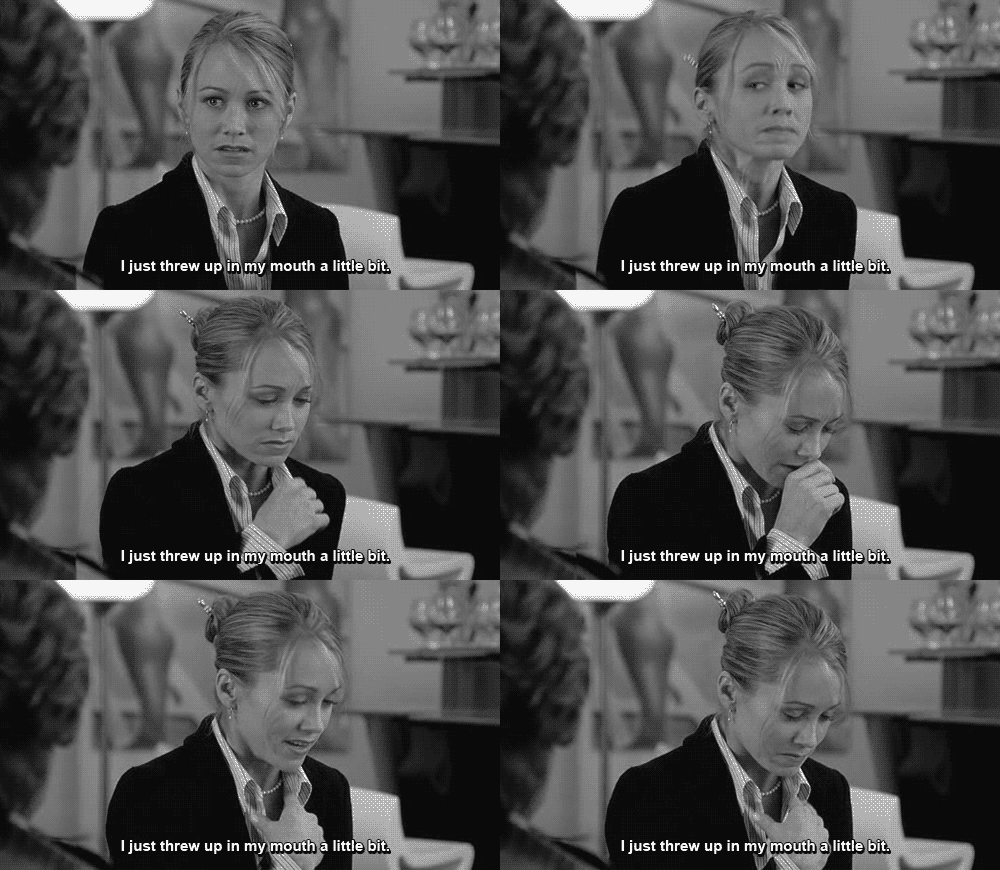
Then art history happened. For some ridiculous reason, a medievalist at one of my colleges pushed me in the direction of art history. It made sense. My great-grandfather was a landscape artist in his country of origin, and my grandmother was an artist as well. I had the language background for it, and I met the intellectual snob criteria for graduate level courses. Perfect.
That is when I met the Flemish Professor. He was a brilliant man and teacher. He made art history seem accessible and easy. Suddenly, I could see art history as a viable career. I took all of his courses–medieval art history. There were, like, six. We got to know each other. We had a good collegiate relationship. It was during the end of my junior year that he suggested I take his graduate course on the cathedrals of Europe. To me, at that time, this was a coup not to mention a fascinating course of study. It was in this class that he handed me the topic for my art history thesis.
Catalonian retables.
If you find yourself asking what the heck a Catalonian retable is, then you’re not alone. That was my response as well except with more colorful language. This is a retable in case you’re wondering:

This was a thesis based on research. Well, the only access I had to Catalonian retables was through large, cumbersome books. Two large, cumbersome books. Both of them in German. For some reason, the Flemish Professor thought that I spoke German because I told him that I got bored while living in France and took an introduction to German at The Goethe Institute. I left being able to count, conjugate, and perhaps order a beer, a piece of cheese or a piece of cake. I would confuse the two. In other words, I would do really well at Oktoberfest.

The only other published research in the entire world at the time was one French article. That’s it. Two German books and one French article. The Flemish Professor asked for a 10-page “thesis” about Catalonian retables based on this? I gave him a 13-page paper, and I used all three sources. The only three sources on Catalonian retables in the world at the time. That’s how obscure the topic was. He checked off on my outline and bibliography.
Do you know what this professor gave me for a grade? Hold on…
A C. A C!!!!! I died on the inside. I took that paper and marched into his office. I put it on his desk and demanded an explanation. Something I have never done before, but I felt he owed me that particularly since he signed off on every aspect of it. We went head to head. The sources were incomplete he said. There were only three I said. In the world. It wasn’t long enough he said. He asked for 10 pages I said. I gave him 13 which was a miracle. Why didn’t I use more of the German material he asked? I don’t speak German I said. I countered him on every criticism. He had nothing to stand on.
“The grade stands. There was a misunderstanding.”
And then he crossed his arms and made something akin to a pouting harumphing noise. Politics?! Was this my ego coming up against his far more established ego? What? I was incredulous. How was I supposed to live with this? Dear God! A C in the class? I went home and had an existential crisis. Who was I? If I got a C, then what? Maybe I really was stupid after all. Maybe my parents were right. Maybe I just hit the ceiling of my abilities in the academy. Maybe I peaked. Maybe…maybe…maybe…maybe…
This all sounds ridiculous. I know that, but when we think about the things that set us off on any given day it isn’t so unreasonable. I know what caused this crisis. I started college two weeks after I escaped trafficking. That blows my mind when I really ponder that. I went from being a sex slave to a co-ed in two weeks. I compartmentalized everything. I threw myself into academics and performing, and I found out that I was good at it. My whole world rose and set on earning high marks in everything, and it fell apart when I didn’t. I didn’t know who I was apart from performing–performing perfectly. From being perfect. This core belief somehow protected me from ever having to deal with what caused me to develop that maladaptive strategy. Underneath my consistent efforts to climb higher and be the best festered a toxic mélange of self-loathing, terror, and despair. If I wasn’t good in the academy, then I wasn’t going to be good anywhere. It was my last hope, or so I thought. The Flemish Professor ripped me apart when he gave me that C.
And it was one of the best things that could have happened to me because it forced a reckoning. I hated who I had become. I didn’t enjoy the hoop jumping, politics, and ass-kissing that I had to do at university. I hated the esoteric and seemingly useless topics of study. Catalonian retables? That’s not going to cure the world of its ills. Furthermore, I realized that I wasn’t actually studying because I liked it. I had lost my integrity. I had become a divided person–a dis-integrated person. Maybe I always had been. I didn’t even know.
Receiving that C, as small a thing as it is in the grand purpose of life, was a catalyst for immense growth. I stopped and reconsidered my path and my purpose. I made life changes after that class that changed the course of my life for good. I also realized that if I was going to do something with my life that mattered to me, then it need be because I’m invested in it for reasons that resonate with my character and who I desire to be rather than proving a point to people who actually don’t care about what happens to me now or in the future. The past should not corrupt the present nor my future.
That was two decades ago. Ironically, that C was the best grade I ever got.
All this is to say that you may have had or are currently having experiences that ignite you in ways you never expected. Your brain and heart may be on fire with existential despair or desolation. You may be up against something that is breaking your brain. Or perhaps your identity is on the line in a way that you never expected. After dealing with recovery from profound trauma for almost three decades, I can safely estimate now that these kinds of experiences can be some of the most useful for emancipating us from ourselves and prisons of our making. Most often, we did not create our cells, but we have a strange gift for keeping ourselves locked inside them through our self-judgment, personal and secret vows, self-loathing, need for vengeance, and constant comparisons between ourselves and others, and ourselves from the past, present, and future through these words, “I didn’t expect that my life would look like this at this age.”
There is no easy way to make a new key for an old prison, but what I have learned is that it all starts with questions. And, the first question is usually, “What would happen if I tried ____________?” Rethinking our present requires imagination and willingness. It also requires giving up our fear of pain. It will hurt emotionally and spiritually to integrate, but it hurts more to remain compartmentalized. This I know from experience.
These are my observations as I continue to walk the road of attempting to live an integrated life. May your entry into the forthcoming holidays bring you peace, merriment, and a deep sense of joy.
As always, keep going.
Shalom…
Currently on the Nightstand
Share this blog

RSS


thrivingisthegoal.com
is licensed under a
Creative Commons Attribution-No Derivative Works 3.0 United States License.

 Out of the Mire