Out of the Mire
…because thriving is the goal
A Conclusion
I’ve discussed myriad topics on this blog ranging from community, body image issues, forgiveness, faith, PTSD, and recovery. I’ve also discussed something called ‘differentiation’ although I haven’t called it that. Essentially, the work I’ve been doing to extract myself from the toxic and abusive relationship with my mother has been the work of ‘differentiation’. Why is this an important topic?
Differentiation is a measure of intellectual and emotional maturity. How differentiated we are determines how well we are able to think for ourselves under pressure, how well we are able to remain clear-minded within relationships and communities that are becoming stressful, and how well we are able to maintain our principles, ethics, and moral code even if others disapprove of us. Doing the work of differentiation is key for any and all forward progress if we are to be successful in our relationships be they personal, work-related, or in the community because it is necessary that we all come to a point where we no longer need to rely on others to approve of us in order to feel good about ourselves. At some point, we all need to learn to self-validate. That’s what differentiation is about.
I’ve written a lot about Borderline Personality Disorder largely because my mother has BPD. 2-6% of the general population struggles with BPD, most of them women. I have not meant to vilify those who struggle with this potentially crippling personality disorder; the truth is, however, that those who have BPD often refuse to seek treatment, and they have the potential to do great harm to those who are in their lives particularly their children. It’s a very serious disorder that requires serious and long-term treatment.
My intent is to focus on the outcome of being raised by a BPD mother. As I explained in this post, she raised a victim. Because I was so thoroughly victimized by both my mother and my father, I was the perfect target for the human trafficker that abducted me. As I’ve said before, once you’re someone’s victim, you’re bound to be another person’s victim again. Victimhood has to be unlearned and healed. It becomes a state of mind and being especially if the victimization happened over many years as mine did. That’s why it is imperative to commit to the process of:
Separation–We are not the same people. I can leave the room, and you’ll still be there when I come back..
Individuation–I am an individual person who can think my own thoughts and make my own choices.
Differentiation–Not only am I an individual person who can think my own thoughts and complete separate actions apart from you, but I do not need you to tell me that I am okay. I can self-soothe and tell myself that I am okay apart from you. Even if you don’t approve of me, my choices, or even validate my feelings, I am still okay. I still feel good about myself. Your behavior does not affect how I feel about myself.
Allow me to bring in the idea of co-dependency, a topic I’ve never mentioned.
Traits of Co-Dependency
If you identify with the following statements, then you may want to seek help for co-dependency.
- My good feeling about who I am stems from being liked by you.
- My mental attention focuses on solving your problems or relieving your pain. Your struggle makes me unhappy.
- My mental attention is focused on pleasing you or protecting your or making you do things my way (for your own good).
- I feel important when I solve your problems or relieve your pain.
- My fear of rejection controls what I say and do.
- I value your opinion and way of doing things more than my own.
- I am not aware of how I feel. I am aware of how you feel.
- I give to you and do things for you so that will like me, love me, stay with me. (online source)
Please allow to share this list with you once again:
Personality Traits in Victims
- A belief that if you love enough the person will change
- A belief that if you love enough the relationship will succeed
- Difficulty establishing and maintaining boundaries
- Not being able to say no
- Being easily influenced by others
- Wanting to be rescued from your life situation
- Wanting to rescue others from their distress
- Being over nurturing particularly when not asked
- Feelings of shame and self-doubt
- Low self-esteem
- A lack of memories about childhood or periods of adulthood
- Shyness
- Difficulty communicating
- A lack of self-confidence
- Wanting to please
- A lack of motivation from within and being motivated by what others want (online source)
If you see yourself in any of the above lists, it’s imperative that you engage in the therapeutic process of healing. Arriving at a place where we can successfully navigate the process of separation, individuation, and differentiation is not easy particularly if we have been abused in any way. The framework of our brains may have been changed if PTSD plays a role. If situational depression is in our lives due to past or present abuse, then the process of claiming our own personhood will remain nothing but a fantasy unless outside help is sought.
Lastly, nothing is impossible. When I started this blog in 2010 I was living in paralyzing fear of my mother. Yes, I had done just about as much psychotherapy as a person could do in order to “deal with” my terror. There comes a time, however, when the abstract work done in a safe environment must be put to use. Inevitably, we are sent out into the field, as it were, to do the real work of living. Every prayer, every declaration, every journal entry, and every promise that we hold dear are called into question when we see just how big the giants in the Promised Land really are. To me, my mother is a Titan, and I’m an ant. A grasshopper would have been a step up.
Alas, I remembered that I have indeed done my work. People with PTSD struggle with an idea that their perpetrators are “all-powerful”. I remembered this when I found a package on my doorstep on Good Friday last. The package was from her. The last of my all-powerful perpetrators. I was immediately trembling and nauseated…and angry. Once again, she trampled upon my personhood to get her own needs met. She ignored my letter and the boundaries that I set which stated clearly that there were to be no gifts. She was to go directly into treatment with a trained clinician, and any and all communication was to go through said clinician. I was reeling. As I explained in my last post regarding my mother, it was a Herculean effort on my part to take such strong measures with her. It was the last mercy I could extend her, my last effort to love her. I want her to get the help she so desperately needs, but her love is the killing kind. She needs to learn what love is, and I can’t be the one to teach her. Not anymore.
In that moment on my front steps, sitting next to the package, I made a choice to fight for myself, my beliefs, my daughters, my marriage, and my future. My own differentiation. I chose to believe that the work I’ve been doing all these years mattered. I chose to believe that love, respect, kindness, and goodness never come at the expense of another person’s identity. Instead, love frees others to become who they were created to be.
I sent the package back to my mother. I was shaking when I stood in the post office, but I did it. I differentiated.
I would not have been able to do that five years ago.
I encourage you, wherever you are on your journey, to keep going. Commit to your process of recovery, restoration, and the rediscovery of joy. It isn’t an easy trek, but it’s so worthwhile.
To get you started:
God Is A River
I was reminded of this song as I was having a conversation with a dear friend today. A few years ago, an acquaintance mailed this song to me on a CD. She’s really only a Facebook friend, but somehow she sensed I needed encouragement.
I had never heard of Peter Mayer before even though he’s a local singer, and, I’ll admit, I’m not a huge fan of folk music. That being said, I love this song. I could listen to it over and over again. Mayer’s execution is so emotional and full of depth and gentleness. It brings me to tears almost every time I hear it.
Fortunately, I was able to find a recording on the ever popular Youtube! Perhaps someone needs a little encouragement out there, or perhaps you just might like this song. In any case, I’ll share this song with you as it was shared with me.
In the ever-shifting water of the river of this life
I was swimming, seeking comfort; I was wrestling waves to find
A boulder I could cling to, a stone to hold me fast
Where I might let the fretful water of this river ‘round me passAnd so I found an anchor, a blessed resting place
A trusty rock I called my savior, for there I would be safe
From the river and its dangers, and I proclaimed my rock divine
And I prayed to it “protect me” and the rock repliedCHORUS:
God is a river, not just a stone
God is a wild, raging rapids
And a slow, meandering flow
God is a deep and narrow passage
And a peaceful, sandy shoal
God is the river, swimmer
So let goStill I clung to my rock tightly with conviction in my arms
Never looking at the stream to keep my mind from thoughts of harm
But the river kept on coming, kept on tugging at my legs
Till at last my fingers faltered, and I was swept awaySo I’m going with the flow now, these relentless twists and bends
Acclimating to the motion, and a sense of being led
And this river’s like my body now, it carries me along
Through the ever-changing scenes and by the rocks that sing this songCHORUS:
God is the river, swimmer
So let go
It Is Finished
It’s done. After weeks of deliberation, writing, re-writing, editing, praying, procrastinating, and, yes, even fasting, I have sent my mother my final words and the book Borderline Personality Disorder Demystified.
My original letter to her was thirteen pages long. Yeah, that’s too long. I, therefore, decided to let it sit on my computer while I figured out my heart. I didn’t want the last thing that I said to her to be angry or hurtful. I needed some sort of revelation. In the end, I don’t really want to say ‘good-bye’ to her. I want her to get help, but if she should choose to continue down her current path, then I have to choose to walk in a different direction.
What I finally realized is that nothing my mother has ever said or done was personal. Everything that she has inflicted upon me and others has been collateral damage of a life very poorly lived. Her mental illness has ravaged her mind, heart, spirit, and body, and I have watched her deteriorate for almost three decades. Within that time, she has tried to commit suicide three to five times, she married twice, she almost committed murder–twice, she committed assault numerous times, and she struggled terribly with depression and severe mood issues associated with BPD. She has tried to make good decisions, and, to her credit, she has done so at times. Underneath it all, however, she has battled her inner Queen, Witch, and Hermit. I’m certain that the Witch tortures her, never letting her forget her most malicious and evil acts. The Queen demands constant control, and her Hermit just wants to hide from it all. I so love this woman, and I do understand that in her heart she never meant to do so much harm. She never meant to become the violent tornado that destroys everything in its path, leaving nothing behind but shattered ruins and cracked foundations. She doesn’t understand that she has always had a choice.
She doesn’t understand that I have a choice, too. I am leaving Tornado Alley. For good.
My husband mailed the book and letter for me last week, and that was the day I said ‘good-bye’ in my heart, and on paper, to my mother. It goes against the grain, saying ‘good-bye’ to a parent while they are still alive. I, however, already mourned her. I’ve been grieving her for five years. That’s how long she decided to go without speaking to me until last July. Why? I’m not sure. I think it’s because I said something that offended her. Nothing is clear anymore where her behavior is concerned.
After the letter and book were out of my home, I felt as if a weight were lifted from me. I took a look at my blog’s appearance, and the dreary colors struck me. Even the photograph! It looked miry indeed.
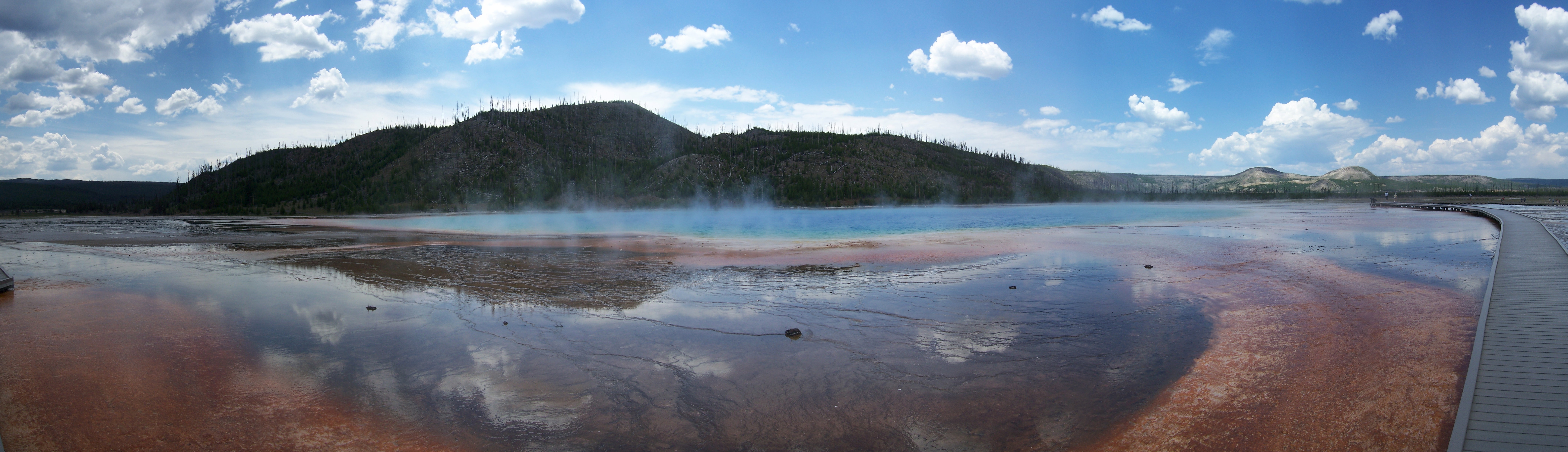
The photo above was the original image that I had used as the header photograph for my blog. I had taken this photograph in 2007 when my family and I were in Yellowstone. I like this image because it looks like a mire to me, and there’s a footpath around the stinky, sulphuric, bacterial mats growing in the murky slime. And, you can see hills and sky beyond the foulness in the foreground. To me, it’s a hopeful image. It’s like life. The immediate circumstances might be full of foul, stinky, muddy grossness, but there might be a footpath somewhere. What’s more, if you keep your eyes on the horizon line, you’re bound to spot blue sky at some point.
This image had to change, however, because it doesn’t represent my life anymore. Suddenly, or slowly over time until I suddenly noticed, it feels different now. The fragrance has changed.

I took this photograph in May of last year. I call it a “Devonian Crossroad”. I almost expect to see a woodland creature like Peter Rabbit saunter out. This is what my life feels like now. I no longer feel like I’m fighting to leave something behind; I feel like I’m moving towards something, and that “something” has the potential to be good. I love this image and the memories contained within it. I was in Devon at the height of the English springtime. It was, in every way, delicious and utterly beautiful. As I was in Cockington Gardens, I am in my life. I am no longer looking for the footpath that will take me “out of the mire”. I am sitting at the beautiful Devonian Crossroad, resting for a bit, inhaling the fragrances, taking in the verdancy.
This is why I changed the photographic header as well as the colors on my blog. Once we crawl out of the mire, that footpath takes us somewhere. We do indeed leave the foul mire. Oh, Thank God, we can leave it!! I wonder where each footpath “out of the mire” leads?
For now, I’m just sitting in the garden at the Devonian Crossroad. I so want to invite you to join me. I wonder where it might lead us? On an adventure?
I have no idea, but it’s beautiful here.
The Least of These…
When you are giving your gifts this year, please consider these women and children:

An estimated 2 million children are enslaved and abused in the global commercial sex trade — most of them girls. Many children are sold into prostitution to pay off family debts or forcibly recruited from the street to work in brothels.
Girls who escape or are rescued face a difficult physical and emotional recovery process. “I wanted to run away, but I had nothing, and my family was too far away,” remembers 15-year-old Sophea*. “Life was unbearable … worst were the beatings if I said ‘no.’”
You can help girls like Sophea recover from exploitation. The World Vision center was the first place in a long time where she felt safe. “I feel good here,” she says. “I feel secure, nobody hurts me. I can learn to read and write properly for the first time.” (from World Vision)
*World Vision is committed to the highest standards of child protection and does not publish names or identifiable photos of exploited children without express permission.
I could have been one of these women. I was a victim of human trafficking, but I escaped. I gain nothing by suggesting that you ponder donating to the Maximum Impact Fund. For $35, however, you can make a donation in someone’s name, a friend’s, a family member’s, an organization’s, and a card will be mailed to them. This money goes directly to helping these girls who are enslaved in the sex trade. Those who are rescued are provided with safe shelter, medical care, food, vocational training, and where possible, reintegration with a loving family. If you are looking to make a more meaningful holiday gift this year, then here is an option.
For more information, you can go here.
Shalom.
Living with The Tides
When I was 22 years-old, I attended l’Université Paul Valéry in Montpellier, France. Montpellier is a city in southern France, west of Marseilles, quite near the Mediterranean Sea. Paul Valéry is one of the oldest universities in Europe.

Montpellier is renowned the world over for something else: l’Ecole Supérieure d’Oenologie; in other words, the School of Oenology. It is considered to be the most prestigious school of oenology in the world. France’s most celebrated wine families send their children to this school to ensure that the family’s winemaking traditions are learned, and, thus, continued. Montpellier isn’t a huge city; I met quite a few of these young, blue blooded vintners in the making. I’m sad to say that they were true to every stereotype–young, snobbish, relatively good-looking, horribly entitled, and xenophobic. If they would deign to speak to you, then you were sure to be insulted. I thought it was humorous. In America, we simply don’t have these sorts of families–one family defined by a profession, generation upon generation upon generation of one craft passing down through the ranks. Our country is simply too young! France’s oldest wine-producing company, Château de Goulaine, was founded in 1000 A.D.! Clearly, my worldview differed from that of these young men.
Thomas was a Californian attending the School of Oenology. He came from a wine family, too, but he wasn’t a wine snob. I met him through another American student in Montpellier. Thomas was in his early 30s. He was very well-educated, and I could never understand why he was in France. He was highly employable already. He was the guy that built the vineyards. He understood grapes, soil, weather, the fermentation process…everything! He had already built a name for himself in Napa Valley. For some reason, however, he thought that attending the most prestigious winemaking school in the world would look good on his CV. He was probably right.
Thomas and I became instant friends. We didn’t see each other often because our studies were rigorous, and he lived on the opposite side of the city. He was ten years my senior, and, I think, he found my friends a bit annoying. They drank too much and talked too loudly. One night, however, we made a date to have dinner and see a movie– an American movie in English! I’m not a huge Quentin Tarantino fan, but “Pulp Fiction” was music to my ears after being forced to listen to the French language 24/7 for months on end. Thomas and I went out for pizza and wine after the movie. It was one of those enchanting evenings when conversation flowed. Everything was just easy, and there was a real depth and connection. We laughed together, but there were moments of true intimacy (as in “in-to-me-see”). It was not romantic in the least. We really were just friends, but, for whatever reason, all pretenses were dropped. Authentic communication and connection happened. I reveled in it because I recognized its evanescence. Thomas walked me home. We hugged. I left France shortly thereafter, and I never saw him again.
This is the way of human interaction, it seems. I don’t know if everyone yearns for authenticity in their relationships, but, if you do, then I suspect you’ll find that it isn’t a constant. There seems to be a tidal quality to intimacy (again, think “in-to-me-see”) in the many and varied forms that human relationships take. There are times when I see my girlfriends, and the conversation is superficial. We don’t bridge the gap very well between each other. Other times, we bypass the shallow end of small talk and dive directly into the deep end of “Tell me how you’re really doing.” Eye contact is easy. We need that hug, and it’s a pleasure to give. Other times, we feel guarded and wary–unwilling to “go there” with anyone. We don’t want anyone seeing into us. We have our reasons.
Sometimes, an intimate, authentic spark occurs between two strangers in the oddest of places. It can be a genuine smile. A short conversation about a book. A compliment. An unexpected conversation at a café. Or, even in virtual conversations through blog comments. In any case, you’ve met a kindred spirit of sorts, and the pleasure of that brief connection washes over you. In that moment, you aren’t alone in the world. You’ve been understood, and you’ve had the chance to extend understanding, too. It goes both ways. Along with the pleasure comes the grief because as soon as it begins, it ends. These moments in time are ephemeral.
They ebb and flow in my own marriage. My husband has been waiting for the latest video game installment of The Elder Scrolls–Skyrim.

While he hasn’t been ignoring me per se, he has been heavily preoccupied with this game. Admittedly, it’s a very cool game. If I were a gamer, I’d probably be preoccupied, too. Alas, I am not a gamer. Let’s just say, since Skyrim has entered our house, he hasn’t touched me in the bedroom–in any way. We have this tradition. You might laugh, but it’s kept our marriage on track. He tucks me in. He’s a night owl; I am not. So, whenever I go to bed, he stops what he’s doing, and he tucks me into bed by kissing me goodnight. It’s our daily check-in. If something is wrong, if we need to talk, or if we simply need to connect, then this is when we do it. It’s the final connecting point of the day. Since I became a Skyrim widow, he has stopped tucking me in. Marriage is full of opportunities to long for intimacy and connection, isn’t it? It’s also full of lost opportunities. Sometimes it’s bleak. Sometimes it’s full and overflowing.
Recognizing the genuine connection when it happens is important because it reminds us that, in part, we were made for it. It’s also important to recognize them because they are so fleeting. Thomas was a kindred spirit, and I was able to enjoy his presence in my life albeit for a very short time. There are other kindred spirits I’ve known for very brief moments, but I’ve enjoyed the time. I’ve also felt the sadness of their loss, too. The darkness that follows the bright spark of connection appears darker somehow if only for a while.
I wonder if Moses felt like that after he asked God to pass before him. It is written in Exodus 33 that God said that he would indeed “let all his goodness pass before him”, but Moses could only see his back. We are human beings, wired for deep connection, but only allowed to see the back of God. I do wonder sometimes if that accounts for the tidal nature of human relationships. We can be such contrary beings, wanting and fearing at the same time. We reach out, we pull back, just like the tide. What moon is drawing us in and pulling us out? Over and over again.

I have no profound words of encouragement to offer. I’m feeling thoughtful and melancholy today. I’m also grateful. I’m grateful for every opportunity I’ve had to connect with another person however brief that connection may have been. I’ve always come away enriched and bettered in some way. Thanksgiving is fast approaching, and I want to be thankful. While I do, at times, struggle with loneliness and melancholy, I do feel that the only way I can temper that is to glance at the landscape of my life and deliberately give thanks. I may feel grief over loss, but I also felt joy in those places, too. We all have journeys to make, and, one way or another, I must learn to sojourn, progressing forward, under the shadow of the back of God.
May your Thanksgiving be blessed, rich, and graced with the Spirit of gratitude, and may your upcoming year take you into territories unknown, full of new adventures, new intimacies, and genuine relationships.
Shalom.
Borderlines, Sociopaths, PTSD, and Peace
It’s been one helluva week so I’m just going to “let go” for a moment. I figure I can do that since it’s my blog after all.
I wish my mother would disappear over the event horizon of a black hole, hence, permanent deletion from the universe at large. There. I said it. I am hopeful that permanent, universal deletion–annihilation really– is painless. Sort of like blowing out a candle. Poof! Gone.
Obviously, I am not going to get my wish, and it’s better that I don’t for some very obvious and not so obvious reasons. Here’s the skinny: my mother has Borderline Personality Disorder (BPD). This particular flavor of personality disorder is rather malignant. It’s akin to malignant narcissism. My father had Antisocial Personality Disorder. Essentially, he was a sociopath. No remorse, guilt, empathy, or emotion. And, he loved to inflict pain. That’s when he smiled. They were an interesting pair to say the least. I’ll admit this: dealing with my father has been much easier than dealing with my mother.
They each had stories to tell me about cats, and each of their tales opens a small window on their psyches. My father lived in a part of the country that didn’t have ordinances regarding feral or loose animals. So, he would leave food out for stray cats. After a few weeks, a small pride of stray and feral cats would be living on his property at his invitation. This would annoy him. So, he would go to his gun safe, load up one of his long range rifles, open up a few cans of tuna, leave the tempting bait out for his prey, and wait. Once the pride was engrossed in their fishy repast, he would begin his game of “Kill the Kitties”. One by one, as the cats devoured the tuna in utter distraction, he picked them off until none remained. He narrated this story to me over the phone, laughing the entire time, as if it were a joke. Sickened, I told him he should stop leaving out food for stray animals. His response? “Now, where’s the fun in that?”
My mother’s story isn’t much better. When she was a girl, she was given a kitten. She loved this kitten. She played with it everyday. Sometimes she wanted to feel close to her kitten in a special way; so, she would strangle it. She would strangle it until it was almost dead, and then she would release it. It would cling to her, sucking in air, grasping at life. This was the feeling she craved–being clung to. This was when she would hold it close. This was her extra special way of finding closeness with her beloved pet. She would do this often.
Both of these stories define the personality disorder of the people behind them. My father enjoyed planning, stalking, and killing. He enjoyed manipulation and power as sociopaths do. The “I hate you, don’t leave me” worldview of the BPD comes through clearly in how my mother treated her kitten. This defines how I was raised. I was never physically strangled, but I was emotionally, spiritually, and verbally assaulted regularly. Unfortunately, she did physically harm other family members–severely at times.
So…fast forward. My father isn’t in the picture anymore, and my mother has been ignoring me for five years…until two weeks ago. When I was slogging through the muck and mire of psychotherapy, I thought I might want a relationship with my mother. I all but begged her to find a therapist and engage in her own process of healing and recovery. I am a compassionate person, and I do recognize that she, too, has suffered profoundly. She refused. I felt enormous rejection, and I grieved. In my eyes, the relationship was dying. I treated it as such. I also realized how bent I truly was in that relationship. My mother raised a victim. I only existed to meet her needs. I was not a separate individual capable of thinking unique thoughts. I didn’t even have my own identity. As one website explains:
Narcissism is quite pronounced in the borderline personality. They really see themselves as the center of everything and have a very distorted view of their importance to others. It is important to recognize when relating to a borderline that you don’t really exist. When they see you they see a fuzzy image that is filled in with projections from their own unconscious. If you do not realize this you will feel very crazy with them. In fact, most children growing up in the family of a borderline parent have a deep abiding belief that they themselves are the one that is crazy, not the parent.
This past year has actually been a relief. Her absence has given me a margin of personal freedom that I didn’t realize I wanted because I never knew it existed. But, when I heard her voice on the phone, my inner adult began to shrink. All that personal freedom and empowerment I desperately fought to gain disappeared. I was six years-old again, sitting on the other side of her bedroom door while she screamed that her life would be over if I ever left her. What could she possibly want after all this time?!
She wanted to be friends. “I want to come visit!” Oh hell, no. Over my dead body. That’s what my inner voice said, but I couldn’t get air to move over my vocal chords. Damn it! I just froze. Thank you ever so, C+PTSD!
There’s an interesting website, www.sociopathicstyle.com, that defines the “traits of a victim” as:
- A belief that if you love enough the person will change
- A belief that if you love enough the relationship will succeed
- Difficulty establishing and maintaining boundaries
- Not being able to say no
- Being easily influenced by others
- Wanting to be rescued from your life situation
- Wanting to rescue others from their distress
- Being over (sic) nurturing particularly when not asked
- Feelings of shame and self doubt
- Low self esteem
- A lack of memories about childhood or periods of adulthood
- Shyness
- Difficulty communicating
- A lack of self confidence
- Wanting to please
- A lack of motivation from within and being motivated by what others want
I’ve italicized my own traits in relation to my mother. She groomed me from Day 1 to comply with her every whim, self-perceived need, desire, and demand, and until the day I married I didn’t know that I had any other choice but to comply. She punished me horribly on my wedding day for “abandoning” her, too. She punished me for having children. She punished me for going to college. Every milestone that represented a transition into adulthood represented abandonment to her, and I was punished for it. I didn’t understand it at the time, but her choosing to ignore my request for a relationship was the best thing she could have done. Experiencing daily life with her absence has allowed me to experience a different life. I had no idea…
Her first phone call caught me off guard, and I played the victim stupendously. It’s been my role of a lifetime after all. I sucked at saying ‘no’, she bulldozed through all those boundaries I worked so hard to put in place like they were made of rice paper, she talked over me. She played me like a fucking Stradivarius. She seethed a little. Her inner witch made an appearance, and I got scared. She put me in my place. Aah….it was just like old times. Only I haven’t played her victim in five years, and my body didn’t respond well. I endured a seven-day migraine and some PTSD flashbacks. It was great. Mind you, I did manage to tell her that I wouldn’t have a relationship with her until she was in therapy, and we had to be speaking to each other on a regular basis (someone save me from myself!).
The migraine and panic attacks should have clued me in– I wasn’t doing well. Oh, and that cheerful, good-natured voice in my head that I’ve come to recognize as Divine asked, “When will you do what you want when it comes to your mother?” What I want? That was the first time that thought had ever entered my head. I realized that I have spent my entire life doing only what she wanted. Even in therapy. The truth is, I don’t want to have a relationship with my mother. Ever. She needs therapy. She needs a diagnosis. She needs DBT/CBT to treat her BPD, and she needs ongoing treatment for her depression and her own PTSD. But, for the love of innocent kittens, I am not responsible for her happiness and well-being, and isn’t that a revelation! No matter what I say or do, I will always be the bad guy because I won’t be meeting her needs, and that’s the only reason I exist in her mind–to meet her needs. There is a part of my heart and mind that cries out in great relief at this truth. There is another part of me that cries out in great pain because I know that my mother is in terrible psychic pain because of me even though I am making the right choice. It still hurts.
Having her in my life triggers me. That’s where I’m at. My brain is, well, a bit fragile when it comes to my mother. That list of victim traits? Yep. That’s me. I was an easy target for the dude who decided to abduct me precisely because both my parents raised me to be their victim. If you’re one person’s victim, sooner or later, you’re going to be someone else’s. Twenty-three years of victimization don’t vanish and leave the neural networks in good shape. C+PTSD may be permanent, and having my mother in my life is only going to reinforce those neural connections.
So, guess what? I actually told her ‘no’ when she called the second time. There would be no relationship. I refused to reconcile, and if we ever did, it would be directed by a therapist. For me, that’s a huge accomplishment. Granted, my entire body was shaking when I hung up the phone, but I said it.
What’s the bright side? I discovered that I was in denial regarding my own abilities, if you will. I can’t have my mother in my life. It’s too triggering. I still experience her as the “all-powerful perpetrator” which is common to victims of abuse, and she still scares the hell out of me. Well, shit. I’ve got some work to do there.
But…I chose my own well-being over my mother’s which, I must say, is a victory. I have never been able to do that before. I daresay, I formed a new neural pathway, and I’m stoked about it.
Christine Lawson wrote the book Understanding the Borderline Mother: Helping Her Children Transcend the Intense, Unpredictable and Volatile Relationship. She states:
“Sometimes adult children feel so frustrated or endangered in the presence of their [Borderline] mothers that they choose not to have contact at all. No one has the right to pass judgment on such situations. Every human being has the right to protect his or her own life. In some cases, it is in the best interest of both mother and child to disengage completely.”
Whether or not a person chooses to walk away from an abusive relationship is not the point here, the point is that we have the right to do so in order to preserve and protect ourselves and, in many cases, the lives of our loved ones.
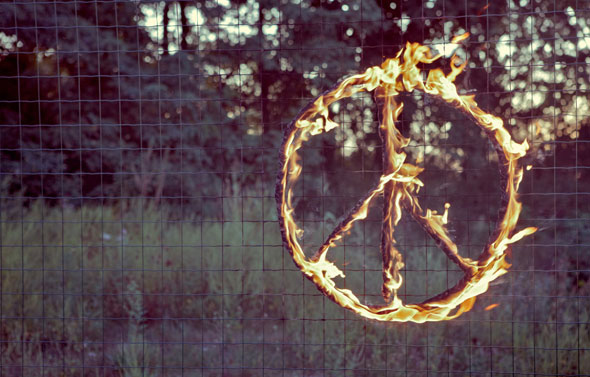
I was raised in a religious environment, and, for many people of faith regardless of that faith, this doesn’t always seem like an option. In Christian circles, I’ve been judged harshly for my decisions to take care of myself. In Jewish circles, I’ve raised a few eyebrows as well. My Jewish grandmother just wanted me to forget the past. Sometimes the past devours the present leaving you with no future. This is what I bring to the table in this case: Romans 12:18 found in the New Testament of the Christian Bible says, “If possible, so far as it depends on you, live in peace with all people.” A brain in a triggered PTSD episode is the opposite of peace. As far as it depends on me, I can’t live peaceably with my mother because peace is not her goal. Getting her own needs met at the expense of all others is her primary goal. Jeremiah 6:14 of the Tanakh or Old Testament says it well: “They have healed the brokenness of My people superficially, Saying, ‘Peace, peace,’ But there is no peace.” How many of us have lived in that environment?–“Everything is fine. You’re fine. Get over it. There is no problem. You see a problem? Then, you are the problem.” Human nature does not change.
I won’t do it. I won’t say there is peace when there is none. Choosing to stop saying ‘Peace’ when there is none may be one of the first steps out of being someone’s victim. It was for me where my father was concerned. It will be again when it comes to fortifying and maintaining my boundaries with my mother.
I must say, I want to say ‘Peace’ because there is peace to be had and enjoyed. Right now. Right here.
A Riff on Rage

I live in an interesting state. I love where I live even with the arctic winters and the almost tropical summer temperatures. I love our lakes and our seasons, and I even like the quirky regional accents. I do, however, wonder if our civil engineers really are drunken sailors because the design of our roadways makes no sense. There are a few highways in my neck of the woods that appear to be designed to kill us all. There are two reasons for this. Two of these particular roads involve yielding, and yielding is a problem for my fellow drivers. I am not native to my resident state meaning I was taught to drive in another state–Texas. In Texas, we were taught to avoid the “wolf pack” ( a group of cars driving too closely together on a highway), maintain proper distances between cars, and we were forced to watch movies like “Blood on the Asphalt” . Our educators said that these films taught us what would happen if were irresponsible while driving. Mainly, they just scared the shit out of us. There is, however, one important skill we were all taught–how to yield. My fellow drivers don’t yield even when it’s potentially hazardous not to do so. The drivers here will cut you off, accelerate on the highways to prevent a lane change, pull out at very low speeds onto the highways where yielding is required causing car accidents, and so on. The second reason that some of our roadways are hazardous is that the safety of the designs themselves depend upon the drivers yielding to merging traffic. Well, as I’ve stated, the local drivers don’t yield so we have a very big problem.
I was driving one of these highways a few weeks ago, and I approached one of the most dangerous interchanges on that stretch. I have to make a quick exit (yield), merge quickly onto another highway (yield again) where I have to merge quickly into high-speed traffic (more yielding), cross three lanes of that traffic in order to make a left lane exit to merge onto another highway. I call it the High Speed Death Merge (HSDM) because the drivers here often won’t let you cross those lanes to make that left lane exit. They are, however, more than willing to box you into the far right-hand lane which forces you onto another highway going in the opposite direction. Often, there is plenty of space to merge into those lanes, but once those drivers catch a glimpse of my turn signal illuminating my intention to, OH NO!, get in front of them (Heaven forbid!), they accelerate, and I’m caught in the 70 mph current of traffic flowing away from my destination.
On this particular day that I was attempting the HSDM, the road looked clear as I approached the three lane highway. “I’m going to make this exit today,” I thought to myself as I accelerated. To be honest, getting ready to cross this highway is like preparing for light speed. I feel like I’m checking my engine, my dashboard instruments, my blind spots, my rearview mirror, and then I double check everything. I take a deep breath, and then I punch it. And, there he was. About three car lengths behind me. A very large, red pick-up truck. In retrospect, my mistake was activating my turn signal, but I have been trained to use the turn signal to communicate my intentions to other drivers. Using the turn signal is like waving a red cloth in front of a bull in these parts of the country! As soon as that truck saw that little light blinking, he charged. Now, I was already traveling at about 65 mph. I was preparing to make the jump to light speed after all, but at what speed would this man have to be traveling to catch up with me if he were at least 3 car lengths behind me? (Do you feel like you’re in Algebra class again?) And, why on earth would he be doing that? He was trying to prevent me from taking the left exit! He had to expend a great deal of effort not to mention gas to catch up with me but also to box me in so that I couldn’t merge into the next lane in a short period of time. What did I do? I accelerated, too, and I had the advantage. I was ahead of him after all. I had to accelerate to 85 mph to overtake him, cross those three lanes of traffic, and make the exit, but I was not going to be pushed onto another highway this time just because Mr. Passive Aggressive in the red dually felt like playing chicken. As I checked my rearview mirror one last time while happily merging onto my exit, I saw Mr. Passive Aggressive’s hand gesture reflected back at me–the bird, the one-finger salute, the finger. Then, it hit me! He thinks I’m the one with the problem in this scenario.
Frustration, anger, and rage are funny like that. The culture in my state is a little on the repressive side. Okay, I’m understating it. We are a bunch of stoic Scandinavians who don’t express anger or any sort of strong emotion well. Put us on the roadways, and it all starts to come out sideways. Everyone is supposed to be “nice” all the time. It’s part of the state’s unofficial motto for crying out loud. Well, put a repressed stoic in a car with anger issues, and what do you get? A person who won’t yield. A person who won’t let another person into the flow of traffic. People think that they are anonymous and invisible when they are in their cars. This is the only reasonable explanation for why people pick their noses while driving (and eat what they find–yes, I saw that once). Suddenly, it not only becomes okay to cut people off, or box them in, or deliberately accelerate to prevent a lane change, but it becomes okay to tailgate and chase and express rage while driving, too. And, if you ask the person making these choices why they are behaving this way, do you know what they would say? They would say it’s the other person’s fault. The other person cut them off so it’s okay to flip them off. The other person won’t change lanes so it’s okay to tailgate. I’m sure Mr. Passive Aggressive has a very good reason for his bad driving. His reason is me.
Feelings of rage often lead us to feel entitled. Victims of violence, trauma, or anything else feel entitled to lash out because of their victimization. You deserve it, right? Look at how much you’ve suffered. Go ahead and roar until you’ve got nothing left, but be careful. Who are you roaring at?
There is a character named Lt. Dan in the movie “Forrest Gump” directed by Robert Zemeckis. Lt. Dan lost both his legs in the Vietnam War. He descended from a family of men who fought and died in all the major wars in which America was historically involved. He believed that it was his destiny to fight and die in Vietnam, too. When Forrest saved him, he deprived Lt. Dan of his legacy and his legs. Now, he was left a veteran in a wheelchair for the rest of his life without any honor or glory. Lt. Dan became mired in his own rage and grief. He lost sight of who he was because of what he’d lost. There is a scene in this film where Lt. Dan and Forrest are on a shrimping boat on the Gulf of Mexico during a violent storm. Dan is on the deck fighting this storm, yelling at it, screaming and punching the wind and rain as it pelts him in the face. He is wrestling with God, and God is wrestling with him as the little shrimping boat rocks back and forth as wave after wave surges. Lt. Dan needs to have it out with God. You can hear him screaming, “Is that all you’ve got?!” The wind only increases, the rain pounds harder, and Lt. Dan fights back even more. This is what we do with our rage. There isn’t a human being alive who could endure being on the end of what a victim of abuse carries inside.
I want to show you what it looks like. French director Jean-Jacques Annaud directed the 1988 film “l’Ours” (The Bear). It is one of the most visually stunning films I’ve ever seen. There is very little dialogue. The film tells the story of an abandoned Grizzly cub who finds himself in the company of an adult Grizzly male who is being tracked by hunters. One of the hunters manages to shoot the adult bear, but he survives. In the following scene, the adult Grizzly comes upon the hunter who shot him–the metaphorical abuser, and what you see is an expression of animal rage directed at a human. There is no violence. It is very moving. Please watch it, and while you watch it consider your own feelings. If you came upon someone who hurt you deeply, what would you do? Would you do what this bear does?
Wrestle with God. Punch the air. Launch into invective in your journal. None of us regardless of our circumstances or how we came to be hurt is entitled to hurt another person or aim our rage at another. That only continues the cycle of abuse, and it must stop with us. We have been victims, but never let your victimization victimize another. Notice that the bear walks away from the hunter.
If you haven’t seen the film “Forrest Gump”, watch it. Lt. Dan does wrestle with God, but he also makes peace, too. And this mighty Grizzly bear lives on to enjoy a good life as well. Healing is a process. Rage and anger are only a few steps on the pathway to greater destinations.
Veins of Gold
I grew up near the Gulf of Mexico. I spent hours at the beach every summer, and I was fearless. I would swim out quite far never taking heed of the depth or the currents. I was once caught in a smack of passing jellyfish, and, yes, I was stung in all sorts of places. I’ve had fish caught in my swimsuit, been nipped by sand sharks, and even been stung by a Portuguese Man-of-War. I used to go crabbing which might account for the presence of sand sharks, and I once had a lifeguard urinate on my ankle in order to alleviate the pain of a jellyfish sting. It was the ultimate humiliation for my young, adolescent heart. He was too handsome and dashing for his own good, and I had hoped my futile attempt at flirting might lead to an exchange of phone numbers–not a furtive piss on my foot behind the lifeguard stand. I was embarrassed, wounded, and stinky. Horrid!
There was not a lot about the ocean that frightened me, but there was one thing that I did not like; I feared getting caught in a series of breaking waves. Sometimes near the shore a series of large waves will come crashing in. If you get caught in the surf zone as a series of plunging breakers come through, you might find yourself coming up for air only to find yourself being plunged to the bottom as another wave crashes down on your head. I was always a very strong swimmer so I wouldn’t panic when I was caught in the midst of strong breaking waves. It just took patience, deep breaths, and focus to slowly make my way to the beach if the waves got a hold of me. This is a good description for how I’m currently experiencing my life. I am caught in a line of plunging breakers. As soon as I rise to the surface to inhale, another wave breaks and I’m forcibly plunged to the bottom where I must wait until the current allows me to rise to the surface for another breath.
The flashbacks have calmed, I have begun to see an exquisitely lovely psychotherapist. The reality of my dear friend’s family member’s suicide has begun to settle in to us. Relief comes and goes as does grief and disbelief, but the initial shock has passed. Those waves have plunged and broken down upon us, and we have come up for the deep breaths. And then one night in my inbox I see a name. An email from a person whose name I haven’t seen in years. My father and his wife, my abusers, have another daughter. She was born when I was 15 years-old. She was special because she wasn’t me. I was a representation of his past life with my mother–all his mistakes, everything he wanted to pretend he was not, everything he wanted to deny he had done. I was essentially bastardized. I watched as this little girl was given everything that I was not–toys, lessons, opportunities, favor, attention, and love. She was the Golden Child. It would have been easy to resent her, but it wasn’t her fault that her parents hated me. I was always accused of myriad sins so when I cut off that relationship I always assumed they would continue to color me as the “bad one”, and yet here she was reaching out to me. Why? What on earth could this young woman want, and for God’s sake, why now?
Is it possible to be friends or even sisters with someone who does not want to know the truth? Even if she did want to know the truth, I don’t want her to know it. To know your parents as kind, loving, supportive, and caring seems miraculous to me because I don’t know either of my parents as such. Explaining to this young woman that her father married my mother when her own mother was only 9 years-old seems challenging. To go on to pull back the curtain on his well-crafted facade would only do her harm. It reminds me of the stories one hears about escaped Nazis who went on to to fabricate new identities in other countries. They remarried, had children, worked, retired, and enjoyed pleasant lives all the while hiding their true identities from their new wives, children, grandchildren, and communities. This is what my father has done, but to my half-sister he is no villain. He is her father. She knows him as loving and supportive. I know him as my worst nightmare. Is this relationship even possible?
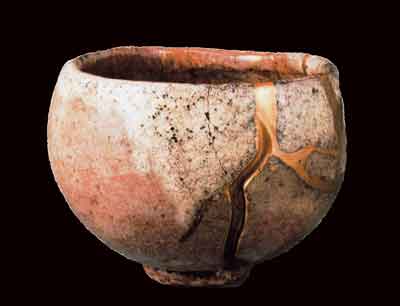
Japanese potters have an interesting tradition dating back centuries. When a pot would crack it was not thrown out. Instead, it was repaired with resin but not camouflaged. Pure gold was painted over the resin repair to highlight the flaw. These flaws add value and character to a ceramic piece, and oftentimes these repaired pieces are preferred over perfect pieces. The cracks and repairs add value to the ceramic fetching a high price on the auction block.
Both the Tanakh and New Testament exhort us to have sincere love and sincere faith. Some believe that the word “sincere” comes from the Latin phrase “without wax”. This may be a fascinating etymological tidbit, an urban myth, or an old wives’ tale. Regardless of its origin, I like this explanation for its appropriate and rather inspirational metaphor. During times of ancient Roman rule, merchants who sold pottery used wax to fill in the cracks on broken pots. To the naive customer, each pot looked flawless, and the deceptive merchant was able to sell all his pots both broken and unblemished. Of course, once the customer took his purchase home he quickly discovered the hidden defect as the wax melted away leaving him with a visibly cracked pot. The contents inside the pot would then be visible if not leaking out. So, what does it mean for us then to be sincere people, and what does this have to do with Japanese ceramics?
I think that we are all “cracked” in some way, and we all have something glorious hidden within. What God is asking us to do as revealed in sacred texts is to allow the cracks to show so that our authenticity, the contents of our character, will be revealed. We spend so much time hiding behind personas of perfection and high performance; how are we ever to make meaningful connections with others much less reveal the glory of our authentic selves? The Japanese have taken it a step further. They repair the cracks and then highlight them with pure gold. They don’t feel the need to hide a flaw with wax; they celebrate the cracks and breaks!
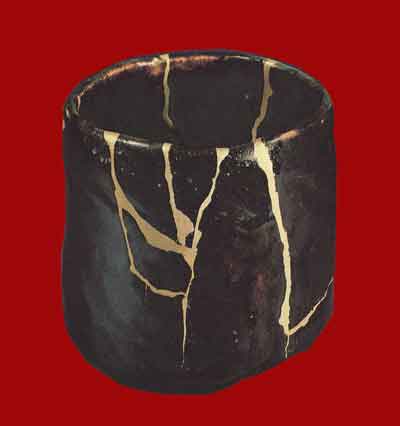
The above tea bowl has been repaired with resin and gold. Look how beautiful the gold strokes are on the ebony glaze like lightning flashes on a black night sky. Imagine how this bowl might look without the repair work. Would it look as interesting? Would it be as beautiful? It would simply be another black tea bowl.
I’m going to bring this around to my earlier struggle. Am I to hide my cracks with my half-sister? Is a healthy relationship characterized by safety and honesty possible if I feel forced to fill in the flaws with denial particularly a denial maintained for someone else’s comfort? I have worked so hard to be sincere, to learn to live from a place of security and truth rather than fear, to live from a place of acceptance rather than shame. Am I to return to the “family’s way” of doing things simply because she’s curious now that she’s older?
For the survivor of sexual abuse and trauma, establishing safety is goal number one. Learning to come out from under the shame that so many of us have experienced and continue to battle is something to celebrate. People will come into our lives who will challenge our progress and make us reevaluate our healing. I went into my basement today and shouted to God, “I am not the bitter one. I have forgiven them! I have done that work even if you are the only witness to the contents of my heart. I am not their victim anymore.” And, sometimes that has to be enough. Sometimes God, how we understand him anyway, is the only witness to the true depths of the darkness we’ve known, and sometimes he’s the only witness to the true depths of the forgiveness we’ve offered…on this side of Heaven anyway.
I don’t have an easy answer to the problem with my half-sister, but I do know that I’m not willing to sacrifice my identity or my safety. And, I’m willing to entertain the idea that our vulnerabilities are worth revealing because they are, in part, what make us unique. It is an idea worth considering.
Living in Color
It is no secret that the past few weeks have been difficult. Moving forward seems to require looking back sometimes, even going back. Unresolved memories of my abduction surfaced recently, and I have been required to revisit old places. It feels like touring an old battleground or an ancient ruin. There was blood shed to be sure, and there was ruin. There was a great fight, and something died there. Good and evil were at work, and a life was at stake. I’m not, however, visiting the site of another’s battle or ruin; I’m visiting mine. I have, therefore, felt vulnerable, shaky, and a little needy as I have set forth on the healing journey once again.
I do not like to feel vulnerable and needy. I do have some trusted allies; nonetheless, I prefer self-reliance even though that opposes my own creed and approach to community and friendship. How can I process what I am going through with a trusted friend if I lock myself in my house? So, I ventured forth in spite of my own fears, and I had two distinct experiences. My first experience thwarted me by only reaffirming my fears of vulnerability. I allowed myself to be transparent with someone and came away feeling distinctly “broken”. I cannot think of another word to describe my deep feelings of shame and regret. Nothing was said overtly, but sometimes it isn’t what is said–it is what is not said. It’s body language, a small criticism, an attitude, a look, a lack of empathy, a sigh. At the end of the day, I regretted leaving the house. I remember driving home, and I was talking to myself as I made my way home. Actually, I was talking to God. I said, “You know, I’m sick of feeling this way. Broken. Damaged. I’m so tired of being “that woman”. That woman with the problem.” It isn’t often that God talks back to me. Oh, I’m a big believer in God speaking to us through nature, other people, even bumper stickers, but when you hear that still, small voice so distinctly answer back in your mind (and you know undoubtedly that it’s not you answering back), it is very important to stop talking and listen. This is what I heard–“You are not broken. You are awesomely and wonderfully made. I made you. How could you break?”
Let me back up here for a moment. I took a hiatus from the American church experience about five years ago for myriad reasons. I left the church, but I did not leave my faith behind. At the time of my exit, the use of the word “broken” was very popular among Christian Evangelicals. To speak Christianese fluently, one had to use “broken” often. It might look something like this: “Oh God, we want to be broken before you.” or “We bring our brokenness to you as an offering.” or “We are broken and weary people.” You get the idea. At times it seemed that the more “broken” a person felt, the holier and more sanctified he was. What does it mean to be “broken”? Google.com has searched many online dictionaries for me, and this is a list of definitions for the adjective “broken”:
- physically and forcibly separated into pieces or cracked or split
- subdued or brought low in condition or status
- (especially of promises or contracts) having been violated or disregarded
- Sundered by divorce, separation, or desertion of a parent or parents
- Intermittently stopping and starting; discontinuous
- Incomplete
- Weakened and infirm
- Crushed by grief
- Financially ruined; bankrupt
- Not functioning; out of order
Obviously, there are a few definitions that apply to the spiritual life of a human being. The church at large does not necessarily have it wrong. We certainly want to bring crushing grief, financial ruin, spiritual lowliness, infirmities, broken promises, and physical brokenness to God. We do not, however, want to wallow or label ourselves or others as “broken”. When I said I felt “broken”, however, I meant the last definition on the list. After all my life experiences, sometimes I just feel like I don’t work anymore. Like I’m kaput. What’s more, sometimes I have a feeling that other people think the same thing. I feel this way when well-meaning people say things like, “How can you have been through so much and still be so normal?” To me, they are really saying, “You must be really screwed-up underneath your veneer of normalcy.” Should I just have ‘Out of Order” tattooed on my forehead and call it a day? Can a person just go through too much? So, when I heard that still, small voice tell me that I am awesomely and wonderfully made, I was forced to reconsider my own opinions.
Psalm 139:14 tells us that we are awesomely and wonderfully made. I did not just fabricate that. As I meditated on this new idea that I was not a broken person, but I was, on the contrary, a whole and working person, I began to wonder what that might mean. This is what I’ve come up with, and I’m going to use images to explain it.
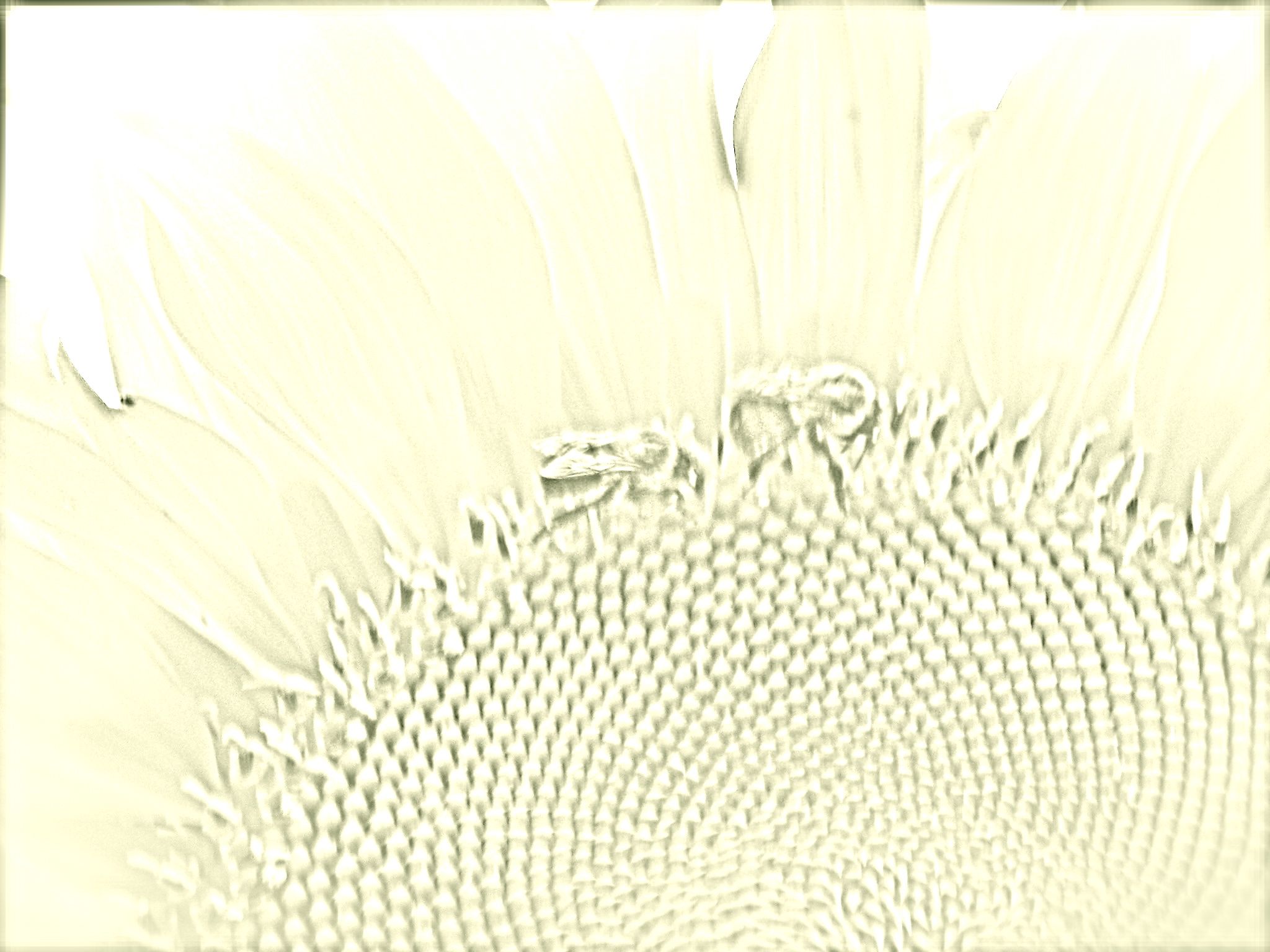
Look at the image above. You can probably discern the subject. Can you find the two bees? Can you see the complexity of patterns? Can you discern color? I have filtered this image, removed color, altered exposure, saturation, temperature, and contrast. I have faded the image on the edges. This image is a metaphor for how we view ourselves. Our life experiences act as filters for how we view ourselves. What might a stinging remark from your mother before prom night alter in your self-image? What about an absent father? What about a rape or an incestuous relationship? Think about my abduction experience? Think about any kind of sexual violence or trauma? Could they remove all color from your self-image leaving you with only a black and white picture of yourself? It’s very possible. If we have been exposed to terrible events or events that left us feeling out of control and terrible about ourselves, then how might we “look” to ourselves? Overexposed, colorless, shadowed, and faded? It explains why I feel broken sometimes. Even being in a fallen world has activated our filters. We are surrounded by all forms of death, destruction, poverty, illness, and suffering. If we are able to live in the world without deactivating our empathy, then we will no doubt have learned to view the world through filters. We must if we are to survive. It is often too painful otherwise.

This is the same image filtered differently. I’ve filtered out the color red. This image looks very different from the other. The bees stand out, but the petals do not. The complexity of the seeds have become more visible, and the play of the shadows is more interesting. Your life with more color, more pattern, less filtering. Some trauma has been resolved. Forgiveness has been at work here. Forward progress. There is more balance between light and dark. Less extremes. More vulnerability means more safety. Better boundaries and more peace.
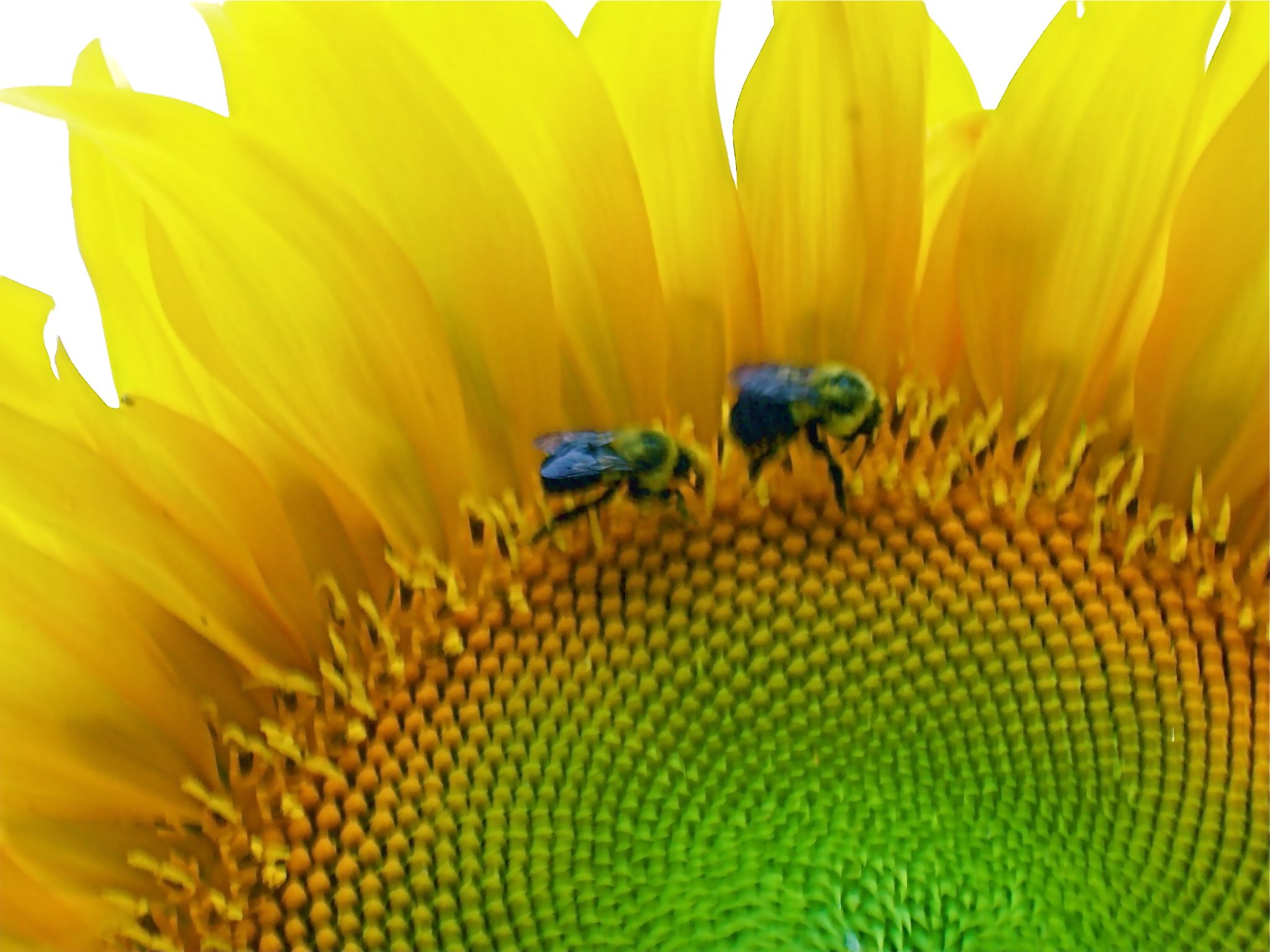
This is the image in full color with very little filtering. I took this photograph yesterday evening in my backyard. This is the flower of the Russian Mammoth Sunflower. Look at the complexity of the seeds in the fruiting body and their colors. Do you see all the details and the shadows in the petals? Do you see how the light reflects off the bees’ wings? These details were impossible to see in the other images due to the effects of the filters. It does not mean that these details were not there. The nature of the flower existed. The bees were doing their work. They existed. This flower is standing majestically at about 12 feet in my backyard at this very moment tracking the sun as it moves across the sky, but you could not know this because of how I filtered the two previous images. You knew that you were looking at a flower. You did not know the color. You may not have known the genus or species. You noted the bees, but you could not notice their gossamer wings or their black and yellow thoraces. You only knew what was allowed to pass through the filters.
In the unseen or invisible world, the eternal world which will never pass away but surrounds us yet, in God’s heart and mind, we are much like this sunflower. We exist in full color in rich complexity. Remember–Thank you for making me so wonderfully complex! Your workmanship is marvelous—how well I know it. (Psalm 139:14) We are not broken, out of order, lowly, violated, emotionally bankrupt, incomplete, separated, or crushed. Our journey in the physical or visible world is to learn to bring forth, if you will, bit by bit the invisible reality of who we really are into the visible. Essentially, step by step, we learn to see ourselves in full color and complexity rather than black and white, overexposed, and shadowy because that is who we really are regardless of what has happened to us or how we feel about ourselves. This process takes time, the help from very trustworthy allies, and an unwavering belief that you are so much more that what you currently see. You are strong, beautiful, powerful, gifted, majestic, capable, talented, complex, and so valuable.
At the end of the famous 1 Corinthians 13 there is this verse:
For now we are looking in a mirror that gives only a dim (blurred) reflection [of reality as in a riddle or enigma], but then [when perfection comes] we shall see in reality and face to face! Now I know in part (imperfectly), but then I shall know and understand fully and clearly, even in the same manner as I have been fully and clearly known and understood [by God].
This verse comes at the end of a chapter entirely devoted to the nature of God’s love. That is the perspective you must take when you read 1 Corinthians 13. This chapter is often read at weddings because we want to be able to love each other with the love that is described in this beloved chapter of the New Testament. What is profound is that God Himself loves us like this. This chapter could end in any number of ways, but it comes to a close with the announcement that what we see is only a blurry and dim reflection, a cracked and tarnished image, of what exists in the perfect reality. What’s more, as we are today, sometimes lost in the haze of an imperfect self-image often rooted in deep psychic pain, we are “fully and clearly known and understood by God”. This statement was made after an entire chapter devoted to the nature of God’s ability to love us. Human beings are never asked to do something which God Himself does not. This chapter is all about the nature of God’s love towards us. So, you see, we may not see ourselves clearly, but God does, and He loves us completely, entirely, thoroughly regardless of everything. Regardless. And, He understands you. You, my friend, are understood. That means that you are not alone.
That is what I learned last week. When I feel the temptation to feel “broken” or ashamed, I must think again. This is not an easy choice, but the question comes down to ‘who am I going to believe?’ Am I going to believe my father, my mother, my perpetrator, or even my wounded self? Well, I’m not going to believe my father, my mother, or my perpetrator. Hell, no. And, my wounded self is…well, wounded.
It’s something worth pondering as we continue to heal.
Breaking Up the Switchbacks
Healing is a process. How many times have you or I heard that statement? Frankly, I don’t think I have ever understood what that process really means. It all seemed very romantic in a way. I remember watching the film “Prince of Tides”. Tom Wingo is sitting in Dr. Lowenstein’s office on behalf of his sister who has tried to commit suicide. She won’t talk to Dr. Lowenstein, her psychiatrist, about her pain or her reasons for her suicide attempts. Tom knows why Lila tried to kill herself. He’s been carrying the same secret inside himself since his boyhood, and Dr. Lowenstein senses something. She senses that Tom is hiding a truth, a truth that might help Lila. Eventually, Tom shares his secret with Dr. Lowenstein. He, his brother, his mother and Lila were sodomized and raped by escaped convicts on one stormy night years ago. If I remember correctly, they murdered the convicts in an act of self-defense, but they were made to keep this horrible event a secret. Lila’s mind and body were paying the price, and she could no longer function under such a heavy burden. After telling the truth, Tom fell to pieces. He wept in Dr. Lowenstein’s arms perhaps for the first time since the night he and his family endured the assault and murdered the criminals. After his catharsis, Tom seems freer. He engages in life in a new way. His countenance is changed. His posture improves. He is transformed. If only it were so easy.
The healing process is not romantic at all. It’s horribly difficult because no one comes to rescue us. We have to do the speaking. We have to do the telling. We have to do the uncovering. We have to do the remembering. We are not required to do it alone, but, ultimately, no one else can do the work for us. We have to show up, and we have to take ownership of our wounds even though we are not the ones who inflicted them. This pain, this grief, this fear, this panic, this loneliness, this alienation, this anger, and this longing for wholeness must all be owned and given a voice.

A friend and I were discussing the grueling process of healing. She described it as hiking switchbacks. Switchbacks are trails that snake up the side of a mountain–each trail is like an individual trail connected to the next by a hairpin turn; thus, the climb up the mountain is less steep, but it is much longer. My friend has done switchback hiking, and she described the feeling of reaching the end of a switchback trail. It’s exciting, and there is a great sense of accomplishment and fatigue at the same time. Then, you look up and realize that you only advanced a few feet towards the summit of the mountain. So much energy expended for so little progress. That’s an appropriate metaphor. What, however, are the options? Should we tackle Everest straight on? Switchback hiking seems like a smart choice if there is a mountain to be climbed. That is the way of this process.
I spent years doing very deep work with a psychotherapist. I have done good work with people trained in spiritual direction. I have done work with a life coach. All of this was very much like switchback hiking. It all represents forward progress. When I finally reached a point where I felt I couldn’t do anymore work, I rested. All of the work had to sink in. Much like deep watering plants, the nutrients must make their way into the soil, and that takes time. Today, I find myself on the mountain again, but I’m not at the bottom. I’m much closer to the summit this time around, but, either way, I still have to hike the damn trail!
It is all too tempting to grow weary of this process, but we don’t have to choose temptation. This is our process. Yes, it’s exhausting and painful, but it does belong to us. I wish that I did not have to face this enemy again, but the fact that memories of my abduction experience came forward (and refuse to leave) and require resolution is actually positive. It means that it’s time for me to hike another switchback. It means that I am closer to the summit, and isn’t that what I have been trying to reach all these years? What will it mean when I reach it? I will plant my flag of victory and look out across the landscape of my life breathing in the high altitude air of freedom knowing that I made it to the top of this mountain in spite of the best efforts of my perpetrators. That will be the sweetest revenge. We will be heroic in all of the places where we have been victimized and laid low. So, lace up your boots.
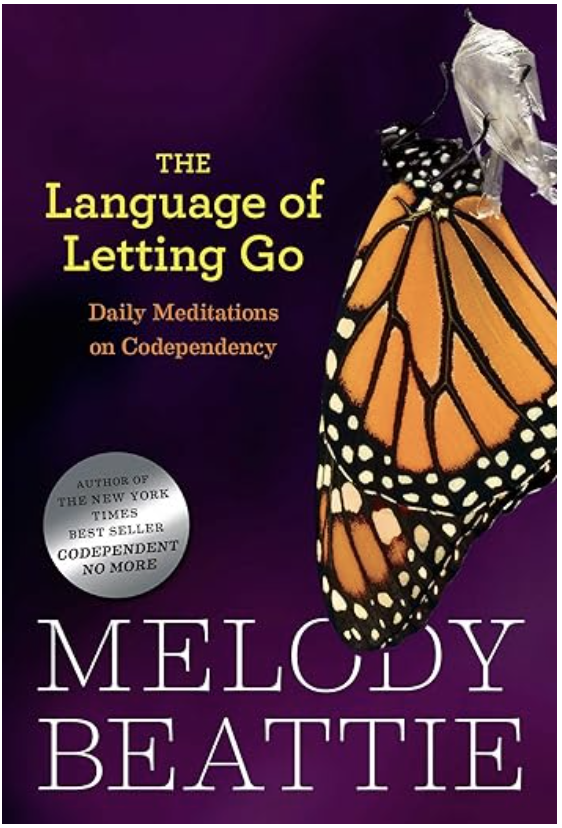
Currently on the Nightstand
Share this blog

RSS


thrivingisthegoal.com
is licensed under a
Creative Commons Attribution-No Derivative Works 3.0 United States License.

 Out of the Mire