Out of the Mire
…because thriving is the goal
Mother’s Day and Me
This coming Sunday, May 11, 2025, is Mother’s Day in the United States, and I am likely not alone when I say that I have mixed emotions about this day. It is by far one of the busiest days for the restaurant industry in this country, and I can imagine why. People want to take their mothers out for brunch and either: A) celebrate them with great pomp and circumstance or B) take them out to a public place to avoid the usual family conflicts that always seem to arise and be done with it. Or, at least, that’s my assessment likely tainted with a tinge of cynicism.
I actually like a good celebration, and any holiday that involves the possibility of cake and flowers gets my vote. Admittedly, Mother’s Day brings up mixed feelings for me as I am both a daughter as well as a mother. I feel as if I’ve written profusely about my mom on this blog, and that’s really only served as a vehicle for processing childhood and adolescent trauma. I was in my thirties when I started this blog, and I am in my early fifties now. My daughters are all adults now, too. It is strange to admit that I still feel exactly the same on the inside–ageless even. Just a bit more mellowed out with a better perspective.
My mother used to bewilder and frighten me something awful–even when I was 35 years-old. She was a mythological force in my mind. An all-powerful being. And I was small and paralyzed, perpetually victim to her every emotional whim and talionic rage. Nothing mattered but her. She was the black hole at the center of my universe, and every part of my life and being was constantly sucked in by her dark gravity. And yet I loved her so. I would do anything to please her. I thought about her all the time. Should I call her? Is she okay? Is she mad at me? What would she do if I didn’t do…X….or Y….or Z? Why has she refused to call me? What did I do this time? I fretted over her like a girl in love except it wasn’t love I felt when my palms sweated. It wasn’t love I felt when my stomach churned from anxiety. It was fear. My mother terrified me. I was terrified that she would stop loving me. I was afraid that she would hurt me. I was afraid of what she might do next. Most of all, I was afraid that she would try to hurt herself…again.
My mother has Borderline Personality Disorder (BPD) as well as depression and OCD, and this trinity tormented her. She did manage to enjoy herself from time to time. She loved disco music and dancing. She liked good scotch and a cigarette. And she really liked all those things together. Sometimes, when there was some extra money, she would take me out for Tex-Mex, and she would drink a margarita. My mom loved her girlfriends and league bowling. She also loved a good party particularly if there were men with big ol’ 1970s mustaches à la Burt Reynolds showing off their chest hair and wearing too-tight jeans. That’s the Happy Mom from my early childhood. Fun-loving, laughing with her girlfriends, and smiling. The Risk Taker.
But, my mom was only happy when there was little to no stress and circumstances were under her complete control or met her expectations. But, life just isn’t like that. After the divorce, my father didn’t send the child support. He remarried, and my mother didn’t like his 19 year-old wife. She was a single mother, and the stress overwhelmed her. I am able to look back and observe my mom through a very different lens now. When I was 25, I was awash in emotional turmoil and pain. It was almost as if I didn’t have an internal compass because she was my internal compass, and I want to explain this.
My mom had a very traumatic history by the time she was 19 years-old, and she desperately wanted a baby. For her, having a baby was not about becoming a parent and having a family. Having a baby was about becoming a complete person–having something to call her own perhaps for the first time. A baby would meet her deepest emotional needs and sense of identity. When I, as an infant, looked up at her, I would reflect back to her the love she felt for me. I, in an instant, became a mirror for her. I existed to carry and mirror her deepest sense of self back to her. But this “love” was conditional because she only required me to mirror it back to her when she was at a deficit, and love was rarely returned in kind.
There is, of course, a much darker side to this. When she was lost in self-hatred, anger, or even rage, she also required a mirror, or a subject. Someone had to receive and ground that negative self-view, and, since she subconsciously believed that I existed only to meet her needs, I became that subject. I was all-good or all-bad, and that “switching” was entirely dependent upon how she felt internally about herself. I was never permitted to have an opinion about anything unless that opinion reinforced hers. Her favorite color was my favorite color. Her favorite movies were mine. Her favorite food was mine. Any disagreement or question was met with rage and possibly physical violence. If I did not do things her way, then there was sure to be threats of violence if not real violence with prolonged consequences, and this pattern of behavior began when I was very young. I have no memories of my mother as an emotionally stable person. My role has always been to emotionally ground and appease her. That was the expectation. In the worst case scenario, she demanded that I abandon how I view myself and substitute her view of me which is to say that she wanted me to despise myself as much as she hated herself. In the best case scenario, I fawned which means that I prioritized her needs over mine at all times while remaining hypervigilant to her moods and whims in order to survive. She was the center of my childhood, adolescence, and young adulthood. I grew up learning to survive her while only being allowed to have needs, desires, and dreams outside of the household. Inside the household, she was the sun, and I was an outer planetoid.
It has taken me a lifetime to unlearn this, and I’m still doing that work. It has also taken me close to three decades to finally be able to see my mom as a person rather than a perpetrator. I understand how she arrived at her place in life. Her stories are all tragic and painful, and, worse, what she internalized about those traumas compounded the pain and piled on distortion upon distortion. For years, I used to believe that I could help her. I was the exemplar codependent, but the more I tried to help her, the more she resented me. I was, in a way, attempting to do to her what she had always done to me. I wanted her to exchange her self-definition with my definition of her. I wanted her to embrace and internalize a self-definition of love, value, and self-acceptance rather than one of self-hatred and annihilation. The more I pushed, however, the more she distanced herself from me. Or, she would lash out with violent language and open old wounds sending me into a tailspin that would take me weeks if not months to recover from.
Today, we have achieved détente. We occasionally text and exchange niceties on holidays and birthdays. She keeps me up to date on her health, and we send each other flowers for Mother’s Day. The arrangement is difficult for me sometimes because it feels artificial, but perhaps it isn’t. This might be the best it can be. I have forgiven her. Today, I can discuss anything that has happened between us in therapy without feeling bitterness or a desire for vengeance. I can feel anger without rage. I can feel grief without self-loathing. The hardest part to release, for me, is the false sense of responsibility that has been with me for as long as memory serves. And yet, every day is another day to try again. Learning to be merciful and generous with oneself is difficult sometimes, too. I did not grow up with parents who were kind, generous, or merciful.
My parting thought on the Eve of Mother’s Day is this: Is there any place inside yourself or your sphere of influence where you abandoned a part of yourself and let someone else’s view take over that place which is rightfully yours?
I did this repeatedly in my life to: appease my mom, avoid conflict, emotional and physical harm, and to survive. It became a go-to survival strategy that eventually became a habit making me appear passive in almost all my relationships when, in fact, I wasn’t a passive person at all. I had internalized my mother’s opinions of me in order to mirror them back to her so that I could avoid further abuse. At crisis points in my life, I found myself feeling profound internal conflicts in which I would hear myself saying, “I’m not a bad person! I’m not incompetent! I don’t have to be perfect! I’m not unlovable!” These thoughts were the expression of my own personality trying to separate and individuate from the internalized hatred that really belonged to my mom. Eventually, it is good to say, “I am a good person. I am competent. I am lovable just as I am.” Why?
Because it’s true.
2 Comments on “Mother’s Day and Me”
Leave a comment
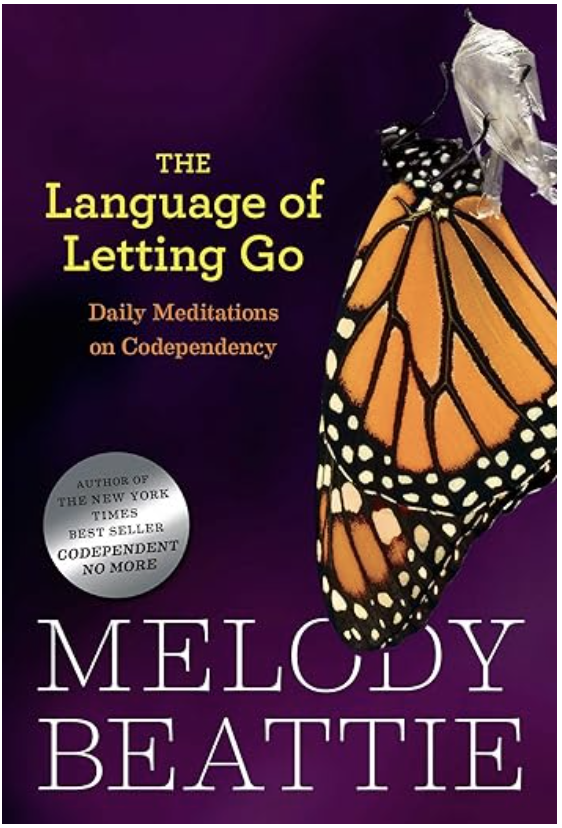
Currently on the Nightstand
Share this blog

RSS


thrivingisthegoal.com
is licensed under a
Creative Commons Attribution-No Derivative Works 3.0 United States License.

 Out of the Mire
Welcome back! I just wanted to say how much I missed your writing—your voice, your reflections, your honesty. It was a beautiful surprise to see a new post from you after all this time. Reading your words again felt like reconnecting with an old friend. I’m so sorry to hear about the painful journey with your mother. It moved me deeply. Thank you for sharing something so raw and real—it takes a lot of strength to put that into words. I admire your clarity and the compassion you extend both to yourself and even to the person who hurt you. I’m holding space for all those layers—grief, healing, growth, and self-love. I hope you’ll continue writing, if and when it feels right. Your perspective really matters.
I’m so glad to hear you’ve reached a detente with your mom. That, and forgiveness, must have been hard. But hopefully healthy for you. You deserve it.
Mike